

Pole mounted flood lights are powerful illumination solutions that offer wide-area coverage for outdoor spaces. These versatile fixtures combine robust lighting performance with strategic placement, making them ideal for various commercial and industrial applications.
At PacLights, we understand the importance of selecting the right pole mounted flood light for your specific needs. In this post, we’ll explore the key factors to consider when choosing, installing, and maintaining these essential lighting fixtures.
What Are Pole Mounted Flood Lights?
Definition and Components
Pole mounted flood lights are powerful outdoor lighting fixtures installed on tall poles to illuminate large areas. These fixtures include a sturdy housing, high-output LED or traditional bulbs, reflectors, and mounting brackets. The pole (typically made of steel or aluminum) provides the necessary height for optimal light distribution.
Advantages of Pole Mounted Flood Lights
Pole mounted flood lights offer several benefits over other outdoor lighting options. Their elevated position allows for wider coverage, which reduces the number of fixtures needed to light a given area. This height also minimizes glare and light trespass, improves visibility, and reduces light pollution.
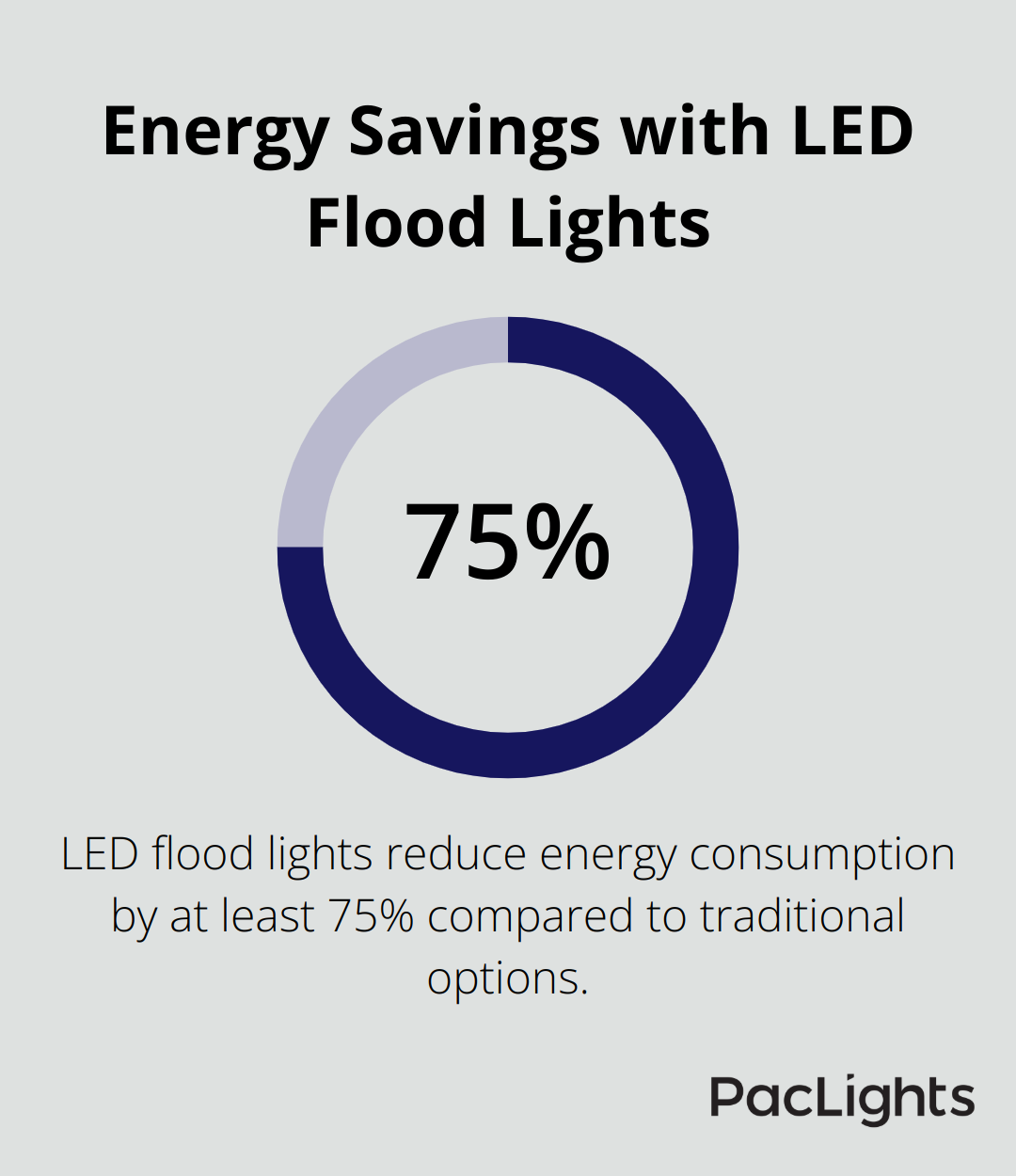
The U.S. Department of Energy reports that LED flood lights can reduce energy consumption by at least 75% compared to traditional options. This significant energy efficiency translates to lower operational costs and a smaller carbon footprint for businesses and municipalities.
Applications in Commercial Settings
These versatile lighting solutions find extensive use in various commercial settings. They often illuminate parking lots, which enhances safety for customers and employees. A study by the Illuminating Engineering Society found that well-lit parking areas can reduce crime rates by up to 39%.
Industrial Uses
Industrial facilities often use pole mounted flood lights to ensure 24/7 visibility in outdoor work areas, loading docks, and storage yards. The bright, uniform illumination they provide is essential for maintaining productivity and safety during night shifts.
Sports Facility Lighting
Sports facilities also benefit from pole mounted flood lights. The National Collegiate Athletic Association specifies different lighting requirements for various sports. For instance, tennis courts require horizontal foot-candle levels ranging from 30 fc for recreational play to 125 fc for professional matches.
Selecting the Right Fixture
When you select a pole mounted flood light, consider factors like light output (measured in lumens), beam angle, and color temperature. For example, a wider beam angle suits large areas, while a narrower beam can highlight specific features or provide focused illumination.
Color temperature (measured in Kelvin) affects the light’s appearance and functionality. Lower values (2700K-3000K) produce warm light ideal for creating a welcoming atmosphere, while higher values (4000K-5000K) offer cooler light that enhances visibility and alertness in work environments.
As we move forward, let’s explore the specific factors to consider when choosing the right pole mounted flood light for your needs.
How to Choose the Best Pole Mounted Flood Light
Selecting the right pole mounted flood light requires an understanding of technical specifications and their real-world impact. This chapter breaks down the key factors to consider when making your choice.
Light Output and Efficiency
Light output, measured in lumens, determines the brightness of your flood light. Most commercial applications require fixtures that produce at least 10,000 lumens. However, raw power isn’t the only consideration. The efficiency of the light, measured in lumens per watt, plays an equally important role. LED flood lights typically offer the highest efficiency, with some models producing over 100 lumens per watt.
The Department of Energy reports that LED lighting can reduce energy consumption by up to 75% compared to traditional options. This translates to significant cost savings over time. For example, a 100-watt LED flood light can replace a 400-watt metal halide fixture while providing similar or better illumination.
Beam Angle and Color Temperature
Beam angle affects light distribution. A narrow beam angle (15-30 degrees) focuses light on specific areas, ideal for highlighting architectural features or signage. Wider beam angles (60-120 degrees) cover larger areas, making them suitable for parking lots or sports fields.
Color temperature (measured in Kelvin) influences the light’s appearance and functionality. Outdoor security lighting often benefits from cooler temperatures (4000K-5000K) as they enhance visibility. However, warmer temperatures (2700K-3000K) can create a more inviting atmosphere for residential or hospitality settings.
Weather Resistance and Durability
Outdoor flood lights must withstand harsh weather conditions. Look for fixtures with high IP (Ingress Protection) ratings. An IP65 rating or higher ensures protection against dust and water jets from any direction. Some high-quality fixtures even offer IP66 or IP67 ratings, providing protection against powerful water jets or temporary immersion.
The housing material also plays a role in durability. Die-cast aluminum housings offer excellent heat dissipation and corrosion resistance. Some manufacturers use special coatings to further enhance weather resistance. For coastal areas or industrial environments with corrosive atmospheres, try to find fixtures with marine-grade finishes.
Smart Features and Controls
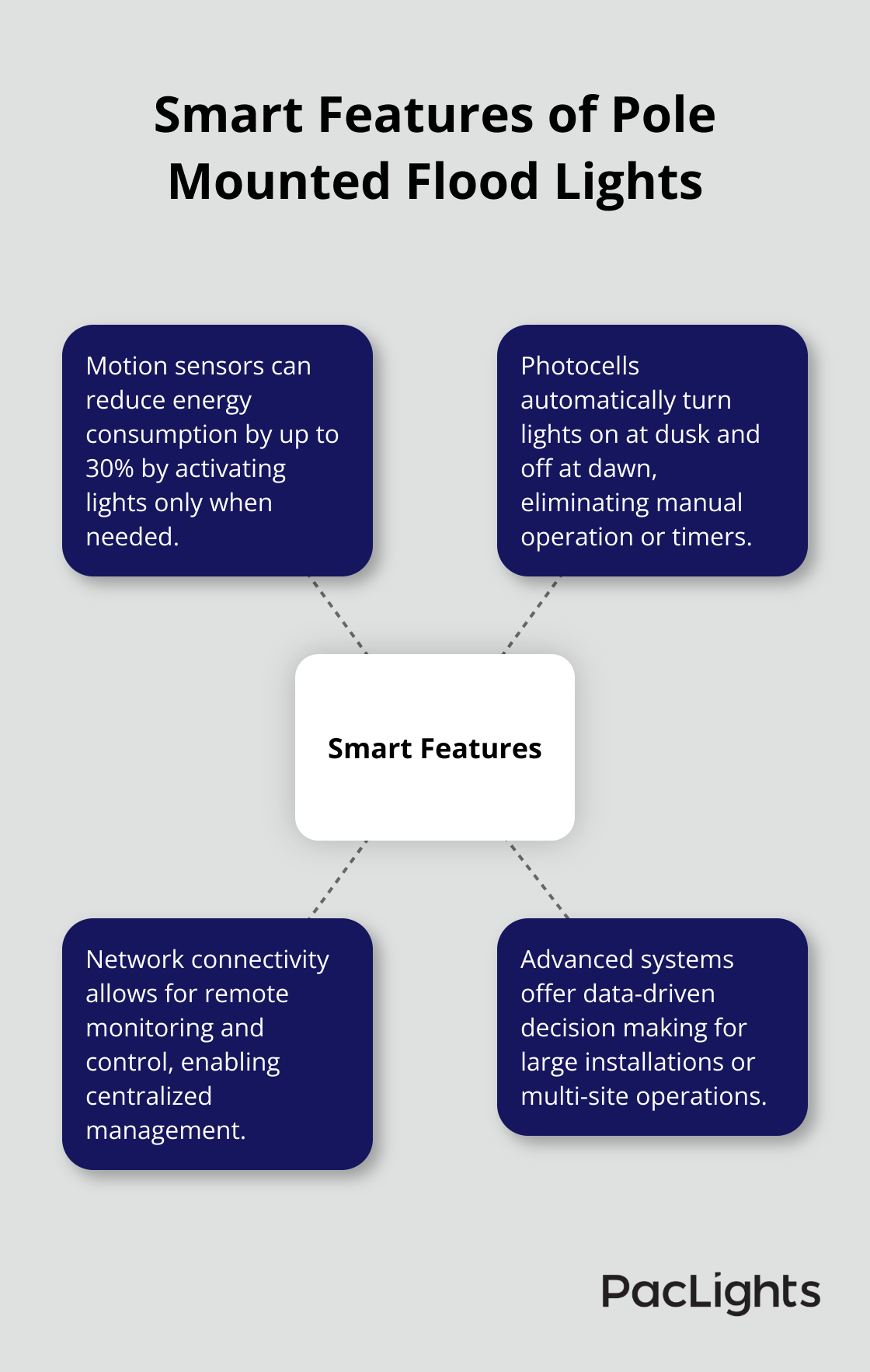
Modern pole mounted flood lights often include smart features that enhance functionality and energy efficiency. Motion sensors can reduce energy consumption by up to 30% by activating lights only when needed. Photocells automatically turn lights on at dusk and off at dawn, eliminating the need for manual operation or timers.
Some advanced systems offer network connectivity, allowing for remote monitoring and control. This can prove particularly useful for large installations or multi-site operations, enabling centralized management and data-driven decision making.
When selecting a pole mounted flood light, consider not just the initial cost but the total cost of ownership. Factor in energy consumption, expected lifespan, and maintenance requirements. While LED fixtures may have a higher upfront cost, their long-term savings often make them the most economical choice.
The next chapter will explore the proper installation and maintenance techniques to ensure optimal performance and longevity of your pole mounted flood lights.
How to Install and Maintain Pole Mounted Flood Lights
Optimal Mounting Techniques
The height and positioning of pole mounted flood lights significantly impact their performance. The Illuminating Engineering Society recommends mounting heights between 20 to 40 feet for most commercial applications. This range optimizes light distribution and minimizes glare.
Secure pole anchoring is essential. In areas with high wind loads, a concrete foundation is recommended. The American Society of Civil Engineers suggests a minimum embedment depth of 10% of the pole height plus an additional 2 feet for stability.
To maximize coverage, adjust the fixture angle. Most flood lights perform best when tilted between 15 to 30 degrees from vertical. Use a light meter to measure foot-candle levels across the illuminated area and adjust as needed for uniform lighting.
Electrical Safety Considerations
Safety and performance depend on proper wiring. The National Electrical Code mandates waterproof connections for all outdoor electrical installations. Use UL-listed weatherproof junction boxes and connectors rated for outdoor use.
Correct wire gauge sizing minimizes voltage drop. For runs over 100 feet, a larger gauge wire than the minimum required by code reduces energy loss and ensures full power to the fixture.
Install surge protection devices at the power source and each fixture. Lightning strikes can damage LED drivers significantly. The Lighting Research Center reports that proper surge protection can extend LED life by up to 20%.
Maintenance for Peak Performance
Regular maintenance keeps flood lights operating at peak efficiency. Create a schedule for routine inspections and cleaning. The Illuminating Engineering Society recommends quarterly visual inspections and annual thorough cleanings for most outdoor lighting systems.
Clean fixture lenses at least once a year. Dirt and debris can reduce light output by up to 30% (according to a study by the Lawrence Berkeley National Laboratory). Use a mild detergent and soft cloth to avoid scratching the lens surface.
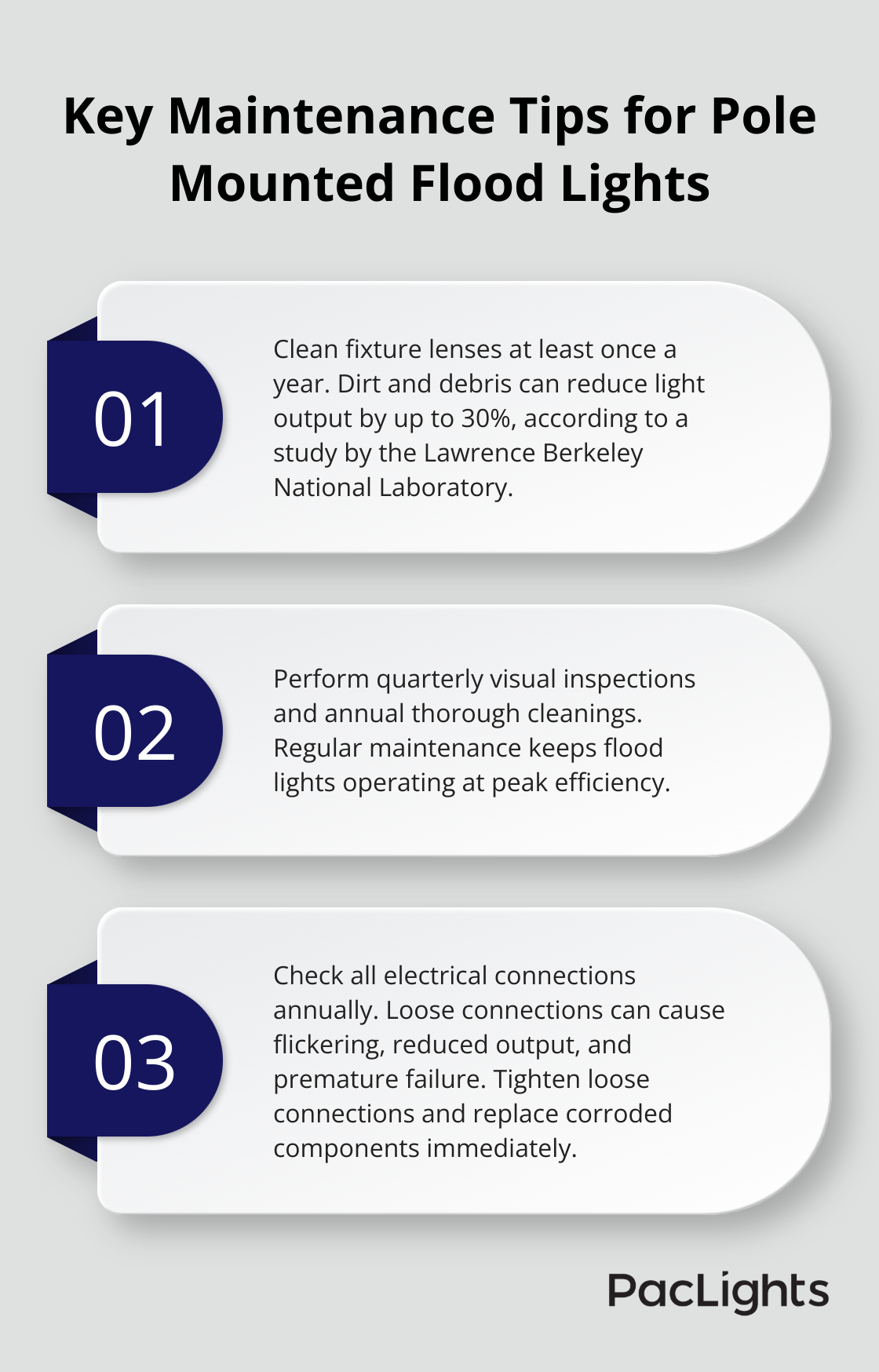
Check all electrical connections annually. Loose connections can cause flickering, reduced output, and premature failure. Tighten any loose connections and replace corroded components immediately.
Monitor LED color shift and lumen depreciation. While LEDs have long lifespans, their output gradually decreases over time. Plan for replacement when output drops below 70% of the initial rating (typically after 50,000 to 100,000 hours of operation).
Professional installation often benefits complex lighting systems to ensure compliance with local codes and optimal performance. This approach helps avoid potential pitfalls associated with DIY installations.
Final Thoughts
Pole mounted flood lights provide powerful illumination for large outdoor spaces. These fixtures offer wide coverage, energy efficiency, and versatility across various commercial and industrial applications. Careful consideration of light output, beam angle, and color temperature allows you to select the ideal fixture for your specific needs.
Proper installation and maintenance maximize the performance and longevity of pole mounted flood lights. Best practices for mounting, wiring, and regular upkeep ensure optimal illumination and safety. Professional installation often yields the best results, especially for complex lighting systems.
PacLights offers a comprehensive range of pole mounted flood light solutions for diverse industrial and commercial lighting needs. Our fixtures combine energy efficiency, durability, and advanced features to provide reliable illumination while reducing costs and environmental impact. From parking lots to sports facilities, PacLights’ pole mounted flood lights deliver exceptional performance and long-term value.
Disclaimer: PacLights is not responsible for any actions taken based on the suggestions and information provided in this article, and readers should consult local building and electrical codes for proper guidance.