

LED vapor proof lights are essential for environments where moisture, dust, and corrosive elements pose a threat to electrical systems. These specialized fixtures offer robust protection and reliable illumination in challenging conditions.
At PacLights, we understand the critical role these lights play in industrial and commercial settings. In this Q&A, we’ll explore the features, benefits, and applications of LED vapor proof lights to help you make informed lighting decisions for your facility.
What Are LED Vapor Proof Lights?
Robust Protection for Harsh Environments
LED vapor proof lights are specialized fixtures engineered to withstand challenging conditions where moisture, dust, and corrosive elements threaten electrical systems. These lights provide reliable illumination while safeguarding their internal components from external hazards.
The primary function of vapor proof lights is to create a sealed environment for the lighting elements. This seal blocks the entry of water vapor, dust particles, and other potentially harmful substances. An Ingress Protection (IP) rating measures the level of protection. For example, an IP65 rating indicates total protection against dust and low-pressure water jets from any direction.
LED Technology Advantages
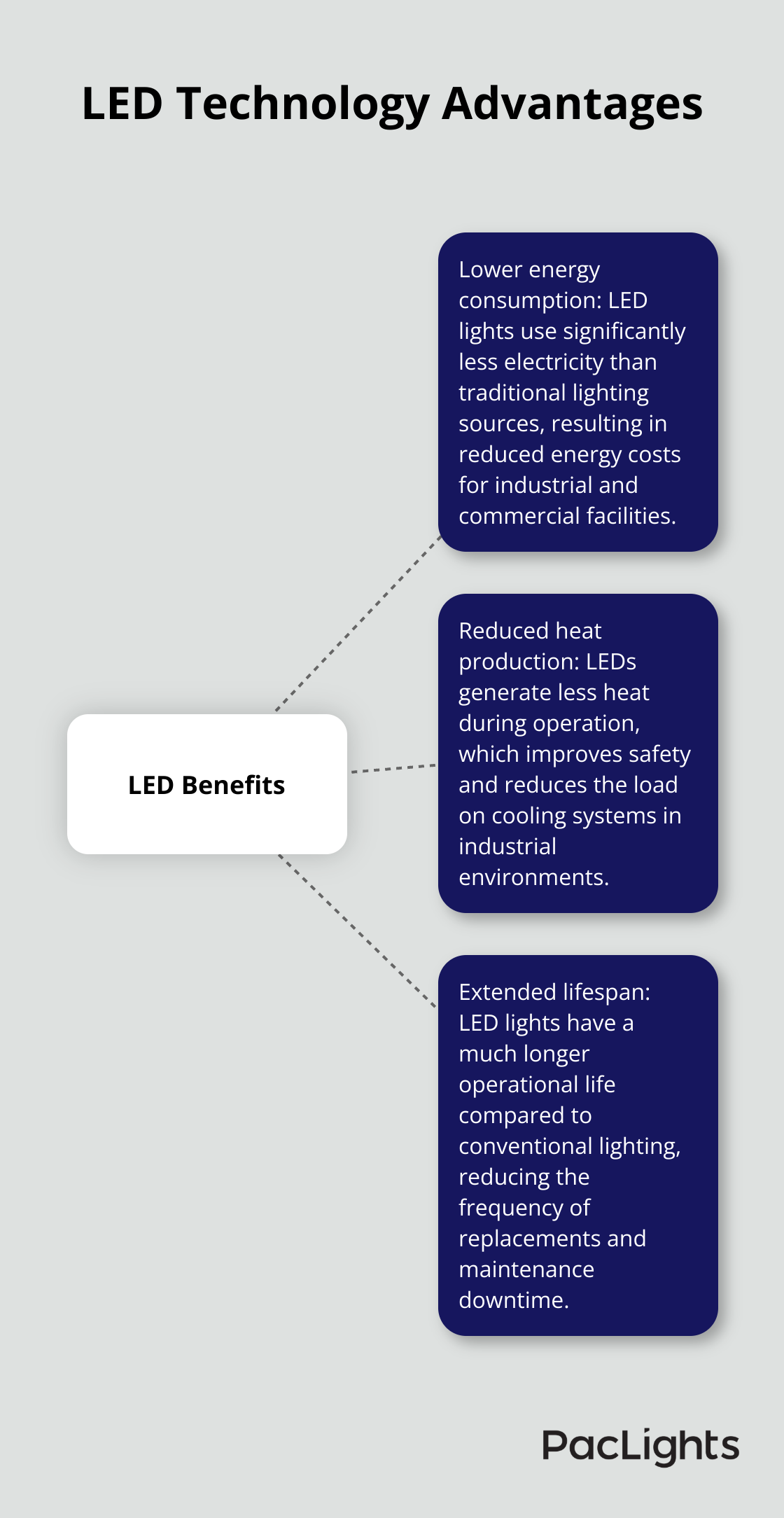
Modern vapor proof lights incorporate LED technology, which offers several benefits over traditional lighting sources:
- Lower energy consumption
- Reduced heat production
- Extended lifespan
This combination of features makes LED vapor proof lights ideal for industrial and commercial applications where maintenance can be challenging and energy costs are a significant concern.
Durability and Efficiency Combined
LED vapor proof fixtures excel in durability. Manufacturers construct these lights with materials that resist extreme temperatures, chemical exposure, and physical impact. Many fixtures (such as those from PacLights) use polycarbonate lenses that are virtually unbreakable, ensuring continued function even in accident-prone areas.
Vapor Proof vs. Waterproof: Understanding the Difference
While often used interchangeably, vapor proof and waterproof lights have distinct characteristics:
- Waterproof lights: Designed to withstand direct water exposure (e.g., submersion)
- Vapor proof lights: Specifically engineered to prevent the penetration of water vapor and fine particles
This distinction makes vapor proof lights suitable for a broader range of industrial applications where humidity and airborne contaminants are the primary concerns.
In industrial settings, the choice between vapor proof and waterproof lighting can significantly impact operational efficiency and safety. Vapor proof lights are typically the preferred option for areas with high humidity, chemical vapors, or dust. Waterproof lights are essential for locations with direct water contact.
As we explore the applications and benefits of LED vapor proof lights in the next section, you’ll discover how these robust fixtures can enhance safety and efficiency in various industrial and commercial environments.
Where LED Vapor Proof Lights Excel
Revolutionizing Industrial Environments
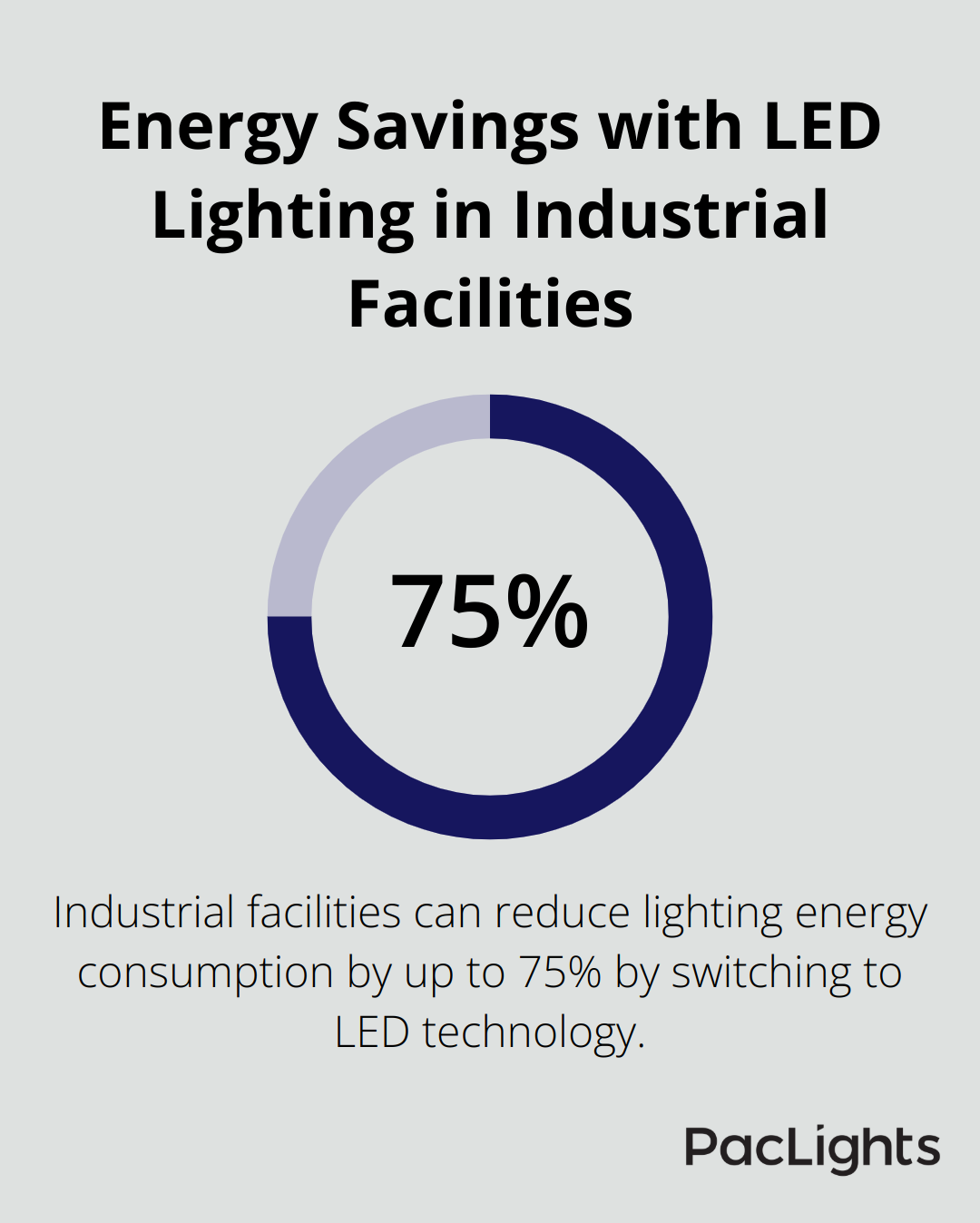
LED vapor proof lights transform manufacturing plants with their ability to withstand harsh conditions. The U.S. Department of Energy reports that industrial facilities can cut lighting energy consumption by up to 75% when they switch to LED technology. This reduction leads to substantial cost savings and productivity improvements.
Food processing facilities reap significant benefits from these fixtures. The sealed design prevents contamination, which helps meet strict hygiene standards. A major food processor reported a 40% decrease in lighting-related downtime after installing LED vapor proof lights.
Enhancing Safety in High-Risk Areas
Oil refineries and chemical plants depend on vapor tight lighting to reduce explosion risks. The National Fire Protection Association (NFPA) recommends the use of properly rated fixtures in these environments. LED vapor proof lights meet these stringent requirements while providing superior visibility.
Underground mining operations use these lights to resist dust and moisture, which is essential for worker safety. The Mining Safety and Health Administration (MSHA) states that improved lighting can lower accident rates by up to 60% in mining environments.
Improving Commercial Setting Efficiency
Car washes and laundromats experience high humidity levels that quickly degrade standard lighting. LED vapor proof fixtures withstand these conditions and last up to five times longer than traditional options. This durability results in lower maintenance costs and fewer business disruptions.
Parking garages benefit from the energy efficiency of LED vapor proof lights. The Lighting Research Center discovered that LED fixtures in parking structures can reduce energy consumption by up to 40% compared to metal halide lamps, while simultaneously improving visibility and safety.
Conquering Outdoor Challenges
Sports facilities and marine environments demand lighting that can withstand extreme weather. LED vapor proof lights excel in these conditions, maintaining performance in temperatures ranging from -40°F to 122°F (-40°C to 50°C). This wide operating range ensures reliable lighting year-round and reduces the need for frequent replacements.
Coastal areas present unique challenges due to salt spray corrosion. LED vapor proof fixtures with marine-grade construction (such as those offered by PacLights) resist this corrosive environment, offering longevity where other lights fail quickly. Some models boast lifespans exceeding 100,000 hours in these harsh conditions.
The selection of the right LED vapor proof light for each application can significantly improve safety, efficiency, and operational costs. The next section will guide you through the process of choosing the perfect fixture for your specific needs.
How to Select the Perfect LED Vapor Proof Light
Understanding IP Ratings
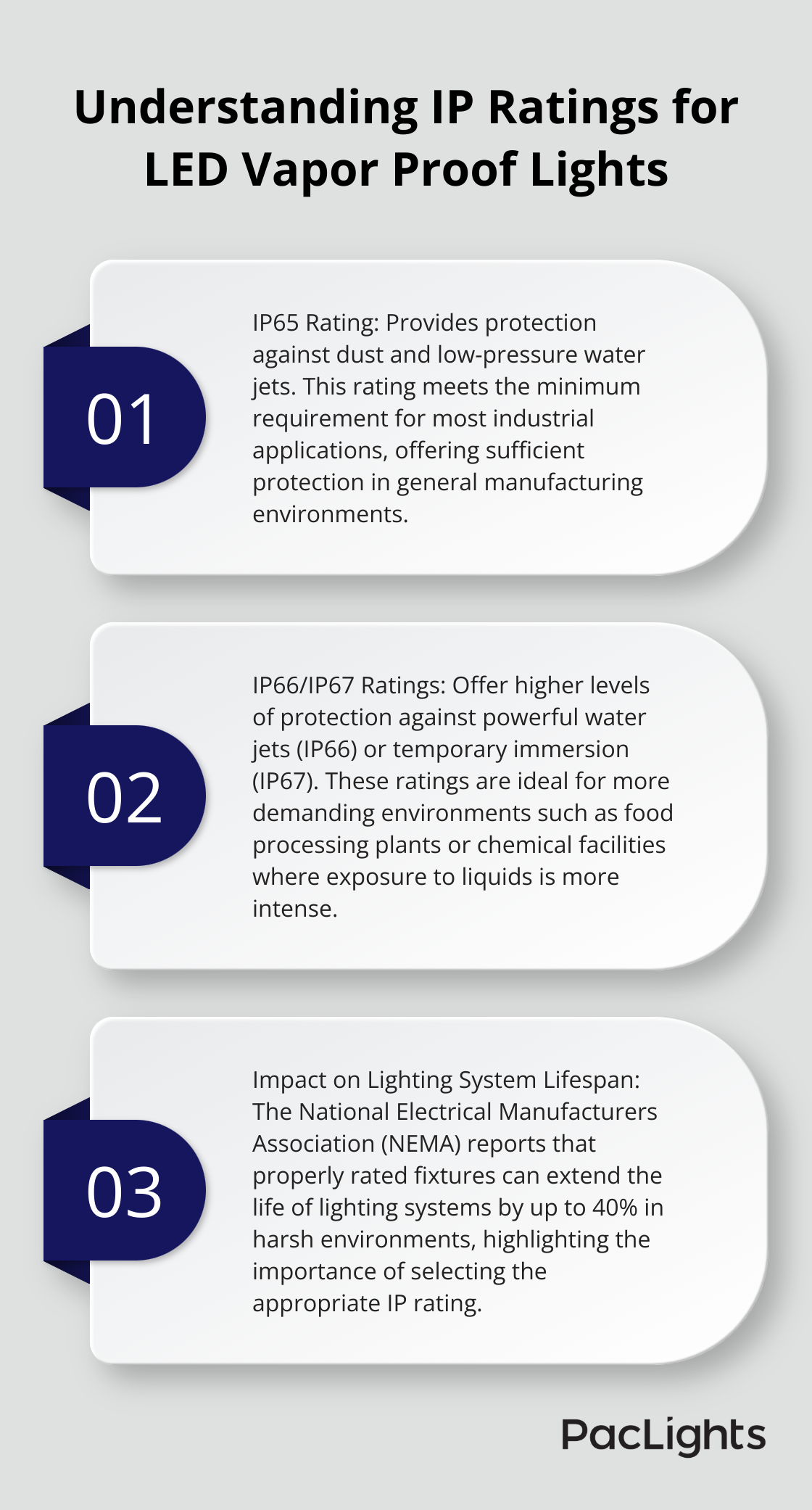
The Ingress Protection (IP) rating indicates the level of protection against solid objects and liquids. For most industrial applications, an IP65 rating meets the minimum requirement. More demanding environments, such as food processing plants or chemical facilities, may require an IP66 or IP67 rating. The National Electrical Manufacturers Association (NEMA) states that properly rated fixtures can extend the life of lighting systems by up to 40% in harsh environments.
Illumination and Energy Efficiency
Lumen output and efficacy (lumens per watt) balance brightness and energy efficiency. The Illuminating Engineering Society (IES) recommends specific light levels for different tasks and environments. General warehouse lighting typically requires 10-20 foot-candles, while detailed assembly work may need 50-100 foot-candles. LED vapor proof lights with high efficacy ratings provide the necessary illumination while minimizing energy consumption.
Color Temperature and Light Quality
Color temperature, measured in Kelvin (K), affects both the appearance and functionality of the illuminated space. Industrial settings often prefer cooler temperatures (4000K-5000K) as they promote alertness and visibility. Areas where color rendering is critical, such as quality control stations, benefit from fixtures with a high Color Rendering Index (CRI) of 80 or above. The U.S. Department of Energy reports that proper color temperature selection can improve worker productivity by up to 8%.
Mounting Options and Installation Flexibility
LED vapor proof lights come in various styles to accommodate different mounting requirements. Surface-mount fixtures work well for direct ceiling installation, while suspended options offer adjustable hanging heights. Some manufacturers provide versatile mounting kits that allow for multiple installation methods, which reduces inventory complexity for facility managers. The Occupational Safety and Health Administration (OSHA) emphasizes the importance of proper fixture mounting to prevent accidents and ensure compliance with workplace safety standards.
Durability and Maintenance Considerations
Industrial environments demand durability. Fixtures constructed with corrosion-resistant materials like stainless steel or high-grade polymers excel in these settings. Some advanced LED vapor proof lights feature modular designs that allow for easy component replacement, which significantly reduces maintenance downtime. The Electric Power Research Institute estimates that facilities can save up to 30% on maintenance costs by selecting easily serviceable lighting fixtures.
Final Thoughts
LED vapor proof lights revolutionize industrial and commercial lighting. These fixtures protect against moisture, dust, and corrosive elements while providing energy-efficient illumination. They offer significant energy savings, reduced maintenance costs, and improved safety in challenging environments.
Factors such as IP ratings, lumen output, color temperature, and mounting options determine optimal performance and longevity of LED vapor proof lights. PacLights specializes in top-quality fixtures that combine durability, energy efficiency, and versatility to meet demanding lighting requirements. We offer solutions that withstand harsh conditions while delivering superior illumination.
Our team of experts will assist you in selecting the perfect LED vapor proof light for your facility. We provide free lighting layout designs and ROI assessments to help you make informed decisions about lighting upgrades. Contact PacLights today to invest in a brighter, safer, and more efficient future for your business.
Disclaimer: PacLights is not responsible for any actions taken based on the suggestions and information provided in this article, and readers should consult local building and electrical codes for proper guidance.