

Flood lights are essential for outdoor illumination, and the 60-watt flood light is a popular choice for many applications. At PacLights, we often get questions about these versatile lighting solutions.
In this Q&A, we’ll explore the features, benefits, and best practices for using 60-watt flood lights. We’ll also compare them to other options and provide tips for installation and maintenance.
What Is a 60 Watt Flood Light?
Powerful Outdoor Illumination
A 60 watt flood light is a robust, wide-beam lighting fixture that illuminates large outdoor areas. These lights offer versatility and efficiency, especially when they use LED technology.
Energy-Efficient Lighting Solution
Modern 60 watt LED flood lights produce approximately 800 lumens of light, which equals the output of a 300 watt incandescent bulb. This results in an 80% reduction in energy consumption while maintaining the same brightness level. The U.S. Department of Energy confirms that LED lighting can cut energy use by 75-80% compared to incandescent lighting, making 60 watt LED flood lights an excellent choice for energy-conscious consumers.

Long-Lasting Performance
These lights boast a lifespan of 25,000 to 50,000 hours, which significantly surpasses the 1,000 to 2,000 hours of traditional incandescent bulbs. This extended lifespan results in fewer replacements and lower maintenance costs over time. Many 60 watt flood lights come with IP65 or higher ratings (protection against dust and water ingress), ensuring their durability in outdoor conditions.
Wide Range of Applications
60 watt flood lights serve various purposes in both residential and commercial settings. They enhance home security, light up driveways, patios, and gardens. In commercial applications, these lights often illuminate parking lots, warehouses, and sports facilities.
The Illuminating Engineering Society recommends a minimum illumination of 1 foot-candle (10.76 lux) for basic parking lot safety, which 60 watt LED flood lights easily achieve. In warehouses, proper lighting can reduce accidents by up to 60% (according to the National Safety Council), highlighting the importance of these flood lights for workplace safety.
For landscape lighting, experts suggest using one watt of lighting for every square foot of garden space. A 60 watt LED flood light that produces 8,000 lumens can effectively illuminate up to 800 square feet, making it suitable for most residential outdoor spaces.
Customizable Features
Many 60 watt flood lights offer adjustable color temperatures, ranging from warm white (2700K-3000K) for residential areas to cool white (5000K-6500K) for security or industrial settings. This flexibility allows users to customize their lighting to suit specific needs or preferences.
As we explore the key features and specifications of 60 watt flood lights, it becomes clear why they are a popular choice for various lighting needs.
How Do 60 Watt Flood Lights Compare to Other Options?
LED vs Traditional Bulb Types
60 watt LED flood lights outperform their traditional counterparts in several key areas. Incandescent flood lights, once the standard, are rapidly becoming obsolete due to their inefficiency. A 60 watt incandescent bulb produces about 800 lumens of light, while an LED equivalent achieves the same brightness using only 8-10 watts of power.
Halogen flood lights offer slightly better efficiency than incandescents but still fall short of LEDs. A 60 watt halogen flood light typically produces around 900 lumens, which is marginally brighter than its incandescent counterpart but consumes the same amount of energy.
Compact Fluorescent Lamps (CFLs) were once considered a more efficient alternative, but they have drawbacks. CFLs contain mercury, which complicates disposal, and they often require a warm-up period before reaching full brightness. LED flood lights, in contrast, turn on instantly and contain no hazardous materials.
Energy Efficiency and Cost Savings
The energy efficiency of 60 watt LED flood lights directly translates into cost savings. The U.S. Department of Energy reports that LED lighting can reduce energy consumption by up to 80% compared to incandescent lighting. This means that over the course of a year, a single 60 watt LED flood light could save you around $30 on your energy bill compared to its incandescent equivalent.
Let’s break down the numbers:
- A 60 watt incandescent flood light used for 5 hours daily costs about $13.14 per year to operate (at $0.12 per kWh).
- A 10 watt LED flood light (60 watt equivalent) used for the same duration costs only $2.19 per year.
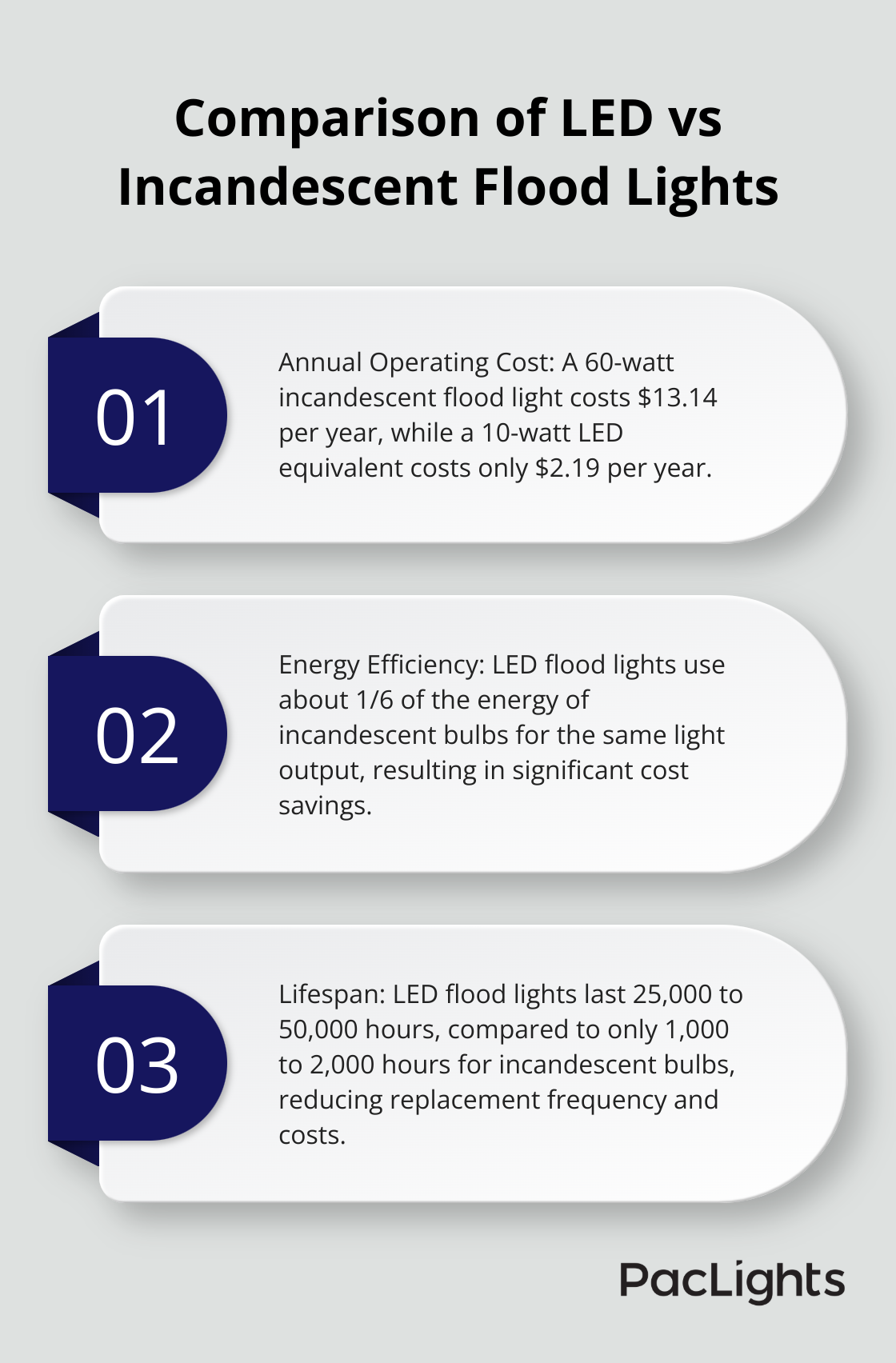
The longer lifespan of LED flood lights (25,000 to 50,000 hours compared to 1,000 to 2,000 hours for incandescents) further increases these savings. You’ll replace an LED flood light far less frequently, reducing both replacement costs and maintenance time.
Light Output and Coverage Area
Light output and coverage area are equally important considerations. A 60 watt LED flood light typically produces around 800 lumens, which illuminates an area of approximately 200 square feet. This makes them ideal for lighting up driveways, patios, and small yards.
Larger areas might require multiple fixtures or higher wattage options. For instance, a 100 watt LED flood light can produce up to 1,600 lumens, covering an area of about 400 square feet. It’s essential to consider the specific needs of your space when choosing between different wattages and lumen outputs.
Color Temperature and Perceived Brightness
The color temperature of the light plays a role in perceived brightness and coverage. Cooler color temperatures (4000K and above) can improve visibility by up to 40% compared to warmer tones, making them excellent choices for security lighting or areas where task visibility is important.
Selecting the Right Flood Light
When selecting flood lights, consider factors like energy efficiency, cost savings, and light output. 60 watt LED flood lights offer a compelling combination of these features, making them an excellent choice for most outdoor lighting needs. However, always assess your specific requirements to ensure you’re choosing the right solution for your space. In the next section, we’ll explore installation and maintenance tips to help you get the most out of your flood lights.
How to Install and Maintain 60 Watt Flood Lights
Optimal Placement for Maximum Illumination
The placement of your flood lights impacts their effectiveness significantly. For residential use, mount lights at least 9 feet high and angle them 22 degrees downward. This configuration typically illuminates an area up to 35 feet away. For larger areas, increase the mounting height proportionally.
When you light driveways or pathways, position lights on both sides for even illumination. For security purposes, place lights near entry points and dark corners of your property. Overlapping light coverage eliminates potential hiding spots for intruders.

Weather-Resistant Installation Techniques
Outdoor flood lights must withstand various weather conditions. Always choose fixtures with an IP65 rating or higher for adequate protection against dust and water. The National Electrical Manufacturers Association recommends this minimum rating for long-term reliability in outdoor settings.
When you install, use silicone caulk around the base of the fixture to create a watertight seal. This simple step prevents water from seeping into the electrical components. For added protection, install a drip loop in the wiring (a downward curve in the wire before it enters the fixture), which prevents water from following the wire into the electrical box.
Maintenance for Longevity and Performance
LED flood lights require less maintenance than traditional bulbs, but regular upkeep ensures optimal performance. Clean the fixtures at least twice a year to prevent dirt and debris from reducing light output. Use a soft, damp cloth and avoid harsh chemicals that could damage the lens or housing.
Check all connections annually, and tighten any loose screws or wire nuts. This prevents water ingress and maintains the integrity of the electrical system. If you notice any signs of corrosion, address them immediately to prevent further damage.
Despite their long lifespan, LED flood lights eventually need replacement. Keep track of installation dates and monitor for any decrease in brightness or change in color temperature (typically after 5-10 years of regular use). These are signs that it’s time to consider replacement.
Professional Installation Considerations
While many homeowners can install flood lights themselves, complex setups or high-voltage wiring may require professional assistance. A licensed electrician can ensure proper installation, adherence to local codes, and optimal performance of your lighting system.
Professionals can also help with advanced features like motion sensors or smart home integration (which can further enhance energy efficiency and security). They can provide valuable advice on light placement and coverage for your specific property layout.
Final Thoughts
60 watt flood lights combine energy efficiency, longevity, and versatility for outdoor illumination. These fixtures provide bright, reliable lighting while consuming less energy than traditional alternatives. LED options excel in efficiency and lifespan, making them a cost-effective choice for long-term use.
Proper selection and installation maximize the benefits of flood lights, ensuring optimal coverage and performance. Factors to consider include energy consumption, light output, color temperature, and durability. Placement and installation techniques significantly impact the effectiveness of your lighting system.
PacLights offers a range of lighting solutions, including high-quality flood lights for diverse needs. Our products provide energy-efficient illumination, potentially reducing costs and environmental impact. We offer free lighting layout designs and ROI assessments to help you make informed decisions for your unique lighting project.
Disclaimer: PacLights is not responsible for any actions taken based on the suggestions and information provided in this article, and readers should consult local building and electrical codes for proper guidance.