

Building lights decoration transforms ordinary structures into architectural masterpieces that command attention day and night. The right lighting design can increase property value by up to 15% while reducing energy costs through modern LED technology.
We at PacLights have helped thousands of property owners create stunning illuminated facades that stand out in their neighborhoods. This guide covers everything from selecting the perfect lighting types to professional installation techniques.
Which Building Light Types Work Best
Facade lights transform building surfaces into dynamic canvases that showcase architectural details after dark. Linear LED systems work exceptionally well when you highlight columns, cornices, and window frames, with color temperatures between 2700K and 4000K that provide the most appealing visual impact. The Chungha Building in Seoul demonstrates how programmable LED strips create vibrant color variations that change throughout the evening, which turns a standard commercial structure into a neighborhood landmark.
Wall-Washing Techniques for Maximum Impact
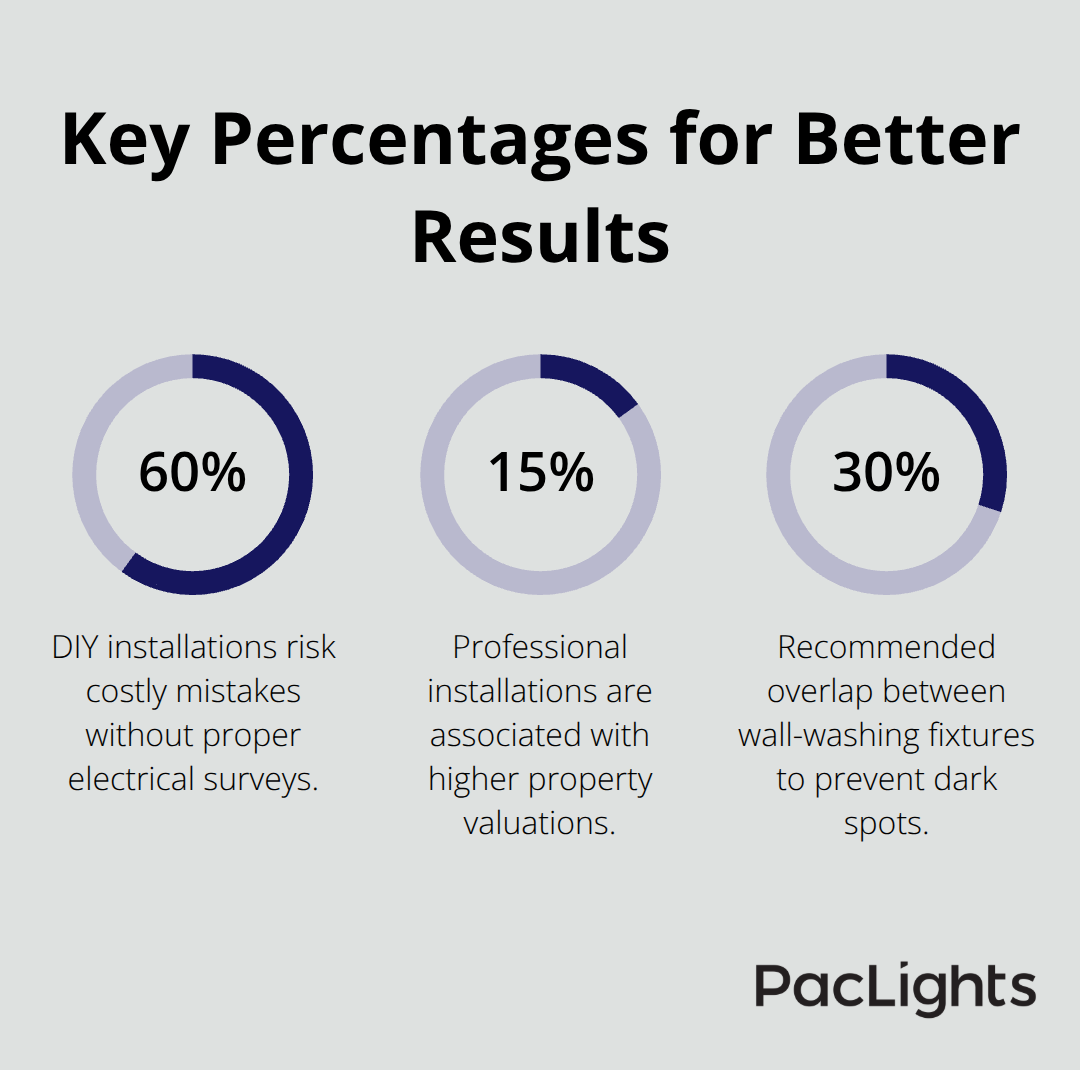
Flood lights positioned 8-12 feet from building surfaces create even illumination that eliminates harsh shadows and highlights texture variations in brick, stone, or concrete. RGB LED flood lights offer over 16 million color combinations, which allows property owners to adapt their building appearance for holidays, events, or seasonal themes. The key lies in proper spacing – fixtures should overlap their light patterns by 30% to avoid dark spots between illuminated areas.
Strip Lights for Clean Architectural Lines
LED strip lights excel when they outline building edges, rooflines, and geometric features with precise definition. Weather-resistant strips rated IP65 or higher withstand rain, snow, and temperature fluctuations while they maintain consistent output for over 50,000 hours. Installation requires aluminum channels with proper heat dissipation, as overheating reduces LED lifespan by up to 40%. Smart controllers enable schedules that automatically adjust brightness based on ambient light levels (which reduces energy consumption during peak evening hours when full intensity isn’t necessary).
Color Temperature Selection for Different Effects
Warm white LEDs (2700K-3000K) create inviting atmospheres that complement residential and hospitality buildings, while cool white options (4000K-5000K) enhance modern commercial facades with crisp, professional appearances. Color-changing systems allow buildings to participate in community events or seasonal celebrations, though they require more complex control systems and higher initial investment.
Your choice of lighting type directly impacts both visual appeal and long-term maintenance costs, which makes proper planning essential before you move forward with installation requirements and technical considerations.
How Do You Plan Building Light Decoration Projects
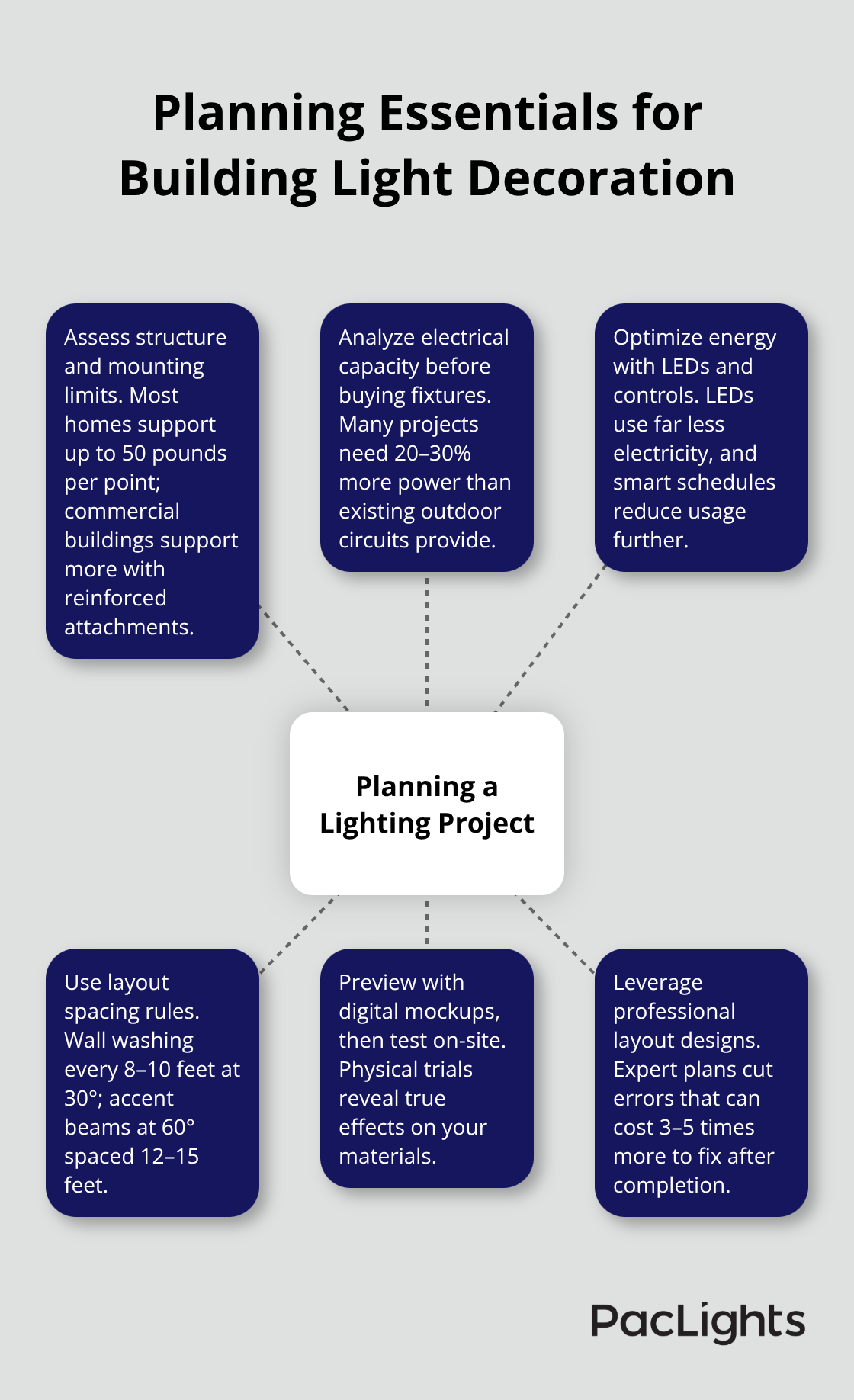
Structural assessment determines the success of your project before you purchase a single fixture. Load-bearing calculations show that most residential buildings support up to 50 pounds per mounting point on exterior walls, while commercial structures handle significantly more weight through reinforced attachment systems. Electrical capacity analysis reveals whether your current service panel accommodates additional loads – most decoration projects require 20-30% more power than existing outdoor circuits provide.
Power Requirements Drive Design Decisions
LED systems consume 75-90% less electricity than traditional options, which means a 1000-square-foot facade project typically draws only 800-1200 watts total power. Smart controllers reduce consumption further through schedules that automatically adjust brightness based on time and ambient conditions. Professional electrical surveys identify existing circuit capacity and determine whether service upgrades become necessary (installations that exceed 80% of panel capacity require additional circuits or electrical service increases that add $2000-5000 to project costs).
Design Layout Determines Visual Impact
Fixture placement calculations prevent uneven illumination that creates dark zones between light sources. Wall washing requires fixtures positioned every 8-10 feet with 30-degree beam angles, while accent lighting works best with 60-degree beams spaced 12-15 feet apart. Color temperature consistency across all fixtures maintains professional appearance – mixed 3000K and 4000K sources create noticeable visual inconsistencies that diminish overall impact.
Digital Planning Tools and Physical Testing
Digital mockup software helps visualize final results before installation, though physical testing with temporary fixtures provides the most accurate preview of actual effects on your specific materials and architectural features. Professional lighting layout designs can optimize fixture placement and reduce installation errors (which often cost 3-5 times more to correct after completion). Once you complete your design plan and power calculations, the next step involves technical installation considerations that determine project safety and long-term performance.
What Installation Method Should You Choose
Professional installation costs 40-60% more upfront but prevents expensive mistakes that plague DIY projects. Electrical permits alone cost $150-500 depending on local codes, while professional contractors handle permits, inspections, and warranty coverage that protects your investment. DIY installations void manufacturer warranties on fixtures that cost $200-2000 each, which means simple wire errors can destroy expensive equipment without recourse.
Electrical Safety Requirements Cannot Be Compromised
Ground fault circuit interrupters become mandatory for all outdoor circuits according to National Electrical Code standards updated in 2020. GFCI breakers cost $45-80 each but prevent electrocution risks that kill 400+ Americans annually from electrical accidents. Proper wire gauge calculations prevent overheats – 12 AWG wire handles 20-amp circuits while 14 AWG works only for 15-amp loads.
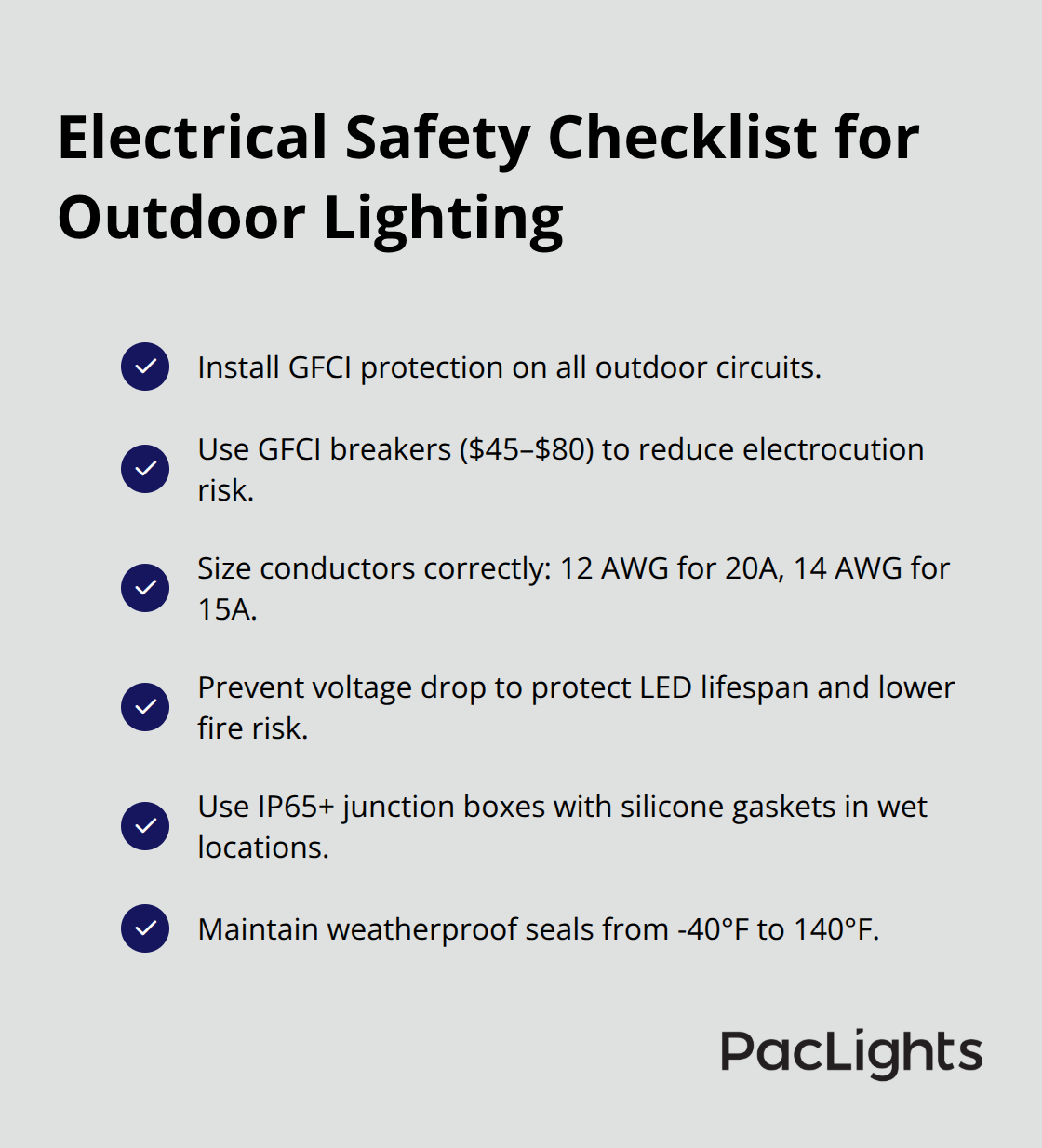
Undersized wire causes voltage drops that reduce LED lifespan by 25-40% and creates fire hazards that insurance companies may not cover.
Junction boxes must carry IP65 or higher ratings for wet locations, with silicone gaskets that maintain weatherproof seals under temperature cycles from -40°F to 140°F.
Weather Resistance Determines Long-Term Performance
IP ratings indicate water and dust protection levels – IP65 fixtures withstand rain and snow while IP67 models survive temporary submersion during floods. Aluminum housings with powder coats resist corrosion 5-7 times longer than steel alternatives in coastal environments with salt spray exposure.
Thermal cycle tests show quality LED drivers maintain output within 5% over 50,000 hours, while cheap alternatives fail after 15,000-20,000 hours. Surge protectors rated for 20kA or higher protect against lightning strikes that cause $1.2 billion in property damage annually.
Professional Installation Benefits
Professional installations include whole-system surge protection that costs $300-800 but prevents equipment replacement costs that exceed $5000-15000 for comprehensive systems. Licensed electricians carry liability insurance that covers property damage from installation errors (which DIY projects cannot provide). Code compliance inspections verify safe installation practices that protect both property value and occupant safety.
Final Thoughts
Professional building lights decoration demands systematic assessment that begins with structural analysis and power calculations. Electrical surveys prevent costly mistakes that affect 60% of DIY installations, while proper fixture selection based on IP ratings and thermal performance delivers decades of reliable operation. Quality LED systems provide measurable returns through reduced energy consumption and increased property values.
Buildings with professional installations achieve 15% higher valuations while they consume 75-90% less electricity than traditional alternatives. Weather-resistant fixtures rated IP65 or higher maintain consistent performance through temperature cycles and moisture exposure that destroy inferior products within 2-3 years. Complex projects benefit from professional installation that includes permits, inspections, and warranty coverage.
Licensed contractors carry liability insurance that protects against installation errors (which cost $5000-15000 in equipment replacement). We at PacLights provide comprehensive solutions with free layout designs and ROI assessments that optimize both visual impact and long-term performance. Professional guidance transforms ordinary structures into architectural landmarks that command attention throughout their neighborhoods.
Disclaimer: PacLights is not responsible for any actions taken based on the suggestions and information provided in this article, and readers should consult local building and electrical codes for proper guidance.