

Choosing the right wholesale LED high bay lighting can significantly impact your space’s efficiency and ambiance. At PacLights, we understand the importance of selecting the perfect lighting solution for your commercial or industrial needs.
This guide will walk you through the essential factors to consider when making your decision, from lumen output to fixture types. We’ll help you navigate the world of LED high bay lighting to find the best fit for your unique requirements.
What Are LED High Bay Lights?
The Basics of LED High Bay Lighting
LED high bay lights are powerful, energy-efficient lighting solutions designed for spaces with high ceilings (typically 20 feet or higher). These fixtures illuminate large areas like warehouses, factories, and gymnasiums effectively.
Components of LED High Bay Lights
LED high bay lights consist of three main parts:
- High-output LED chips
- A driver to regulate power
- A heat sink for thermal management
The fixture’s design often includes a reflector or lens to direct light downward, which ensures optimal coverage of the space below.
LED High Bays vs. Traditional Lighting
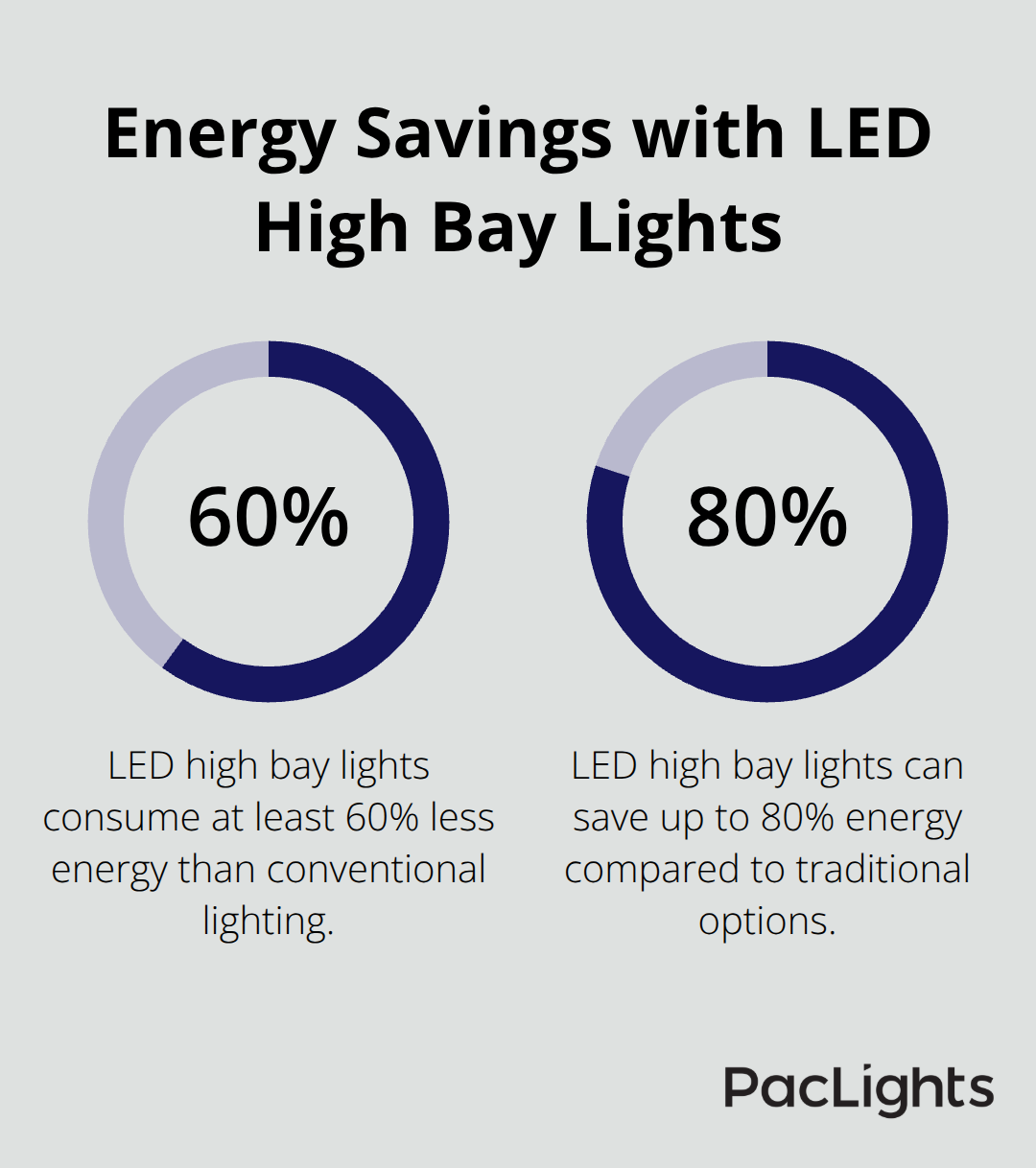
LED high bay lights offer significant advantages over traditional options like metal halide or fluorescent fixtures. The U.S. Department of Energy reports that LEDs consume 60-80% less energy than conventional counterparts, which translates to substantial cost savings on electricity bills.
Longevity sets LEDs apart. While metal halide lamps typically last around 10,000 hours, quality LED high bays can function for 50,000 hours or more. This extended lifespan reduces maintenance costs and downtime associated with frequent bulb replacements.
Ideal Applications for LED High Bays
LED high bay lights excel in various commercial and industrial settings:
- Warehouses: They provide uniform illumination crucial for inventory management and worker safety.
- Manufacturing facilities: Their high color rendering index (CRI) allows for accurate color perception during quality control processes.
- Retail environments: LED high bays create inviting, well-lit spaces that showcase products effectively, especially in stores with high shelving.
- Sports facilities: The instant-on capability of LEDs eliminates warm-up times associated with traditional lighting systems.
- Cold storage facilities: Unlike fluorescent lights that struggle in low temperatures, LED high bays maintain their efficiency and output in cold environments.
Customizing Light for Your Space
When you select LED high bay lights, consider the specific requirements of your space. A warehouse might need cooler color temperatures (5000K-6500K) to enhance alertness, while a retail space might benefit from warmer tones (3000K-4000K) for a more inviting atmosphere.
The next chapter will explore the key factors to consider when choosing LED high bay lights, including lumen output, color temperature, and beam angle. These elements will help you find the perfect lighting solution for your unique facility needs.
Key Factors in LED High Bay Selection
Lumen Output and Efficiency
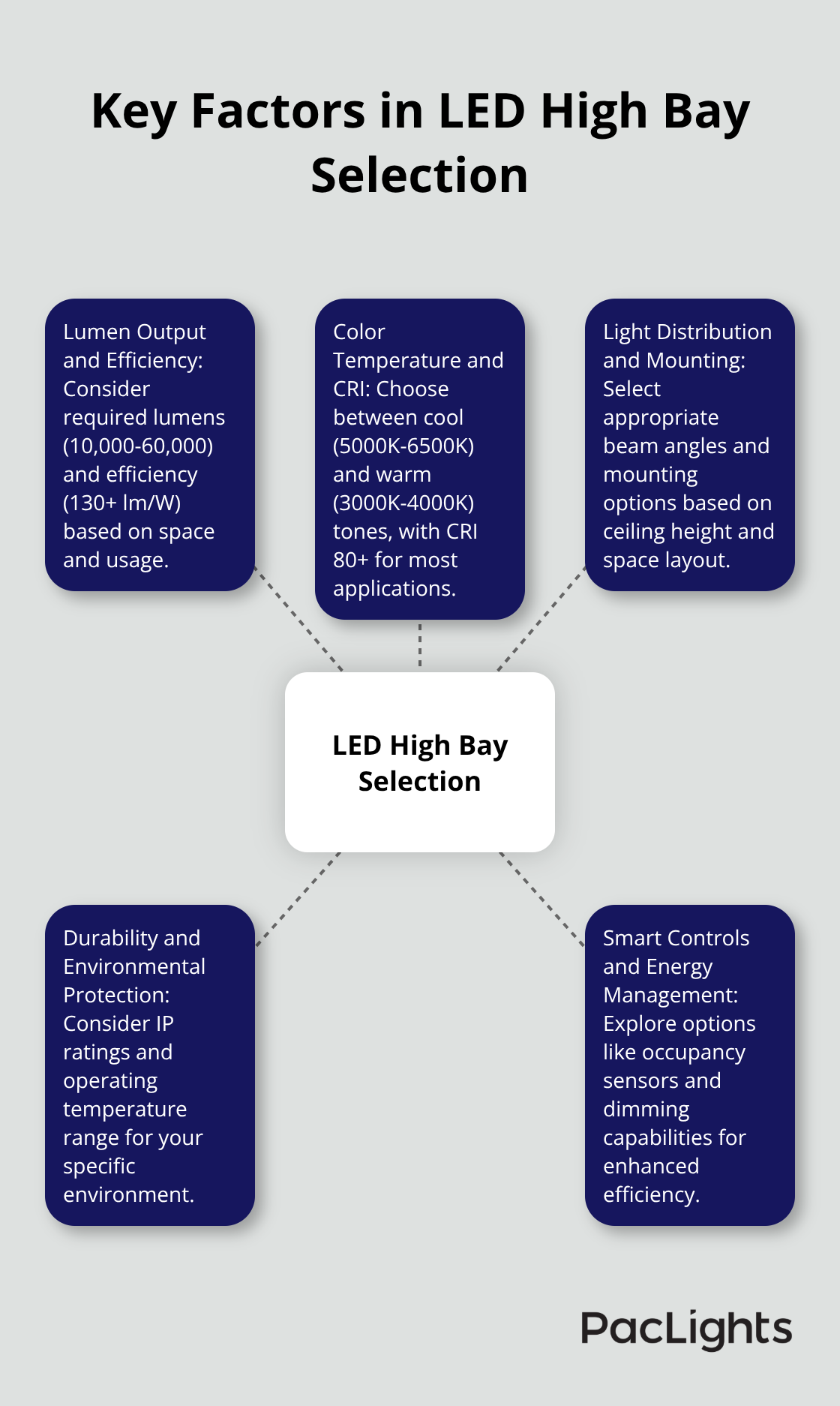
Lumen output measures the total light emitted by a fixture. High bay applications typically require 10,000 to 60,000 lumens, based on ceiling height and space usage. Efficiency, measured in lumens per watt (lm/W), is equally important. Try to find fixtures that offer at least 130 lm/W, with some high-performance options reaching up to 160 lm/W or more.
To calculate your space’s lighting needs, multiply its square footage by the recommended foot-candles for your application. For example, a 5,000 sq ft warehouse requiring 30 foot-candles would need 150,000 lumens total.
Color Temperature and CRI
Color temperature affects the perceived warmth or coolness of light. Industrial settings benefit from cooler temperatures (5000K-6500K) to enhance alertness and visibility. Retail or office spaces often prefer warmer tones (3000K-4000K) for a more inviting atmosphere.
Color Rendering Index (CRI) measures how accurately a light source reveals colors compared to natural light. For most applications, a CRI of 80 or above is sufficient. In settings where color accuracy is critical (such as quality control areas or retail displays), opt for fixtures with a CRI of 90 or higher.
Light Distribution and Mounting Options
The beam angle of LED high bay lights determines light distribution across your space. Wide beam angles (120 degrees) work well for open areas, while narrower beams focus light on specific zones. Consider your ceiling height and space layout when choosing beam angles.
Mounting options include chain, pendant, and surface mounts. Your choice depends on your ceiling structure and desired aesthetic. Pendant mounts allow for precise height adjustments, which can be crucial in spaces with varying ceiling heights.
Durability and Environmental Protection
The IP (Ingress Protection) rating indicates a fixture’s resistance to dust and moisture. For most indoor applications, an IP65 rating suffices. However, in harsh environments like food processing plants or outdoor areas, consider fixtures with higher ratings like IP66 or IP67.
The operating temperature range is also important, especially if your facility experiences extreme temperatures. Quality LED high bays should function effectively in temperatures ranging from -40°F to 122°F (-40°C to 50°C).
Smart Controls and Energy Management
Smart controls can significantly enhance your lighting system’s efficiency. Occupancy sensors can reduce energy consumption by up to 30% in warehouses. Daylight harvesting systems adjust light output based on available natural light, further optimizing energy use.
Look for fixtures that are compatible with 0-10V dimming or more advanced protocols like DALI or DMX for granular control. Some manufacturers offer integrated wireless controls, allowing for easy setup and management of lighting zones without extensive rewiring.
The next chapter will explore the various types of LED high bay fixtures available, helping you understand which style best suits your specific needs and space requirements.
Which LED High Bay Fixture Is Right for You?
UFO High Bays
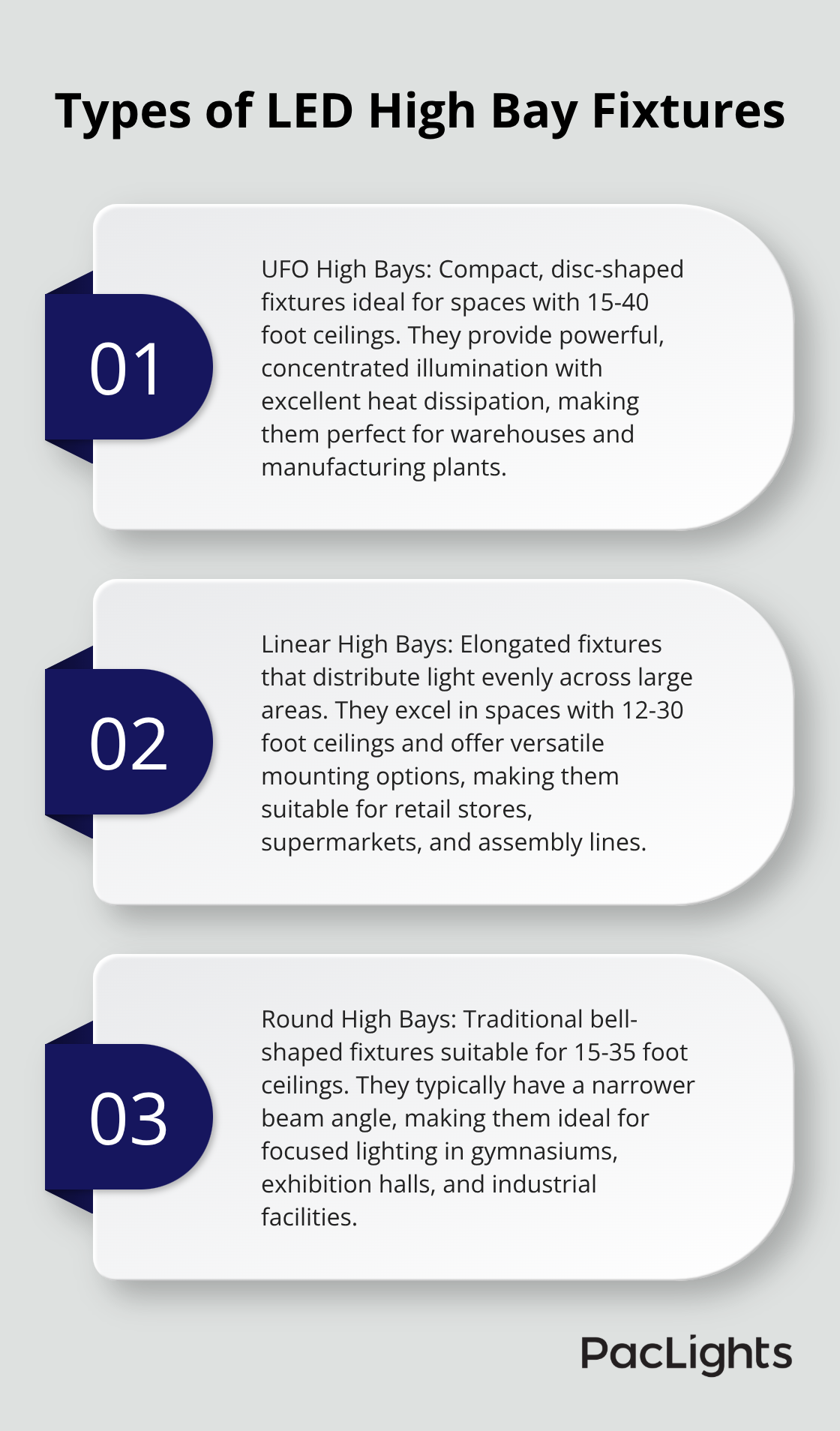
UFO (Unidentified Flying Object) high bays are compact, disc-shaped fixtures that provide powerful, concentrated illumination. Their design allows for excellent heat dissipation, which maintains LED longevity. UFO high bays work best in spaces with ceiling heights of 15 to 40 feet, such as warehouses, manufacturing plants, and sports facilities.
These fixtures typically offer a beam angle of 120 degrees, which provides wide, uniform coverage. A 150W UFO high bay can replace a 400W metal halide fixture while delivering superior light quality and energy savings.
Linear High Bays
Linear high bays are elongated fixtures that distribute light evenly across large areas. They excel in spaces with lower ceilings (12 to 30 feet) or where a sleek, modern aesthetic is desired. Retail stores, supermarkets, and assembly lines often benefit from linear high bays.
A key advantage of linear high bays is their versatility in mounting options. You can suspend them, surface-mount them, or integrate them into ceiling grids. This flexibility makes them adaptable to various architectural designs and retrofit projects.
Round High Bays
Round high bays (also known as bell-shaped high bays) offer a traditional look with modern LED efficiency. These fixtures suit ceiling heights of 15 to 35 feet and are often used in gymnasiums, exhibition halls, and industrial facilities.
Round high bays typically have a narrower beam angle compared to UFO fixtures, which makes them ideal for spaces that require more focused lighting. A 200W round high bay with a 90-degree beam angle can effectively illuminate specific work areas in a factory setting.
Choosing the Right Fixture
When you select between these fixture types, consider your space’s specific requirements. UFO high bays excel in high-ceiling environments with widespread lighting needs. Linear high bays create uniform illumination in elongated spaces. Round high bays offer a balance of traditional aesthetics and modern performance.
The right choice depends on factors like ceiling height, space layout, and lighting goals. Try to assess your facility’s unique needs (including energy efficiency targets and maintenance considerations) before making a decision.
Final Thoughts
Selecting the right wholesale LED high bay lighting involves multiple factors (lumen output, color temperature, beam angle, and durability). These elements create an optimal lighting environment that enhances productivity, safety, and energy efficiency in your facility. You must understand how these factors apply to your specific needs to make an informed decision.
PacLights offers a wide range of high-quality LED lighting solutions for diverse industrial and commercial needs. We provide expertise in energy-efficient lighting to help reduce costs and carbon footprints. Our customizable options meet unique requirements for various spaces, from warehouses to retail environments.
Professional installation and maintenance maximize the performance and longevity of your LED high bay lighting system. Proper installation ensures optimal light distribution and energy efficiency. Regular maintenance keeps your fixtures operating at peak performance and maintains consistent illumination quality over time.
Disclaimer: PacLights is not responsible for any actions taken based on the suggestions and information provided in this article, and readers should consult local building and electrical codes for proper guidance.