

Server room technicians waste valuable time squinting at equipment labels in poorly lit racks. Poor visibility leads to misidentification errors and extended maintenance windows.
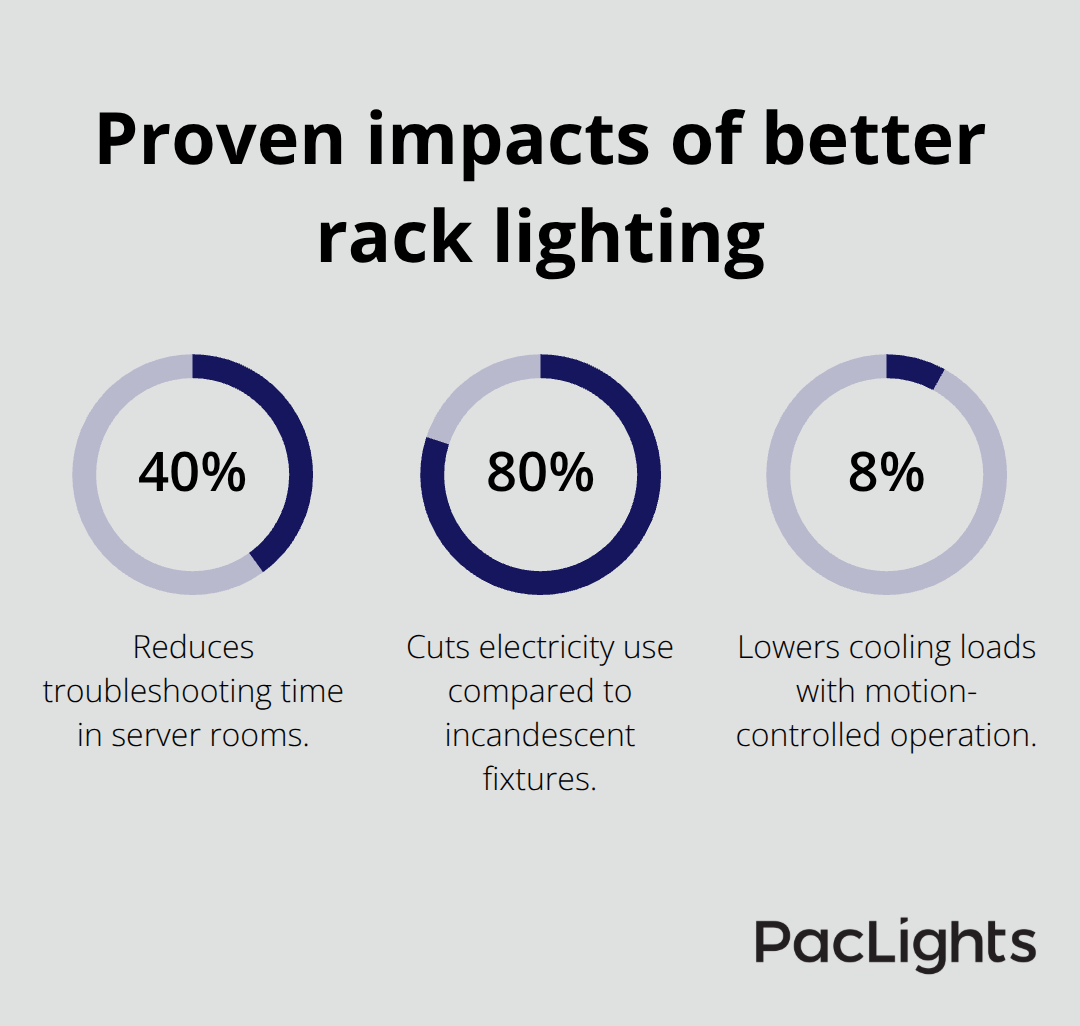
We at PacLights understand that proper rack lighting transforms server room operations. The right lighting system reduces troubleshooting time by up to 40% while preventing costly equipment mistakes.
Understanding Rack Lighting Requirements
Server rooms demand precise lighting calculations that general facility lighting cannot meet. Standard overhead lighting creates shadows between rack rows and fails to illuminate equipment faces where technicians need visibility most. ASHRAE standards recommend minimum 200 lux vertical illuminance on rack faces and 500 lux on equipment tops, but these numbers only tell part of the story.
Rack Layout Drives Lighting Strategy
Dense rack configurations with 42U heights require different lighting approaches than sparse layouts with 24U racks. Narrow aisles between equipment create lighting challenges where traditional ceiling fixtures cannot reach. Cold aisle containment systems block overhead light penetration, which makes rack-mounted solutions necessary.
Server rooms with hot aisle/cold aisle configurations need asymmetric lighting that directs illumination downward and inward to minimize light spill between rows. Motion-controlled rack lighting systems can reduce cooling loads by 8%, which saves approximately $11,000 annually in larger facilities according to deployment data from major data centers.
Power Requirements Shape System Selection
LED rack lighting consumes 80% less electricity than incandescent alternatives while it produces minimal heat that affects HVAC systems. PoE lighting systems simplify installation because they share infrastructure with existing Cat-6 networking cables, which eliminates separate power runs. Each rack light typically draws 15-30 watts compared to 100+ watts for traditional fixtures.
Heat Output Affects HVAC Performance
Heat output matters because every watt of lighting heat requires additional cooling capacity. Color temperature selection affects technician performance, with 4000K LED fixtures that enhance contrast and reduce eye strain during extended maintenance tasks (compared to warmer or cooler alternatives).
Emergency backup lighting now requires compliance with ASHRAE and TIA-942 standards, which makes battery-backed or inverter-equipped fixtures mandatory for critical operations. These requirements directly influence the types of rack lighting solutions that meet both operational needs and regulatory standards.
Types of Rack Lighting Solutions
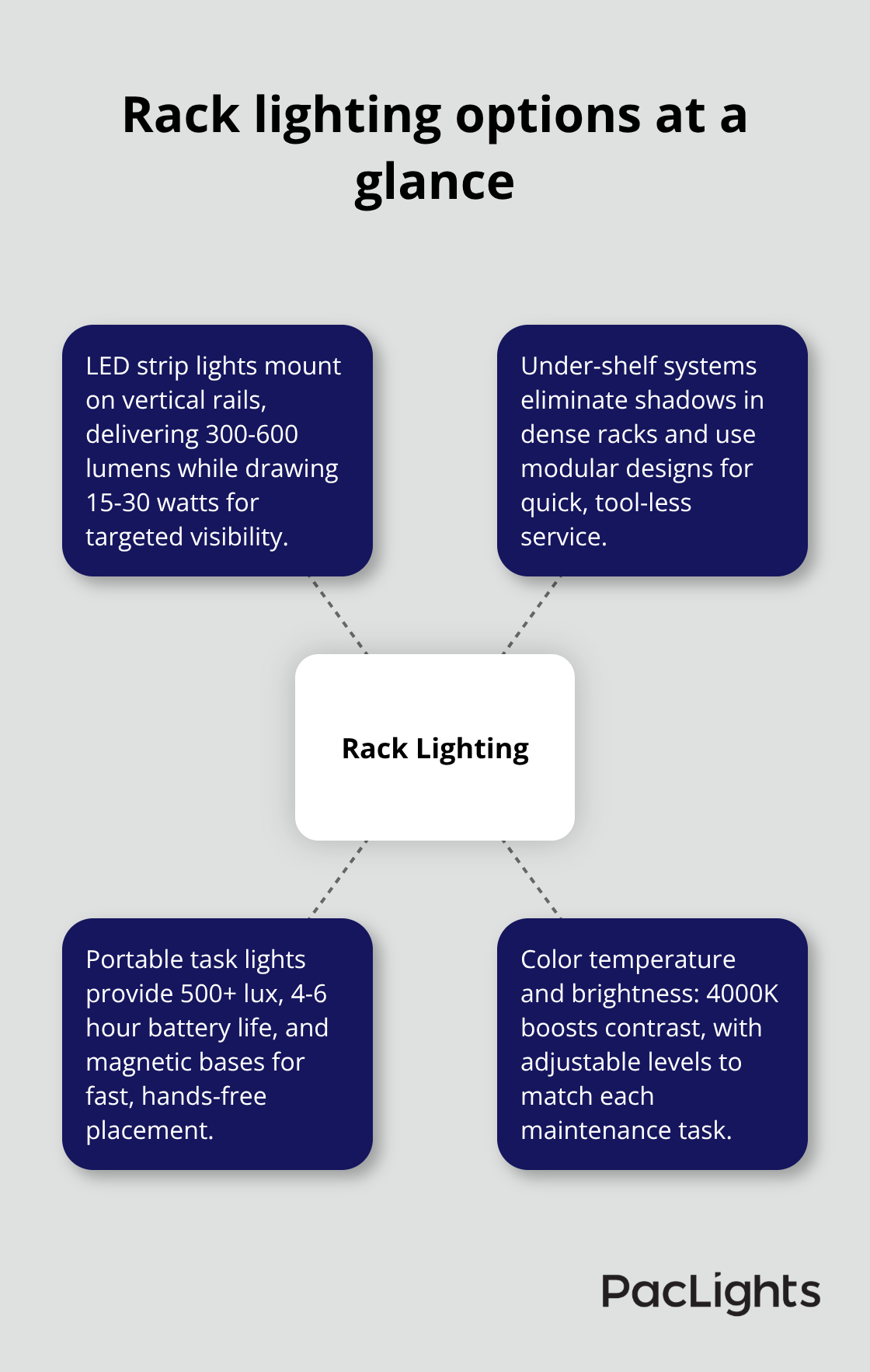
Direct-mount LED strip lights dominate modern server environments because they attach directly to vertical rack rails and provide concentrated illumination exactly where technicians need it. These 1U fixtures typically consume 15-30 watts while they deliver 300-600 lumens of targeted light. The 1U LED Multicolor + White Rack Light retails for approximately $199.56, which makes it cost-effective for dense server deployments. Multi-color options enhance visual identification of different equipment types, which reduces troubleshooting time when technicians quickly distinguish between servers, switches, and storage units.
Under-Shelf Systems for Dense Configurations
Under-shelf systems excel in high-density racks where equipment fills every available unit. These fixtures mount beneath server shelves and direct light downward onto equipment below, which eliminates shadows that standard overhead lighting creates. Modular designs allow tool-less replacement and maintenance, which reduces service interruptions. PowerCON connectors provide secure power connections that withstand vibration from server fans. Aluminum construction handles temperature fluctuations better than plastic alternatives (extending fixture lifespan to 25,000-50,000 hours of operation).
Portable Task Solutions for Maintenance
Portable LED work lights serve maintenance scenarios where permanent fixtures cannot reach. Battery-powered units eliminate tripping hazards from extension cords while they provide 500+ lux illumination for detailed component work. Emergency situations require immediate response, which makes portable units with 4-6 hour battery life indispensable for power outage scenarios. Magnetic bases allow quick attachment to rack frames and free technician hands for complex procedures. These units typically cost $150-300 but pay for themselves when they reduce maintenance errors that can cause equipment downtime worth thousands of dollars per hour.
Color Temperature and Brightness Selection
Color temperature affects technician performance significantly. 4000K LED fixtures enhance contrast and reduce fatigue during extended maintenance tasks compared to warmer or cooler alternatives. Brightness levels between 300-600 lumens provide adequate visibility without creating glare that interferes with adjacent equipment. Adjustable brightness features allow technicians to customize illumination based on specific tasks (from routine inspections to detailed component replacement).
The selection process requires careful evaluation of specific performance characteristics that determine long-term effectiveness and operational efficiency.
Key Selection Criteria for Rack Lighting
Brightness specifications require precise calculations beyond standard recommendations. Target 400-500 lumens per fixture for server rack faces, which provides adequate visibility without glare that interferes with adjacent equipment. Color temperature at 4000K enhances contrast and reduces eye strain during extended maintenance tasks compared to warmer 3000K or cooler 6500K alternatives. Adjustable brightness features allow customization from 10% to 100% output based on specific tasks, with full brightness for component replacement and reduced levels for routine monitoring. Most quality LED rack fixtures deliver 300-600 lumens while they consume only 15-30 watts (representing 80% energy savings over traditional incandescent alternatives).
Installation Methods That Deliver Results
Tool-less mounting systems reduce installation time by 60% compared to fixtures that require screws or brackets. PowerCON connectors provide secure connections that withstand server fan vibration better than standard plugs. Modular designs allow component replacement without removal of entire fixtures, which minimizes service interruptions.
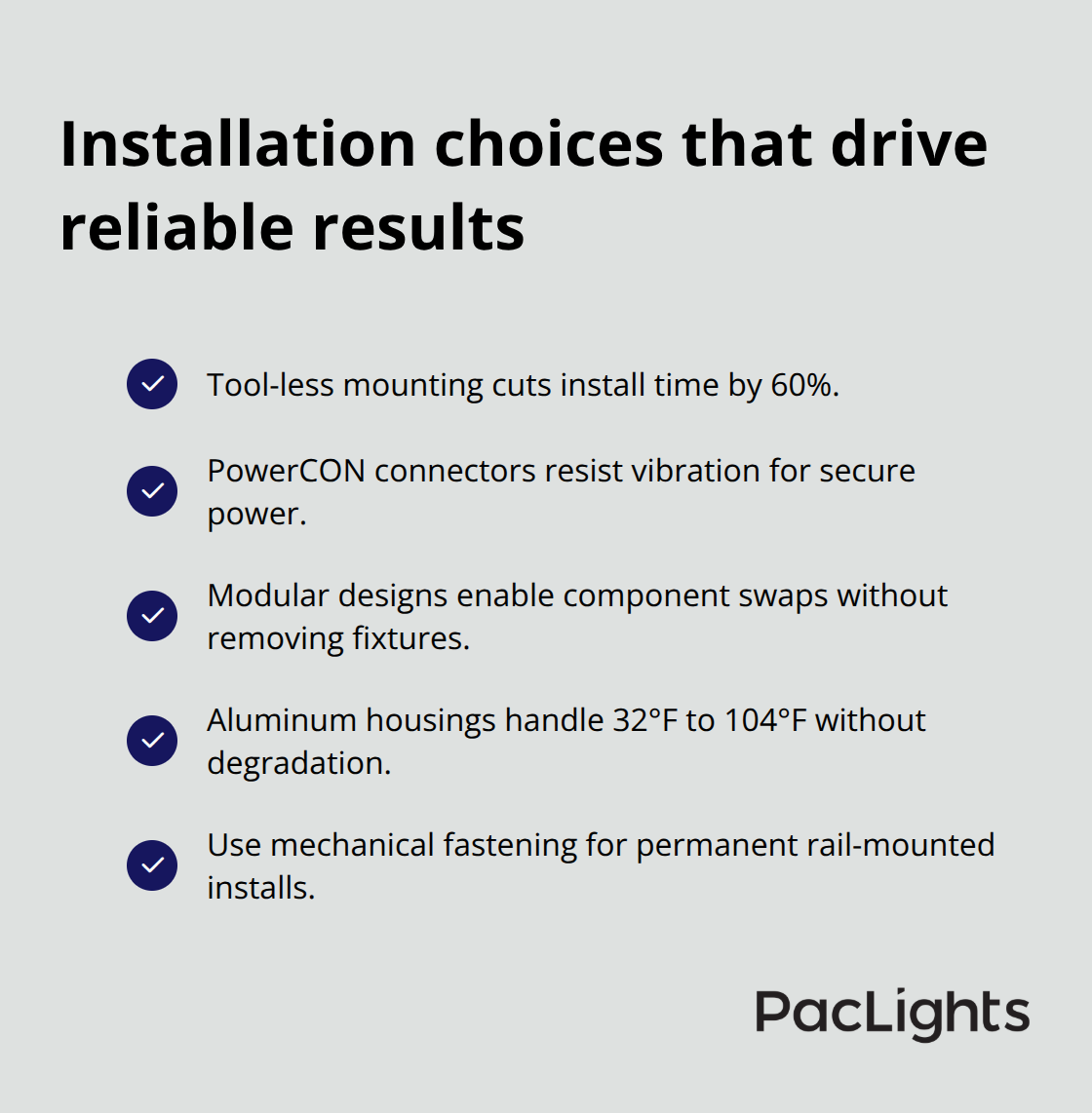
Aluminum construction handles temperature fluctuations from 32°F to 104°F without performance degradation, while plastic alternatives fail within 18 months in server environments. Magnetic mounting options work for portable units but permanent installations require mechanical fastening to vertical rack rails.
Power Distribution and Infrastructure
PoE systems eliminate separate power runs when Cat-6 infrastructure exists, though AC-powered fixtures offer higher brightness levels for dense rack configurations. UK, US, and European plug options provide flexibility for installation in different regions. Environmental factors such as temperature and humidity impact performance of rack lighting systems significantly. Proper cable management alongside rack lights prevents clutter and improves airflow around equipment (maintaining optimal operating conditions).
Energy Costs and Maintenance Reality
LED fixtures last 25,000-50,000 hours compared to 1,000 hours for incandescent bulbs, which reduces replacement frequency by 25-50 times. Energy consumption calculations show 30-watt LED fixtures cost $26 annually in electricity versus $87 for equivalent incandescent units at $0.10 per kWh. Heat output affects HVAC performance directly, with LED fixtures that produce minimal thermal load and reduce cooling requirements by 8% in motion-controlled installations. ROI typically occurs within 2-3 years through combined energy and cooling savings. Emergency backup features add $50-100 per fixture but prevent compliance violations during power outages.
Final Thoughts
Effective rack lighting selection requires you to balance brightness specifications, installation methods, and energy efficiency to achieve optimal server visibility. Target 400-500 lumens per fixture with 4000K color temperature for enhanced contrast and reduced eye strain. Tool-less mount systems with PowerCON connectors provide reliable installation that withstands server environment conditions.
LED rack lighting delivers substantial long-term benefits through 80% energy savings and 25,000-50,000 hour lifespans compared to traditional alternatives. Motion-controlled systems reduce cooling loads by 8% and generate $11,000 annual savings in larger facilities. ROI typically occurs within 2-3 years through combined energy and cooling cost reductions (based on deployment data from major data centers).
Implementation success depends on proper assessment of server room layout, rack configuration, and power infrastructure. Start with pilot installations in critical areas to validate performance before facility-wide deployment. PacLights offers comprehensive rack lighting solutions to optimize your server room illumination strategy.
Disclaimer: PacLights is not responsible for any actions taken based on the suggestions and information provided in this article, and readers should consult local building and electrical codes for proper guidance.