

Choosing the right high bay warehouse lighting is a critical decision for any industrial or commercial space. Proper illumination not only enhances productivity but also ensures worker safety and energy efficiency.
At PacLights, we understand the complexities involved in selecting the ideal lighting solution for your facility. This guide will walk you through the essential factors to consider when choosing high bay lights for your warehouse or industrial space.
What is High Bay Lighting?
Definition and Purpose
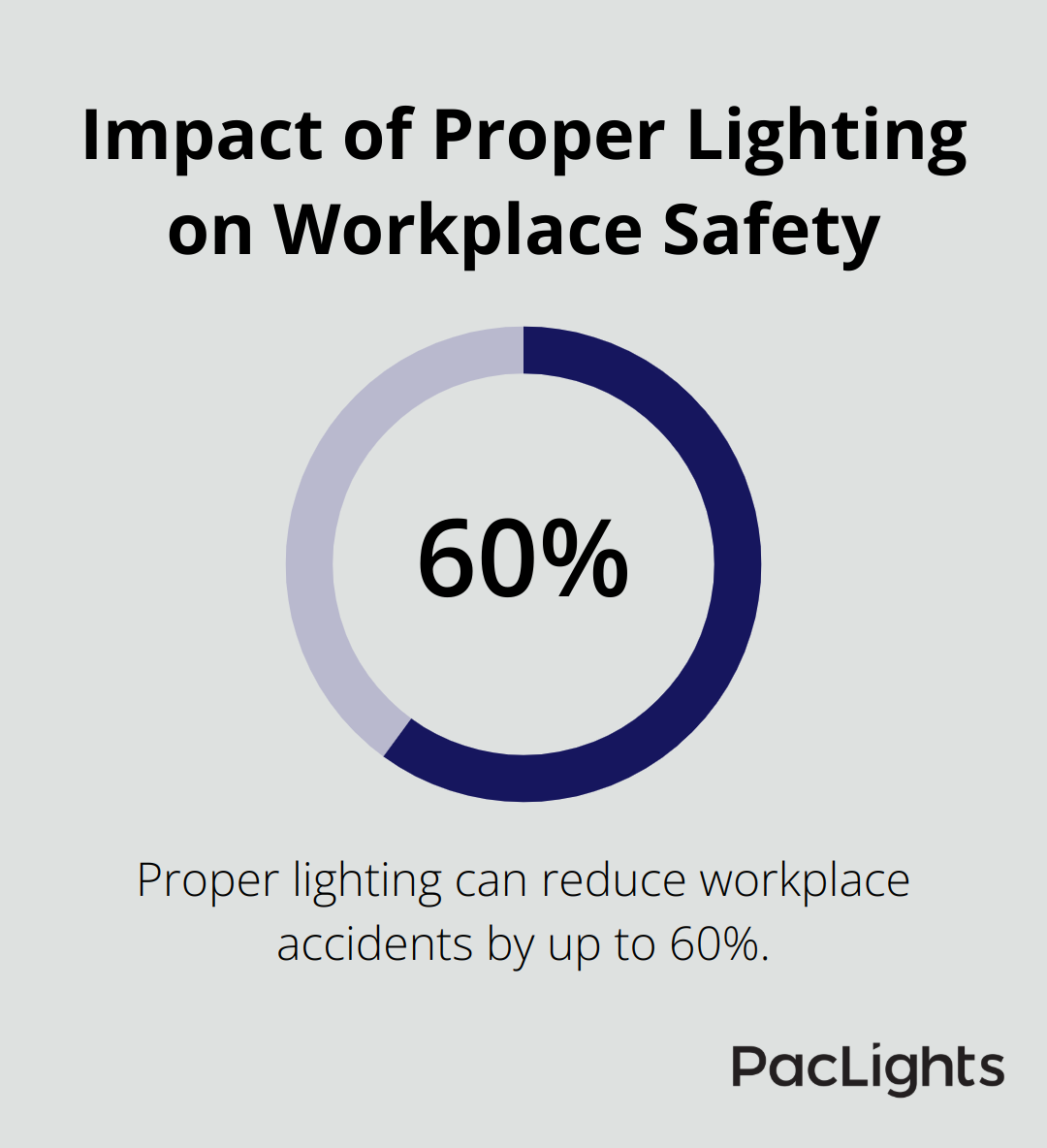
High bay lighting refers to a specialized illumination solution designed for large, open spaces with ceilings typically 20 feet or higher. This type of lighting provides bright, uniform illumination across expansive areas, enabling workers to perform tasks safely and efficiently regardless of their location within the facility. A study by the National Institute for Occupational Safety and Health found that proper lighting can reduce workplace accidents by up to 60%.
Common Applications
High bay lighting finds extensive use in various industrial and commercial settings:
- Warehouses: These fixtures illuminate vast storage areas, enabling efficient inventory management and order fulfillment.
- Manufacturing plants: High bay lights ensure precise production processes and quality control.
- Sports facilities: Indoor courts and arenas depend on high bay lighting for optimal visibility during games and events.
Key Selection Factors
When selecting high bay lighting for your facility, consider these important factors:
Mounting Height
The distance between the floor and the light fixture determines the light distribution pattern needed for effective illumination. This factor plays a significant role in choosing the right fixture type and optics.
Lumen Output
The Illuminating Engineering Society recommends a minimum of 30 foot-candles for general warehouse lighting. Calculate the total lumens required based on your space’s dimensions and reflectance values to achieve optimal illumination.
Energy Efficiency
Most facilities prioritize energy efficiency. LED high bay lights can reduce energy consumption by up to 75% compared to traditional metal halide fixtures, resulting in significant cost savings over time.
Color Temperature and CRI
For most industrial applications, a cool white color temperature (4000K-5000K) is preferred. A high Color Rendering Index (CRI of 80+) ensures accurate color representation, which is essential for quality control and safety in many industrial settings.
Types of High Bay Lights
The next section will explore the various types of high bay lights available, including LED, metal halide, and fluorescent options. Understanding these different technologies will help you make an informed decision when choosing the best lighting solution for your facility.
Types of High Bay Lights: Choosing the Best for Your Warehouse
LED High Bay Lights: The Modern Powerhouse
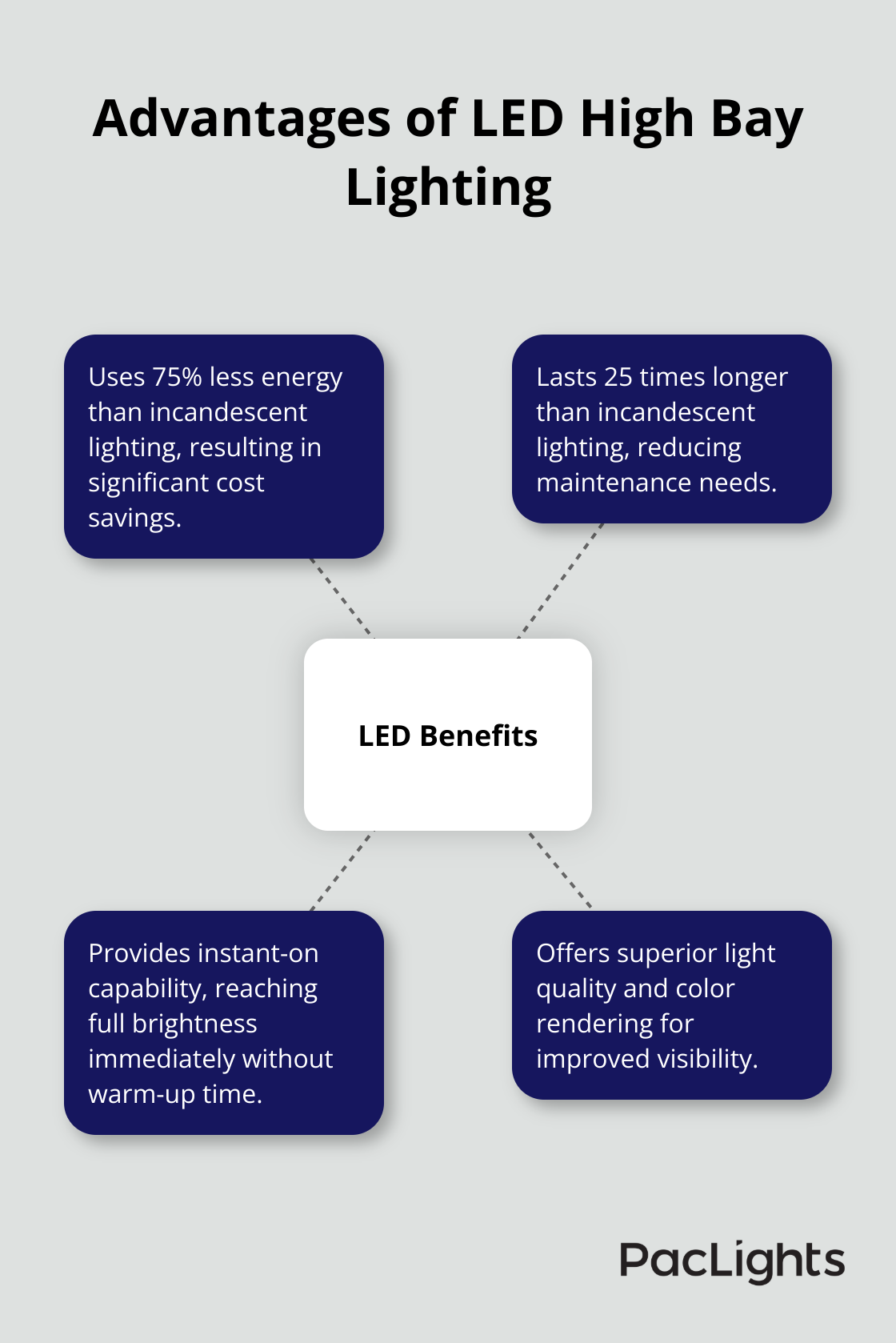
LED high bay lights have become the top choice for many warehouse managers. Their popularity stems from exceptional energy efficiency, long lifespan, and superior light quality. The U.S. Department of Energy reports that LEDs use about 75% less energy and last 25 times longer than incandescent lighting. This translates to significant cost savings over time.
A key advantage of LED high bays is their instant-on capability. Unlike metal halide lights that need a warm-up period, LEDs reach full brightness immediately. This feature proves particularly useful in warehouses with frequent on-off cycles or those requiring emergency lighting.
Metal Halide High Bay Lights: The Traditional Option
Metal halide lights have lit warehouses for decades. They produce a bright, white light that closely mimics natural daylight, making them suitable for color-critical tasks. However, they come with several drawbacks.
Metal halide lights consume more power to produce the same amount of light as LEDs. They also have a shorter lifespan (typically 10,000 to 20,000 hours compared to 50,000+ hours for LEDs). Metal halide bulbs degrade over time, losing up to 50% of their initial light output by the end of their life cycle.
Fluorescent High Bay Lights: The Middle Ground
Fluorescent high bay lights offer a middle ground between LEDs and metal halides in terms of energy efficiency and cost. They provide good color rendering and come in various color temperatures. However, their performance in cold environments can be problematic, as low temperatures can affect their light output and lifespan.
Fluorescent lights contain mercury, which raises environmental concerns for disposal. Their lifespan (20,000 to 30,000 hours), while better than metal halides, still falls short of LEDs.
Comparing the Options
When selecting between these options, consider factors such as:
- Initial cost
- Long-term energy savings
- Maintenance requirements
- Specific lighting needs of your warehouse
While LEDs may have a higher upfront cost, their long-term benefits often make them the most cost-effective choice for most modern warehouses.
The next section will explore crucial factors to consider when choosing high bay lights, helping you make an informed decision based on your specific warehouse needs and requirements.
How to Select the Perfect High Bay Lights for Your Warehouse
Selecting the right high bay lights for your warehouse requires careful consideration of several key factors. This guide will help you navigate the selection process and optimize your lighting solution.
Ceiling Height and Light Distribution
The height of your warehouse ceiling directly impacts the effectiveness of your lighting setup. For ceilings between 20 and 40 feet, narrow beam angles (60 degrees or less) provide focused illumination and prevent light from scattering before reaching the work surface. Lower ceilings benefit from wider beam angles (90 degrees or more) for better coverage.
A study by the Lighting Research Center found that proper light distribution can increase task visibility by up to 30%, which significantly improves worker productivity and safety.
Lumen Output and Color Quality
The lumen output of your high bay lights determines the brightness of your warehouse. The Illuminating Engineering Society recommends:
- 30 foot-candles (fc) for general warehouse lighting
- 50 fc for packing and shipping areas
- Up to 100 fc for detailed assembly work
Color quality, measured by the Color Rendering Index (CRI), plays an equally important role. A CRI of 80 or above (ideal for most warehouse applications) ensures accurate color perception, which is essential for quality control and safety.
Durability and Energy Efficiency
Warehouses often present harsh environments, so your lighting needs to withstand tough conditions. Look for fixtures with high IP (Ingress Protection) ratings. An IP65 rating or higher protects against dust and water, ensuring longevity in challenging conditions.
Energy efficiency significantly impacts costs. LED high bays can reduce energy consumption by up to 75% compared to traditional lighting. The U.S. Department of Energy reports that widespread use of LED lighting could save 348 TWh of electricity by 2027 (equivalent to the annual output of 44 large power plants).
Smart Controls and Future-Proofing
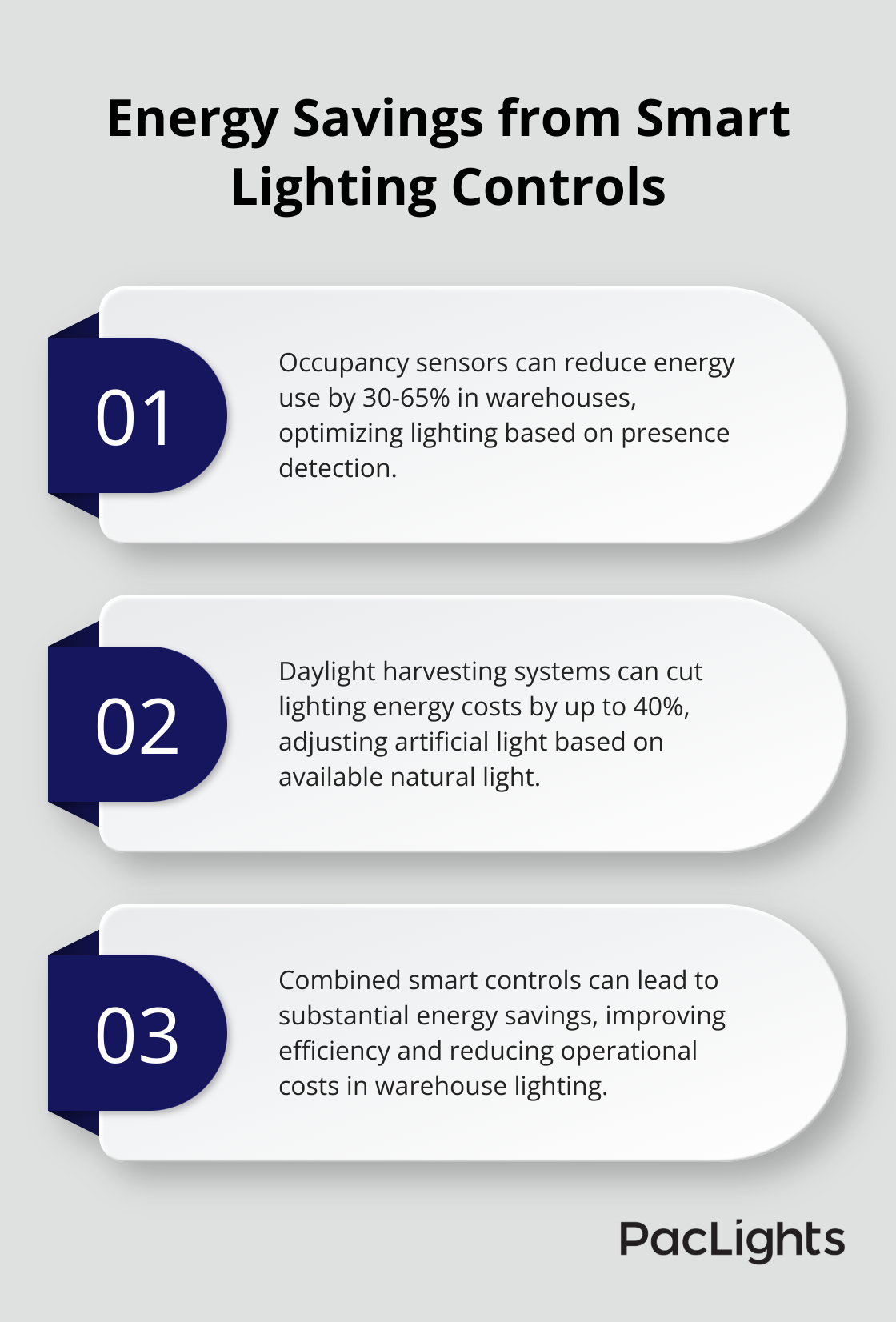
Smart controls can further optimize your lighting system. Occupancy sensors can reduce energy use by 30-65% in warehouses, according to a study by the California Lighting Technology Center. Daylight harvesting systems can cut lighting energy costs by up to 40%.
Try to select fixtures that are compatible with advanced lighting control systems. These allow for granular control, data collection, and integration with other building systems, which future-proofs your investment.
The right lighting solution is an investment that pays dividends in the long run. It not only illuminates your warehouse effectively but also contributes to improved productivity, safety, and energy efficiency.
Final Thoughts
High bay warehouse lighting impacts every aspect of facility operations. The right lighting enhances productivity, improves safety, and reduces operational costs. Quality lighting solutions can decrease workplace accidents by up to 60% while boosting productivity and cutting energy consumption significantly.
We at PacLights offer energy-efficient high bay lighting fixtures that reduce carbon footprints and lead to substantial cost savings. Our advanced lighting systems feature optional daylight and motion controls, optimizing energy use and adapting to specific warehouse needs. These solutions provide improved visibility, increased safety, and potential integration with smart building systems.
Prioritizing high bay warehouse lighting illuminates more than just space-it brightens the bottom line. The right lighting solution creates a competitive advantage in today’s business landscape. Invest in efficient, safe, and future-proof lighting to drive the success of your warehouse operations.
Disclaimer: PacLights is not responsible for any actions taken based on the suggestions and information provided in this article, and readers should consult local building and electrical codes for proper guidance.