

Calculating the right lighting for your workspace is essential for productivity and comfort. At PacLights, we understand the importance of proper illumination, especially when it comes to low bay lighting.
Whether you’re managing a warehouse, retail store, or office space, knowing how to use a low bay lighting calculator can make a significant difference in your lighting design. This guide will walk you through the process, ensuring you achieve optimal lighting for your specific needs.
What is Low Bay Lighting?
Defining Low Bay Lighting
Low bay lighting provides specialized illumination for spaces with ceiling heights between 12 and 20 feet. These fixtures deliver uniform, glare-free light where traditional ceiling-mounted options fall short. Each unit typically produces 7,500 to 20,000 lumens (depending on application and mounting height).
Common Applications
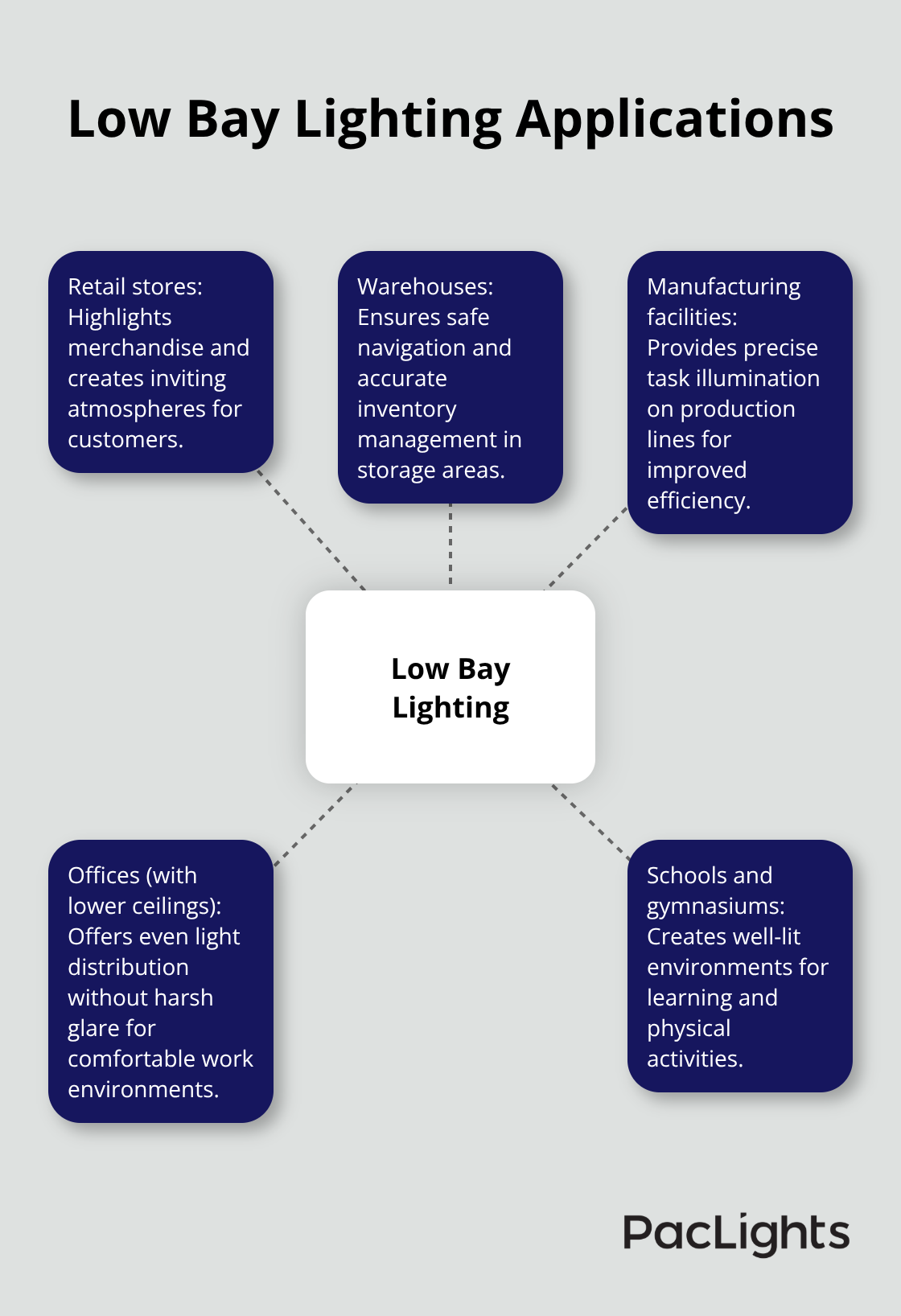
Low bay lighting finds use across various industries:
- Retail stores: Highlights merchandise and creates inviting atmospheres
- Warehouses: Ensures safe navigation and accurate inventory management
- Manufacturing facilities: Provides precise task illumination on production lines
- Offices (with lower ceilings): Offers even light distribution without harsh glare
- Schools and gymnasiums: Creates well-lit environments for learning and physical activities
Low Bay vs. High Bay: Key Differences
The main distinctions between low bay and high bay lighting include:
- Ceiling height: Low bay (12-20 feet) vs. High bay (20+ feet)
- Light distribution: Low bay fixtures optimize for wider coverage at lower heights (beam angle of 120 degrees or more)
- Energy efficiency: Modern LED low bay fixtures achieve up to 200 lumens per watt (outperforming traditional systems by 60-80%)
Selecting the Right Low Bay Lighting
When choosing low bay lighting, consider these factors:
- Color temperature: 4000K works well for general use, while 5000K suits tasks requiring high visibility and color accuracy
- Lumen output: Match to your space’s specific needs
- Beam angle: Ensure comprehensive coverage without harsh shadows or hotspots
- Energy efficiency: Look for LED options to maximize savings (typical payback periods range from 18 to 24 months)
The Impact of Proper Low Bay Lighting
Effective low bay lighting transforms spaces. It enhances safety, boosts productivity, and creates comfortable environments for various activities. The right lighting solution can significantly reduce energy costs while improving the overall quality of illumination.
As we move forward, understanding how to calculate the ideal low bay lighting for your specific space becomes essential. Let’s explore the key factors to consider in this process.
Key Factors for Low Bay Lighting Calculations
Ceiling Height and Room Dimensions
The foundation of any low bay lighting calculation starts with accurate space measurements. Ceiling height determines the fixture types and positioning. Low bay applications typically involve ceilings between 12 and 20 feet.
Room dimensions also influence the lighting design. Larger floor areas require more fixtures or higher lumen output for consistent illumination. A general guideline suggests one low bay LED light for every 100 to 200 square feet (depending on desired brightness).
Task-Specific Lighting Requirements
Different activities need varying illumination levels. The Illuminating Engineering Society (IES) offers detailed foot-candle recommendations for various applications:
- General storage areas: 10-20 foot-candles
- Retail spaces: 30-50 foot-candles
- Manufacturing assembly: 50-100 foot-candles
Identifying primary tasks in your space helps determine appropriate light levels, optimizing both safety and productivity.
Surface Reflectance and Light Distribution
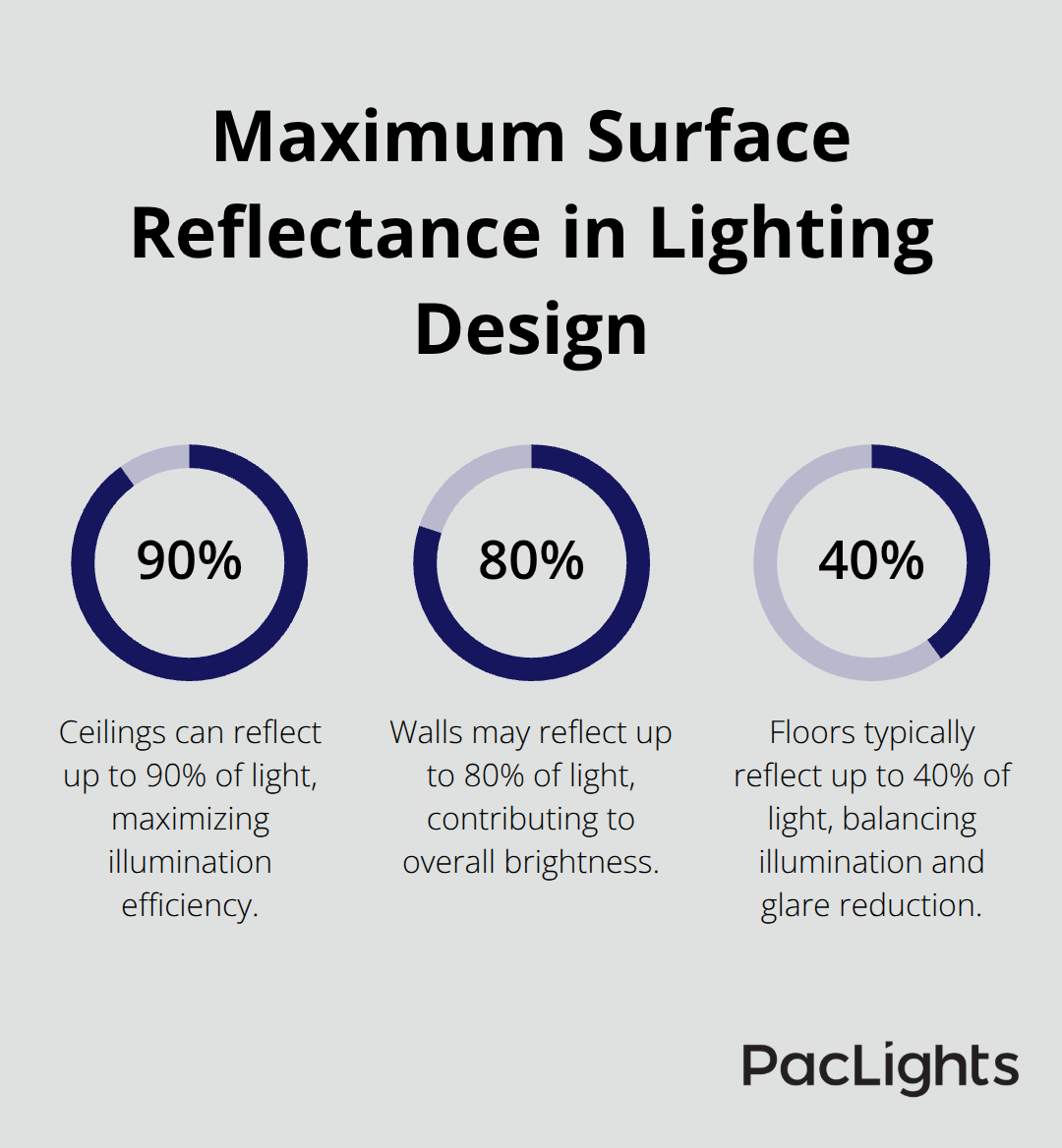
Wall, ceiling, and floor reflective properties impact light distribution. Light-colored surfaces reflect more light, potentially reducing necessary fixtures. Dark surfaces absorb light, requiring higher lumen output for equivalent illumination.
Consider these reflectance values in your lighting plan:
- Ceilings: 70-90% reflectance
- Walls: 50-80% reflectance
- Floors: 20-40% reflectance
Proper surface reflectance consideration prevents issues like dark corners or overly bright areas, ensuring more uniform light distribution.
Energy Efficiency Goals
Energy efficiency plays a significant role in low bay lighting calculations. LED fixtures offer superior efficiency (up to 200 lumens per watt) compared to traditional lighting systems. This efficiency translates to lower energy costs and reduced environmental impact.
When selecting fixtures, look for options with high lumens per watt ratings. Also, consider incorporating lighting controls (such as occupancy sensors or daylight harvesting) to further optimize energy use.
Fixture Selection and Placement
The type and placement of low bay fixtures greatly influence lighting effectiveness. Factors to consider include:
- Beam angle (try for 120 degrees or more for wide coverage)
- Color temperature (4000K for general use, 5000K for high visibility tasks)
- Lumen output (matched to space requirements)
- Glare reduction features
Proper fixture spacing (typically 1 to 1.5 times the mounting height) ensures even light distribution without dark spots or excessive overlap.
These key factors form the foundation for accurate low bay lighting calculations. In the next section, we’ll walk through a step-by-step guide to put these principles into practice and create an effective lighting plan for your space.
How to Calculate Low Bay Lighting Step by Step
Determine Required Illumination Levels
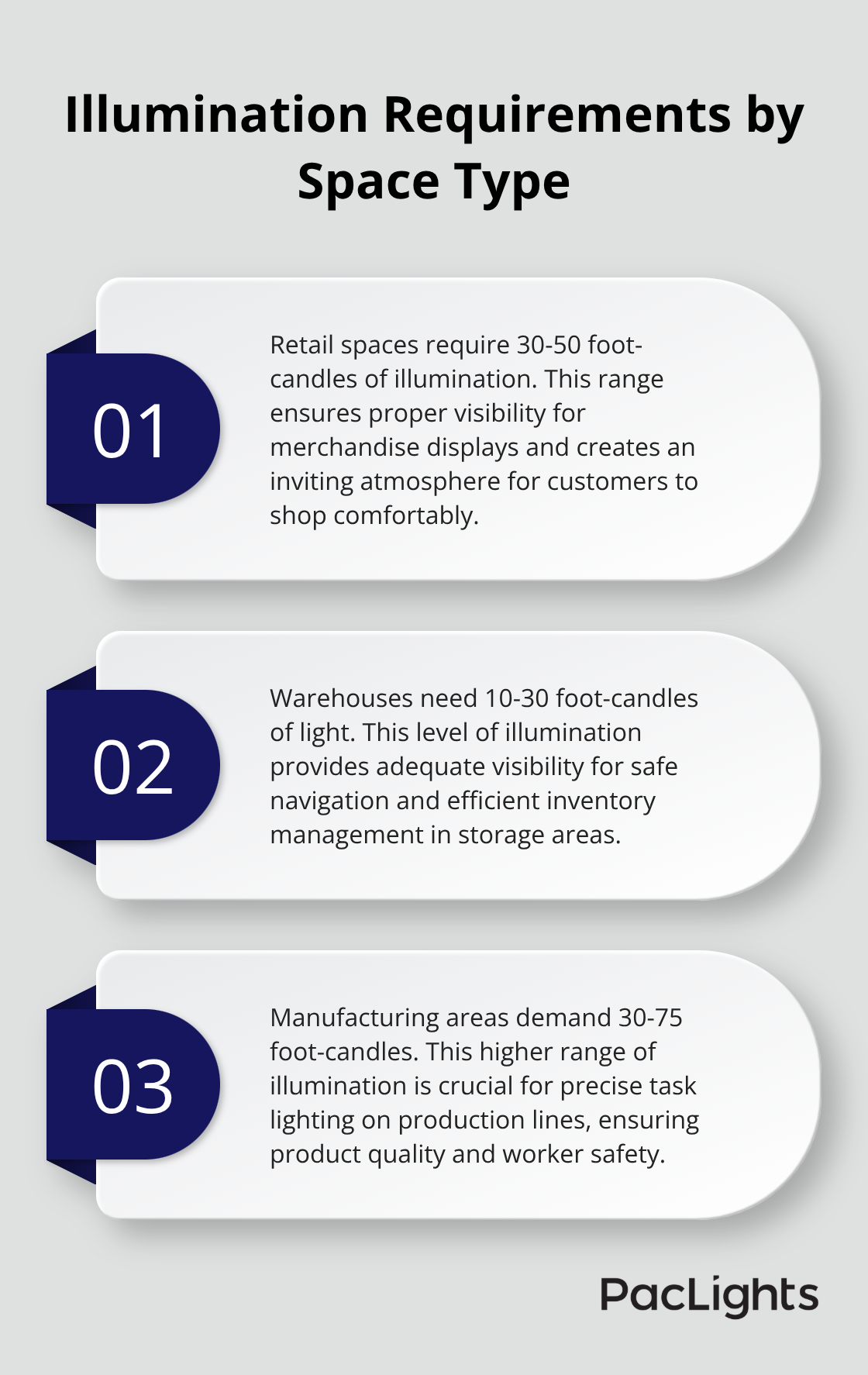
Start by identifying the specific foot-candle or lux requirements for your area. The Illuminating Engineering Society (IES) provides detailed recommendations based on space function:
- Retail spaces: 30-50 foot-candles
- Warehouses: 10-30 foot-candles
- Manufacturing areas: 30-75 foot-candles
These values serve as a starting point. Adjust based on specific tasks, employee age, and precision requirements.
Calculate Total Lumens Needed
To determine the total lumens required, use this formula:
Total Lumens = (Square Footage x Desired Foot-Candles) / Light Loss Factor
The Light Loss Factor accounts for fixture depreciation over time (typically 0.8 for LED fixtures).
For a 2,000 sq. ft. retail space aiming for 40 foot-candles:
Total Lumens = (2,000 x 40) / 0.8 = 100,000 lumens
Select Appropriate Fixtures
With the total lumen requirement, choose fixtures that meet your needs. Modern LED low bay fixtures offer 100-200 lumens per watt. For our example, assuming 150 lumens per watt:
Number of Fixtures = 100,000 lumens / (Fixture Wattage x 150 lumens/watt)
If using 100W fixtures: 100,000 / (100 x 150) ≈ 7 fixtures
Consider factors like color temperature (4000K for general use, 5000K for high-visibility tasks) and beam angle (120° or more for wide coverage).
Design Your Lighting Layout
Create a layout that ensures even light distribution. Space fixtures 1 to 1.5 times the mounting height apart. For a 15-foot ceiling, try to place fixtures 15-22 feet between each other.
Use lighting design software or consult with lighting professionals to optimize your layout. This step prevents dark spots and ensures uniform illumination across your space.
Fine-Tune Your Calculations
These calculations provide a solid starting point. Adjust based on your specific needs, and always consider energy efficiency in your final selection. LED fixtures from reputable manufacturers can lead to significant long-term savings and improved lighting quality.
Wrapping Up
Calculating low bay lighting for your space creates an efficient and productive environment. A low bay lighting calculator simplifies the process, allowing you to make informed decisions about fixture quantity, placement, and specifications. This tool helps you determine required illumination levels, calculate total lumens, select appropriate fixtures, and create an optimized layout.
Proper lighting design impacts employee well-being, productivity, and energy efficiency. It transforms retail spaces, warehouses, manufacturing facilities, and offices (creating inviting atmospheres for customers, ensuring safe navigation in storage areas, and providing precise illumination for detailed tasks). Well-planned low bay lighting leads to improved visibility, reduced energy consumption, and enhanced overall lighting quality.
We at PacLights understand the importance of tailored lighting solutions. Our range of energy-efficient LED fixtures meets diverse industrial needs while reducing costs and carbon footprints. Take the time to calculate your low bay lighting needs carefully, and you’ll benefit from a well-illuminated, energy-efficient, and productive environment for years to come.
Disclaimer: PacLights is not responsible for any actions taken based on the suggestions and information provided in this article, and readers should consult local building and electrical codes for proper guidance.