

LED high bay lighting prices can significantly impact your facility’s budget and long-term operational costs.
At PacLights, we understand the importance of making informed decisions about industrial lighting solutions.
This post will break down the factors affecting LED high bay costs, provide average price ranges, and highlight the long-term savings you can expect from this energy-efficient technology.
What Drives LED High Bay Lighting Costs?
Wattage and Lumen Output
The power and brightness of LED high bay lights directly affect their price. Higher wattage fixtures with greater lumen output typically cost more. A 100W LED high bay light (producing around 15,000 lumens) might cost between $100 to $200, while a 400W fixture (outputting 60,000 lumens) could range from $400 to $800. You should assess your specific lighting needs to avoid overpaying for unnecessary power or brightness.
Component Quality and Features
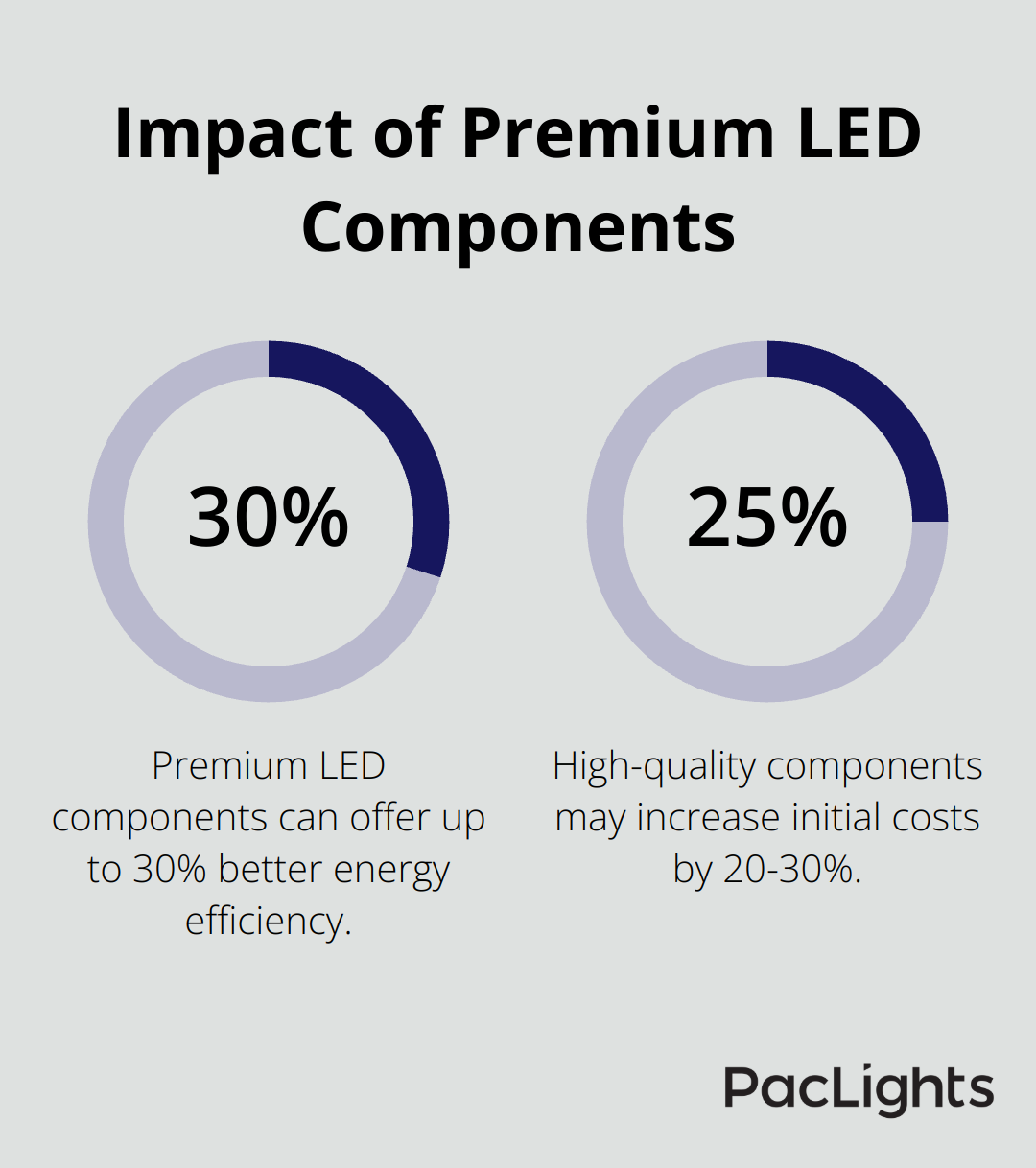
The quality of LED chips, drivers, and heat sinks significantly impacts both the price and performance of high bay lights. Premium components often result in higher initial costs but can lead to better energy efficiency, longer lifespan, and improved light quality. Fixtures with high-quality optics direct the light where it’s needed most, potentially justifying a higher upfront cost. Fixtures with high-quality Cree or Nichia LED chips may cost 20-30% more than those with generic LEDs but can offer up to 30% better energy efficiency.
Brand and Warranty
Established brands often command higher prices due to their reputation for quality and reliability. While you might pay a premium, these brands typically offer more comprehensive warranties. A standard 5-year warranty is common, but some manufacturers offer up to 10 years. This extended protection can offset the higher initial cost through reduced replacement expenses over time.
Quantity Ordered
The quantity of fixtures ordered can significantly impact unit prices. Bulk purchases often come with discounts. Ordering 10 or more units might result in a 5-10% discount, while larger orders of 50+ units could see discounts of 15-20% or more. If you’re outfitting a large facility, you should get quotes for bulk orders to maximize savings.
Installation Requirements
Installation costs can vary widely based on the project complexity and local labor rates. Simple replacements might cost $100-$200 per fixture, while more complex installations (involving new wiring or mounting) could range from $300-$500 per fixture. Always factor in these costs when budgeting for your lighting upgrade. Some suppliers offer turnkey solutions that include installation, which can simplify the process and potentially reduce overall costs.
Now that we’ve explored the factors that influence LED high bay lighting costs, let’s look at the average cost ranges you can expect for different types of LED high bay fixtures.
The Real Cost of LED High Bay Lighting
Price Ranges for Different Wattages
LED high bay lighting costs vary based on several factors. Understanding these price ranges will help you make an informed decision for your facility. LED high bay lights typically cost between $100 and $1,000 per fixture, depending on wattage and features. Here’s a general breakdown:
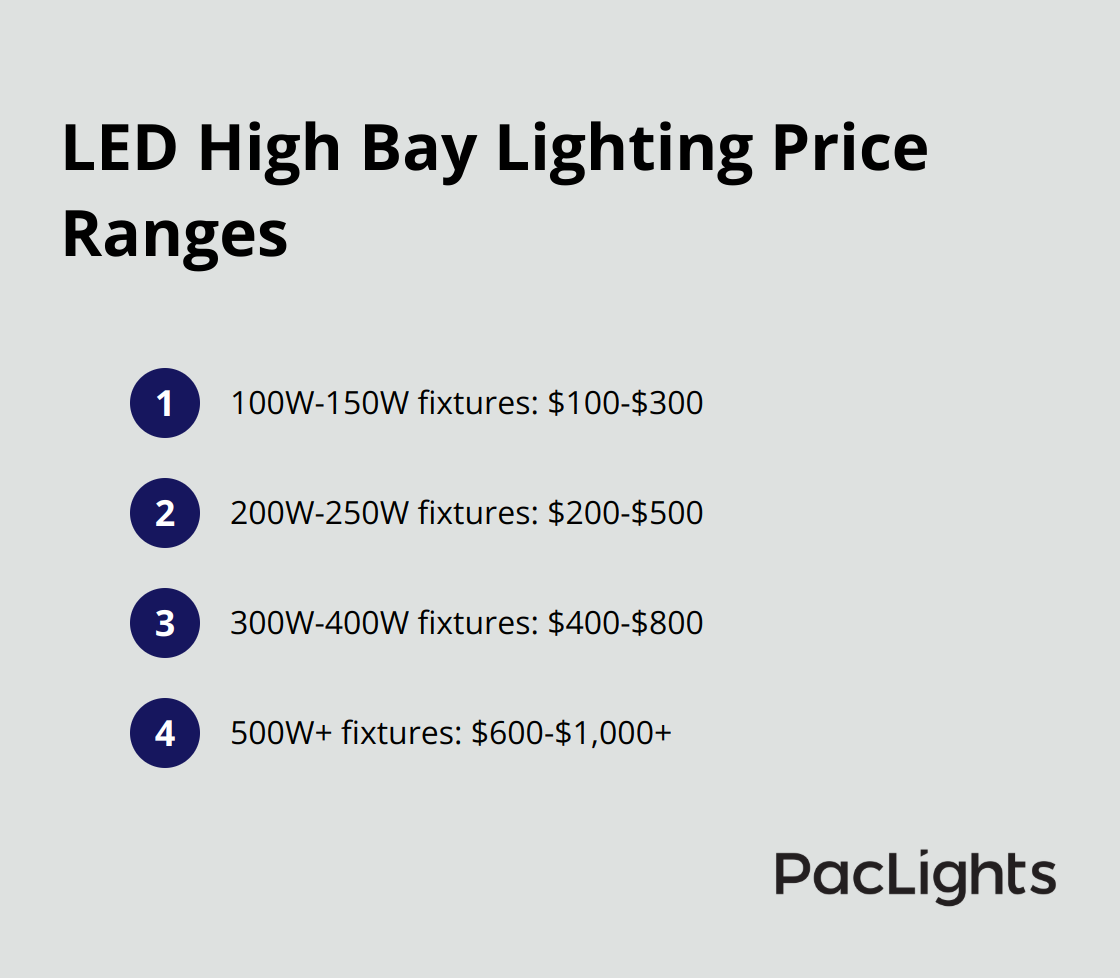
These represent average ranges. High-end fixtures with advanced features or from premium brands may exceed these prices.
Cost Comparison with Traditional Lighting
LED high bays have a higher initial cost compared to traditional metal halide or high-pressure sodium fixtures. However, the long-term savings prove significant. A 400W metal halide fixture might cost $150-$300, while a comparable LED fixture (around 150W-200W) could cost $300-$500.
The U.S. Department of Energy reports that LEDs use at least 75% less energy than incandescent lighting. This translates to substantial savings over time. For example, a 200W LED high bay replacing a 400W metal halide can save about $100 per year in energy costs alone (based on average electricity rates and 12 hours of daily use).
Factors Influencing Price Variations
Several elements cause price fluctuations in LED high bay lighting:
- Lumen output: Higher lumen fixtures generally cost more. A 30,000-lumen fixture will be pricier than a 15,000-lumen one.
- Color temperature options: Fixtures with selectable color temperatures (e.g., 3000K, 4000K, 5000K) may cost 10-20% more than fixed CCT models.
- Dimming capabilities: Dimmable fixtures typically add 15-25% to the cost but offer greater energy-saving potential.
- IP ratings: Fixtures with higher Ingress Protection ratings for dust and moisture resistance can cost 20-30% more than standard models.
- Certifications: Products with certifications like DLC Premium or Energy Star may cost more but often qualify for rebates (potentially offsetting the higher initial price).
When considering LED high bay lighting, you must look beyond the upfront cost. The energy efficiency and longer lifespans can make LEDs a cost-effective choice in the long run. To get a clear picture of your total investment, request a comprehensive quote that includes energy savings projections and available rebates.
The initial cost of LED high bay lighting might seem high, but the long-term benefits often outweigh this investment. Let’s explore these long-term cost savings in more detail.
How Much Can You Save with LED High Bay Lighting?
Energy Bill Reduction
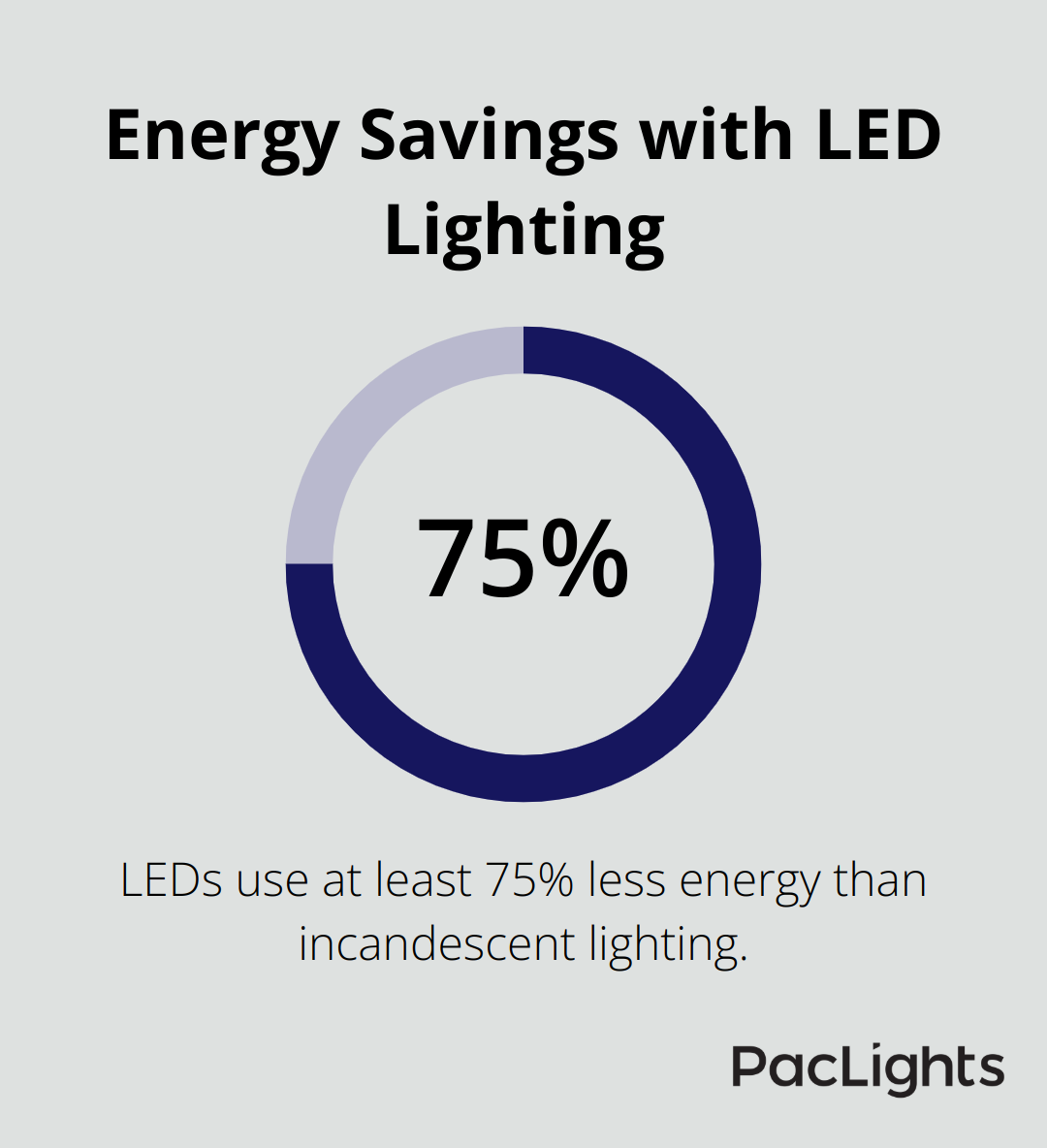
LED high bay lights consume significantly less energy than traditional lighting systems. The U.S. Department of Energy reports that LEDs use up to 75% less energy than incandescent lighting. This translates to substantial annual savings for warehouses and industrial facilities.
A practical example illustrates this point. A 150W LED high bay can replace a 400W metal halide fixture while providing equal or better illumination. With 12 hours of daily operation and an electricity rate of $0.12 per kWh, the annual energy cost for the metal halide would be about $210, compared to only $79 for the LED fixture. When you multiply this by the number of fixtures in your facility, the savings become significant.
Lower Maintenance Costs
LED high bay lights boast an impressive lifespan, often exceeding 50,000 hours. This longevity significantly reduces the frequency and cost of replacements. Traditional metal halide lamps typically last only 10,000 to 15,000 hours, necessitating more frequent replacements and associated labor costs.
Consider a facility with 100 high bay fixtures. With traditional lighting, you might replace bulbs every 2-3 years. LED fixtures, however, could last 10-15 years or more under the same operating conditions. This difference saves on replacement costs and minimizes production disruptions and safety risks associated with frequent maintenance.
Available Rebates and Incentives
Many utility companies and government agencies offer rebates and incentives for businesses that upgrade to energy-efficient lighting. These programs can significantly offset the initial cost of LED high bay lighting.
The Database of State Incentives for Renewables & Efficiency (DSIRE) provides a comprehensive list of energy efficiency incentives across the United States. Some programs offer rebates of $0.10 to $0.30 per watt reduced, which can cover 20-30% of project costs.
To maximize these benefits, look for LED high bay fixtures that are DLC (DesignLights Consortium) listed or Energy Star certified, as these often qualify for the best rebates.
Return on Investment Calculation
To understand the true value of LED high bay lighting, you should calculate the Return on Investment (ROI). This calculation considers the initial cost, energy savings, maintenance savings, and any applicable rebates.
A simple ROI calculation might look like this:
Total Cost = Initial Investment – RebatesAnnual Savings = Energy Savings + Maintenance SavingsROI (years) = Total Cost / Annual Savings
For many businesses, the ROI period for LED high bay lighting falls between 1-3 years. After this point, the continued energy and maintenance savings represent pure cost reduction for your operations.
Final Thoughts
LED high bay lighting prices range from $100 to $1,000 per fixture, but the long-term benefits justify this investment. Energy savings of up to 75% and lifespans exceeding 50,000 hours result in significant reductions in electricity bills and maintenance costs. The return on investment typically occurs within one to three years, after which the continued savings represent pure cost reduction for operations.
LED high bay lighting improves light quality and reduces environmental impact, making it an excellent choice for warehouses and industrial spaces. We at PacLights offer a wide range of energy-efficient lighting solutions tailored to diverse industrial needs. Our LED high bay fixtures combine durability and versatility to meet specific lighting requirements.
We provide free lighting layout designs and ROI assessments to help you make informed decisions about upgrading your lighting system. LED high bay lighting represents an investment in a brighter, more efficient future for your facility (and your bottom line). Contact us today to explore how our solutions can benefit your business.
Disclaimer: PacLights is not responsible for any actions taken based on the suggestions and information provided in this article, and readers should consult local building and electrical codes for proper guidance.