

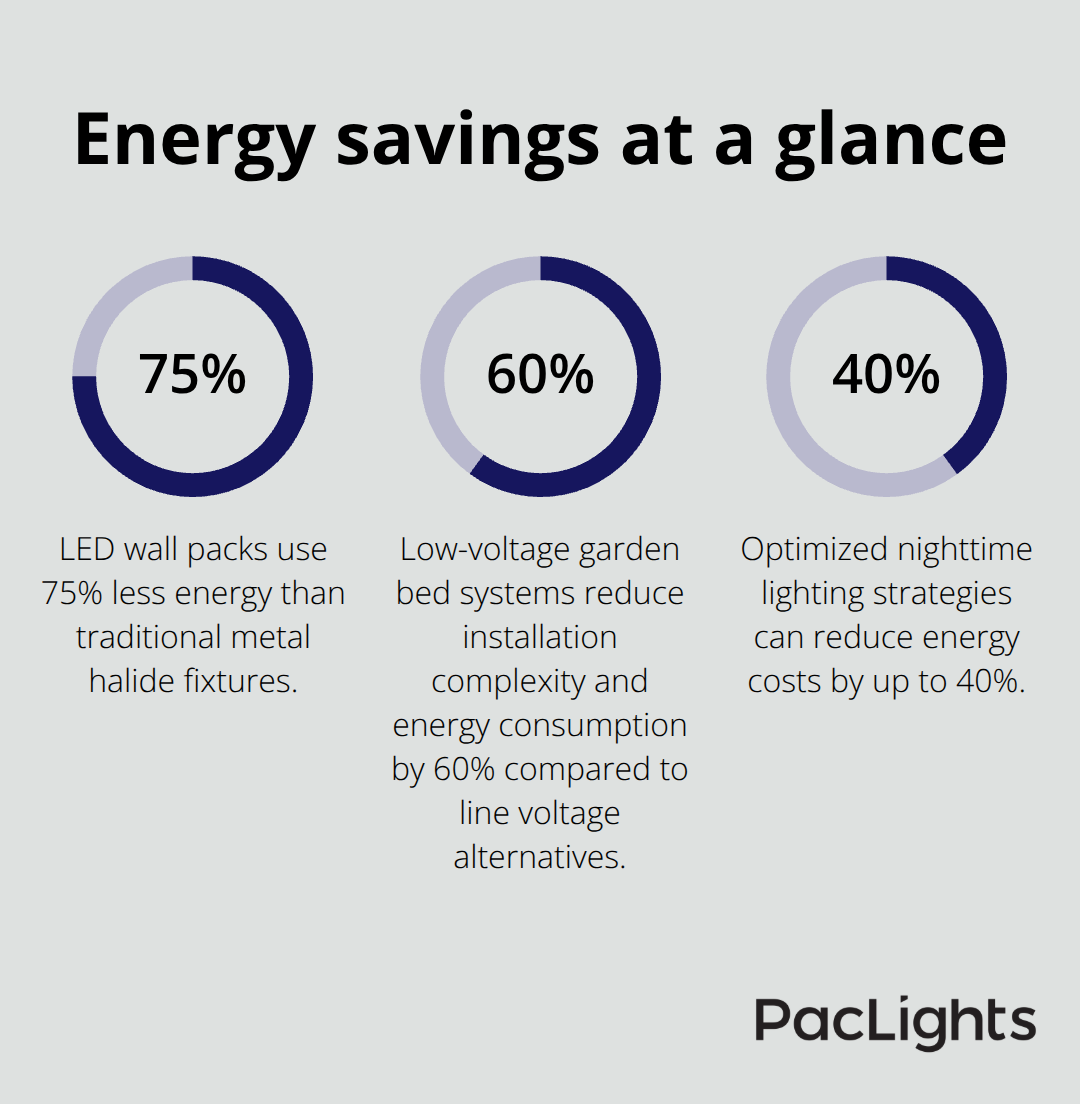
Building lights at night transform ordinary structures into architectural showcases while providing essential safety and security benefits. The right lighting strategy can reduce energy costs by up to 40% compared to traditional systems.
At PacLights, we’ve helped thousands of property owners navigate the complexities of nighttime illumination. This guide covers everything from selecting the right fixtures to professional installation techniques.
Types of Building Lights for Nighttime Illumination
Wall-mounted fixtures deliver the strongest impact for nighttime building illumination. LED wall packs consume 75% less energy than traditional metal halide fixtures while they produce superior light output. Position these fixtures 12-15 feet apart for optimal coverage on commercial buildings. Architectural uplights create dramatic facade effects when you use narrow beam angles between 10-25 degrees, with fixtures placed 6-8 feet from the building base.
Linear LED strips work exceptionally well for accent work that highlights building edges and creates clean geometric lines.
Pathway and Landscape Integration
Bollard lights should stand 42 inches high for maximum pedestrian safety while they minimize light pollution. Space these fixtures every 20-25 feet along walkways to maintain consistent illumination levels of 2-5 foot-candles. Tree uplights require 35-watt LED fixtures positioned 8-12 feet from large trees, and warm 3000K color temperatures enhance natural textures effectively. Garden bed systems work best with low-voltage options that operate at 12 volts (which reduces installation complexity and energy consumption by 60% compared to line voltage alternatives).
Security and Flood Applications
Motion-activated flood lights should trigger within 20 feet of detection and remain active for 5-10 minutes. Install these fixtures 10-12 feet high to prevent tampering while they cover 180-degree detection zones. Dusk-to-dawn photocell sensors eliminate manual operation and reduce energy waste when they automatically shut off during daylight hours. High-intensity discharge floods consume 150-400 watts, but LED alternatives deliver equivalent output while they use only 50-120 watts. Position security lights to eliminate dark corners and blind spots around building perimeters, loading docks, and entry points where criminal activity typically occurs.
Smart Controls and Automation
Modern building lights integrate with smart control systems that adjust brightness based on occupancy and ambient light levels. These systems can reduce energy consumption by an additional 30-50% beyond standard LED savings. Networked controls allow facility managers to monitor and adjust multiple fixtures remotely (creating significant operational efficiencies).
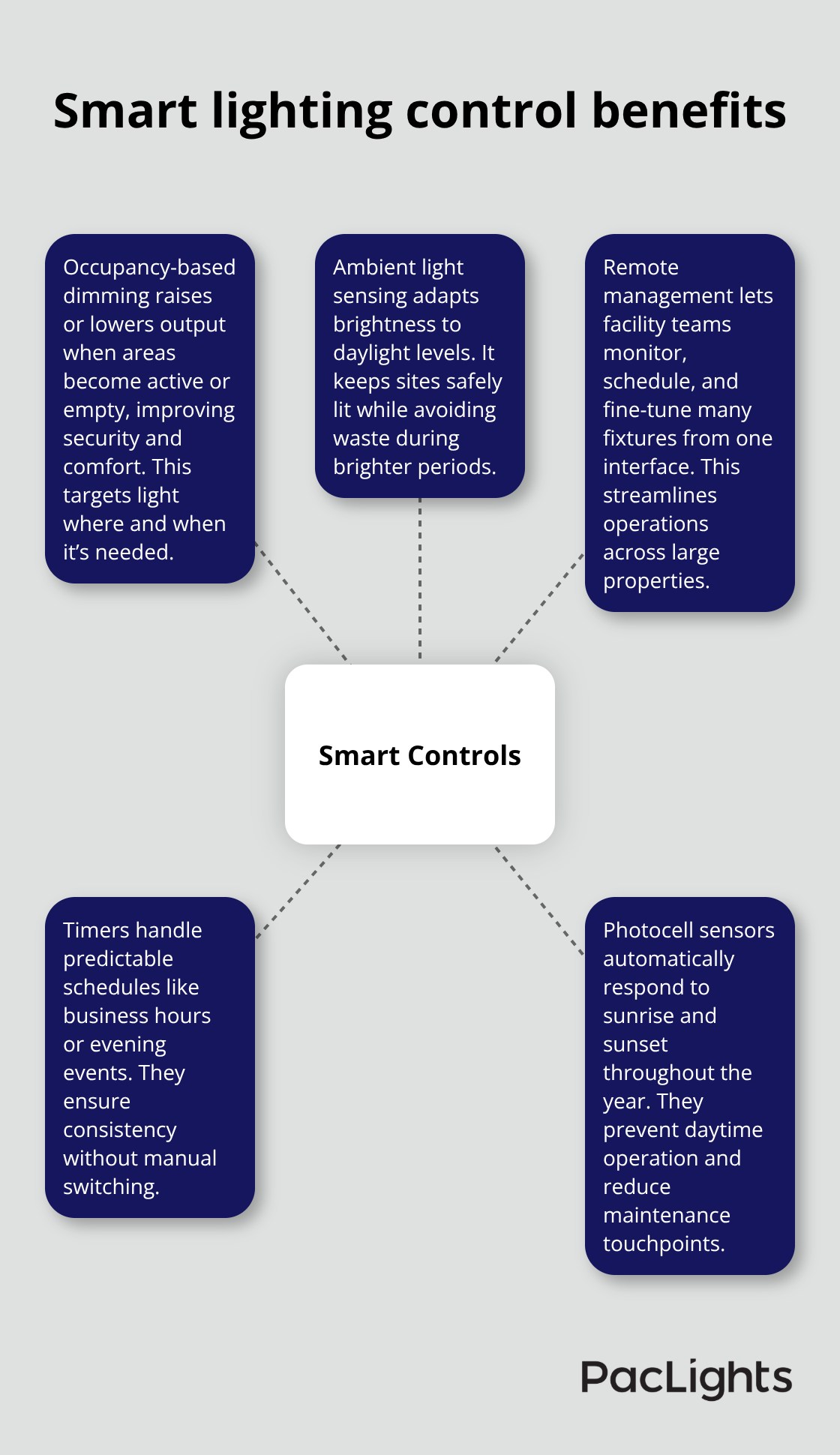
Timer-based systems work well for predictable schedules, while photocell sensors respond automatically to changing daylight conditions throughout the year.
Once you select the right fixture types for your project, the next step involves understanding key factors that influence performance and cost-effectiveness over time.
Key Considerations for Nighttime Building Lighting
Energy Efficiency and Cost Management
LED fixtures cut electricity consumption by 50-80% compared to traditional systems. A 100-watt metal halide fixture costs approximately $35 annually to operate, while an equivalent 30-watt LED fixture costs only $10 per year. Commercial buildings typically achieve payback periods of 2-4 years when they upgrade to LED systems.
Photocell sensors add another 20-30% in energy savings when they prevent daytime operation. Motion sensors slash security costs by 60% since fixtures activate only when needed. The Department of Energy reports that proper controls can reduce total building energy consumption by 15-25%.
Smart systems adjust output based on ambient light levels and create additional savings of $200-400 annually per fixture in commercial applications. These automated controls eliminate manual operation while they optimize performance throughout different seasons and weather conditions.
Light Pollution and Environmental Impact
Dark sky ordinances limit upward light emission to 2.5% of total fixture output in many municipalities. Full cutoff fixtures prevent light trespass beyond property boundaries and reduce glare complaints from neighbors. Warm color temperatures below 3000K minimize impact on wildlife patterns and circadian rhythms.
The International Dark-Sky Association requires fixtures to emit zero lumens above 90 degrees for certified installations. Light pollution violations result in fines that range from $500-2500 per fixture in major cities (making compliance both environmentally responsible and financially necessary).
Position fixtures at least 25 feet from property lines to avoid spillover issues. Shield all flood lights with barn doors or visors to direct light downward and prevent unnecessary sky glow.
Safety and Security Requirements
Security applications require minimum illumination levels of 5-10 foot-candles, but levels that exceed 20 foot-candles create excessive glare and increase liability risks. Proper fixture placement eliminates dark corners and blind spots around building perimeters, loading docks, and entry points where incidents typically occur.
Motion-activated systems provide adequate security while they conserve energy during low-activity periods. These fixtures should trigger within 20 feet of detection and remain active for 5-10 minutes to balance security needs with operational costs.
Professional installation becomes essential when you consider these technical requirements alongside local codes and safety standards that govern commercial properties.
Best Practices for Installing Building Lights at Night
Professional Installation vs DIY Limitations
Commercial building lights require professional installation for projects that exceed 50 volts or involve structural modifications. Licensed electricians must handle all line voltage connections, photocell wiring, and control system integration. The National Electrical Code mandates professional installation for fixtures mounted above 12 feet or that require conduit runs longer than 25 feet. DIY installation works only for low-voltage landscape systems under 30 watts, but these fixtures provide insufficient illumination for security applications.
Professional installers complete projects 60% faster than DIY approaches while they eliminate code violations that cost $1,500-3,000 in fines and rework. Electricians carry liability insurance worth $500,000-2 million (which protects property owners from damage claims during installation). Licensed professionals also provide warranties that cover both labor and materials for 2-5 years.
Optimal Timing and Scheduling Strategies
Install building lights during fall and winter months when darkness arrives earlier and you can test performance immediately. Schedule installations between October and February to avoid peak construction season delays and secure 15-20% lower contractor rates. Complete all electrical work during daylight hours between 8 AM and 4 PM when visibility remains optimal for safety.
Weather conditions matter significantly for outdoor installations. Avoid work during temperatures below 20°F or above 90°F since extreme conditions affect fixture performance and installer safety. Wind speeds that exceed 15 mph create dangerous conditions for ladder work and precision alignment. Rain delays installation by 24-48 hours since moisture compromises electrical connections and creates slip hazards.
Electrical Safety Requirements
Turn off power at the main breaker before you begin any electrical work, then verify zero voltage with a digital multimeter rated for your system voltage. Commercial buildings require GFCI protection for all outdoor fixtures within 20 feet of water sources or grade level. Use only copper wiring rated for outdoor applications with THWN-2 insulation that resists moisture and UV damage.
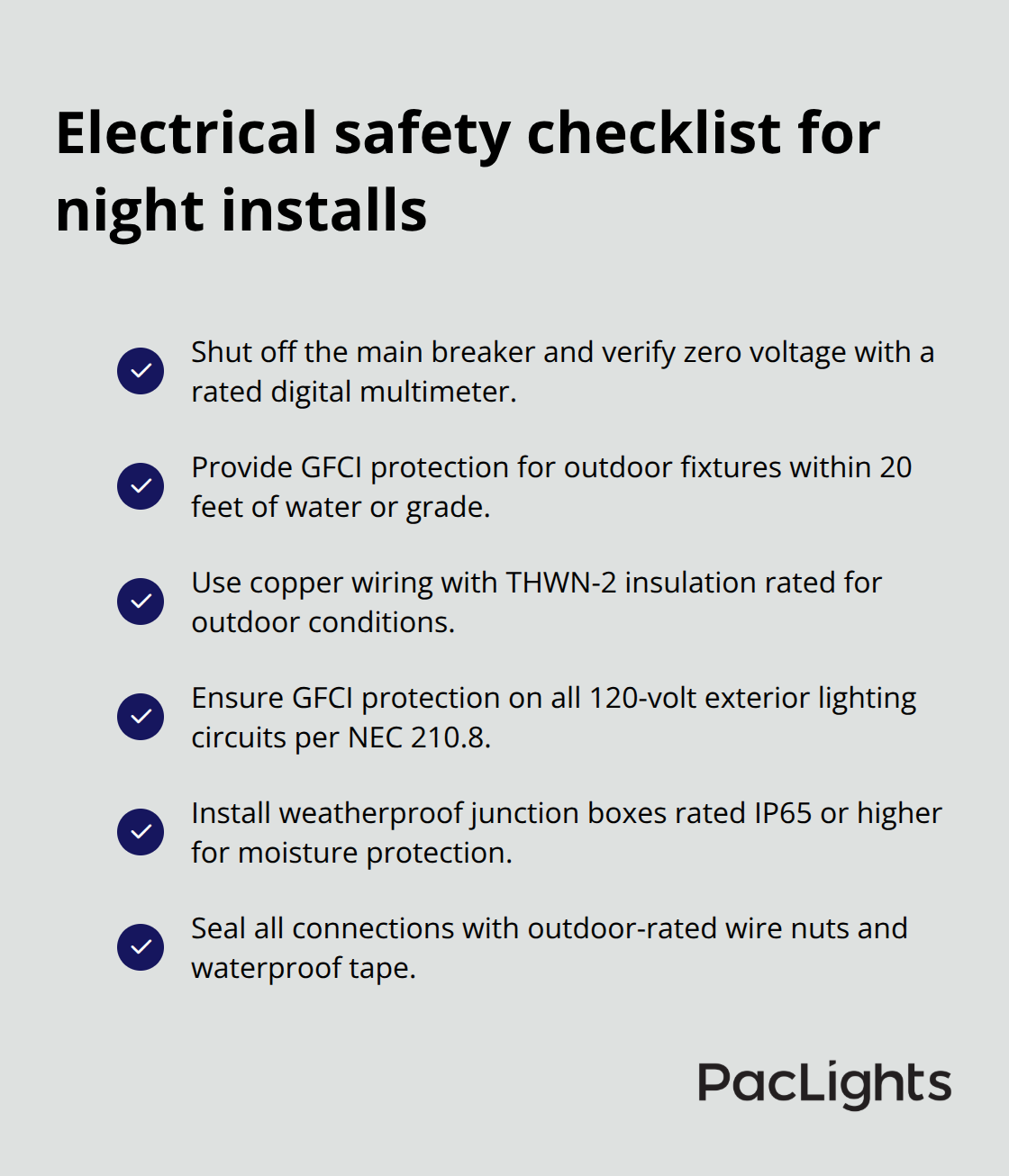
Ground fault protection becomes mandatory for all 120-volt circuits that serve exterior lights per NEC Article 210.8. Install weatherproof junction boxes rated IP65 or higher to prevent moisture infiltration that causes fixture failure within 6 months. All connections require wire nuts rated for outdoor use plus waterproof tape to maintain long-term reliability in harsh weather conditions (especially during winter freeze-thaw cycles).
Final Thoughts
Building lights at night require careful planning that balances performance, efficiency, and compliance requirements. LED fixtures deliver 50-80% energy savings while smart controls add another 30% reduction in operating costs. Professional installation prevents code violations and provides warranties that protect your investment for years.
The long-term benefits extend beyond cost savings. Proper lighting design increases property values by 15-20% while it reduces security incidents by 40%. Energy-efficient systems qualify for utility rebates worth $50-200 per fixture in most regions (and modern controls eliminate manual operation while they adapt automatically to seasonal changes).
Your next step involves selecting fixtures that match your specific requirements and budget constraints. We at PacLights help property owners develop effective lighting strategies through our consultation services. Contact our team to explore LED retrofit solutions and advanced controls that optimize energy use throughout your facility.
Disclaimer: PacLights is not responsible for any actions taken based on the suggestions and information provided in this article, and readers should consult local building and electrical codes for proper guidance.