

Office light art transforms workplaces far beyond basic illumination. Strategic lighting design shapes employee mood, productivity, and overall workplace satisfaction.
We at PacLights understand that modern offices need lighting solutions that blend functionality with aesthetic appeal. The right lighting creates environments where teams thrive and corporate culture flourishes.
How Light Psychology Shapes Your Workplace
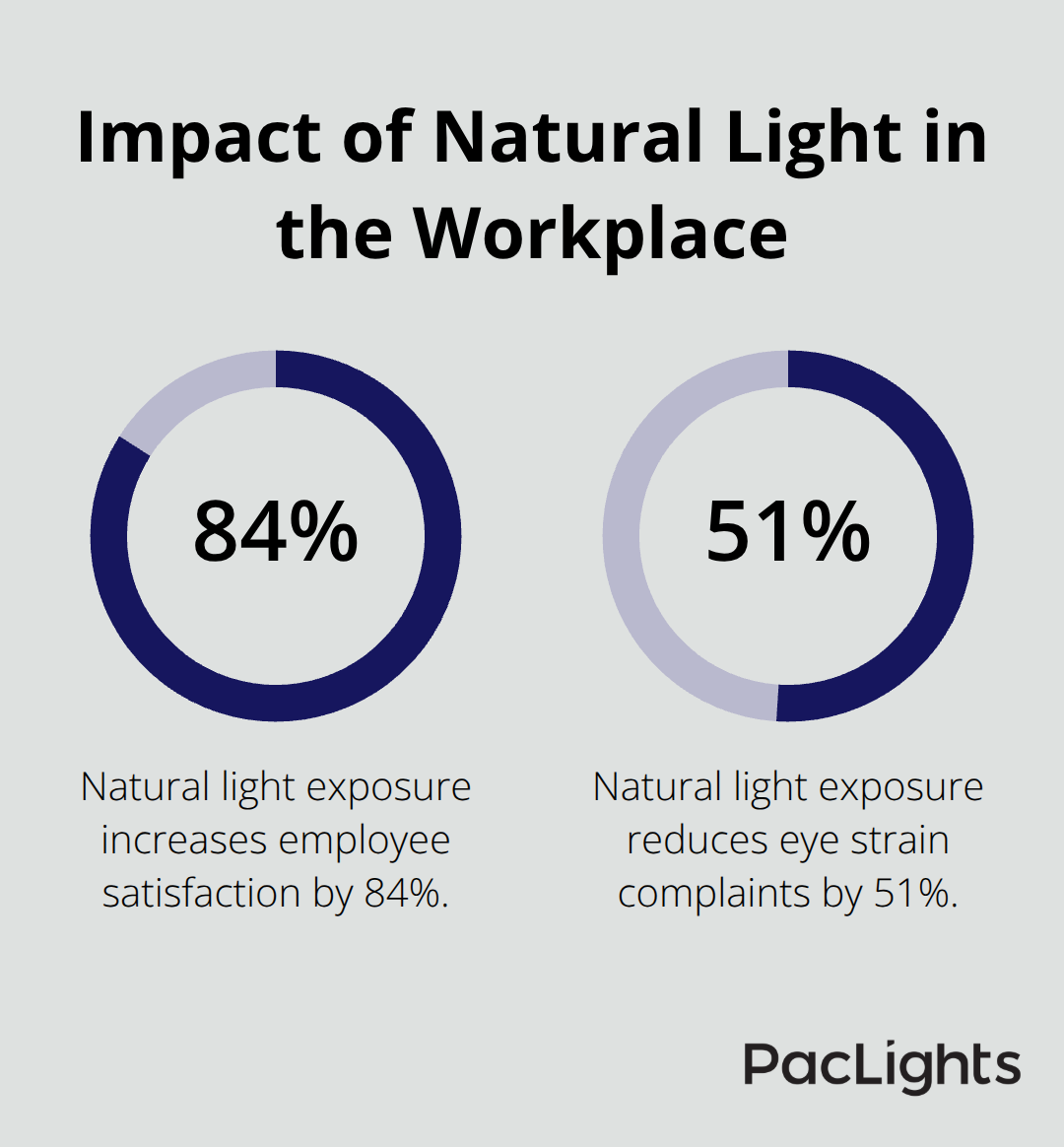
Poor lighting costs businesses millions in lost productivity annually. Harvard Business School research shows that workers in optimally lit offices demonstrate 15% higher productivity compared to those in poorly lit environments. Natural light exposure increases employee satisfaction by 84% and reduces eye strain complaints by 51% (according to Cornell University workplace studies).
Light Temperature Controls Employee Energy
Color temperature dramatically affects workplace performance. Cool light at 5000-6500K boosts alertness and focus during morning hours, while warm light at 2700-3000K promotes relaxation during afternoon breaks. Northwestern University found that employees exposed to blue-rich light at 6500K completed tasks 25% faster than those under standard fluorescent lighting.
Circadian rhythm disruption from improper lighting leads to 23% more sick days and decreased cognitive function. Smart LED systems that adjust throughout the day maintain optimal melatonin production, which improves sleep quality and next-day performance.
Brightness Levels Drive Cognitive Performance
Insufficient lighting below 300 lux reduces reading speed by 38% and increases error rates significantly. Optimal task lighting ranges between 500-1000 lux for detailed work, while general office areas require 200-500 lux. University of Illinois studies demonstrate that consistent lighting at proper levels improves decision-making speed by 23% and reduces mental fatigue.
Glare from poor fixture placement decreases productivity by 15% and causes headaches in 68% of affected workers. Strategic placement of adjustable task lighting allows employees to customize their environment (leading to 19% higher job satisfaction scores).
Visual Comfort Impacts Team Dynamics
Proper lighting distribution creates comfortable environments where employees collaborate more effectively. Uneven lighting creates shadows and bright spots that strain eyes and disrupt focus. Teams in well-lit spaces report 31% better communication and 27% more creative problem-solving sessions.
The foundation of effective workplace lighting sets the stage for artistic installations that can transform ordinary offices into inspiring environments.
Transforming Office Spaces with Artistic Light Design
Artistic light installations succeed when they solve real workplace problems while they create visual impact. Microsoft’s Redmond headquarters features programmable LED strips that change color temperature throughout the day, which reduces eye strain by 40% while it creates dynamic visual interest. Google’s London office uses suspended light sculptures that provide 800 lux task lighting below while they serve as conversation pieces. These installations cost 30% more upfront but deliver measurable productivity gains that justify the investment within 18 months.

Smart Integration Beats Pure Aesthetics
Effective light art integrates seamlessly with existing electrical systems and building management platforms. Linear LED installations along corridor walls provide wayfinding illumination at 200 lux while they display company colors or patterns. Wall-mounted light panels serve dual purposes as ambient lighting and digital displays for company announcements. Airbnb’s San Francisco office combines artistic pendant lights with motion sensors, which reduces energy consumption by 35% while it maintains visual appeal. The key lies in fixtures that enhance functionality rather than compromise it.
Budget-Conscious Light Art Delivers Results
Strategic placement maximizes impact without massive budgets. Reception areas benefit most from statement light pieces because they create first impressions for clients and candidates. Conference rooms need adjustable artistic fixtures that support both presentation modes and collaborative work. Simple LED strip installations behind frosted panels create custom light walls for under $200 per linear foot (including basic controls and installation). Professional RGB light systems allow color changes for different events or seasons, which provides variety without additional hardware costs.
Practical Installation Approaches
Companies typically allocate 15-20% of their total lighting budget to artistic elements and see 25% improvement in employee satisfaction scores. Modular systems offer flexibility for future office reconfigurations without complete reinstallation. Track-mounted artistic fixtures allow position adjustments as workspace needs evolve. Motion-activated accent lighting reduces energy waste while it maintains visual drama during off-hours.
These design principles create the foundation for lighting installations that actively shape corporate culture and strengthen team connections throughout the workplace.
Building Stronger Corporate Culture Through Lighting
Light art becomes a powerful tool for communicating company values when it aligns with brand messaging and workplace behavior. Salesforce Tower in San Francisco uses programmable LED installations that display company colors during product launches and community events, which creates 67% higher employee pride scores according to internal surveys. Companies with consistent light branding across their facilities see 43% better brand recognition among visitors and 28% higher employee advocacy on social media platforms. The key lies in selecting fixtures that reinforce brand identity through color temperature, intensity patterns, and visual rhythm rather than generic decorative elements.
Strategic Placement Drives Team Performance
Collaborative spaces require different approaches than individual work areas to maximize team effectiveness. Slack headquarters features adjustable pendant lights over meeting tables that provide 750 lux task lighting while they create intimate discussion zones. Open collaboration areas benefit from diffused overhead illumination at 400-500 lux combined with accent lights that define team boundaries. MIT research shows that teams working under properly zoned illumination complete projects 34% faster and report 41% better communication quality. Conference rooms with tunable white LED systems allow temperature adjustment from 3000K for brainstorming sessions to 5000K for analytical tasks (which improves meeting productivity by 22%).
Employee Retention Through Environmental Investment
Companies that invest in artistic solutions see measurable retention improvements within the first year. Deloitte found that workplaces with thoughtful design reduce turnover by 26% and decrease recruitment costs by an average of $12,000 per retained employee. Workers in offices with dynamic installations report 38% higher job satisfaction and 29% better work-life balance perception. Enhanced productivity, increased safety measures, and improved employee satisfaction contribute to reduced turnover rates and a stronger organizational culture. The investment typically pays for itself through reduced costs and increased productivity within 24 months, making light art one of the most cost-effective retention strategies available to modern businesses.
Color Psychology Reinforces Brand Values
Different color temperatures communicate distinct corporate messages to employees and visitors. Cool white light at 5000K projects innovation and technology focus, while warm white at 3000K suggests comfort and collaboration. Companies in creative industries often use RGB systems that cycle through brand colors throughout the day (creating visual consistency with marketing materials). Financial firms typically choose neutral white temperatures that convey professionalism and reliability. The psychological impact of consistent color choices strengthens brand identity and helps employees internalize company values through daily environmental exposure.

Final Thoughts
Office light art represents a strategic investment that transforms corporate culture through measurable improvements in employee satisfaction, productivity, and retention. Companies that implement artistic solutions report 26% lower turnover rates and 38% higher job satisfaction scores. These environments naturally foster collaboration and innovation among teams.
The transformation process starts with assessment of current conditions and identification of areas where artistic installations solve functional problems while they enhance visual appeal. Strategic placement in reception areas, conference rooms, and collaborative spaces maximizes impact without overwhelming budgets. Modern LED systems with programmable features allow companies to adapt their environments to different activities and seasons (creating flexibility for evolving workplace needs).
Long-term benefits extend beyond immediate productivity gains through reduced recruitment costs that average $12,000 per retained employee and improved brand recognition among visitors. The investment typically pays for itself within 24 months through decreased turnover and increased output. We at PacLights provide comprehensive solutions that combine energy efficiency with aesthetic appeal to help businesses create inspiring workplaces.
Disclaimer: PacLights is not responsible for any actions taken based on the suggestions and information provided in this article, and readers should consult local building and electrical codes for proper guidance.