

At PacLights, we’re witnessing a revolution in sustainable building design. Architectural LEDs are at the forefront of this transformation, offering unparalleled energy efficiency and versatility.
These innovative lighting solutions are reshaping how we illuminate spaces, both inside and out. In this post, we’ll explore why architectural LEDs are becoming the cornerstone of eco-friendly construction and design.
What Are Architectural LEDs?
Defining Architectural LEDs
Architectural lighting encompasses the strategic use of light in buildings and outdoor environments to enhance the structure’s design, create moods, and provide illumination. Architectural LEDs represent a cutting-edge lighting solution that combines efficiency, versatility, and aesthetic appeal. These advanced lighting systems are specifically engineered for architectural applications, providing precise illumination for both interior and exterior spaces.
The Efficiency Advantage
Architectural LEDs outperform traditional lighting options due to their exceptional energy efficiency. They convert up to 80% of their energy into light (compared to a mere 10% for incandescent bulbs). This high conversion rate translates to significant energy savings and reduced carbon emissions over time.

The lifespan of architectural LEDs is equally impressive. With a range of 25,000 to 50,000 hours, they last 25 to 50 times longer than traditional incandescent bulbs. This longevity not only reduces replacement costs but also minimizes waste, aligning perfectly with sustainable building practices.
Architectural LEDs vs. Traditional Lighting
When compared to traditional lighting solutions, architectural LEDs offer several advantages:
- Energy Efficiency: LEDs use significantly less power to produce the same amount of light as traditional bulbs.
- Heat Production: LEDs generate much less heat, which reduces the strain on HVAC systems and further lowers energy costs.
- Durability: Unlike fragile incandescent or fluorescent bulbs, LEDs are solid-state devices resistant to shock and vibration.
- Color Options: LEDs offer a wide range of color temperatures and can even change colors, providing greater design flexibility.
Types of Architectural LED Fixtures
Architectural LEDs come in various forms to suit different design needs:
- Linear LED Fixtures: These fixtures create continuous lines of light in ceilings or walls.
- LED Panel Lights: These lights provide even, glare-free illumination (perfect for offices and commercial spaces).
- LED overhead light fixtures: These fixtures offer accent lighting or general illumination in residential and commercial settings.
- LED Wall Washers: These lights evenly illuminate vertical surfaces, enhancing spatial perception.
- LED Spotlights: These fixtures highlight architectural features or artwork.
The Future of Architectural Lighting
As we move towards more sustainable building practices, architectural LEDs will play an increasingly important role. Their energy efficiency, longevity, and versatility make them an ideal choice for designers and architects who prioritize both form and function. In the next section, we’ll explore the environmental impact of these innovative lighting solutions and how they contribute to greener building designs.
How Architectural LEDs Benefit the Environment
Dramatic Reduction in Energy Consumption
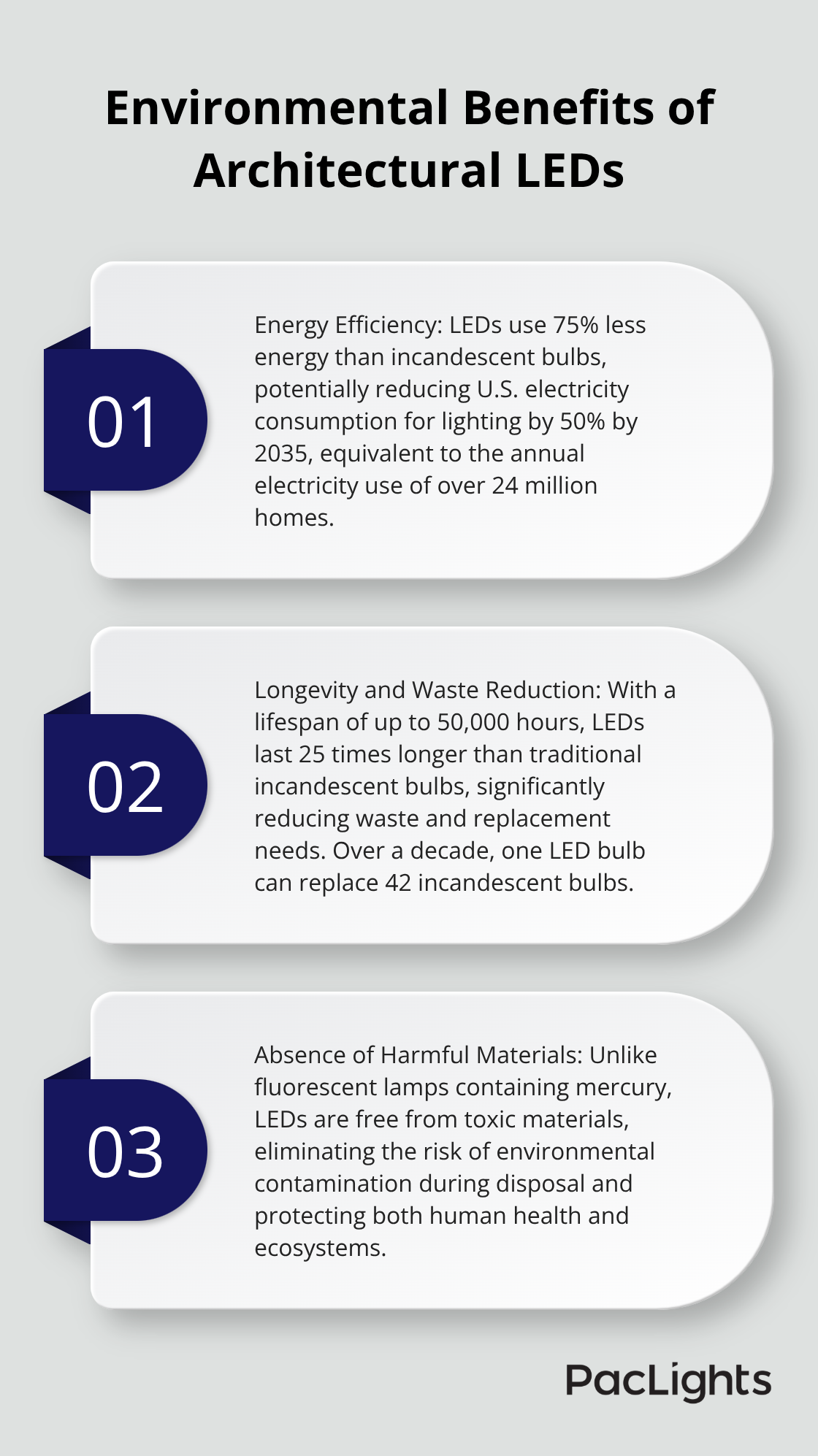
Architectural LEDs stand at the forefront of energy-efficient lighting solutions. The U.S. Department of Energy reports that LEDs use approximately 75% less energy than incandescent bulbs and can last up to 25 times longer. This significant reduction translates to lower electricity bills and a smaller carbon footprint for buildings.
The American Council for an Energy-Efficient Economy projects that LED lighting could cut U.S. electricity consumption for lighting by 50% by 2035. This reduction equals the annual electricity use of over 24 million homes, highlighting the massive potential for carbon emission reduction through widespread LED adoption.
Impressive Longevity Reduces Waste
The extended lifespan of architectural LEDs plays a crucial role in waste reduction. These fixtures can last up to 50,000 hours, which is 25 times longer than traditional incandescent bulbs. This longevity results in fewer replacements, reduced manufacturing needs, and less disposal of spent bulbs.
To illustrate this point, consider that over a decade, you would need to replace an incandescent bulb 42 times to match the lifespan of a single LED bulb. This dramatic reduction in material usage and waste aligns perfectly with sustainable building practices and circular economy principles.
Absence of Harmful Materials
Unlike fluorescent lamps (which contain mercury and require special disposal methods), architectural LEDs contain no toxic materials. This absence of harmful substances makes LEDs safer for handling and installation, and eliminates the risk of environmental contamination during disposal.
The Environmental Protection Agency (EPA) estimates that 2-3% of mercury in fluorescent lamps escapes into the environment when the bulbs break. The switch to LEDs completely prevents this mercury pollution, protecting both human health and ecosystems.
Heat Reduction and HVAC Efficiency
Architectural LEDs generate significantly less heat compared to traditional lighting options. This reduced heat output leads to lower cooling costs and decreased strain on HVAC systems. In large commercial buildings, this can result in substantial energy savings beyond just lighting efficiency.
Versatility in Design and Control
The flexibility of architectural LEDs allows for innovative lighting designs that can further enhance energy efficiency. These fixtures can be easily integrated with smart control systems, enabling features like daylight harvesting and occupancy sensing. Such advanced controls can optimize light usage based on natural light availability and room occupancy, further reducing energy consumption.
As we move towards more sustainable building practices, the environmental benefits of LEDs are multifaceted. Their energy efficiency, longevity, and non-toxic composition make them an essential component of eco-friendly structures. In the next section, we’ll explore how these innovative lighting solutions integrate into sustainable building design, enhancing both form and function.
How Architectural LEDs Integrate with Smart Building Systems
Smart Lighting Controls: The Brain of Efficient LED Systems
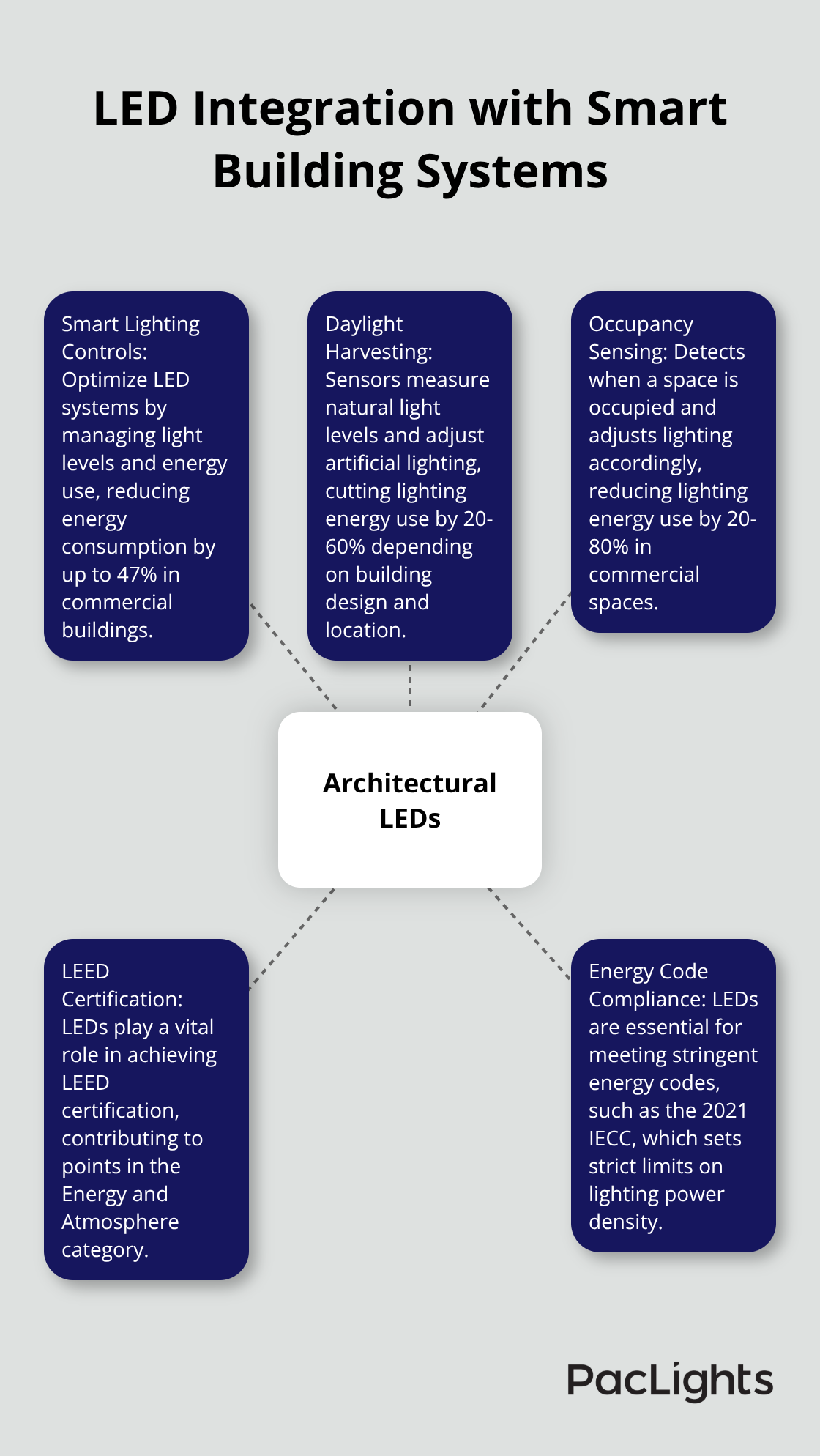
Smart lighting controls optimize LED systems by managing light levels, color temperature, and energy use. The Northwest Energy Efficiency Alliance reports that these controls can reduce energy consumption by up to 47% in commercial buildings. For example, a large office complex that implemented a smart lighting system with LED fixtures saw a 38% reduction in lighting-related energy costs within the first year. The system automatically adjusts light levels based on occupancy and available daylight, which ensures optimal illumination while minimizing waste.
Daylight Harvesting: Maximizing Natural Light
Daylight harvesting techniques use sensors to measure natural light levels and adjust artificial lighting accordingly. The Lawrence Berkeley National Laboratory indicates that this method can cut lighting energy use by 20-60% (depending on the building’s design and location). A university library that installed a daylight harvesting system integrated with LED fixtures achieved a 45% reduction in lighting energy use and improved visual comfort for students and staff.
Occupancy Sensing: Efficiency Through Detection
Occupancy sensors detect when a space is occupied and adjust lighting accordingly. The Energy Trust of Oregon estimates that these sensors can reduce lighting energy use by 20-80% in commercial spaces. A hotel chain that installed occupancy sensors in conjunction with LED fixtures in their corridors and common areas experienced a 65% reduction in lighting energy use in these spaces, which significantly lowered their operational costs and carbon footprint.
LEED Certification: LEDs as a Key Component
LED lighting plays a vital role in achieving LEED (Leadership in Energy and Environmental Design) certification. The U.S. Green Building Council awards points for energy-efficient lighting solutions, and LEDs often emerge as the top choice. A new office building in Chicago earned 6 out of 18 possible points in the Energy and Atmosphere category of LEED certification. The building’s lighting power density was 40% below ASHRAE 90.1-2010 standards, largely due to the efficient LED system.
Energy Code Compliance: Meeting Stringent Standards
As energy codes become more stringent, LEDs become essential for compliance. The 2021 International Energy Conservation Code (IECC) sets strict limits on lighting power density, which are much easier to meet with LED technology. A manufacturing facility in Texas used LED high bay fixtures to reduce their lighting power density by 50%, which easily met the IECC requirements while improving light quality and reducing energy costs.
Final Thoughts
Architectural LEDs revolutionize sustainable building design with unparalleled energy efficiency and longevity. These innovative lighting solutions reduce energy consumption by up to 75% compared to traditional lighting and last up to 50,000 hours, minimizing waste and replacement costs. The integration of architectural LEDs with smart building systems optimizes light usage through features like daylight harvesting and occupancy sensing, leading to additional energy savings of 20-60%.
Architects and builders committed to creating sustainable, energy-efficient structures must adopt architectural LED solutions. These lighting systems play a key role in meeting stringent energy codes and achieving certifications like LEED, which are increasingly important in today’s environmentally conscious market. Future advancements in LED technology will likely include higher efficacy LEDs, improved color rendering capabilities, and more sophisticated integration with building management systems.
We at PacLights offer a wide range of architectural LED solutions designed to meet diverse industrial and commercial lighting needs. Our products combine energy efficiency with durability and versatility, helping you create sustainable, well-lit spaces while reducing costs and carbon footprints. Choose architectural LEDs to illuminate spaces and light the way to a more sustainable future in building design.
Disclaimer: PacLights is not responsible for any actions taken based on the suggestions and information provided in this article, and readers should consult local building and electrical codes for proper guidance.