

Choosing the right lighting for your commercial or industrial space can significantly impact productivity, energy efficiency, and overall ambiance. Linear low bay LED lights have become a popular choice for areas with lower ceiling heights, offering superior illumination and cost-effectiveness.
At PacLights, we understand the importance of selecting the best lighting solution for your specific needs. This guide will walk you through the essential factors to consider when choosing linear low bay LED lights, ensuring you make an informed decision for your facility.
What Are Linear Low Bay LED Lights?
Defining Linear Low Bay LEDs
Linear low bay LED lights are specialized lighting fixtures designed for spaces with ceiling heights between 12 to 20 feet. These versatile lights find common use in commercial and industrial settings such as warehouses, retail stores, gymnasiums, and manufacturing facilities.
Illumination Efficiency
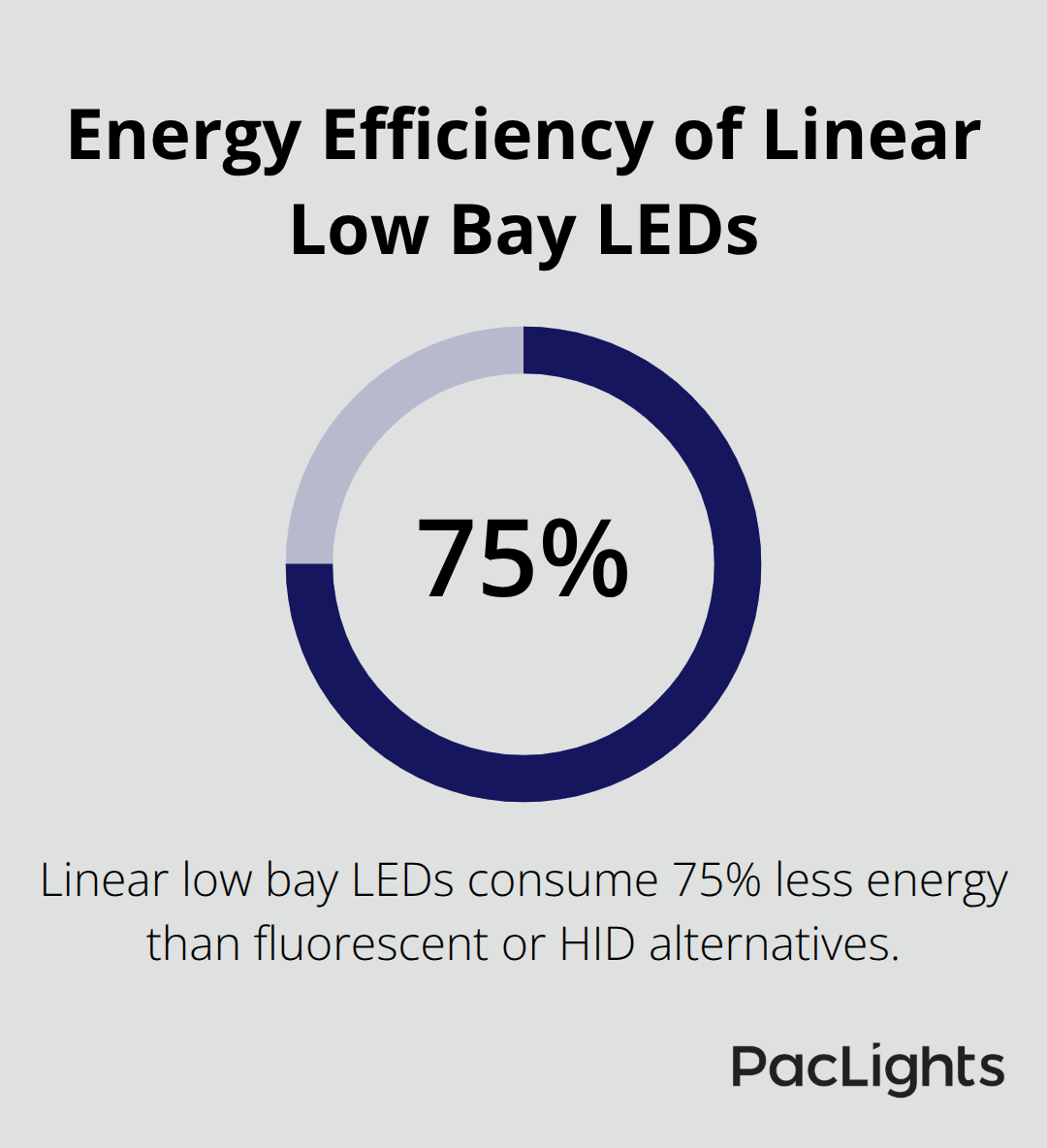
Linear low bay LEDs outperform traditional lighting options in several ways. They consume up to 75% less energy than fluorescent or HID alternatives, which leads to significant cost savings. For example, a 100-watt linear low bay LED can replace a 250-watt metal halide fixture while providing equivalent or better illumination. This energy efficiency translates to lower electricity bills and a reduced carbon footprint.
Longevity and Reduced Maintenance
The impressive lifespan of linear low bay LEDs stands out as another advantage. These fixtures can last up to 50,000 hours or more, far surpassing the 10,000-20,000 hour lifespan of traditional lighting. This longevity results in fewer replacements and lower maintenance costs over time. A study by the U.S. Department of Energy found that LED lighting can reduce maintenance costs by up to 80% compared to conventional lighting systems.
Key Features for Quality Lighting
When selecting linear low bay LED lights, several features ensure optimal performance:
- High lumens per watt (LPW) ratings: Top-tier LEDs can deliver 130-150 LPW, which ensures maximum light output with minimal energy input.
- Color rendering index (CRI): A CRI of 80 or higher (recommended for most commercial applications) accurately represents colors and enhances visual comfort. Some industries (e.g., automotive repair or textile manufacturing) may benefit from even higher CRI ratings of 90+.
- Beam angle and light distribution: Linear LED lighting typically offers wider beam angles (120-180 degrees) compared to their high bay counterparts, which provides more uniform illumination across larger areas. This feature particularly benefits spaces where even lighting is critical for safety and productivity.
As we move forward, it’s important to consider additional factors that influence the selection of the best linear low bay LED lights for your specific needs. Let’s explore these crucial elements in the next section.
Key Factors in Selecting Linear Low Bay LED Lights
Lumen Output and Efficacy
The brightness of your lighting fixture depends on its lumen output. Linear low bay applications typically require between 7,000 to 15,000 lumens per fixture, based on the specific area and task requirements. However, raw lumen output isn’t the sole consideration. Efficacy, measured in lumens per watt (LPW), indicates how efficiently the fixture converts electricity into light. Top-performing linear low bay LEDs can achieve 130-150 LPW or higher. This high efficacy results in lower energy costs and a reduced environmental impact.
Color Temperature and CRI
Color temperature affects the ambiance and functionality of your space. Most commercial and industrial applications prefer neutral white (4000K) or cool white (5000K). These color temperatures promote alertness and visibility, essential for task-oriented environments.
The Color Rendering Index (CRI) holds equal importance. A CRI of 80+ ensures colors appear natural and vibrant in commercial spaces. Some industries (such as automotive repair or textile manufacturing) may benefit from even higher CRI ratings of 90+. The U.S. Department of Energy reports that high CRI lighting can improve visual acuity by up to 5%, potentially boosting productivity in work environments.

Light Distribution and Controls
The beam angle of your linear low bay LED lights affects light distribution across your space. Most linear fixtures offer wide beam angles between 120 to 180 degrees, providing uniform illumination over large areas. This wide distribution benefits open spaces like warehouses or retail floors.
Dimming capabilities and advanced controls can enhance the functionality of your lighting system. Daylight harvesting sensors automatically adjust light output based on available natural light, potentially saving up to 40% on lighting energy costs (according to the Lighting Controls Association). Motion sensors reduce energy waste in low-traffic areas, with some studies showing energy savings of up to 30% in warehouse applications.
Durability and Environmental Protection
The Ingress Protection (IP) rating determines durability, especially in industrial or outdoor settings. An IP65 rating or higher protects against dust and water ingress, essential for longevity in challenging environments. For example, food processing facilities or car washes, where moisture and cleaning chemicals are present, require a high IP rating.
The operating temperature range of the fixtures also matters. Quality linear low bay LEDs should perform efficiently in a wide range of temperatures, typically from -20°C to 50°C (-4°F to 122°F). This ensures consistent performance across various seasons and applications.
These factors will help you select linear low bay LED lights that meet your immediate lighting needs and provide long-term benefits in energy savings, maintenance reduction, and improved workplace conditions. The next section will explore installation and maintenance considerations to ensure you maximize the value of your lighting investment.
How to Install and Maintain Linear Low Bay LED Lights
Versatile Mounting Options
Linear low bay LED lights offer multiple mounting options to accommodate various environments. Surface mounting provides quick installations, especially for retrofit projects. Suspended mounting allows adjustable heights, which benefits spaces with varying ceiling heights or where lower mounting improves light distribution. Recessed mounting integrates fixtures into the ceiling, creating a sleek look ideal for spaces with drop ceilings.
The U.S. Department of Energy reports that proper fixture placement can improve lighting efficiency by up to 50%. When installing linear low bay LEDs, try to achieve a spacing-to-mounting-height ratio of 1.2 to 1.5 for optimal coverage. This means if your fixtures are mounted at 15 feet, space them approximately 18 to 22.5 feet apart for uniform illumination.
Energy Savings and ROI Calculations
Energy savings from linear low bay LED lights can be substantial. A typical 100W LED fixture can replace a 250W metal halide, resulting in a 60% reduction in energy consumption. To calculate your potential savings:
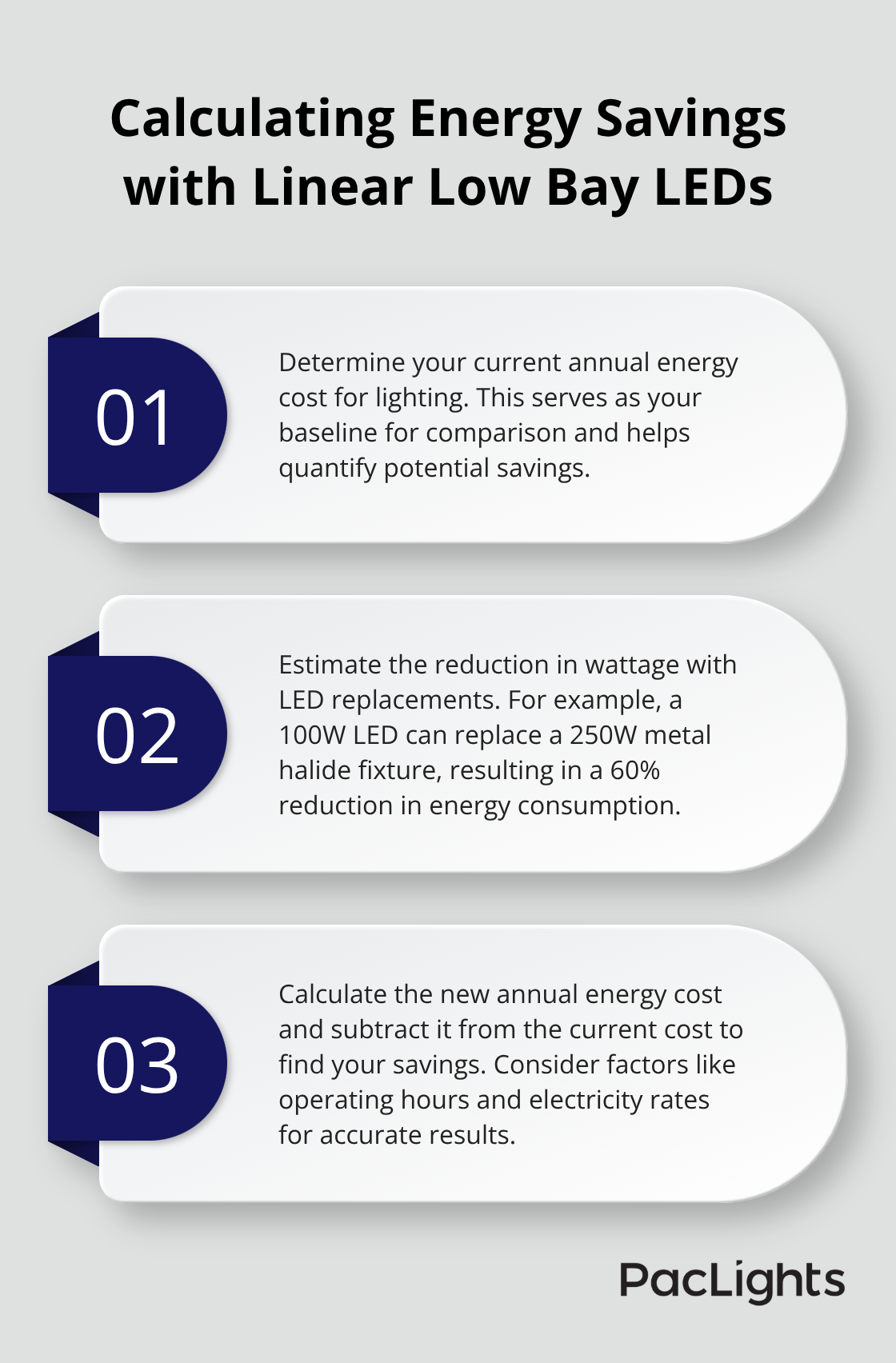
For example, if you replace 50 metal halide fixtures (250W each) with LED equivalents (100W each), operating 12 hours a day, 365 days a year, at $0.12 per kWh, your annual savings would be approximately $6,570.
The initial investment in LED lighting is typically recouped within 2-3 years through energy savings alone. Factor in reduced maintenance costs, and the ROI becomes even more attractive. The Department of Energy estimates that LED lighting can reduce maintenance costs by up to 80% compared to traditional lighting systems.
Simplified Maintenance for Long-Term Performance
Linear low bay LED lights require minimal maintenance, but a few simple practices can extend their lifespan and maintain peak performance. Inspect fixtures regularly for dust accumulation and clean them with a soft, dry cloth. Avoid using harsh chemicals that could damage the LED components or lenses.
Monitor your fixtures for any signs of decreased output or color shifts, which could indicate the need for replacement. Most quality LED fixtures maintain at least 70% of their initial output after 50,000 hours of use (far outlasting traditional lighting options).
Implement a proactive maintenance schedule to prevent unexpected outages and ensure consistent lighting quality. The Illuminating Engineering Society recommends annual inspections for most commercial lighting systems, with more frequent checks in harsh environments.
Warranty and Support
A comprehensive warranty is essential when selecting linear low bay LED lights. Look for manufacturers offering at least a 5-year warranty, which demonstrates confidence in their product’s quality and longevity. Some premium fixtures come with warranties extending up to 10 years, providing long-term peace of mind.
Customer support is equally important. Choose a manufacturer that offers technical assistance for installation, troubleshooting, and maintenance. This support can be invaluable, especially when dealing with large-scale lighting projects or integrating advanced control systems.
When evaluating warranties, pay attention to coverage details. Some warranties may only cover the LED chips, while others include the entire fixture (including the driver). Understanding these nuances can save you from unexpected costs down the line.
Final Thoughts
Linear low bay LED lights offer a powerful solution for spaces with lower ceilings. These fixtures provide uniform illumination, significant energy savings, and reduced maintenance costs compared to traditional lighting systems. The initial investment in quality LED fixtures often results in substantial long-term benefits, including lower energy consumption and extended lifespan.
We at PacLights understand the importance of selecting the right lighting solution for your facility. Our range of linear low bay LED lights meets diverse industrial and commercial needs, offering energy-efficient options that reduce costs and environmental impact. We provide free lighting layout designs and ROI assessments to help you make an informed decision.
For expert guidance through the selection process, contact our team at PacLights. We will ensure you find the perfect lighting solution (tailored to your unique requirements). Our commitment to quality and customer satisfaction sets us apart in the industry.
Disclaimer: PacLights is not responsible for any actions taken based on the suggestions and information provided in this article, and readers should consult local building and electrical codes for proper guidance.