

Picking the wrong lighting fixture for a hazardous environment can cost you thousands in compliance fines or equipment damage. At PacLights, we know that vapor tight fixture ratings aren’t just technical specs-they’re your first line of defense against dust, moisture, and explosive atmospheres.
This guide breaks down IP codes and hazardous-location classifications so you can make confident decisions about which fixtures actually protect your facility.
What IP Ratings Actually Measure and How They Apply to Your Facility
IEC 60529 standard uses a two-digit code where the first digit measures dust ingress and the second measures water ingress. The dust rating runs from 0 to 6, with 0 meaning no protection and 6 meaning complete dust-tight protection. The water rating runs from 0 to 9, with 0 meaning no protection and 9 meaning protection against high-pressure water jets. Most industrial vapor tight fixtures fall into the IP65, IP66, or IP67 range, and understanding what each actually does matters far more than memorizing the full scale.
Understanding the Three Common Industrial Ratings
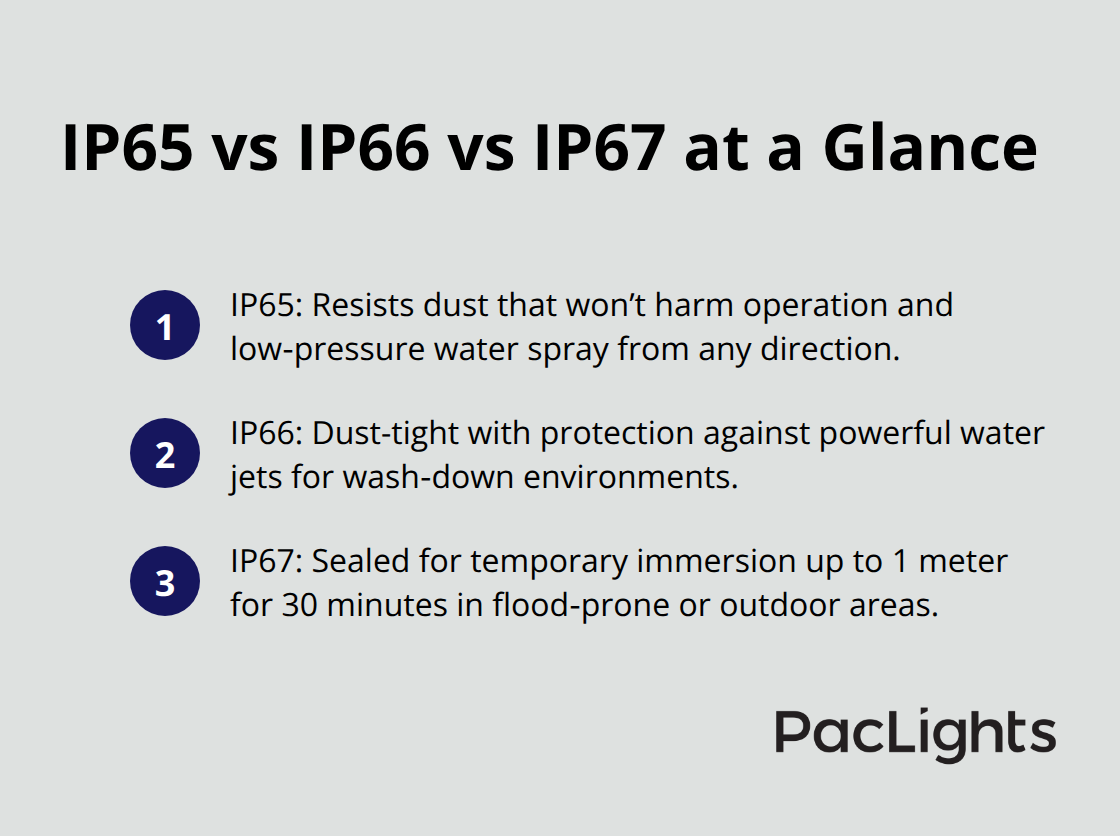
IP65 protects against low-pressure water spray from any direction and dust ingress that won’t harm operation. IP66 adds protection against powerful water jets and is the minimum standard for wash-down environments in food processing or chemical facilities. IP67 seals against temporary immersion in water up to 1 meter for 30 minutes, making it suitable for outdoor or flood-prone areas. Many facility managers assume higher IP ratings automatically mean better protection, but that reasoning misses a critical point: IP ratings address only external water and dust ingress, not internal ignition containment.
A fixture rated IP67 keeps water out effectively, yet it says nothing about whether that fixture can safely contain an internal arc or spark in a flammable atmosphere. This distinction separates vapor tight fixtures from hazardous-location luminaires, and conflating the two creates serious compliance gaps.
Selecting the Right IP Rating for Non-Classified Wash-Down Areas
For non-classified wash-down areas, IP66 serves as your practical floor. Facilities handling food products, pharmaceuticals with water exposure, or outdoor equipment typically operate in these zones where moisture is constant but explosive atmospheres are not present. IP67 becomes necessary only when temporary water immersion is possible, such as in areas prone to flooding or where equipment sits below spray height. Specifying IP67 across an entire facility often wastes budget since most indoor wash-down operations never reach immersion conditions.
Managing Grease Exposure and Gasket Degradation
In grease-heavy environments like meat processing or bakeries, standard IP66 listings prove insufficient because grease degrades gaskets and lens materials over time. Look for fixtures with a specific Suitable for Grease supplement to the UL 1598 listing, and verify that lens and gasket materials resist fats and oils. Temperature cycling also degrades gaskets faster than static conditions; preventive maintenance should include scheduled gasket inspection and latch re-torquing every 12 to 24 months depending on temperature swings in your facility.
Protecting Against Conduit Entry Vulnerabilities
Conduit entries present another overlooked vulnerability. Improper sealing of conduit fittings allows moisture and vapors to migrate into downstream enclosures that may not be rated for the exposure. Install approved seal-offs and follow NEC packing instructions precisely. Documentation of your IP selection matters for rebates and compliance audits-capture the fixture model, IP rating, and installation location in your project records so future maintenance teams understand why a specific rating was chosen for each area. With these IP fundamentals in place, you’re ready to examine how hazardous-location classifications add another layer of protection requirements that IP ratings alone cannot provide.
When Hazardous Classifications Matter More Than IP Ratings
NEC Article 500 organizes hazardous locations into three classes based on what materials are present, then subdivides each class into divisions based on how often those materials appear during normal operation. Class I locations contain flammable gases or vapors-think refineries, chemical plants, and gas-handling facilities where the atmosphere itself becomes dangerous. Class II locations involve combustible dusts like grain, flour, or plastic particles suspended in air; food processing plants and grain elevators operate here. Class III locations contain easily ignitable fibers or flyings such as textile mills and woodworking shops where dust or fiber accumulation creates fire risk.
Division 1 vs. Division 2: The Critical Difference
The distinction between divisions determines fixture selection more than anything else. Division 1 means the hazardous material is present under normal operation-constantly or frequently. Division 2 means the material is not normally present but may escape from process equipment during abnormal conditions, such as a leak from a pump seal or a ruptured line. This difference is enormous.
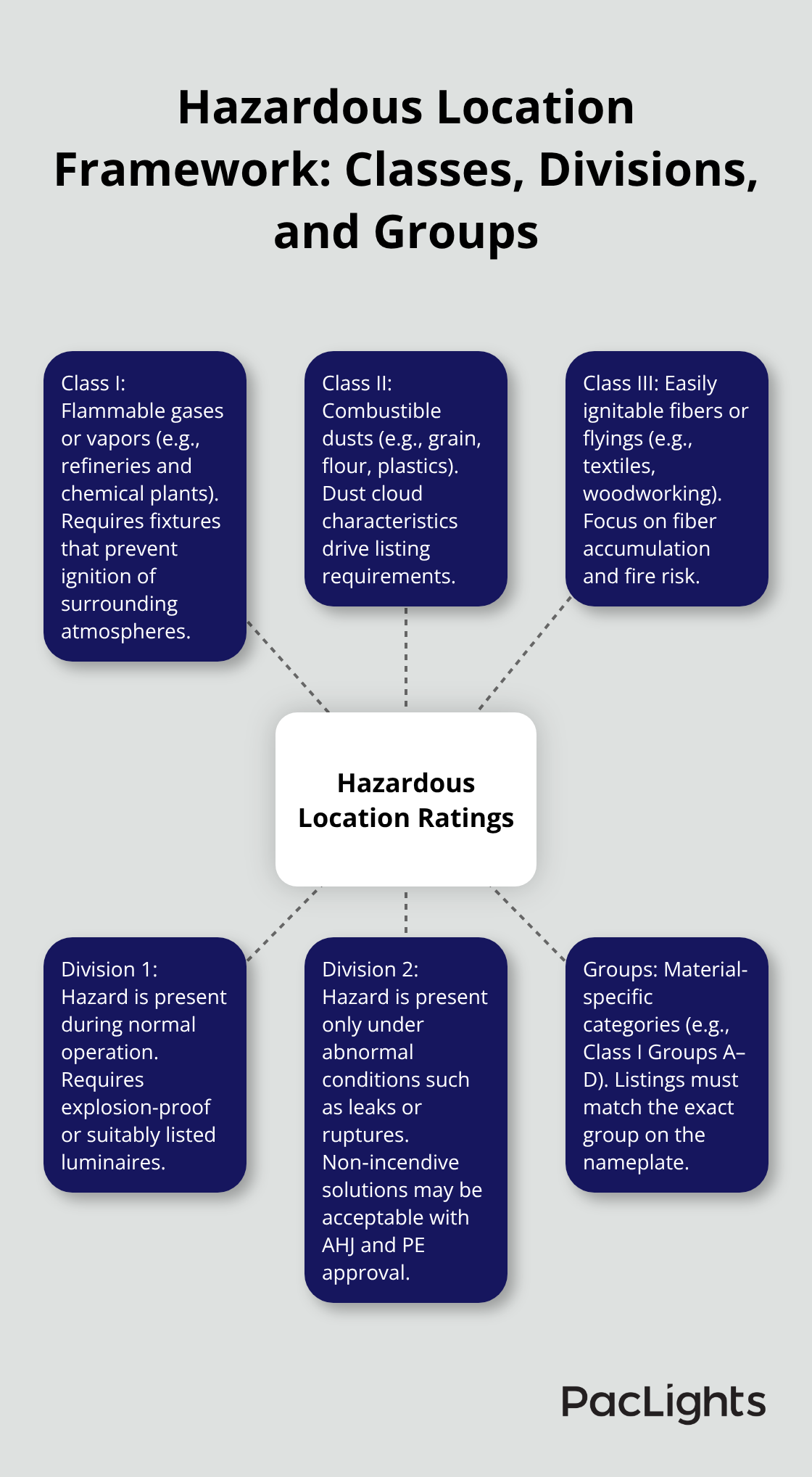
A Class I Division 1 refinery pump room requires explosion-proof luminaires rated to UL 844, which means the fixture must contain any internal arc or spark without allowing flame to escape through joints or openings. A Class I Division 2 area around the same pump room where vapor might escape only during equipment failure can sometimes accept vapor-tight fixtures with documented non-incendive ratings, provided the Authority Having Jurisdiction approves the installation and a licensed Professional Engineer signs off on it.
Why IP Ratings and Hazardous-Location Ratings Are Not Interchangeable
The mistake most facility managers make is assuming that because a fixture looks sealed or carries an IP66 rating, it is safe for hazardous areas. IP ratings measure dust and water ingress from outside the fixture. Hazardous-location ratings measure whether the fixture can contain an explosion inside the enclosure without igniting the surrounding atmosphere. These are fundamentally different safety goals, and conflating them creates liability. A fixture marked only as Class I Division 2 without a group designation is incomplete and unacceptable.
Understanding Group Ratings and Material-Specific Requirements
Within each class, NEC groups specify the exact materials present. Class I groups range from A through D, with Group A being the most stringent (acetylene) and Group D being the least stringent (propane, methane). Class II and III designate dusts and fibers without further subdivision. A fixture certified for Class I Group D may not be acceptable in a Class I Group B environment even though both are Division 1, because the ignition characteristics and pressures differ. This is where manufacturer documentation becomes non-negotiable. Work with your safety officer or a qualified PE to map your facility’s exact classification using hazard assessments and NEC guidance. Document the class, division, and group for each area. Then verify that every fixture you specify carries a nameplate or data sheet showing it is listed for those exact ratings.
Verifying Certifications and Addressing Special Environments
Third-party listings from UL or CSA must appear on the fixture label or in the manufacturer’s technical documentation. If you cannot find explicit hazard-location markings on a fixture’s nameplate or data sheet, do not assume it is suitable for the space. In grease-heavy Class II environments, confirm that the fixture carries a supplement to UL 1598 showing it is suitable for grease exposure, because standard dust-tight ratings do not address long-term gasket degradation from fats and oils. Temperature ratings also matter-some fixtures have limited operating ranges that may exclude them from high-temperature Class II areas or outdoor Class III locations exposed to freeze-thaw cycles. The selection process requires matching the fixture’s certification to the site’s actual classification, not the other way around. Once you have verified the hazard-location ratings for your space, the next step involves confirming that the fixture also meets the environmental and performance standards your facility demands.
How to Match Fixtures to Your Facility’s Real Operating Conditions
Start with IP Rating Based on Actual Site Conditions
Selecting the right vapor tight fixture requires matching three concrete variables to your facility’s actual environment: the IP rating your space demands, the temperature range equipment will experience, and the operating cost difference between upgrade options. Document what your facility actually encounters, not what you think it might encounter. A food processing plant with daily wash-downs at 140°F using caustic chemicals needs IP66 minimum, but adding IP67 costs 15 to 25 percent more and provides zero additional benefit since immersion never occurs on your production floor.
Walk the space with your maintenance team and ask directly: does water sit on fixtures or does it drain immediately? Do you use high-pressure jets or gentle spray systems? Does grease accumulate on lens surfaces? These answers determine whether IP66 suffices or IP67 becomes necessary.
Account for Temperature Extremes and Gasket Durability
Temperature tolerance matters equally because gaskets and optical materials degrade faster at temperature extremes. A fixture rated only to 104°F will fail prematurely in a bakery oven area reaching 130°F regularly, forcing replacement within two years instead of seven. Check the fixture’s data sheet for the full operating range, not just the maximum temperature. Many manufacturers list only the upper limit, but cold environments cause gasket brittleness and optical fogging just as severe as heat exposure.
For outdoor installations or areas with freeze-thaw cycles, verify that the fixture is rated for your region’s minimum winter temperature. Temperature cycling also degrades gaskets faster than static conditions; preventive maintenance should include scheduled gasket inspection and latch re-torquing every 12 to 24 months depending on temperature swings in your facility.
Calculate Total Cost of Ownership Across Energy, Maintenance, and Rebates
Cost analysis separates smart upgrades from wasteful spending. A Class I Division 2 facility considering whether to retrofit 40 fixtures from 400W metal-halide to 150W LED vapor tight models should calculate the full picture: energy savings, maintenance labor, lamp replacement frequency, and HVAC load reduction. At an average industrial electricity rate of 0.12 dollars per kilowatt-hour, switching 40 fixtures saves approximately 100,000 kilowatt-hours annually, equaling 12,000 dollars in energy costs alone.
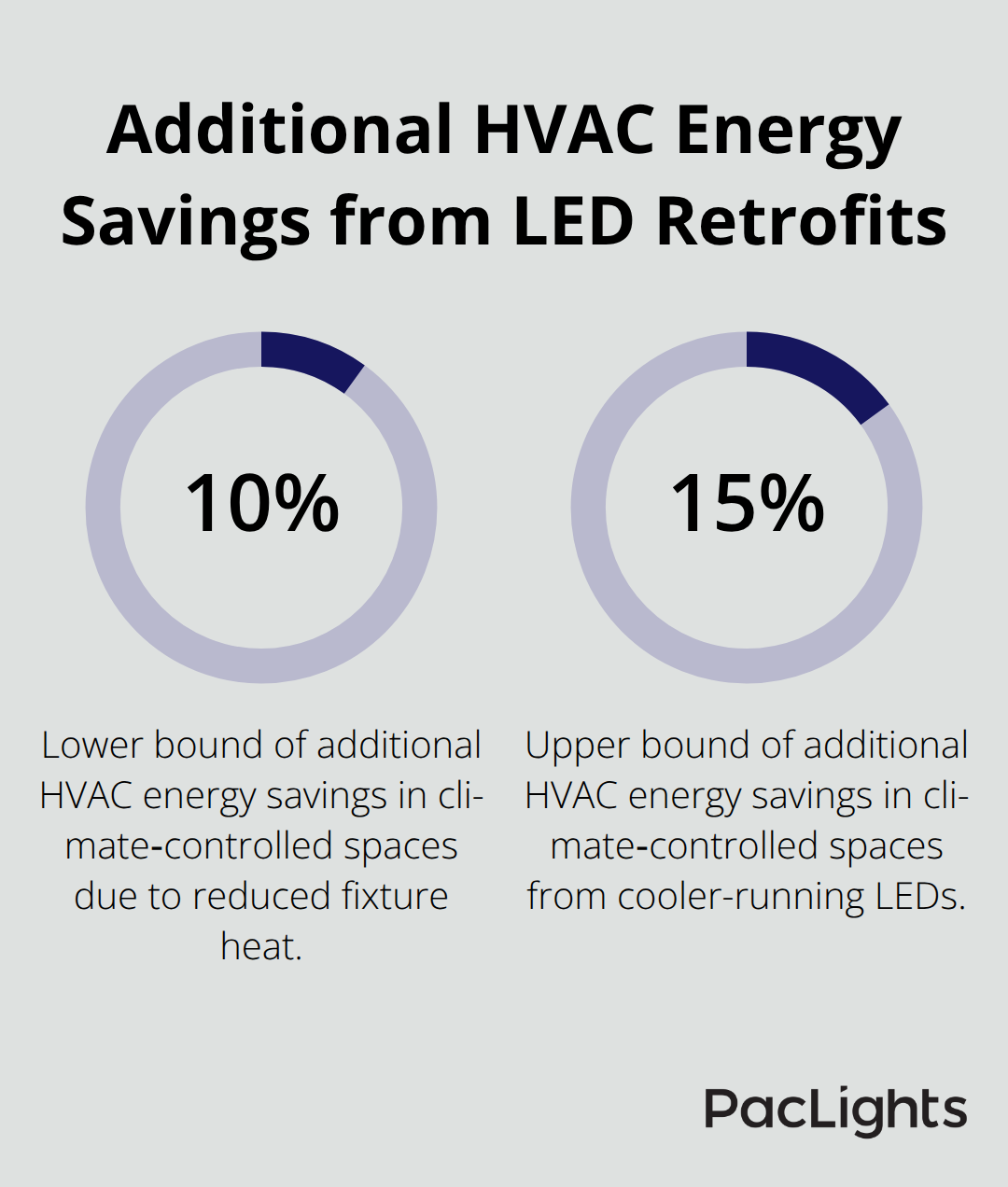
Maintenance drops because LED fixtures eliminate the need for frequent lamp changes, ballast replacements, and thermal-related failures; traditional metal-halide requires lamp replacement every 6,000 to 10,000 hours, while LED runs 50,000 hours or longer. Reduced fixture heat also lowers HVAC cooling demand, adding another 10 to 15 percent to your energy savings in climate-controlled spaces. These facilities typically achieve payback within 18 to 30 months, making the retrofit economically sound even before accounting for rebates.
Leverage Utility Incentives and Performance Data
Check whether your utility offers incentives for LED upgrades in hazardous locations; many utilities provide rebates of 0.50 to 1.50 dollars per watt for DesignLights Consortium Premium-listed fixtures, which can reduce your net project cost by 20 to 30 percent. Request photometric data files in IES format from your fixture manufacturer so you can model the exact lumen output and distribution in your space before committing to purchase, ensuring the fixture delivers the light levels your operations require.
Final Thoughts
Vapor tight fixture ratings protect your facility from the specific hazards your space actually faces, and IP ratings handle moisture and dust ingress from outside the fixture while hazardous-location classifications address whether a fixture can contain internal ignition sources safely. Confusing these two standards creates compliance gaps that cost money and expose your operation to serious risk. The right fixture for your facility depends on three concrete factors: the IP rating your environment demands based on actual wash-down conditions, the temperature range your equipment will experience, and the total cost of ownership across energy, maintenance, and rebates.
Start by documenting your space’s exact conditions with your maintenance team and safety officer, then walk the facility to identify whether you operate in a classified hazardous area and verify the class, division, and group ratings if applicable. For non-classified wash-down environments, IP66 serves as your practical baseline; IP67 adds cost without benefit unless temporary water immersion actually occurs. In grease-heavy operations, confirm that fixtures carry a Suitable for Grease supplement to UL 1598 and include gasket inspection in your preventive maintenance schedule every 12 to 24 months.
The economics of upgrading to LED vapor tight fixtures often justify the investment within 18 to 30 months through energy savings, reduced maintenance labor, and lower HVAC cooling demand, and utility rebates for DesignLights Consortium Premium-listed fixtures can reduce your net project cost by 20 to 30 percent. We at PacLights understand that selecting the right vapor tight fixture requires matching specifications to your facility’s real operating conditions, not theoretical standards. Contact us to discuss your facility’s specific requirements and explore solutions tailored to your hazardous or wash-down environment.
Disclaimer: PacLights is not responsible for any actions taken based on the suggestions and information provided in this article, and readers should consult local building and electrical codes for proper guidance.