

Standard lighting fails in harsh industrial environments. Moisture, chemicals, and extreme temperatures destroy ordinary fixtures within months, leaving your facility dark and unsafe.
Vapor tight LED fixtures are built differently. At PacLights, we’ve seen firsthand how proper sealing and robust construction keep facilities running reliably where standard lights simply can’t survive.
Why Vapor Tight Fixtures Stop Moisture and Chemical Damage
Moisture penetration destroys standard LED fixtures in weeks, not years. Water entering a fixture corrodes electrical connections, fosters mold growth inside the housing, and causes complete failure. Vapor tight fixtures seal this vulnerability with multiple layers of protection. Gasket materials like silicone and EPDM rubber create barriers that prevent water vapor and liquid from reaching internal components. Precision-engineered seals maintain integrity even when exposed to direct spray, condensation, and high humidity for extended periods.
The difference matters in food processing plants where washdown cycles happen daily, refrigeration facilities where temperature swings create constant condensation, and chemical storage areas where corrosive vapors attack anything exposed. Standard IP65-rated fixtures claim splash protection but fail under sustained vapor exposure. True vapor tight fixtures meet IP66 or higher standards, meaning they withstand powerful jets of water from any direction without allowing moisture ingress.
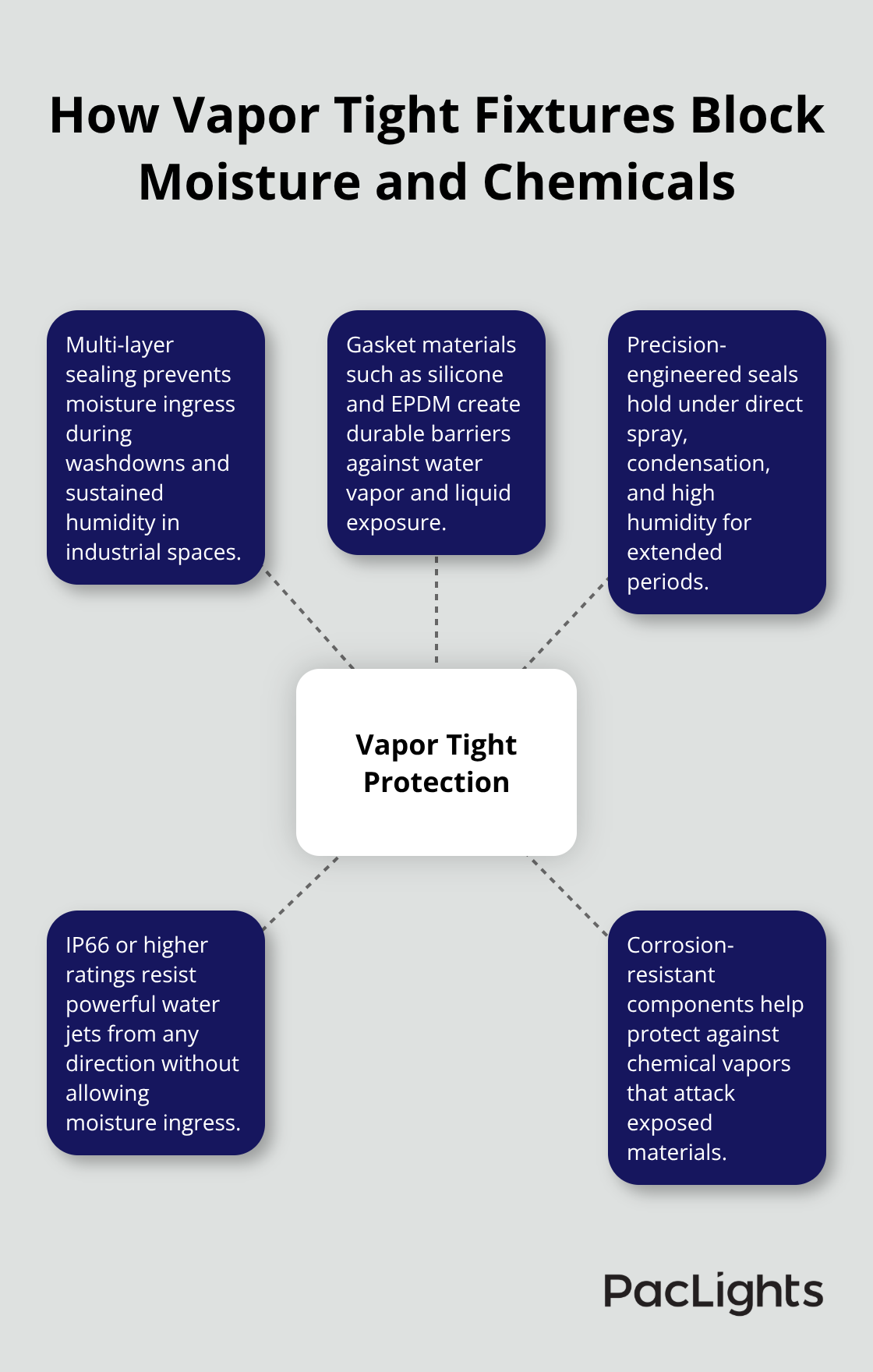
In wastewater treatment plants, the combination of moisture and hydrogen sulfide gas attacks metal components aggressively. Fixtures rated for these conditions use stainless steel hardware and specialized gasket compounds that resist chemical degradation. The cost difference between a standard fixture and a vapor tight alternative runs 20-35 percent higher upfront, but that fixture lasts 8-10 years instead of failing after 6-18 months in harsh conditions. Facilities that switch to proper vapor tight sealing report 60-70 percent fewer maintenance calls related to lighting failures, reducing labor costs significantly.
Extreme Temperature Swings Require Engineered Materials
Industrial environments experience temperature fluctuations that crack standard plastic housings and cause gasket materials to lose elasticity. A refrigeration facility might cycle from minus 20 degrees Fahrenheit to plus 80 degrees Fahrenheit multiple times daily. These swings create thermal stress that ordinary fixtures cannot withstand. Vapor tight LED fixtures use materials engineered specifically for this stress. Polycarbonate and aluminum housings expand and contract predictably without cracking. Gasket materials selected for vapor tight applications maintain flexibility across temperature ranges from minus 40 to plus 140 degrees Fahrenheit.
LED components themselves perform better in sealed enclosures because the fixture protects them from rapid temperature changes that degrade semiconductor performance. Fixtures operating in chemical manufacturing areas face additional complexity because some chemicals attack specific materials. A facility handling chlorine or bromine compounds cannot use standard rubber gaskets because these chemicals degrade them within months. Vapor tight fixtures designed for chemical environments use specialized gasket compounds like Viton that resist chemical attack. The selection process requires understanding both the temperature extremes and the specific chemical environment where the fixture operates.
Compliance Protects Your Facility and Your Liability
Industrial facilities operating in hazardous locations must meet specific electrical codes. The National Electrical Code requires fixtures in classified locations to meet UL standards for hazardous locations. Vapor tight fixtures that meet UL1598 certification for hazardous locations comply with these requirements. Using non-certified fixtures in classified areas creates liability exposure for your facility. If an accident occurs near non-compliant lighting, your insurance may deny coverage and regulatory agencies can impose fines.
OSHA standards require adequate illumination in work areas, and that illumination must come from fixtures appropriate for the environment. A wastewater treatment facility using standard fixtures in areas with explosive gas potential violates code and creates safety risk. Vapor tight fixtures certified for hazardous locations eliminate this exposure. Compliance also affects maintenance planning. Certified vapor tight fixtures have documented performance specifications that help you predict service life and plan replacements proactively. This predictability reduces emergency maintenance situations where facilities operate with failed lighting that creates safety hazards.
Understanding these three factors-moisture protection, temperature resilience, and regulatory compliance-shapes the foundation of reliable industrial lighting. The next section examines where these fixtures deliver the most dramatic performance improvements across specific industrial applications.
Applications Where Vapor Tight Fixtures Outperform Standard Lighting
Food Processing and Refrigeration Facilities
Food processing facilities operate under relentless moisture and sanitation demands. USDA regulations require washdown cleaning multiple times daily, and standard fixtures fail catastrophically under these conditions. A poultry processing plant washing down work areas with high-pressure water at 180 degrees Fahrenheit destroys ordinary IP65 fixtures within months. Vapor tight LED fixtures rated IP66 or higher survive these cycles for years.
The National Chicken Council reports that equipment downtime costs processors approximately 500 to 1,200 dollars per hour in lost production. When lighting fails and forces facility shutdown, the financial impact extends far beyond replacing the fixture itself. Refrigeration facilities face a different but equally demanding challenge.
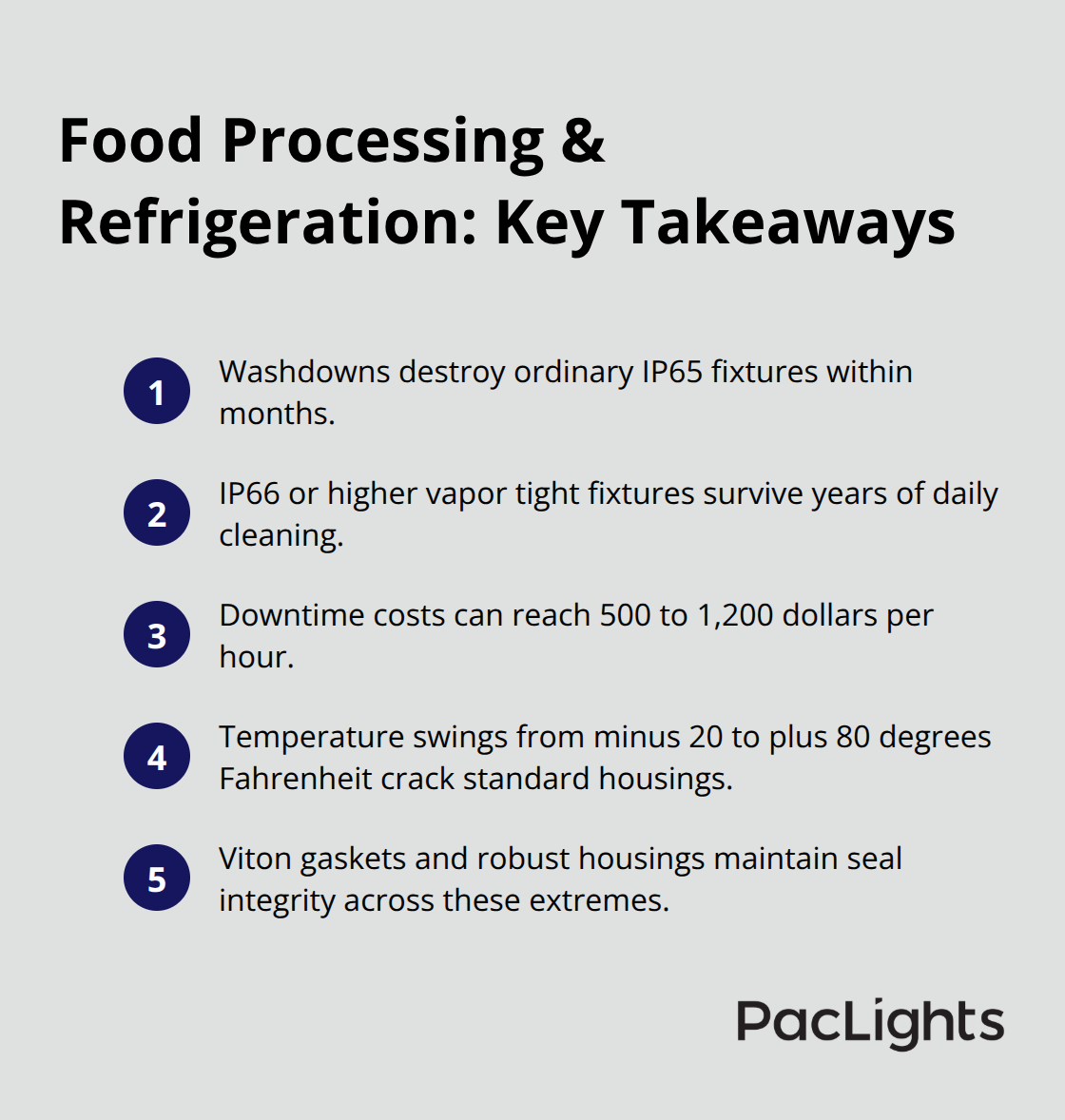
Temperature swings between minus 20 and plus 80 degrees Fahrenheit crack standard plastic housings and degrade gasket materials. Vapor tight fixtures with polycarbonate or aluminum construction and Viton gaskets maintain seal integrity across these extremes.
Facilities that switched to vapor tight fixtures reported 40 to 50 percent reduction in emergency maintenance calls during winter months when thermal stress peaks. The upfront investment of 20 to 35 percent higher cost recovers within two to three years through eliminated emergency repairs and reduced labor expenses.
Chemical Manufacturing and Storage Areas
Chemical manufacturing environments demand specialized material selection that standard fixture manufacturers ignore. Facilities handling chlorine, bromine, or sulfuric acid vapors cannot use ordinary rubber gaskets because these chemicals degrade them in weeks. Viton gaskets resist chemical attack where standard materials fail completely. A chemical storage facility storing hydrochloric acid vapors must use fixtures with stainless steel hardware and chemical-resistant gaskets, not generic industrial fixtures.
The cost difference between selecting the correct vapor tight fixture for the specific chemical environment and replacing failed standard fixtures repeatedly makes proper specification non-negotiable. Facilities that consult with manufacturers about their specific chemical exposures rather than purchasing generic industrial fixtures reduce unplanned maintenance by 60 to 70 percent.
Wastewater Treatment and Marine Environments
Wastewater treatment plants combine moisture and hydrogen sulfide exposure that attacks metals aggressively. The American Water Works Association notes that corrosion-related failures account for 25 to 30 percent of equipment replacement costs in treatment facilities. Vapor tight fixtures with stainless steel fasteners and specialized coatings extend service life from 2 to 3 years to 8 to 10 years in these environments.
Marine facilities face salt spray corrosion that destroys standard fixtures in months. Coastal manufacturing plants, desalination facilities, and port operations require fixtures with marine-grade sealing and corrosion-resistant materials. These specialized vapor tight fixtures protect your investment and maintain continuous illumination where standard equipment fails repeatedly.
The specific demands of each industrial environment shape fixture selection in ways that generic industrial lighting cannot address. Understanding these application-specific requirements prepares you to evaluate the technical features that separate reliable vapor tight fixtures from standard alternatives.
Choosing the Right Vapor Tight Fixture for Your Specific Environment
Match Gasket Materials to Your Chemical Environment
Selecting a vapor tight fixture requires understanding three technical specifications that directly impact performance and cost. Gasket material selection determines whether your fixture survives the specific chemical environment where it operates. Silicone gaskets work well in food processing and general moisture exposure but fail rapidly when exposed to chlorine or bromine vapors. Viton gaskets resist chemical attack and handle extreme temperature swings from minus 40 to plus 140 degrees Fahrenheit without losing elasticity.
A facility handling hydrochloric acid vapors must specify Viton or equivalent chemical-resistant materials, not generic industrial fixtures. The gasket material drives roughly 10 to 15 percent of fixture cost, but choosing wrong means replacing failed fixtures every 6 to 12 months instead of operating reliably for 8 to 10 years. Stainless steel hardware matters equally in chemical and marine environments because standard steel corrodes within weeks when exposed to salt spray or corrosive vapors. Facilities near coastal areas or handling aggressive chemicals should reject any fixture with plated fasteners and demand 304 or 316 stainless steel construction.
Calculate Total Cost of Ownership, Not Just Purchase Price
LED efficiency and fixture lifespan connect directly to total cost of ownership in ways that upfront price comparisons miss entirely. A vapor tight fixture consuming 60 watts instead of 80 watts for the same light output saves approximately 175 to 200 dollars annually per fixture in electricity costs across a typical industrial facility operating 16 hours daily.
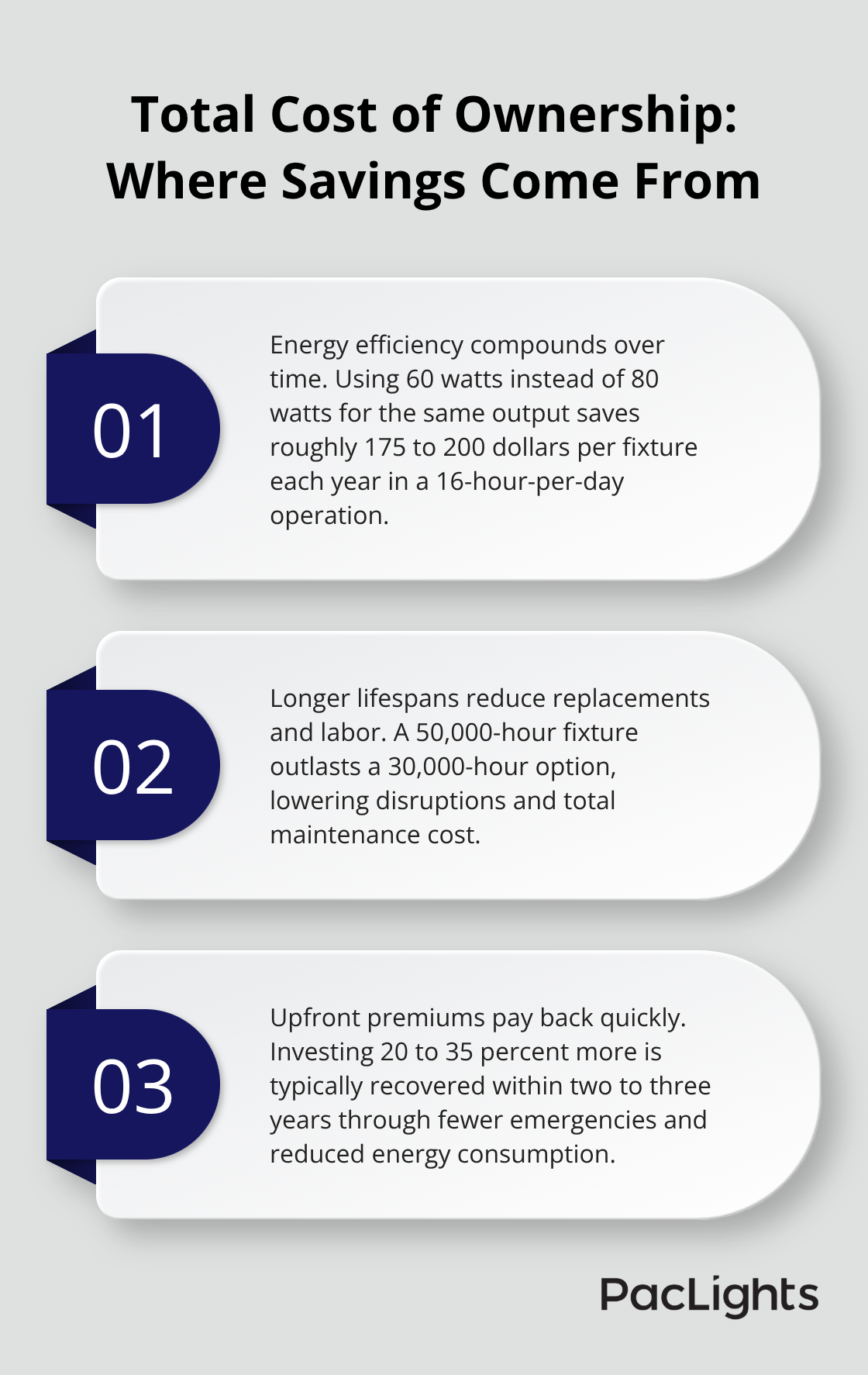
Over a 10-year service life, that efficiency difference totals 1,750 to 2,000 dollars per fixture in energy savings alone.
Fixture lifespan specifications matter because a 50,000-hour rated LED fixture costs less to operate than a 30,000-hour fixture even if the initial purchase price runs higher. Calculate total cost of ownership by adding the fixture cost, installation labor, energy consumption over expected service life, and maintenance labor. Most facilities discover that investing 20 to 35 percent more upfront for proper vapor tight fixtures recovers the premium within two to three years through eliminated emergency repairs and reduced energy consumption.
Prioritize Maintenance Requirements and Long-Term Performance
Maintenance requirements separate reliable vapor tight fixtures from poor performers. Quality fixtures designed for harsh environments require only annual visual inspection and gasket replacement every five to seven years. Cheaper alternatives demand quarterly inspections, frequent gasket replacement, and emergency service calls that accumulate costs rapidly. Advanced lighting controls optimize energy use and provide data on fixture performance, helping facilities track maintenance schedules proactively instead of reacting to failures.
Final Thoughts
Vapor tight LED fixtures solve a problem that standard industrial lighting cannot address: reliable operation in environments where moisture, chemicals, and temperature extremes destroy ordinary equipment. The financial case for these fixtures rests on total cost of ownership, not purchase price alone. A facility investing 20 to 35 percent more upfront recovers that premium within two to three years through eliminated emergency maintenance, reduced labor costs, and lower energy consumption.
The ROI extends beyond direct cost savings to encompass worker safety and regulatory compliance. Reliable lighting maintains adequate illumination in hazardous areas and protects your facility from liability exposure and insurance complications. Facilities operating with certified vapor tight LED fixtures avoid the regulatory fines and coverage denials that plague operations using non-compliant equipment.
Assess your specific environment and match fixture specifications to your actual conditions by identifying the chemical exposures, temperature ranges, and moisture levels your facility experiences. Consult with manufacturers about gasket materials and hardware options that address your particular challenges. Visit PacLights to explore vapor tight and hazardous location lighting solutions tailored to your industrial needs, along with free lighting layout designs and ROI assessments.
Disclaimer: PacLights is not responsible for any actions taken based on the suggestions and information provided in this article, and readers should consult local building and electrical codes for proper guidance.