

Your facility’s lighting system is aging, and you know an upgrade is overdue. NSF certified retrofit kits offer a straightforward way to modernize without ripping out everything you have.
At PacLights, we’ve seen firsthand how the right retrofit solution cuts energy costs while meeting strict health and sanitation standards. This guide walks you through what these kits are, why they matter, and how to install them with minimal disruption.
What NSF Certified Retrofit Kits Actually Are
An NSF certified retrofit kit replaces your fixture’s entire LED assembly-modules, drivers, and mounting hardware-to fit common fixture types like recessed cans, troffers, and linear systems. Unlike a simple bulb swap, a retrofit kit transforms your existing infrastructure into a food-safe lighting system that meets strict sanitation and safety standards. NSF International, an independent standards body, certifies these kits against rigorous criteria aligned with FDA and USDA guidelines. The NSF/ANSI 2 rating process involves seven steps: product information submission, lab testing, facility inspection, sampling, results review, contract listing, and annual retesting. Any fixture carrying an NSF/ANSI 2 listing has passed independent verification to perform in food handling environments without contaminating surfaces or failing under sanitation pressures.
Why NSF Certification Cuts Through the Noise
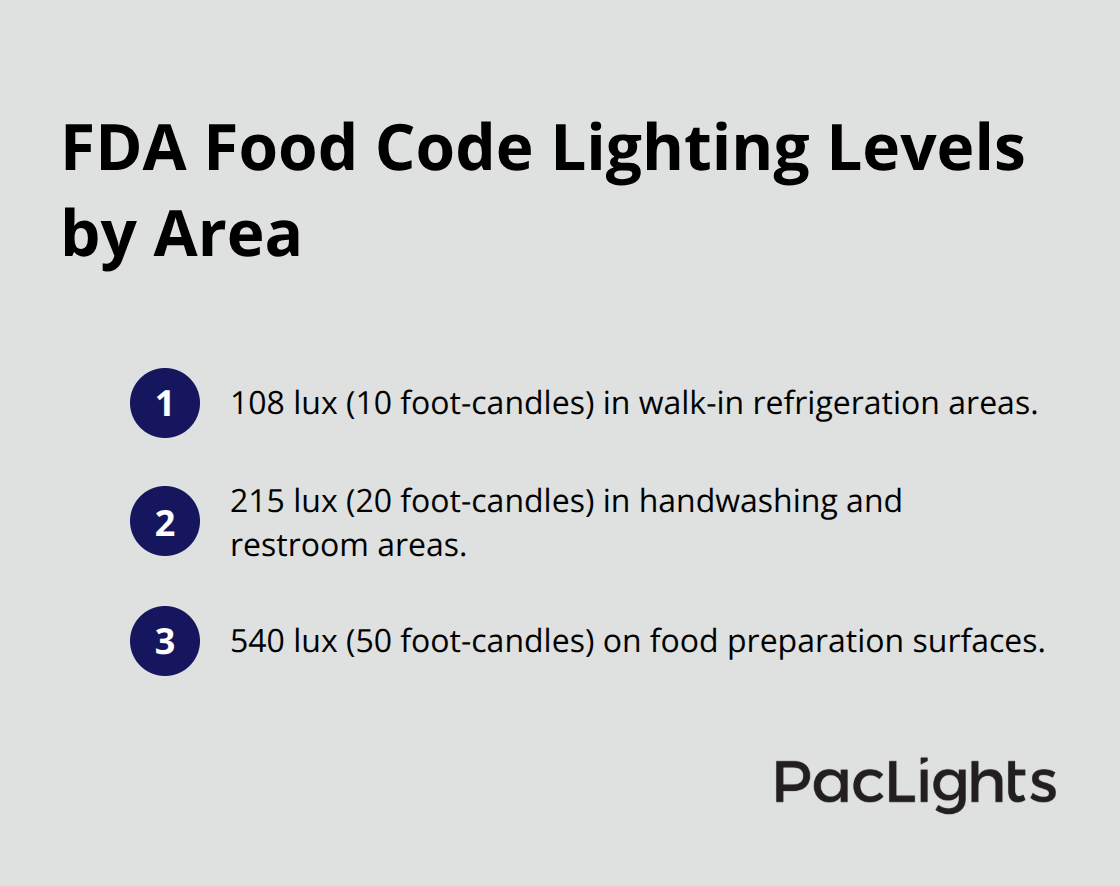
Food facilities face three overlapping regulatory bodies-NSF, ANSI, and the FDA-each demanding specific standards. The FDA Food Code sets exact illumination requirements: 108 lux (10 foot-candles) in walk-in refrigeration, 215 lux (20 foot-candles) in handwashing and restroom areas, and 540 lux (50 foot-candles) on food prep surfaces. NSF certified retrofit kits deliver these lux levels while using smooth, non-porous, sealed housings that prevent dust, moisture, and bacteria buildup. Shatterproof polycarbonate lenses eliminate glass contamination risk.
Corrosion-resistant materials withstand frequent sanitizing chemical exposure without degrading. IP69K-rated options guard against high-pressure, high-temperature washdowns-the highest protection rating available. Without NSF certification, you’re guessing whether your retrofit meets code. With it, you have documented proof that your system stays compliant and reduces contamination risk.
The Real Cost of Skipping NSF Certification
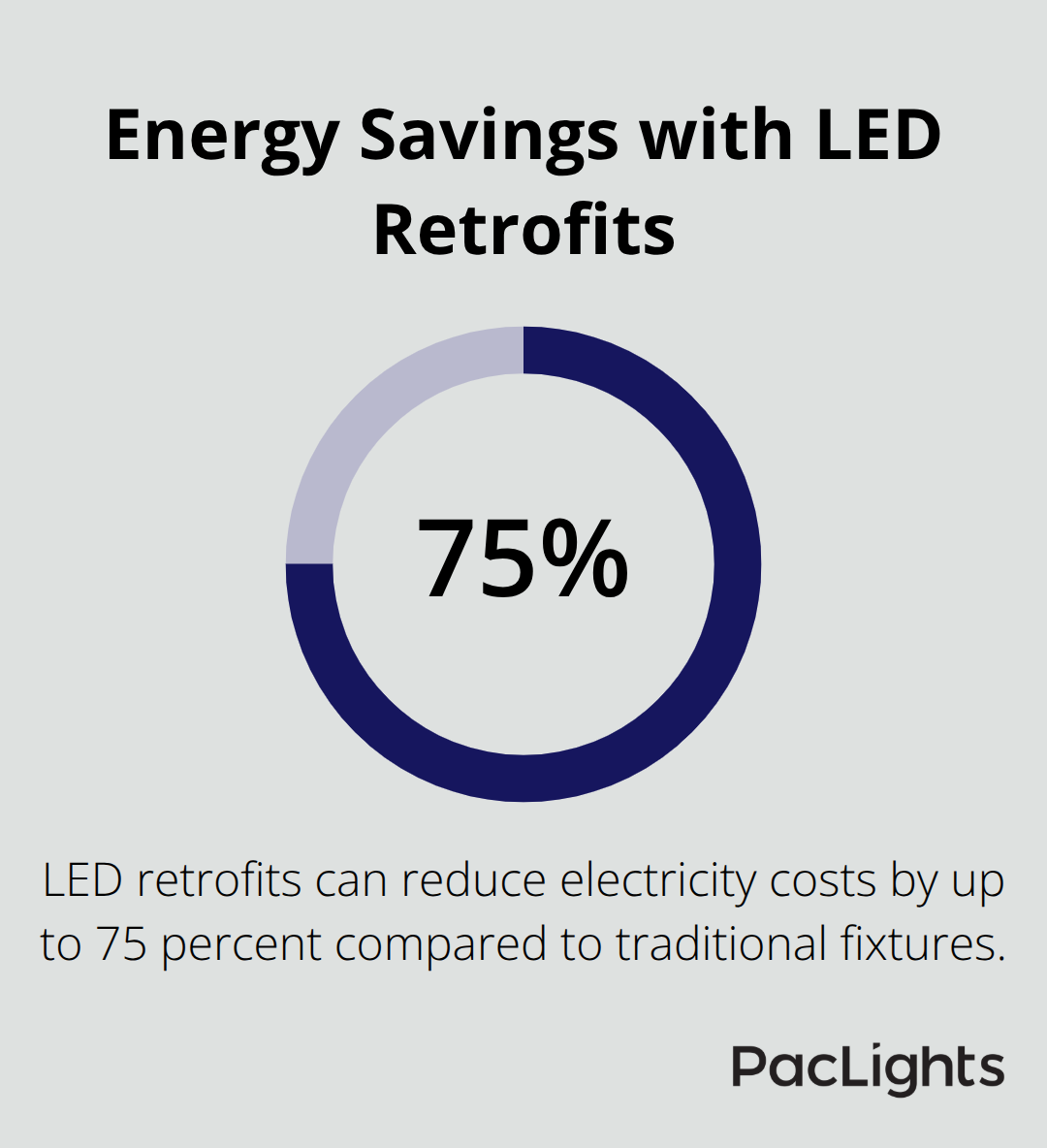
Facilities operating without certified lighting face FDA violations, potential shutdowns, and costly retrofits to regain compliance. An NSF certified retrofit kit costs more upfront than a generic LED replacement, but the energy savings justify the investment. LED retrofits can reduce electricity costs by up to 75 percent compared to traditional fixtures. Typical lifespans reach 50,000 hours, cutting maintenance frequency and long-term replacement expenses. PacLights offers NSF certified LED retrofit solutions tailored to commercial kitchens, food processing facilities, beverage bottling operations, and cold storage environments, with options including high bays, tube lights, vapor-tight fixtures, and strip lights.
The combination of compliance assurance, energy efficiency, and durability makes NSF certification non-negotiable for food service operations-not an optional upgrade.
What Happens Next in Your Upgrade
Now that you understand what NSF certification protects, the next step is recognizing the tangible benefits these kits deliver to your operation. Energy savings and improved worker safety form the foundation of why facilities make this switch, and the numbers speak for themselves.
Why NSF Retrofit Kits Pay for Themselves
The Financial Case for Upgrading
Upgrading to NSF certified retrofit kits delivers measurable financial returns that extend far beyond the initial purchase price. LED retrofits reduce electricity costs by up to 75 percent compared to traditional fixtures, a difference that compounds across months and years of operation. A food processing facility running lighting 16 hours daily sees substantial monthly savings-the exact amount depends on your current fixture wattage, local electricity rates, and the number of fixtures replaced, but the trajectory is always downward. Typical LED retrofit kits reach 50,000 hours of lifespan, which translates to roughly 8–10 years of continuous operation before replacement becomes necessary. This longevity eliminates the constant maintenance drain of older systems that require frequent bulb changes, driver repairs, and fixture servicing.
Utility rebates and incentive programs often offset a portion of retrofit costs, particularly for DLC-listed fixtures that meet efficiency standards. Facilities that conduct lighting audits identify which fixtures deliver the fastest payback and quantify energy savings with precision. The financial case is straightforward: NSF certified retrofits cost more upfront but save money faster than alternatives.
Worker Safety and Product Quality Improvements
Worker safety and product quality improve simultaneously when you install NSF certified retrofit kits. The FDA Food Code mandates specific lux levels-108 lux in refrigeration areas, 215 lux in handwashing zones, and 540 lux on food prep surfaces-and NSF certified retrofits deliver these exact targets with high color rendering (CRI 80+) that helps workers spot contamination, discoloration, and quality issues that poor lighting would hide. Brighter, more uniform illumination reduces eye strain and fatigue, which directly impacts worker productivity and reduces mistakes during food handling.
The sealed, smooth housings and shatterproof polycarbonate lenses eliminate glass contamination risk entirely, removing a persistent liability from your operation. IP69K-rated options withstand high-pressure, high-temperature washdowns without degradation, meaning your lighting system survives sanitization cycles that would destroy standard fixtures. Corrosion-resistant materials resist the chemical exposure inherent in food facilities, extending fixture life and preventing material failure that creates additional contamination pathways.
Making the Upgrade Work for Your Operation
The combination of compliance assurance, improved visibility, and robust construction means NSF certified retrofits protect both your workers and your products while reducing operational headaches. Your next consideration involves understanding whether your existing infrastructure can accommodate these kits and what the installation process actually entails.
Installation and Implementation Process
Verify Compatibility Before You Buy
Compatibility determines whether your retrofit project succeeds or stalls. NSF certified retrofit kits come in standard forms-high bays, tube lights, vapor-tight fixtures, and strip lights-but your existing infrastructure may not align perfectly with off-the-shelf solutions. Document your current fixture type, mounting configuration, wattage, voltage, and physical dimensions before selecting a kit. Recessed can fixtures, troffer systems, and linear layouts each require different retrofit approaches, and mismatched components waste time and money.
The retrofit kit’s driver location, bypass options, and heat management design must match your fixture’s electrical setup. If your facility uses older dimming systems, confirm the retrofit kit supports 0–10V dimming protocol or standard dimmer compatibility-many LED kits require specific dimmer models to function properly. Vapor-tight and IP69K-rated options demand extra attention to ventilation and thermal design, since sealed enclosures trap heat differently than open fixtures. Request detailed compatibility assessments before committing to any retrofit purchase, as incorrect selections create installation delays and potential safety issues.
Prepare Your Facility for Installation
Installation demands careful planning to minimize operational disruption. Power down at the breaker before touching any components, use insulated tools, and wear appropriate personal protective equipment-this is non-negotiable regardless of facility size.
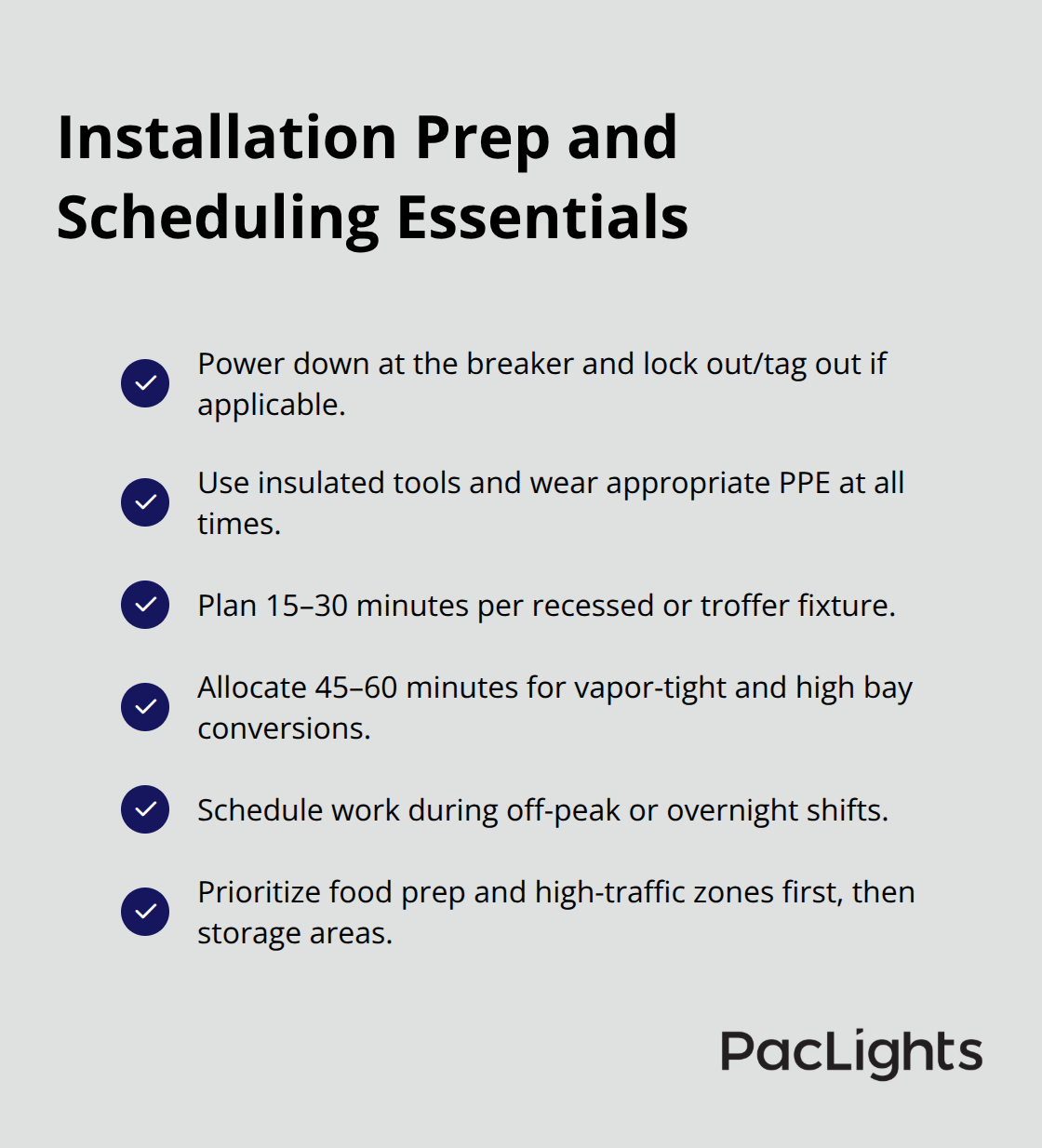
Typical retrofit installation takes 15–30 minutes per fixture for straightforward recessed or troffer applications, but vapor-tight and high bay conversions may require 45–60 minutes due to sealed housing complexity.
Schedule retrofits during off-peak operational hours or overnight shifts to avoid disrupting food preparation, processing, or cold storage access. Prioritize high-traffic areas and food prep zones first, then move to storage and support spaces. This sequencing keeps your facility operational while you complete the most critical upgrades.
Execute Installation with Professional Support
Professional installation eliminates compatibility guesswork and ensures proper electrical connections, heat management, and compliance verification-particularly valuable for larger facilities where multiple fixture types exist across different zones. Technicians verify that each retrofit kit fits correctly, that drivers function within thermal limits, and that sealed housings maintain their sanitation properties. The upfront cost of professional installation typically pays for itself through faster project completion, reduced rework, and documented compliance documentation that satisfies FDA inspections.
Final Thoughts
NSF certified retrofit kits deliver three outcomes that matter most to facility managers: compliance assurance, measurable cost savings, and operational reliability. Your facility avoids FDA violations and potential shutdowns by installing fixtures that meet strict sanitation and safety standards. Energy savings of up to 75 percent compound across years of operation, offsetting the higher upfront cost through lower electricity bills and reduced maintenance frequency.
Start with a lighting audit to identify which fixtures deliver the fastest payback and quantify your potential savings. Document your current infrastructure-fixture types, wattage, voltage, and mounting configurations-before selecting retrofit kits. Verify compatibility with your electrical setup, particularly if you use dimming systems or sealed enclosures (professional guidance here prevents costly mistakes).
We at PacLights understand the specific demands of commercial kitchens, food processing facilities, beverage operations, and cold storage environments. Our NSF certified retrofit solutions include high bays, tube lights, vapor-tight fixtures, and strip lights designed to meet FDA lux requirements while withstanding frequent sanitization cycles. Contact PacLights today to discuss which retrofit solution fits your facility’s needs and budget.
Disclaimer: PacLights is not responsible for any actions taken based on the suggestions and information provided in this article, and readers should consult local building and electrical codes for proper guidance.