

Lighting in food processing plants, pharmaceutical facilities, and cold storage warehouses isn’t just about visibility. It’s about meeting strict safety standards that protect your products and operations.
NSF certified lights advantages go beyond compliance. At PacLights, we’ve seen firsthand how proper certification reduces contamination risks, cuts maintenance costs, and extends equipment lifespan in the most demanding environments.
What NSF Certification Actually Protects
The NSF Standard and Its Scope
NSF International certification for lighting isn’t a generic safety badge. Founded in 1944, NSF International developed NSF/ANSI 2, a rigorous standard specifically for food equipment sanitation that applies directly to lighting fixtures used in food processing, pharmaceutical manufacturing, and cold storage facilities. The standard focuses on three critical areas: corrosion resistance, cleanability, and contamination prevention. When a fixture carries the NSF mark, it means the product has passed testing to withstand extreme conditions-harsh chemical sanitizers, high-pressure washdowns, temperature fluctuations, and moisture exposure-without degrading or creating contamination points.
This differs fundamentally from general safety marks like UL or ETL, which validate electrical safety but say nothing about sanitation performance or material durability in washdown environments. NSF certification also requires ongoing compliance through routine inspections, including annual plant audits, so the mark carries real accountability.
Zone-Based Protection Levels
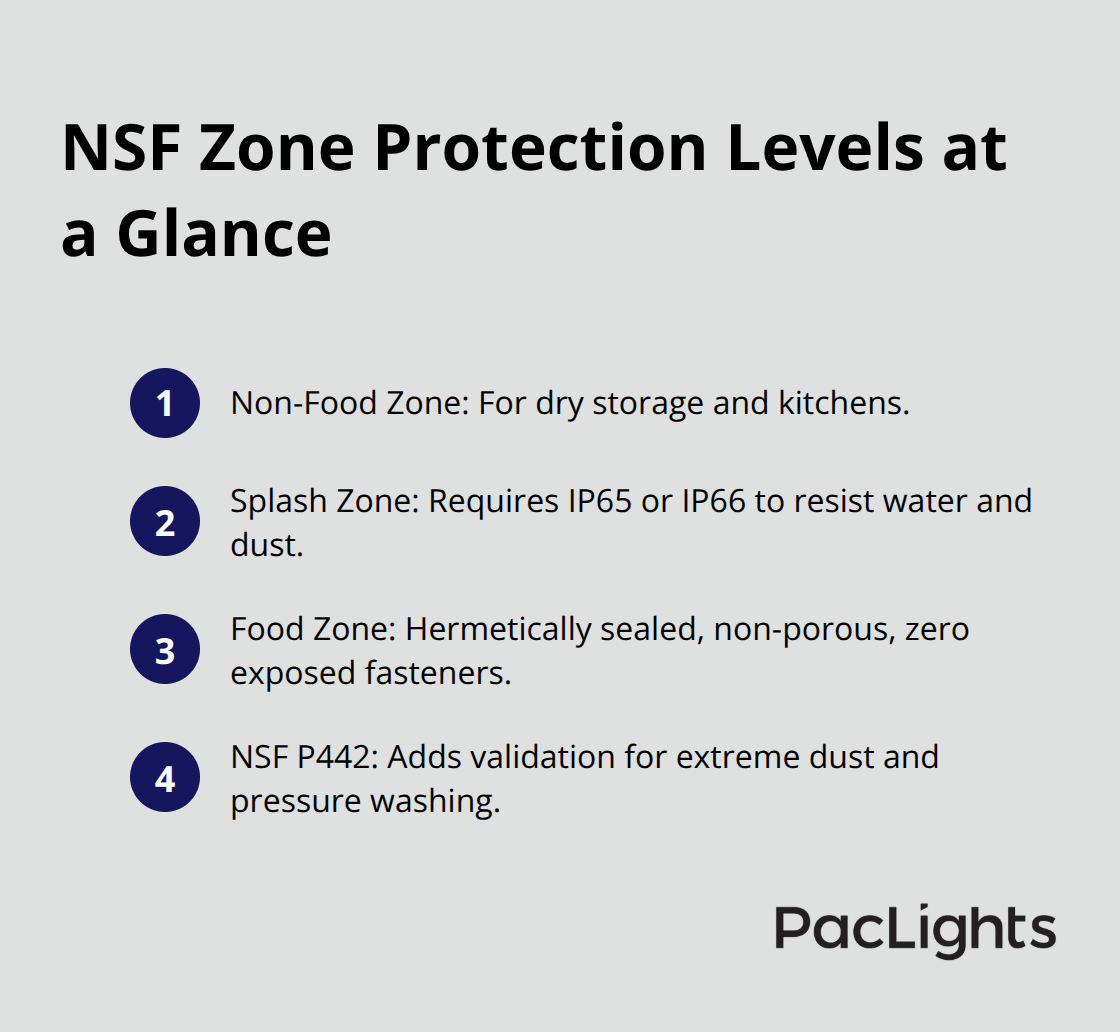
The certification framework recognizes three zones: Non-Food Zone for dry storage and kitchens, Splash Zone for wet processing areas where high-pressure cleaning occurs, and Food Zone for direct food contact surfaces. Each zone demands different protection levels. Splash Zone fixtures typically require IP65 or IP66 ratings to resist water and dust, while Food Zone lighting must feature hermetically sealed housings with zero exposed fasteners, smooth non-porous surfaces, and corrosion-resistant materials like polycarbonate or stainless steel. NSF P442, the controlled environment light fixture standard, adds additional validation for fixtures that endure extreme dust and pressure washing conditions.
The Rigorous Testing Behind Certification
The testing process behind NSF certification is deliberately stringent. Fixtures undergo material analysis to confirm non-toxic, corrosion-resistant composition, pressure testing to simulate industrial washdowns, and design evaluation to eliminate bacteria harborage points-meaning no visible screws, crevices, or glass components that could shatter or trap contaminants. NSF-certified LED fixtures commonly deliver 50,000 to 75,000 hours of operational life, substantially reducing maintenance frequency compared to traditional metal halide or fluorescent systems.
Global Recognition and Regulatory Alignment
Public health professionals in over 180 countries recognize and trust the NSF mark, which strengthens your facility’s position during regulatory audits and third-party inspections. When you select NSF-certified lighting, you choose fixtures designed to meet FDA Food Code expectations and USDA compliance requirements, reducing risk of costly recalls, shutdowns, or violations. Standard commercial lighting, even energy-efficient LED options, often contains design features incompatible with sanitary environments-exposed fasteners, unsealed joints, or materials prone to corrosion when exposed to cleaning chemicals and moisture. NSF certification eliminates these risks through verified design and material standards.
Understanding what NSF certification actually protects sets the foundation for recognizing the tangible advantages these fixtures deliver in your operations.
What NSF Certified Lights Actually Deliver
Contamination Prevention Through Design
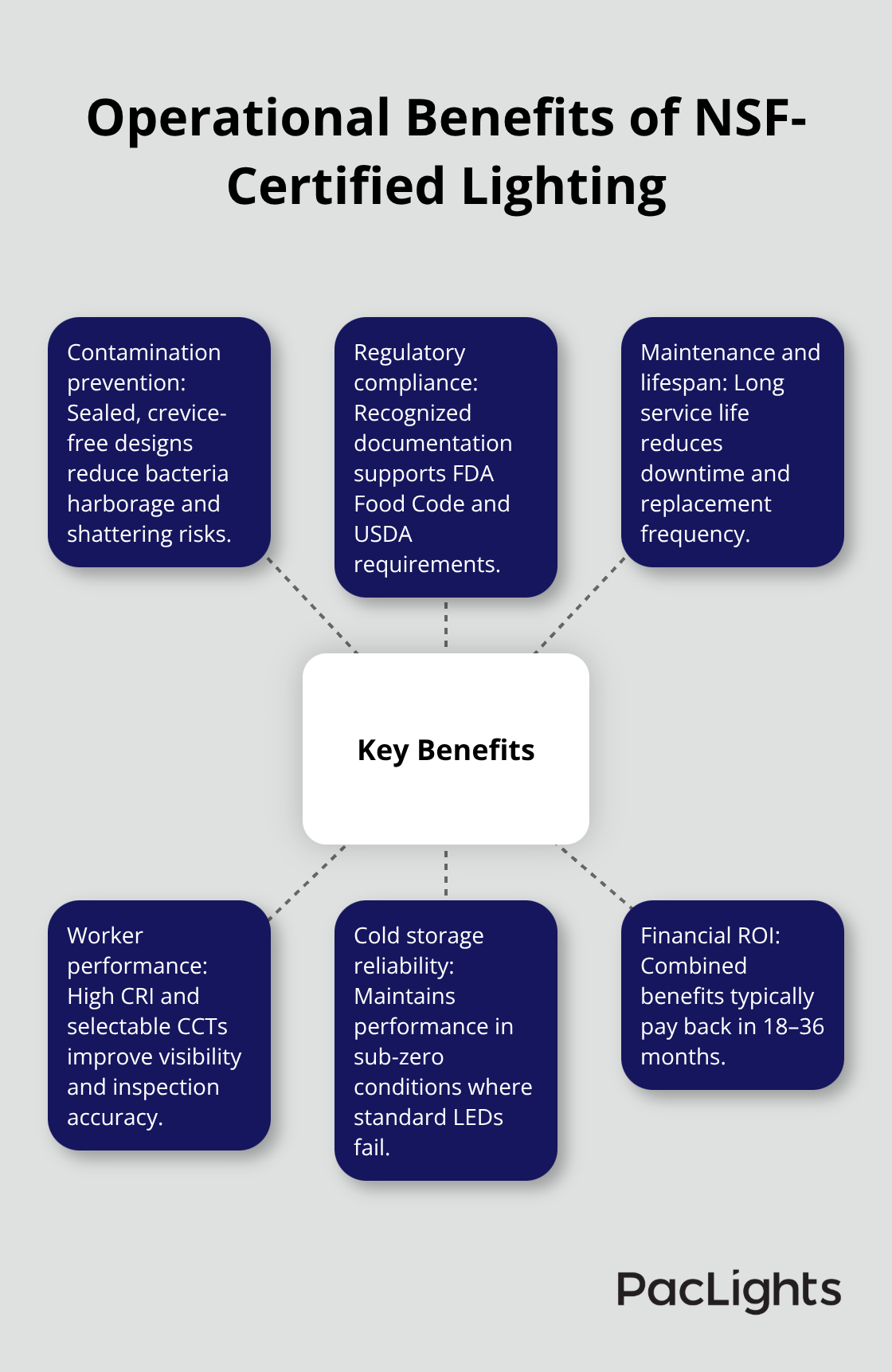
NSF certification transforms lighting from a commodity purchase into a contamination prevention tool. Facilities processing food, pharmaceuticals, or temperature-sensitive products face regulatory pressure that generic LED fixtures simply cannot address. The FDA Food Code explicitly prohibits equipment materials that shatter, corrode, or harbor bacteria in food contact areas. NSF-certified fixtures meet this requirement through design features standard lighting ignores: hermetically sealed housings prevent moisture and particulates from entering the fixture, eliminating breeding grounds for pathogens. Smooth, non-porous exteriors with zero exposed fasteners allow thorough cleaning without trapping contaminants in crevices or under screw heads. Corrosion-resistant materials like polycarbonate and stainless steel withstand repeated exposure to sanitizing chemicals that would degrade standard aluminum housings within months.
Regulatory Compliance and Audit Protection
Third-party audits and regulatory inspections demand verifiable proof that equipment meets public health standards. NSF certification provides exactly that documentation, recognized across 180 countries by health and safety professionals. This certification directly reduces shutdown risk and eliminates costly compliance failures. When inspectors review your facility’s equipment, the NSF mark demonstrates that your lighting meets FDA Food Code expectations and USDA compliance requirements without question. Standard commercial lighting, even energy-efficient LED options, often contains design features incompatible with sanitary environments-exposed fasteners, unsealed joints, or materials prone to corrosion when exposed to cleaning chemicals and moisture. NSF certification eliminates these risks through verified design and material standards.
Operational Efficiency and Cost Reduction
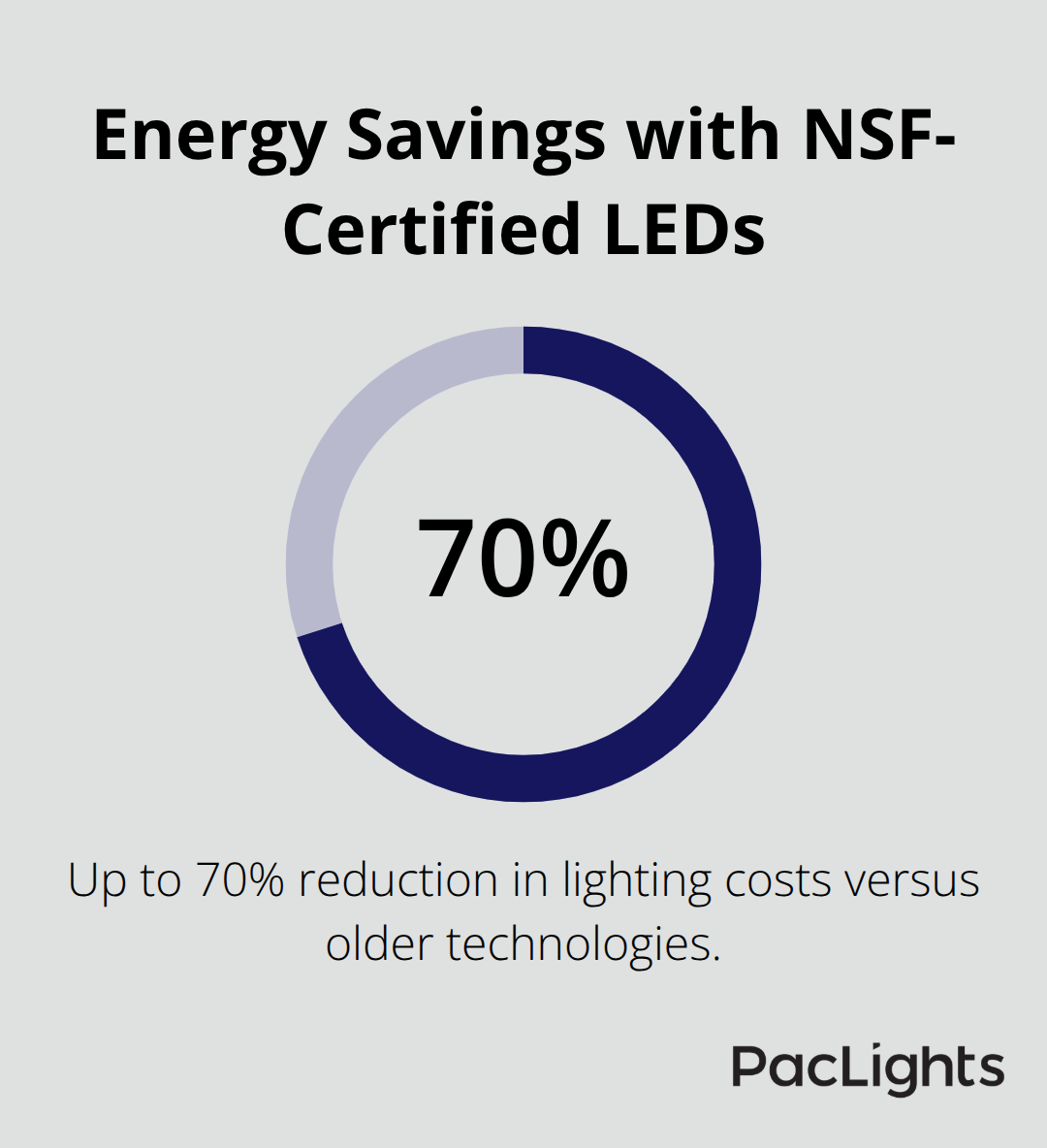
NSF-certified LED fixtures deliver 50,000 to 75,000 hours of operational life compared to 10,000 to 20,000 hours for traditional metal halide systems, meaning fewer replacement cycles and less production downtime for maintenance. Energy consumption drops dramatically, with facilities reporting up to 70% reductions in lighting costs versus older technologies. High IP ratings like IP65, IP66, or IP69K ensure fixtures withstand high-pressure washdowns at 80 to 100 bar without water infiltration or performance degradation.
Worker Performance and Environmental Conditions
Workers experience improved visibility through high color rendering index values above 80 and selectable color temperatures between 3500K and 5000K, reducing eye strain during extended shifts and improving product inspection accuracy in critical processes. Cold storage facilities benefit significantly since NSF-certified fixtures maintain performance in sub-zero temperatures where standard LEDs fail. The combination of extended lifespan, lower energy consumption, reduced maintenance frequency, and improved worker conditions creates a measurable financial advantage that justifies the initial investment within 18 to 36 months for most food and pharmaceutical facilities.
Making the Right Selection for Your Facility
The operational advantages of NSF-certified lighting extend across multiple facility types and processing environments. Whether you operate a food processing plant, pharmaceutical manufacturing facility, or cold storage warehouse, the certification framework guides you toward fixtures designed for your specific operational demands. Understanding these advantages prepares you to evaluate which NSF-certified solutions align with your facility’s zones and requirements.
Industries That Benefit Most from NSF Certified Lighting
Food and Beverage Processing: Regulatory Demands and Contamination Risks
Food and beverage processing facilities operate under FDA Food Code requirements that explicitly prohibit equipment materials capable of shattering, corroding, or harboring bacteria in food contact areas. NSF-certified lighting directly addresses this regulatory demand through sealed housings, shatterproof construction, and corrosion-resistant materials that withstand repeated exposure to sanitizing chemicals and high-pressure washdowns. Facilities processing meat, dairy, or produce face particularly strict contamination prevention requirements because a single lighting failure or contamination point can trigger product recalls affecting thousands of units and costing millions in losses.
Pharmaceutical Manufacturing and Healthcare Environments
Pharmaceutical manufacturing and healthcare environments demand equally rigorous sanitation standards, with cleanroom protocols requiring fixtures that prevent particulate shedding and support sterilization procedures. NSF-certified fixtures rated IP66 or IP69K withstand sterilization protocols without performance degradation, eliminating the need for temporary lighting solutions during sanitation cycles. These facilities cannot tolerate equipment failures that compromise product integrity or patient safety.
Cold Storage Warehouses: Temperature Performance
Cold storage warehouses present a unique challenge because standard LED fixtures often fail in sub-zero temperatures, while NSF-certified options maintain full performance in conditions below minus 20 degrees Celsius. This temperature resilience prevents costly equipment replacements and production interruptions that plague facilities relying on conventional lighting systems.
Operational Cost Advantages Across Industries
Food processing plants typically spend 15 to 20 percent of maintenance budgets on lighting replacement and cleaning-related downtime, but NSF-certified LED fixtures delivering 50,000 to 75,000 hours of life reduce replacement cycles from annual to every five to seven years. Pharmaceutical facilities benefit from fixtures that withstand sterilization protocols without requiring temporary lighting solutions during sanitation cycles. Cold storage operations see measurable energy reductions of 50 to 70 percent compared to traditional metal halide systems, directly improving profitability in facilities where cooling costs already consume 30 to 40 percent of operating budgets. Livestock farming facilities processing meat products face identical sanitation demands as food plants, making NSF certification equally essential for regulatory compliance and contamination prevention.
Selecting Fixtures for Zone-Specific Requirements
NSF-certified fixtures address the zone-based protection levels these industries demand rather than forcing generic commercial fixtures into specialized applications. High-bay options serve general processing areas, linear task lights handle washdown zones, large-scale operations benefit from specialized high-bay designs, and cold storage environments require fixtures engineered specifically for sub-zero performance. Each product type delivers the sealed construction, corrosion resistance, and performance durability that these demanding industries require to maintain operations and protect their reputation.
Final Thoughts
NSF certified lights advantages extend far beyond regulatory compliance-they protect your facility’s reputation and reduce long-term maintenance costs. Facilities processing food, pharmaceuticals, or temperature-sensitive products face genuine financial exposure when standard commercial lighting cannot withstand washdown environments or maintain performance in extreme conditions. NSF certification eliminates this risk by guaranteeing that fixtures meet rigorous sanitation standards, resist corrosion from cleaning chemicals, and prevent bacteria harborage through sealed, crevice-free design.
Identifying NSF certified lighting requires verifying the NSF mark on product documentation and confirming the fixture matches your facility’s zone requirements. Food Zone applications demand hermetically sealed housings with zero exposed fasteners, while Splash Zone areas need IP65 or IP66 ratings to withstand high-pressure washdowns. Request datasheets from manufacturers and confirm NSF/ANSI 2 certification before purchase, checking that the specific model number appears on official NSF documentation rather than relying on marketing claims alone.
We at PacLights understand that selecting lighting for demanding industrial environments requires more than standard product specifications. Our team offers free lighting layout designs and ROI assessments to help you identify which NSF certified fixtures deliver the best performance for your specific facility zones and operational requirements. Contact PacLights to discuss how NSF certified fixtures can improve your facility’s safety, compliance, and operational efficiency.
Disclaimer: PacLights is not responsible for any actions taken based on the suggestions and information provided in this article, and readers should consult local building and electrical codes for proper guidance.