

Choosing the right lighting for your facility matters more than most people realize. The difference between a recessed surface mount downlight and other options affects everything from your energy bills to how your space actually feels.
At PacLights, we’ve seen facilities waste thousands annually on outdated lighting systems. This guide walks you through what works, what saves money, and how to pick the solution that fits your specific needs.
What Recessed and Surface Mount Downlights Actually Are
Recessed downlights sit inside your ceiling cavity, keeping the fixture body hidden and creating a clean, uninterrupted ceiling line. Surface mount downlights sit on top of the ceiling with their bodies fully visible. The distinction matters because it directly affects installation speed, ceiling aesthetics, and long-term maintenance costs. Recessed fixtures require adequate ceiling depth-typically 4 to 6 inches-and demand cutting into drywall or tile, which adds installation time and expense. Surface mounted options work on any ceiling type, including solid concrete or shallow suspended ceilings, and can often be installed in a single day versus the 3 to 5 days typical for recessed work.
How Ceiling Type Determines Your Installation Path
Concrete ceilings require masonry drilling and specialized anchors, adding roughly 20 to 30 percent more labor time than suspended tile installations. Suspended tile ceilings allow clip-on or magnetic mounting, making surface fixtures the fastest retrofit option. Drywall ceilings accommodate both approaches, but recessed installation still demands ceiling cuts and careful framing work. You should measure your ceiling height and material first, then map your layout on paper using the fixture base plate as a template to mark precise mounting points. This upfront planning prevents costly mistakes and helps you avoid dark spots or uneven illumination.
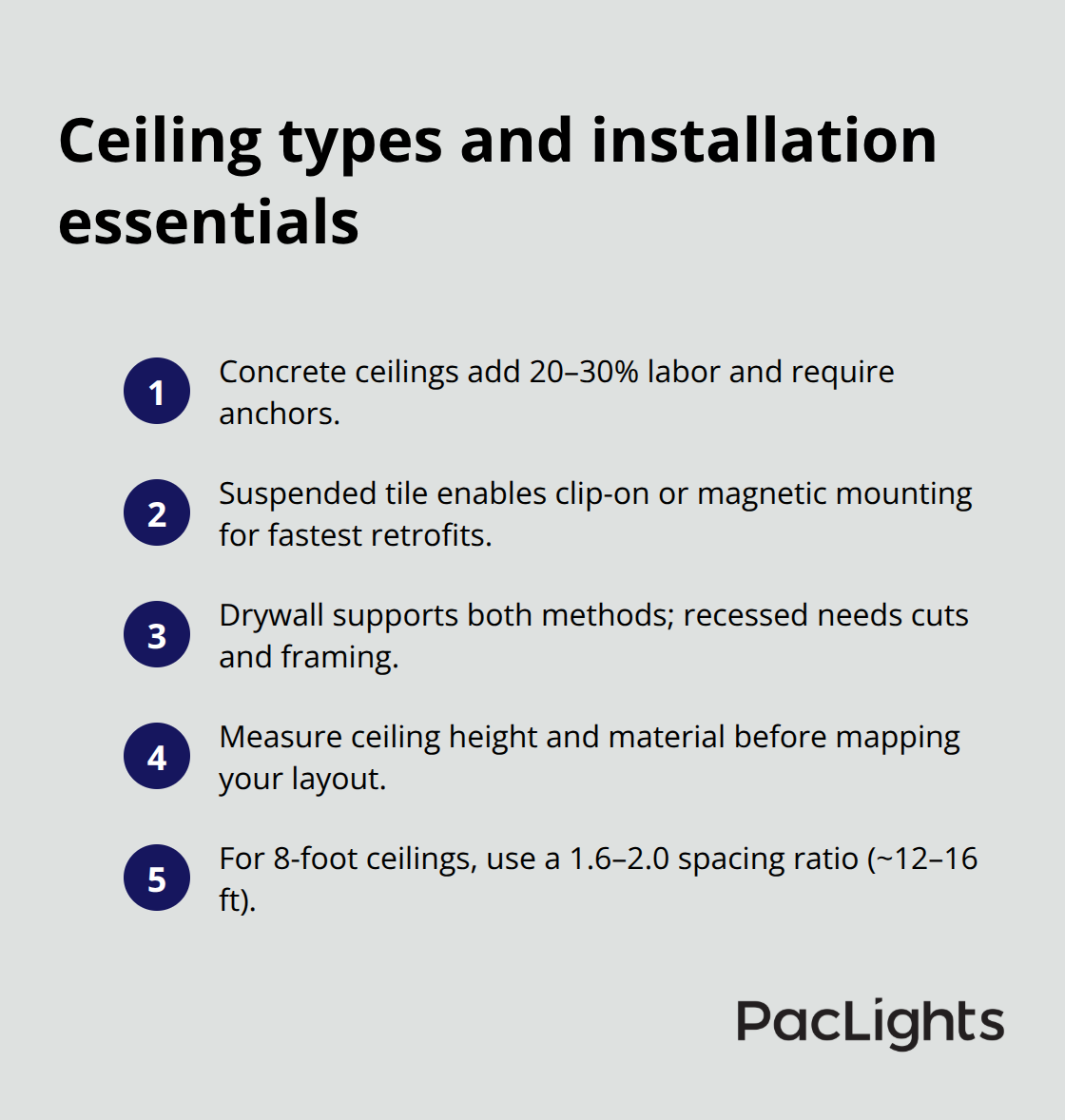
For warehouses or commercial spaces with 8-foot ceilings, try spacing fixtures at a 1.6 to 2.0 ratio-meaning fixtures roughly 12 to 16 feet apart-to maintain even light coverage without shadows.
Brightness, Color, and Control Capabilities
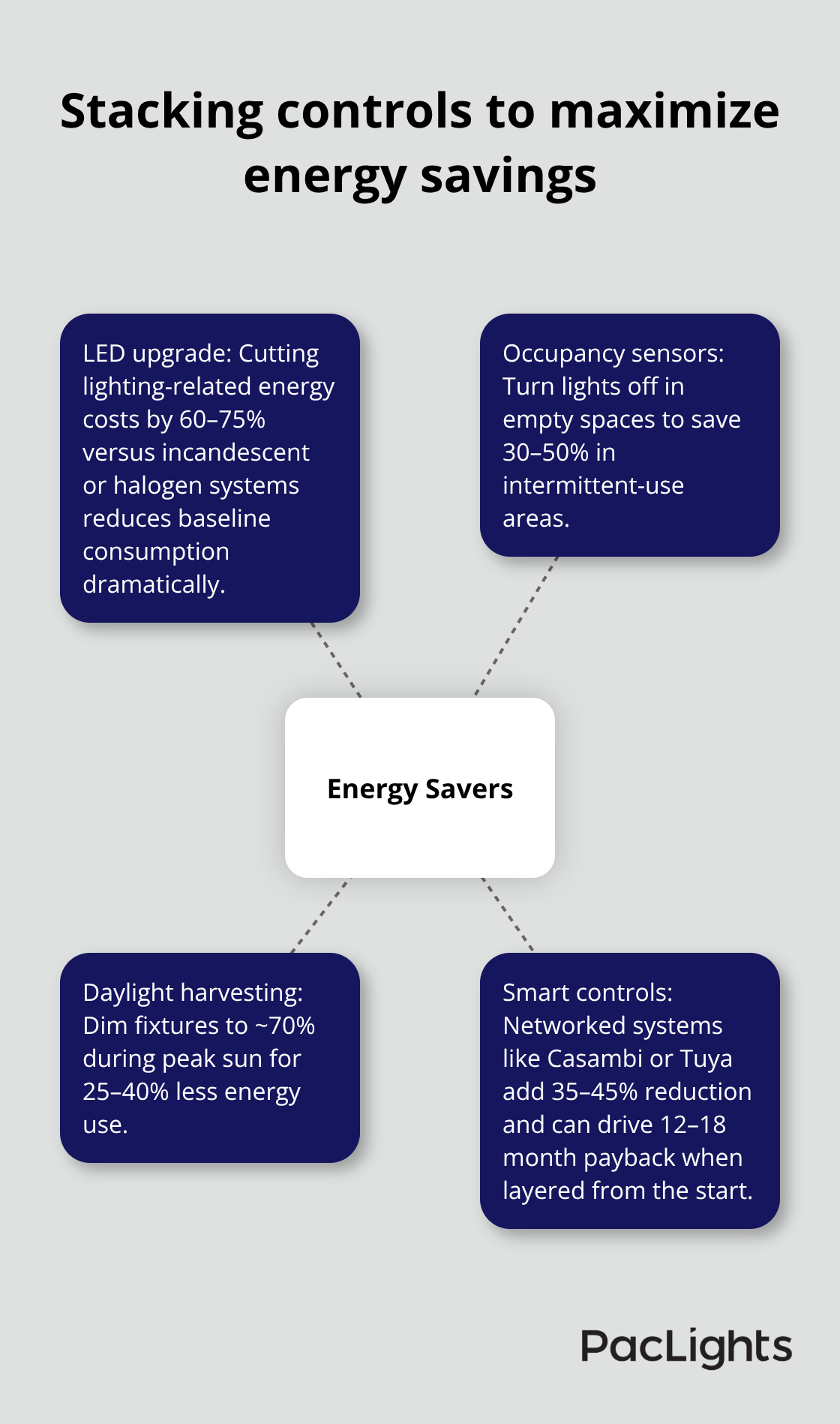
Both recessed and surface mount downlights now come with five selectable color temperatures ranging from 2700K warm white through 5000K daylight, eliminating the need to stock multiple SKUs. Task-heavy areas like showrooms benefit from 2000 to 3000 lumens per fixture, while general office spaces function well at lower outputs. Color temperature directly impacts performance: the Department of Energy notes that 4000 to 5000K improves task accuracy by 5 to 15 percent compared to warmer tones. Dimmable models with 0-10V or DALI drivers provide smooth brightness control and integrate with occupancy sensors to cut energy use by 30 to 50 percent in intermittent-use spaces. Smart networked controls like Casambi and Tuya IoT can yield an additional 35 to 45 percent energy reduction when paired with efficient LEDs (a typical 12 to 18 month payback from energy savings alone).
Installation Speed and Retrofit Compatibility
For facilities upgrading outdated systems, retrofit LED recessed solutions enable fast upgrades without rewiring. Surface mounts offer the lowest installation friction for new builds or remodels. The choice between the two ultimately hinges on your ceiling type, available depth, and timeline. Once you understand these installation realities, the next step involves calculating the actual energy and cost benefits that modern downlights deliver-and how those savings compound over time.
Energy Efficiency and Cost Savings with Modern Downlights
LED downlights deliver real savings, not theoretical ones. When you upgrade from older incandescent or halogen systems to LED surface mounts or recessed fixtures, you cut lighting-related energy costs by 60 to 75 percent. For a standard 20-by-30-foot warehouse with an 8-foot ceiling running 12 to 16 fixtures at 60-degree beam angles, that translates to roughly 200 to 300 watts of continuous power draw versus 2000 to 3000 watts with legacy lighting. Typical surface mount downlights produce 800 to 1500 lumens from 10 to 18 watts of LED power, delivering about 120 lumens per watt.
The payback period runs 18 to 24 months from utility savings alone, meaning your investment pays for itself while the fixtures sit in your ceiling delivering another 40,000 to 50,000 hours of maintenance-free operation.
Real Numbers Behind LED Conversion
Energy Star certified downlights reduce operating costs further and qualify for many utility rebate programs. High-quality LED drivers and proper heat management matter significantly here: cheaper LEDs fade faster and erode long-term savings, so investing in reputable fixtures upfront prevents false economy down the road. When you select fixtures with reliable drivers and adequate thermal design, you protect your ROI and extend the lifespan of your lighting system.
How Occupancy Sensors Amplify Your Savings
Occupancy sensors cut energy use by 30 to 50 percent in spaces with intermittent occupancy like conference rooms, storage areas, or bathrooms. These sensors turn lights off after inactivity, eliminating waste in areas that sit empty for extended periods. The installation cost remains modest, and the energy reduction compounds month after month.
Daylight Harvesting and Smart Controls
Daylight harvesting-dimming fixtures to around 70 percent during peak sunlight-reduces energy consumption by 25 to 40 percent according to Department of Energy guidance. Networked smart controls like Casambi and Tuya IoT paired with efficient LEDs yield an additional 35 to 45 percent total energy reduction, pushing your combined payback to 12 to 18 months when you layer controls from project inception. Document your baseline energy consumption before adding controls and track monthly usage afterward to verify actual savings and identify further optimization opportunities.
Installation Strategy for Maximum Returns
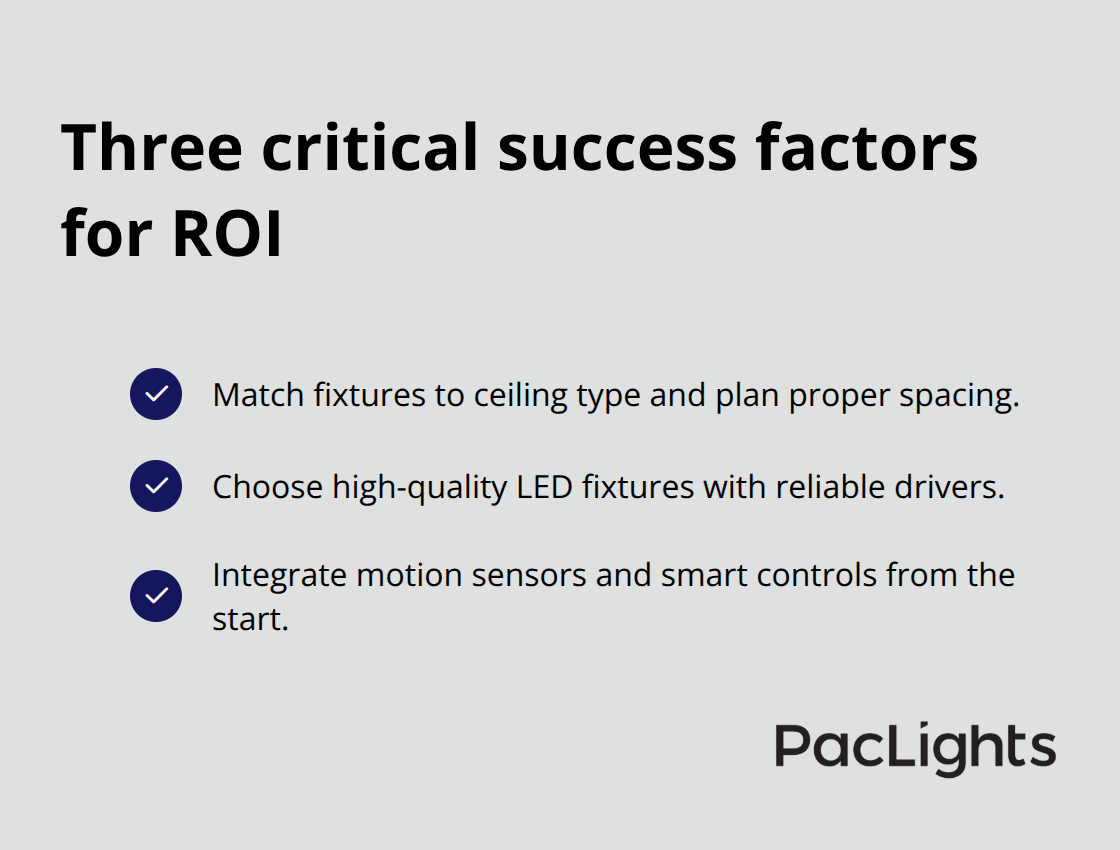
The three critical success factors are matching fixtures to your ceiling type with proper spacing, selecting high-quality LED fixtures with reliable drivers, and integrating motion sensors and smart controls from the start rather than retrofitting them later. Professional installation matters most when dealing with concrete ceilings or complex electrical work, so measure ceiling height and material early to guide fixture selection and control compatibility. Once you understand how to structure your control strategy, the next step involves selecting the specific downlight solution that aligns with your facility’s unique ceiling type and operational demands.
Selecting the Right Downlight Solution for Your Ceiling Type
Your ceiling type dictates everything-installation timeline, labor costs, retrofit feasibility, and long-term maintenance burden. Concrete ceilings demand masonry drilling and specialized anchors, consuming 20 to 30 percent more labor time than suspended tile work, which makes surface mount downlights the practical choice for speed and cost control. Drywall ceilings split the difference: recessed installation still requires careful framing and cuts, but surface mounts install flush against the surface in hours rather than days. Suspended tile ceilings offer the fastest retrofit path with clip-on or magnetic mounting systems, making them ideal for facilities that cannot tolerate extended downtime. Measure your actual ceiling height and material first, then map your layout on paper using the fixture base plate as a template to mark precise mounting points. This prevents costly mistakes and ensures even light distribution.
For an 8-foot ceiling in a warehouse or open office, space fixtures at a 1.6 to 2.0 ratio-roughly 12 to 16 feet apart-to maintain even coverage without dark zones. Task-heavy areas like showrooms and retail counters need 2000 to 3000 lumens per fixture, while general office spaces function well at 1000 to 1500 lumens, which directly influences how many fixtures you need and where to position them.
Color Temperature Drives Task Accuracy
Color temperature matters far more than most facility managers realize. The Department of Energy confirms that 4000K to 5000K improves task accuracy by 5 to 15 percent compared to warmer 2700K tones, making cooler temperatures essential for precision work, inspection areas, and assembly lines. Office environments typically perform best at 3500K, which balances alertness with visual comfort over extended hours. Modern downlights offer five selectable color temperatures from 2700K through 5000K, eliminating the need to purchase and stock multiple fixture models-a significant inventory and installation advantage.
Dimming and Control Integration
Dimmable models with 0-10V or DALI drivers provide smooth brightness adjustment and integrate cleanly with occupancy sensors and daylight harvesting systems. Triac dimming costs less upfront but produces visible flicker and uneven dimming performance, so 0-10V drivers represent the better long-term investment despite higher initial expense. Pairing dimmable fixtures with occupancy sensors cuts energy consumption by 30 to 50 percent in intermittent-use spaces like conference rooms, storage areas, and bathrooms.
Daylight harvesting systems automatically dim fixtures to approximately 70 percent brightness during peak sunlight hours, reducing energy use by 25 to 40 percent according to Department of Energy data. Networked smart controls like Casambi and Tuya IoT layered onto efficient LEDs deliver an additional 35 to 45 percent total energy reduction when you install them from project inception rather than retrofit them later.
Installation and Driver Quality Impact ROI
Professional installation becomes essential when working with concrete ceilings or integrating complex electrical and control systems. High-quality LED drivers and proper thermal management directly impact fixture lifespan and ROI-cheaper LEDs fade faster and undermine long-term savings, so select reputable fixtures upfront to prevent false economy. Document your baseline energy consumption before adding controls, then track monthly usage to verify actual savings and identify further optimization opportunities. PacLights offers free lighting layout designs and ROI assessments to help you structure control strategies that align with your facility’s specific ceiling type and operational demands.
Final Thoughts
Recessed surface mount downlight solutions shift your facility away from outdated systems that drain budgets and waste energy. Your choice between recessed and surface mount options depends on ceiling type, installation timeline, and maintenance priorities-recessed fixtures deliver seamless aesthetics where depth allows, while surface mounts offer speed and retrofit compatibility across concrete, drywall, and suspended tile ceilings. Modern downlights cut operating costs by 60 to 75 percent with payback periods of 18 to 24 months, and occupancy sensors or daylight harvesting systems amplify those savings by another 30 to 50 percent when you integrate them from the start.
Three concrete actions move you forward. Measure your ceiling height and material to determine which fixture type fits your space, calculate your baseline energy consumption and map out a control strategy using occupancy sensors or daylight harvesting, and select fixtures from reputable manufacturers with reliable drivers to avoid the false economy of cheaper LEDs that fade quickly. Color temperature flexibility from 2700K to 5000K improves task accuracy by 5 to 15 percent in precision areas while maintaining visual comfort in offices, and high-quality LED drivers protect your ROI while extending fixture lifespan to 40,000 to 50,000 hours of maintenance-free operation.
We at PacLights understand that facility lighting decisions affect both your bottom line and operational performance. Contact our team to discuss your facility’s lighting needs and explore how modern downlights reduce costs while improving illumination quality across your space.
Disclaimer: PacLights is not responsible for any actions taken based on the suggestions and information provided in this article, and readers should consult local building and electrical codes for proper guidance.