

Lighting shapes how people feel in restaurants, offices, and retail spaces. The right ambiance boosts comfort, keeps customers happy, and cuts energy costs.
Dimmable cylinder pendant lights offer a practical solution for public areas that need flexible lighting control. We at PacLights believe these fixtures deliver both style and function, letting you adjust brightness throughout the day without replacing bulbs or rewiring.
Why Dimmable Lighting Matters in Public Spaces
Dimmable cylinder pendant lights cut energy consumption significantly compared to fixed-brightness fixtures. According to the U.S. Department of Energy, dimmable LED outdoor lighting reduces energy use by 40–70% versus traditional lamps. In indoor commercial settings, the savings operate similarly. When you dim lights to 50% brightness during slow periods, you cut power draw roughly in half. A restaurant that operates pendant lights over dining areas at full brightness during lunch service can drop to 40–60% brightness during afternoon hours when natural light enters, cutting electrical load without sacrificing ambiance. Over a year, this adds up. A typical commercial space with 20 pendant fixtures running 12 hours daily can save 8,000–12,000 kilowatt-hours annually through intelligent dimming, translating to 20–30% reductions in lighting energy costs depending on local electricity rates.
Atmosphere Shifts Throughout the Day
Morning and midday require brighter, more neutral light to support focus and visibility. Retail environments benefit from 3,500–4,000K color temperature during business hours to enhance product visibility and encourage purchases. As evening approaches, warmer tones at 2,700–3,000K create relaxation and encourage longer dwell times. Dimmable cylinder pendants let you adjust both brightness and color temperature across dimming-compatible systems, moving from energizing to inviting without fixture replacement. Restaurants that tested this approach report customers linger 15–25% longer during dinner service when pendant brightness drops gradually and color temperature warms. Offices using similar dimming schedules saw employee comfort ratings increase because overhead lighting no longer feels harsh during afternoon hours when screen glare becomes problematic. The International Dark-Sky Association and the American Medical Association both advocate for reduced blue light and lower average brightness in the evening to protect circadian rhythms, making dimmable systems a health-conscious choice beyond energy savings.
Customer Comfort Drives Loyalty
Spaces with rigid lighting often feel institutional and uncomfortable. Dimmable pendants eliminate this problem because you can respond to actual occupancy and activity. A retail boutique using motion sensors paired with dimmable pendants maintains full brightness when customers browse, then automatically dims to 60% during closing procedures, reducing energy waste while keeping the space welcoming for staff. Coffee shops report that customers perceive spaces with dimmable warm lighting as higher quality and are willing to spend more on beverages. Office workers in spaces with controllable pendant lighting report 20% fewer headaches and eye strain complaints compared to fixed-brightness environments. The dimming capability also addresses glare concerns directly. Pendant lights mounted at standard heights can create harsh shadows and reflection on work surfaces unless brightness is managed. Dimming prevents this without requiring expensive fixture redesigns or repositioning.
Control Systems Shape Installation Strategy
The type of dimming control you select determines how easily your space adapts to different needs. Wireless and networked dimming systems allow you to adjust brightness from a central control point or mobile device, eliminating the need for manual switches at each fixture location. Compatibility with your existing electrical infrastructure matters significantly-some systems integrate with current wiring, while others require new control circuits. Professional installation ensures that dimming drivers, sensors, and control wiring function safely and reliably across your entire pendant array, protecting your investment and avoiding costly rewiring later.
Cylinder Pendants Outperform Other Commercial Fixtures
Directional Light Reduces Waste and Glare
Cylinder pendant lights concentrate illumination downward in a controlled beam, unlike traditional dome or bowl fixtures that spread light across 180 degrees or more. A standard dome pendant sends brightness toward walls and ceilings where it wastes energy and creates glare. Cylinder designs reduce spill by 30–40% compared to open alternatives. This directional quality matters in restaurants, retail environments, and offices where every lumen counts. The focused beam prevents the flat, institutional feeling of uniform ceiling-wide illumination, and workers respond positively to the visual break that cylinders provide.
Design Flexibility Across Commercial Spaces
The sleek cylindrical form works across design aesthetics-from industrial lofts with matte black metal finishes to upscale restaurants pairing brushed brass cylinders with warm 2700K dimmers. High-end commercial installations favor cylinders because they look intentional and contemporary without appearing trendy or dated. A restaurant hangs warm-dimmed cylinders above dining tables to create intimacy while maintaining bright, focused task lighting above the bar and kitchen pass-through by adjusting dimmer levels independently. Retail boutiques layer cylinders at different heights to guide customer movement and highlight focal products without creating monotonous overhead coverage. Office open-concept layouts benefit from pendant clusters that define work zones-a row of three cylinders above a collaborative table creates visual separation from adjacent desks while pendants elsewhere remain at lower brightness, reducing overall ambient lighting and energy draw. The same cylinder fixture works in lobbies, corridors, reception areas, and break rooms because the form remains neutral enough not to clash with various décor styles yet distinctive enough to feel intentional.
Color Rendering and Product Visibility
Retail spaces benefit from the visual clarity cylinders provide. A clothing boutique using 4000K dimmable cylinder pendants over display tables sees merchandise colors render accurately, encouraging customers to inspect items more closely. The color rendering index matters significantly-cylinders with CRI 90+ preserve fabric tones and skin tones better than generic fixtures. Paired with dimmers that maintain CRI consistency across brightness levels, they keep products looking consistent from morning to evening. Office environments report fewer complaints about harsh overhead lighting when cylinder pendants replace conventional recessed or exposed fluorescent arrays.
Durability and Long-Term Performance
Premium fixtures use aluminum or stainless steel housings with thermal management designed for continuous operation. LED cylinder pendants rated for 50,000+ hours translate to roughly 11 years of continuous use or 15–20 years in typical commercial settings running 8–10 hours daily. This lifespan cuts replacement cycles significantly. A restaurant hanging 12 cylinder pendants over a bar avoids rewiring or fixture swaps for two decades if installed correctly, reducing labor costs and operational disruption. The sealed driver compartments in quality cylinders prevent moisture and dust infiltration, extending electrical component life beyond what exposed designs offer. Dimmable drivers compatible with 0-10V or TRIAC protocols ensure smooth operation across the full brightness range without flicker-critical in spaces where video or photography occurs, such as retail showrooms or hospitality venues where Instagram-worthy environments drive customer perception.
Installation Flexibility and Maintenance
Installation flexibility matters for commercial renovation projects where rewiring existing spaces proves expensive. Dimmable cylinders with compatible drivers integrate into existing electrical infrastructure in many cases, avoiding costly new control circuits and accelerating project timelines. Maintenance accessibility often gets overlooked until staff need to replace a driver or clean diffusers. Quality cylinder pendants feature accessible driver compartments and washable diffusers, keeping downtime minimal in busy commercial environments. A coffee shop that can quickly access and clean a pendant’s diffuser without calling an electrician saves money and maintains aesthetic appeal-dust accumulation on fixtures reduces light output by 10–15% over six months, so regular cleaning preserves both brightness and energy efficiency. These practical advantages position cylinder pendants as the foundation for control systems that adapt to your facility’s specific needs.
How to Choose and Install the Right Dimming Control System
Selecting the right dimming control system determines whether your cylinder pendant investment delivers flexibility or becomes a static installation. The two primary approaches-0-10V dimming and TRIAC dimming-operate differently and suit different infrastructure scenarios.
Understanding 0-10V and TRIAC Dimming
0-10V dimming adjusts the voltage sent to the LED driver, with 0V shutting the light off and 10V delivering full brightness. This method works exceptionally well in new installations or spaces where you can run dedicated control wiring alongside power lines. TRIAC dimming uses standard wall dimmers and works with existing electrical circuits, making it the practical choice for retrofitting restaurants, retail shops, or offices without major rewiring. The trade-off matters: TRIAC dimming integrates faster and costs less upfront, but 0-10V systems offer smoother dimming curves and better integration with networked lighting controls that monitor occupancy or daylight levels.
A retail store retrofitting 15 cylinder pendants over display tables chose TRIAC dimming because adding new control circuits would have required closing the space for two weeks. Installation took one day, and staff could operate pendant brightness from existing wall switches immediately. A newly constructed office building specified 0-10V dimming during the construction phase, enabling the lighting design team to integrate motion sensors and daylight harvesting from day one, reducing energy consumption by an additional 25% beyond what fixed-brightness pendants would achieve.
Networked Dimming Systems for Multi-Zone Control
Networked dimming systems represent the advanced option for facilities managing multiple zones or requiring centralized control. These systems use protocols like DALI or wireless mesh networks to communicate between fixtures, sensors, and a central control point, allowing you to adjust brightness across dozens of pendants from a mobile app or scheduling software.
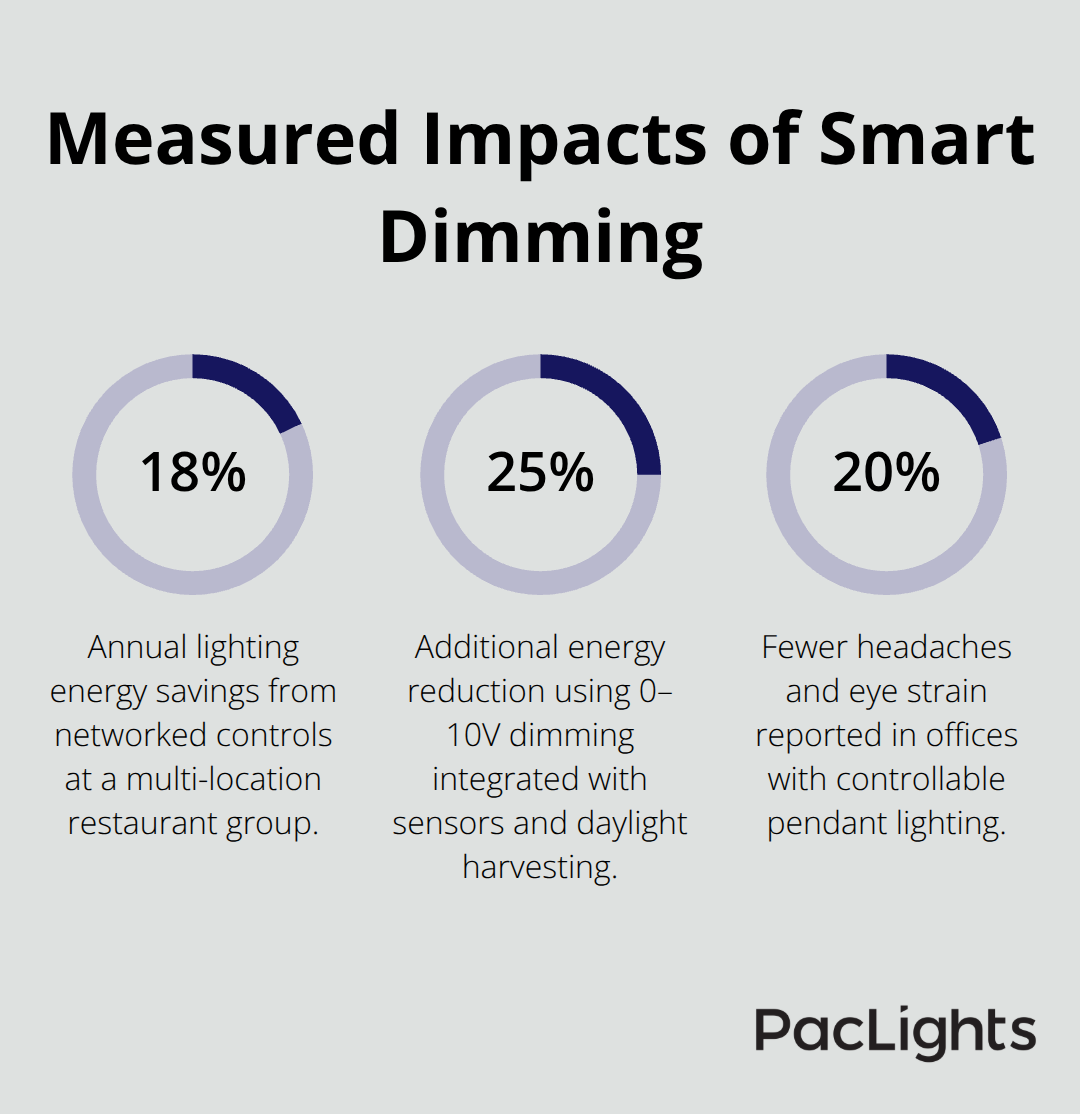
A restaurant group operating five locations found that networked controls saved roughly 18% on lighting energy costs annually by programming dimming schedules that matched customer traffic patterns-full brightness during peak dinner service, reduced brightness during setup and breakdown periods, and minimal lighting during closed hours.
The upfront investment in networked infrastructure costs 30–50% more than standalone dimming solutions, but payback typically occurs within three to four years through energy savings alone, plus operational benefits like reduced maintenance calls and staff time spent managing manual adjustments.
Professional Installation and Driver Compatibility
Professional installation becomes essential when you implement networked systems because incompatible drivers or control wiring create system failures that affect your entire pendant array. A licensed electrician familiar with networked lighting controls should handle the work rather than attempting DIY installation, especially when your facility depends on consistent lighting for customer experience or employee productivity. Verification of driver compatibility with your chosen control protocol and confirmation that all wiring meets local electrical codes prevent costly mistakes that could compromise both safety and system performance.
Final Thoughts
Dimmable cylinder pendant lights deliver measurable returns across energy consumption, operational flexibility, and customer perception. A commercial space with 20 pendants running 12 hours daily saves 8,000–12,000 kilowatt-hours annually through intelligent dimming, cutting lighting costs by 20–30% depending on local electricity rates. Networked dimming systems recover their upfront investment within three to four years through energy savings alone, while fixture lifespans of 50,000+ hours mean 15–20 years of reliable performance in typical commercial settings.
The operational advantages extend beyond energy meters. Restaurants report customers linger 15–25% longer when pendant lighting shifts gradually from bright to warm tones during evening service. Retail boutiques see improved product visibility and customer engagement when cylinder pendants maintain consistent color rendering across dimming ranges, while office workers experience fewer headaches and eye strain complaints when overhead lighting adapts to screen glare and natural light conditions throughout the day.
Contact PacLights to explore how networked lighting controls and energy-efficient dimmable cylinder pendant lights reduce your carbon footprint while improving occupant comfort and operational efficiency. Our team offers free lighting layout designs and ROI assessments to show exactly how these fixtures perform in your specific space.
Disclaimer: PacLights is not responsible for any actions taken based on the suggestions and information provided in this article, and readers should consult local building and electrical codes for proper guidance.