

Indoor cylinder wall lights serve double duty in commercial spaces-they handle the practical work of task lighting while adding visual interest to your walls. We at PacLights know that the right fixtures can transform how a space functions and feels.
This guide covers how these lights improve workspace visibility, which types work best for different environments, and why LED options save money over time.
How Cylinder Wall Lights Boost Task and Ambient Lighting
Focused Illumination for Precision Work
Cylinder wall lights excel at delivering focused illumination exactly where you need it in work environments. The directional beam from a well-positioned cylinder fixture-typically offering 15-degree to 60-degree spread options-concentrates light on desks, assembly stations, or display areas without spilling into adjacent zones. This precision matters in commercial settings where wasted light translates directly to wasted energy. A 40-degree beam angle cylinder mounted at 60 inches above the floor illuminates a concentrated work zone while keeping surrounding areas darker, which means your staff sees what they’re doing without the overhead glare that causes headaches during eight-hour shifts.
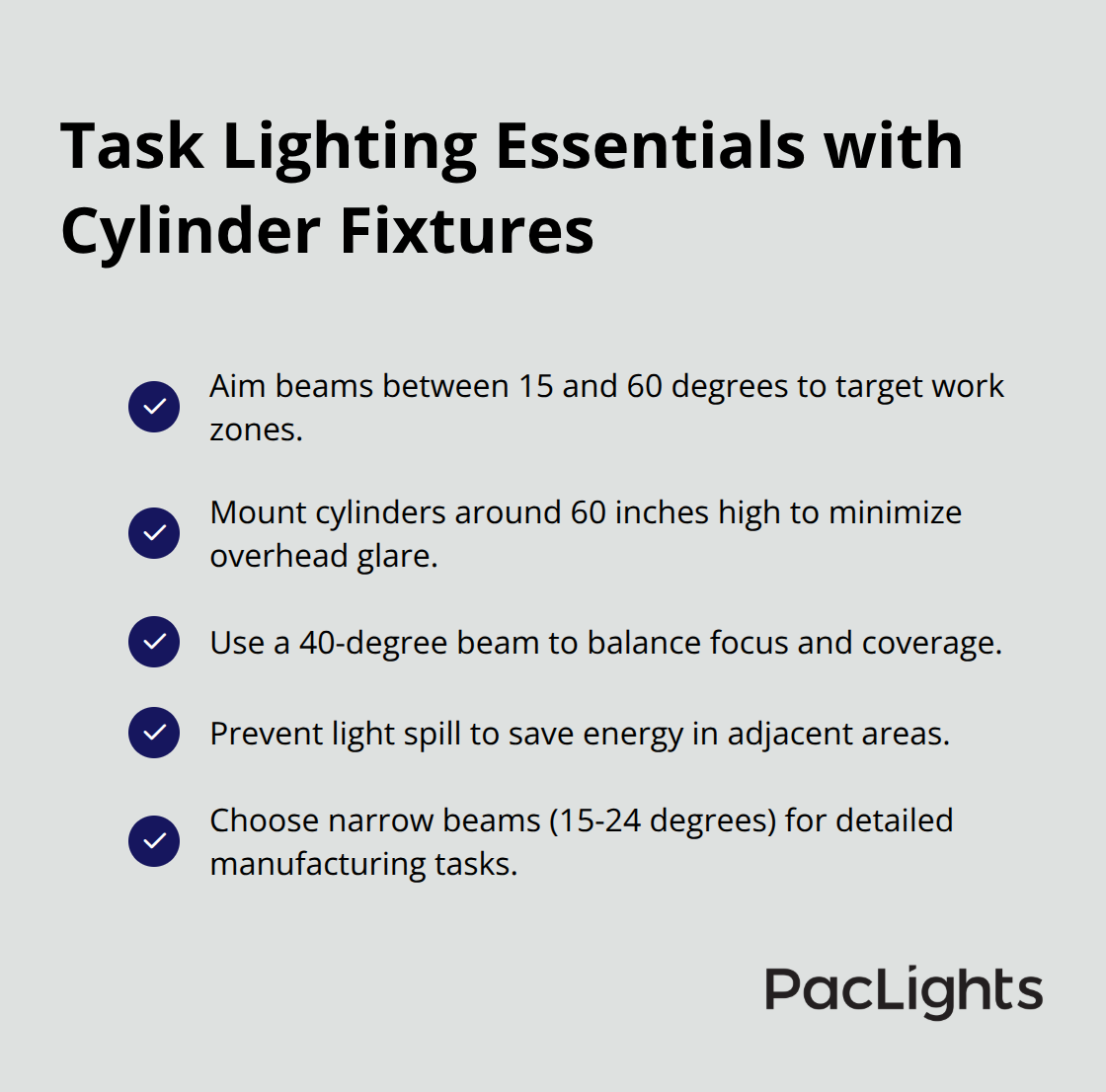
In manufacturing facilities, narrow beam cylinders (around 15-24 degrees) mounted strategically over workstations replace inefficient pendant lights, giving workers better visibility of fine details while using 40 percent less energy than older fluorescent systems when paired with dimming and occupancy sensors.
Dual-Function Design Reduces Fixture Clutter
The upward and downward light distribution capability of modern cylinders means a single fixture can wash accent light across a textured wall while simultaneously providing task lighting below. This dual functionality eliminates the need for multiple fixture types in the same space, streamlining your installation and reducing overall costs.
Reducing Eye Strain Through Controlled Light
Eye strain drops significantly when task lighting comes from a controlled source rather than broad overhead panels. Cylinder fixtures reduce glare by directing light away from eye level, and their precision optics prevent the harsh shadows that cause visual fatigue. In office environments, positioning cylinders at 5.5 to 6.5 feet above the floor-slightly above typical seated eye level-keeps the source outside your direct line of sight while illuminating documents and screens effectively.
Color Temperature and Circadian Alignment
Color temperature selection matters for workspace comfort and productivity. A 4000K fixture delivers the neutral, modern feel commercial spaces need while supporting focus and alertness, whereas older 2700K incandescent work lighting felt warm but created visual strain due to lower brightness levels. Modern LED cylinders with adjustable color temperature and dimming capability let you shift from 3000K during morning focus hours to 4000K mid-day, matching circadian rhythms without fixture changes.
Long-Term Reliability and Maintenance Savings
The long lifespan of cylinder LEDs-typically 50,000 hours or more-means maintenance crews spend far less time on replacements, keeping your spaces consistently lit rather than dealing with burned-out spots that force workers to compensate with desk lamps or eye strain. This reliability directly impacts your bottom line and worker productivity. Understanding how these fixtures perform across different commercial environments helps you select the right solution for your specific application.
Types and Applications of Cylinder Wall Lights in Commercial Spaces
Warehouses and Manufacturing: Durability Meets Output
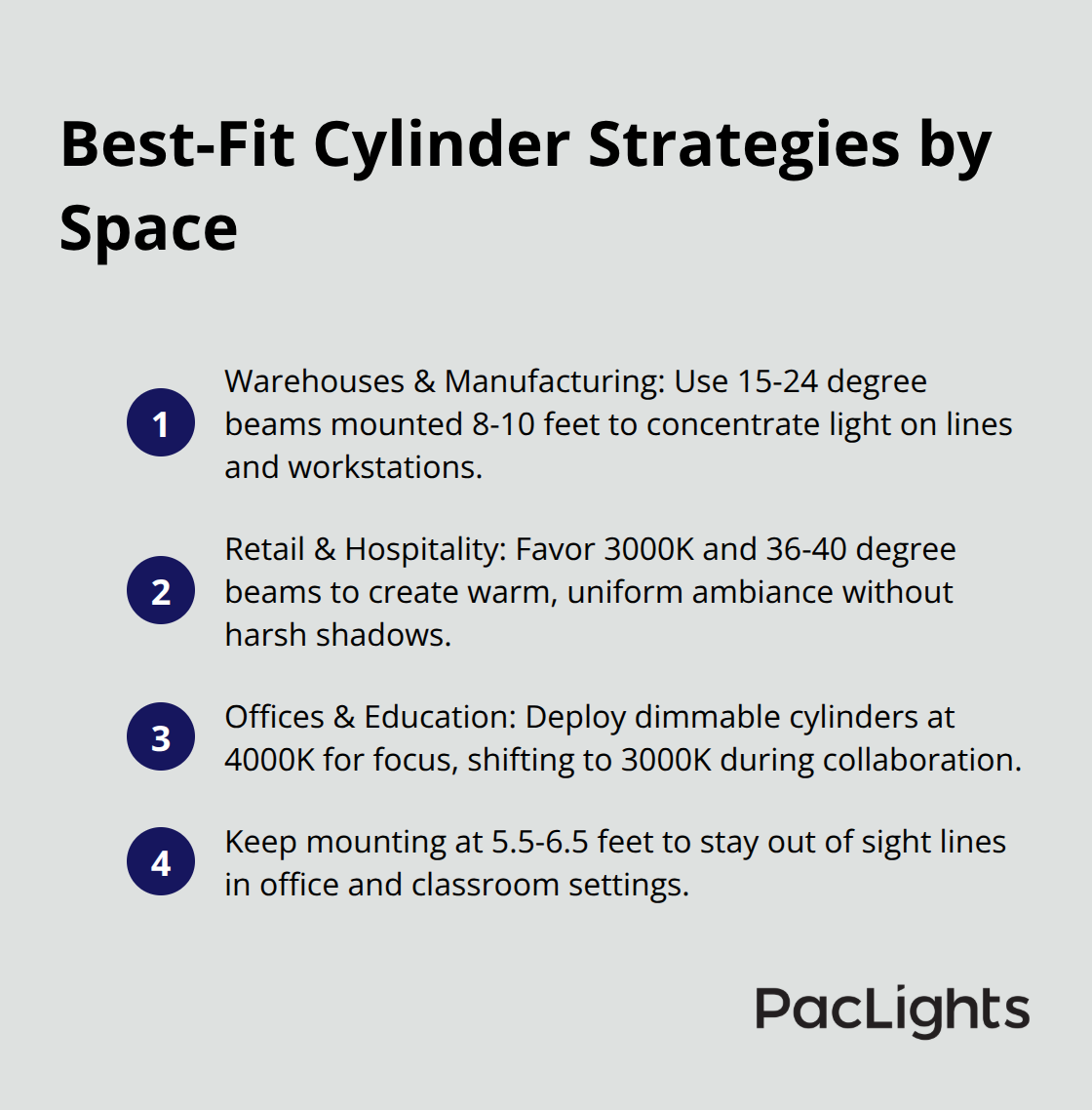
Warehouse and manufacturing environments demand cylinder fixtures built for durability and raw light output. Narrow beam cylinders between 15 and 24 degrees mounted 8 to 10 feet above assembly lines or inventory zones concentrate light exactly where workers need visibility without illuminating empty overhead space. A manufacturing facility running a 40-hour work week across three shifts benefits from fixtures rated for 50,000+ hours of operation, which translates to roughly five years before replacement becomes necessary.
Install these with occupancy sensors and dimming controls, and you cut energy consumption by 40 percent compared to always-on fluorescent systems while maintaining the 4000K color temperature that keeps workers alert during repetitive tasks. Warehouse managers should specify fixtures with robust aluminum heat sinks and IP65 ratings to handle dust and moisture typical in these environments. The upfront cost sits higher than older pendant lighting, but the reduced maintenance cycles and energy bills recover that investment within 18 to 24 months.
Retail and Hospitality: Balancing Function with Aesthetics
Retail and hospitality spaces take a different approach because customers notice the fixtures themselves. A 40-degree beam angle cylinder with 3000K color temperature creates a warm, inviting atmosphere while illuminating merchandise or architectural features without harsh shadows. Galleries and retail displays benefit from narrow-beam cylinders positioned 6 to 8 inches from artwork to create even illumination without hotspots or glare that damages visual appeal.
Hospitality lobbies and corridors need fixtures spaced 6 to 8 feet apart with 36-degree beam angles to eliminate dark patches while maintaining the cohesive ambiance that influences how guests perceive the space. Color rendering index above 90 matters in these applications because accurate color representation influences purchase decisions and brand perception.
Offices and Educational Facilities: Flexibility and Control
Office and educational settings require flexibility that single-function fixtures cannot provide. Classrooms and open-plan offices benefit from dimmable cylinders with 4000K output that support focus during instruction or work sessions, then dim to 3000K during collaborative periods or breaks to reduce visual fatigue. Positioning fixtures at 5.5 to 6.5 feet above floor level keeps the light source outside direct sight lines while illuminating desks and whiteboards effectively.
Educational facilities should specify fixtures compatible with networked lighting controls and daylight harvesting, which automatically reduce artificial light when windows provide sufficient illumination. This approach cuts energy use substantially in spaces with variable natural light throughout the day.
Customization Drives Performance Across All Environments
Customization matters across all three environments because one fixture specification rarely suits multiple zones in the same building. Different beam angles, color temperatures, and control strategies must match specific zones rather than apply generic solutions that waste energy and compromise performance. The next section examines how LED technology and advanced controls transform these fixtures into cost-saving assets that pay for themselves through reduced energy consumption and maintenance cycles.
Energy Efficiency and Cost Savings with LED Cylinder Wall Lights
Raw Energy Savings That Hit Your Bottom Line
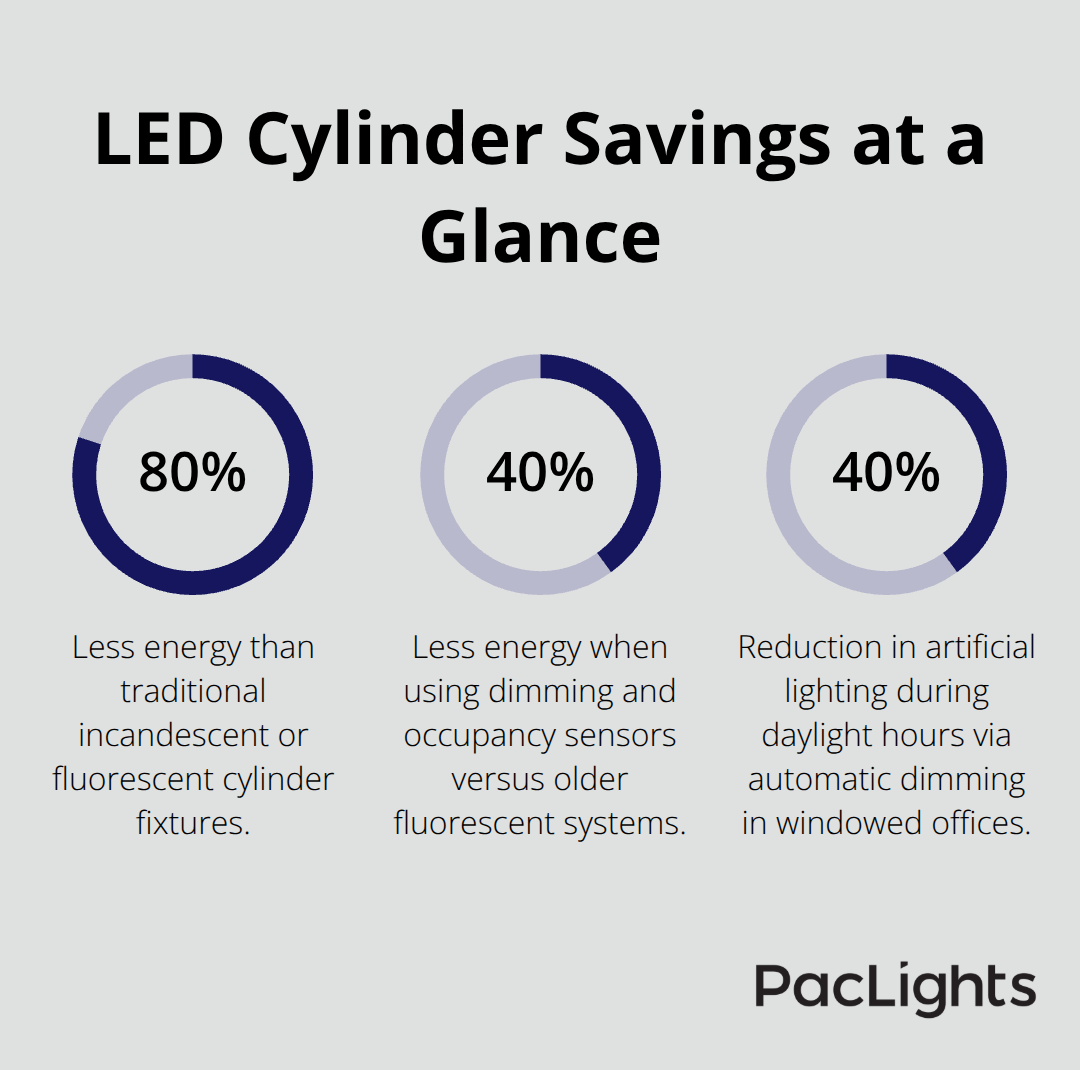
LED cylinder wall lights consume roughly 80 percent less energy than traditional incandescent or fluorescent cylinder fixtures, which means a commercial facility running these lights across multiple zones sees measurable reductions on monthly utility bills within the first billing cycle. A warehouse replacing forty fluorescent pendant lights with 40-watt LED cylinders operating twelve hours daily cuts annual energy consumption by approximately 17,000 kilowatt-hours, translating to roughly $2,000 in annual savings at typical commercial electricity rates of 0.12 dollars per kilowatt-hour. Modern LED cylinders deliver over 100 lumens per watt, producing brightness levels that match or exceed older systems while drawing a fraction of the power. The upfront cost of LED cylinders runs higher than legacy fixtures, but this investment recovers within eighteen to twenty-four months through energy savings alone, after which every additional year generates pure operational profit.
Maintenance Advantages That Reduce Labor Costs
LED cylinders rated for 50,000 hours of operation require replacement roughly once every five years in a facility running twelve-hour daily schedules, compared to fluorescent tubes needing changes every one to two years. Eliminating frequent bulb replacements reduces labor costs, minimizes facility disruptions from maintenance crews working in occupied spaces, and eliminates the environmental burden of disposing burned-out bulbs. This reliability advantage compounds over time as your maintenance team spends less effort on routine replacements and more time on strategic facility improvements.
Smart Controls Amplify Savings Further
Occupancy sensors and daylight harvesting controls amplify energy savings substantially beyond the baseline LED advantage. A commercial office building with windows on two sides can reduce artificial lighting by forty percent during daylight hours through automatic dimming, cutting annual energy use by an additional 6,000 to 8,000 kilowatt-hours depending on geographic location and window orientation. Motion sensors in warehouses and storage areas activate lights only when workers occupy zones, preventing the waste of illuminating empty spaces during shift changes or lunch breaks. These control strategies work with LED cylinders to create a comprehensive energy-optimization approach that addresses both consumption and operational patterns.
Networked Controls Enable Facility-Wide Optimization
Advanced lighting controls (such as networked lighting controls) allow facilities to implement energy-optimization strategies without replacing entire lighting systems. Networked systems monitor usage patterns across zones, adjust color temperature and brightness automatically, and provide data that identifies additional savings opportunities. A facility manager can track which zones consume the most energy, adjust fixture settings remotely, and respond to seasonal changes in natural light availability without sending crews to individual fixtures. This data-driven approach transforms lighting from a static utility into a dynamic system that adapts to actual occupancy and daylight conditions throughout the year.
Final Thoughts
Indoor cylinder wall lights transform commercial spaces by combining focused task lighting with visual refinement that improves how facilities function and feel. The precision beam control, long operational lifespan, and minimal maintenance requirements make these fixtures practical investments that recover their upfront cost within eighteen to twenty-four months through reduced utility bills and eliminated bulb replacement cycles. LED cylinders rated for 50,000 hours of operation generate significantly lower carbon footprints than traditional fixtures, supporting corporate environmental commitments without sacrificing performance or workspace quality.
Networked lighting controls and occupancy sensors amplify these benefits further by optimizing energy use based on actual occupancy patterns and natural light availability rather than static lighting schedules. We at PacLights provide durable, versatile cylinder wall light fixtures tailored to your specific facility requirements, whether you operate a warehouse, retail environment, office, or educational facility. Our team offers free lighting layout designs and ROI assessments to help you identify the exact fixtures and control strategies that deliver maximum performance for your commercial application.
Disclaimer: PacLights is not responsible for any actions taken based on the suggestions and information provided in this article, and readers should consult local building and electrical codes for proper guidance.