

Tight ceiling spaces present a real challenge for facility managers and contractors. A low profile flush downlight solves this problem by delivering bright, even illumination without eating into valuable overhead clearance.
At PacLights, we’ve seen firsthand how the right lighting fixture transforms cramped areas into functional, well-lit spaces. This guide covers everything you need to know about selecting, installing, and maintaining these compact solutions.
What Makes Low Profile Flush Downlights Different
Low profile flush downlights sit completely flush with your ceiling, typically measuring between 1/2 inch and 1.5 inches thick depending on the model. This extreme compactness makes them fundamentally different from standard recessed downlights, which require 4 to 6 inches of plenum space above the ceiling. The key difference lies in their canless design-the light source, driver, and reflector integrate directly into a slim housing that mounts flat against drywall, plaster, or suspended tile. Standard downlights rely on separate housings and trim rings that extend into the ceiling cavity, creating a much larger footprint. In spaces where ceiling clearance is already tight, this difference between 0.5 inches and 6 inches represents the difference between a feasible retrofit and an impossible one.
The Compact Design Advantage
Many facilities operate with minimal plenum height, especially in retrofit situations where HVAC ducts, pipes, and electrical conduit compete for space above the ceiling. Low profile flush downlights eliminate the need for extensive attic work or costly structural modifications. The canless design removes housing compatibility checks and adapter fittings, which speeds up installation and reduces project risk. Remote driver placement provides flexibility for complex ceiling layouts and keeps ceilings clean and clutter-free. IC-rated, airtight construction reduces HVAC load by minimizing air leakage between conditioned and unconditioned spaces, which boosts overall efficiency.
Retail and Hospitality Applications
Low profile flush downlights excel in hospitality settings like hotels and boutique retail spaces where aesthetics matter as much as function. Retail environments typically space fixtures 6 to 8 feet apart at 2,500 to 3,500 lumens per unit with 4,000 to 5,000K color temperature to accurately render product colors with 90+ CRI. Office corridors and break rooms benefit from the same technology, with recommended spacing of 8 to 10 feet and 3,500 to 4,000K for flicker-free, productive environments.
Kitchen and Bathroom Specifications
Kitchens and bathrooms represent another critical application. Kitchen counters typically require 18 to 24 inch spacing with 3,000+ lumens at 4000K, while bathrooms need 4 to 6 feet spacing with 1,500 to 2,000 lumens at 3000 to 4000K. Moisture-rated variants rated UL Damp or UL Wet extend durability in bathrooms, showers, and covered outdoor areas.
Energy Performance and Control Options
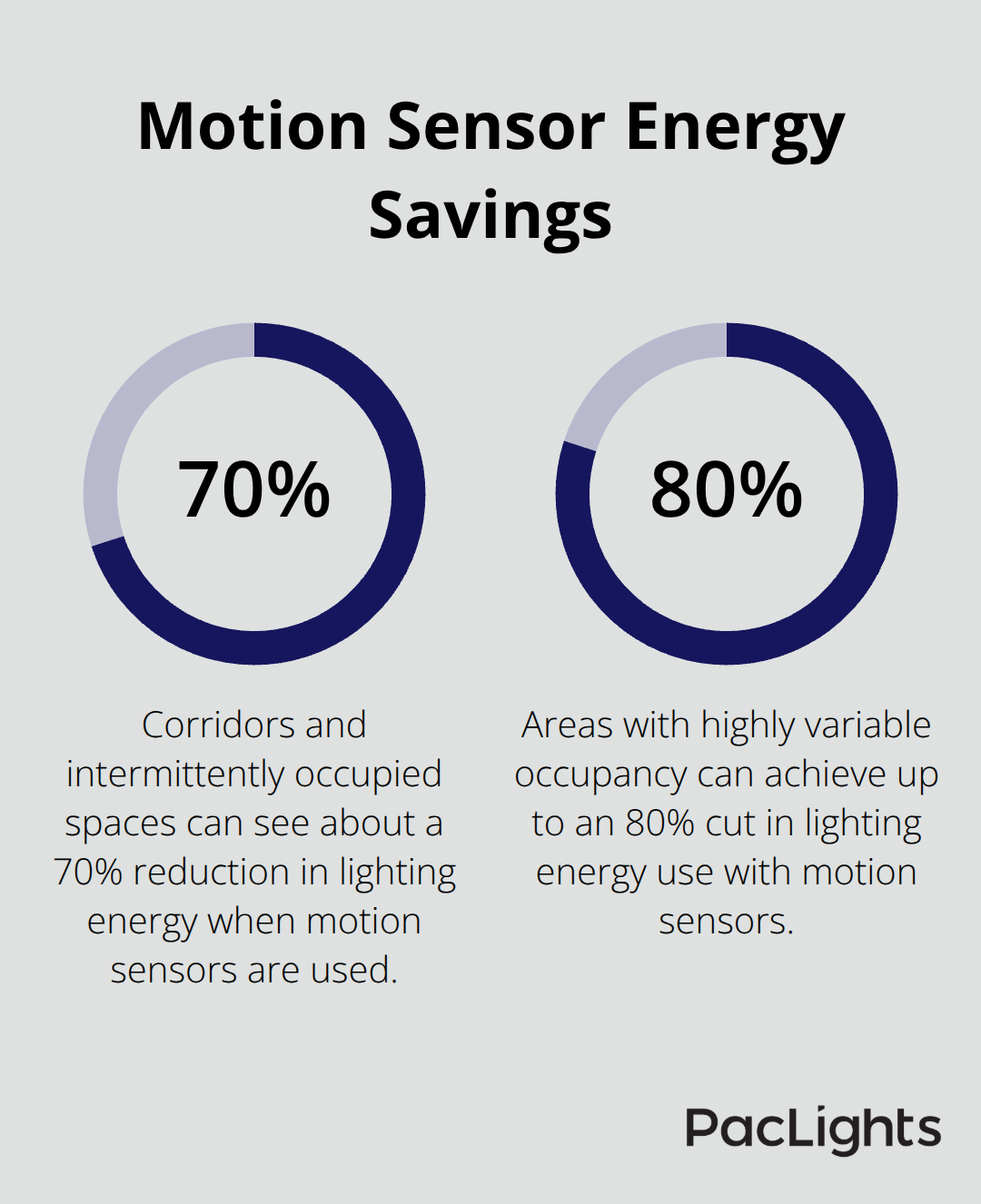
Energy consumption runs 8 to 12 watts per fixture compared to 60 watts for incandescent equivalents, delivering roughly 24,000 watt-hours of annual savings for a typical 20-fixture kitchen running 5 hours daily-approximately $240 to $300 per year per location. These fixtures support field-selectable color temperatures from 2700K to 5000K and work with 5% phase-cut and 0-10V dimming systems without requiring a full control system overhaul. Motion sensors can cut energy use by 70 to 80% in corridors and spaces with fluctuating occupancy, which improves efficiency in real-world layouts.
Understanding these design differences and applications sets the stage for evaluating installation requirements and compatibility with your existing ceiling systems.
Why Low Profile Flush Downlights Deliver Real Value
Solving Retrofit Constraints Without Structural Changes
Retrofit projects in existing buildings face hard constraints: you cannot relocate HVAC systems, and you cannot tear down structural elements just to install lighting. Low profile fixtures solve this problem by requiring zero plenum space modifications. A standard recessed downlight demands 4 to 6 inches of clearance above the ceiling, which forces contractors to either relocate ducts and conduit or abandon the project altogether. Low profile models at 0.5 to 1.5 inches thick eliminate this friction entirely, meaning facility managers can upgrade lighting without engineering changes and without shutting down operations for weeks.
Installation speed matters significantly. The canless design removes compatibility checks and adapter fittings, which cuts installation time compared to traditional recessed fixtures. This translates directly to lower labor costs and faster project completion-a tangible win for retrofit budgets.
Measurable Energy Savings and Long-Term ROI
Energy savings deliver measurable returns that justify the upfront investment. Standard incandescent downlights consume 60 watts per fixture; low profile LEDs run 8 to 12 watts. A typical 20-fixture kitchen running 5 hours daily generates roughly 24,000 watt-hours of annual savings, worth approximately $240 to $300 per location depending on local electricity rates. Motion sensors amplify this further, cutting energy consumption by 70 to 80% in corridors and intermittently occupied spaces.
ENERGY STAR certified models deliver around 50,000-hour lifespans, which means you replace bulbs far less frequently than incandescent or older halogen fixtures. Over 25 years of facility operation, this compounds into substantial cost reduction. The IC-rated, airtight construction reduces HVAC load through minimized air leakage between conditioned and unconditioned spaces, improving overall building efficiency beyond just the lighting system itself.
Control Integration and Operational Flexibility
Dimmable options supporting 5% phase-cut and 0-10V systems integrate with existing control infrastructure without expensive panel upgrades. This flexibility allows facilities to adapt lighting to occupancy patterns and task requirements without major capital expenditure. Field-selectable color temperatures from 2700K to 5000K provide additional operational control, enabling adjustments as facility needs evolve.
Aesthetic and Performance Benefits Across Applications
The flush-mount design creates uncluttered ceilings that look finished and modern. Retail showrooms and hospitality spaces see tangible benefits: product displays render accurately with 90+ CRI at 4,000 to 5,000K color temperature, and the seamless ceiling appearance enhances perceived quality. Offices benefit from flicker-free operation at 3,500 to 4,000K, supporting occupant comfort during long workdays.
Moisture-rated variants extend durability in bathrooms and wet environments, eliminating premature failures that disrupt operations and drive replacement costs. These performance advantages across different facility types make low profile fixtures a versatile solution for diverse applications.
Planning Your Installation Strategy
The real value emerges when you match fixture specifications to your specific space requirements and operational patterns. Installation compatibility, electrical capacity, and ceiling type all influence project success and long-term performance.
Getting Low Profile Fixtures Right: Ceiling Compatibility and Electrical Setup
Installing low profile flush downlights requires three critical decisions upfront: confirming your ceiling type, verifying electrical capacity, and understanding how the fixture mounts.
Ceiling Type and Installation Approach
Drywall allows straightforward cutouts and secure mounting with standard brackets, but plaster ceilings demand careful drilling to avoid cracking around the fixture perimeter. Use a carbide hole saw and work slowly to prevent fractures that compromise structural integrity. Suspended tile ceilings present the easiest retrofit scenario because fixtures mount directly to grid supports without ceiling modifications, though you must verify that grid weight capacity accommodates the fixture and wiring.

Before cutting any holes, confirm attic clearance above your ceiling cuts to prevent hitting HVAC ducts, pipes, or electrical conduit. A simple flashlight inspection or brief attic access eliminates costly mistakes.
Electrical Panel Capacity and Circuit Planning
Electrical panel capacity determines how many fixtures you can safely install on a single circuit. Standard 15-amp circuits support approximately 12 to 15 low profile fixtures running at 10 watts each, while 20-amp circuits accommodate 16 to 20 fixtures. Exceeding these limits creates fire hazards and potential code violations.
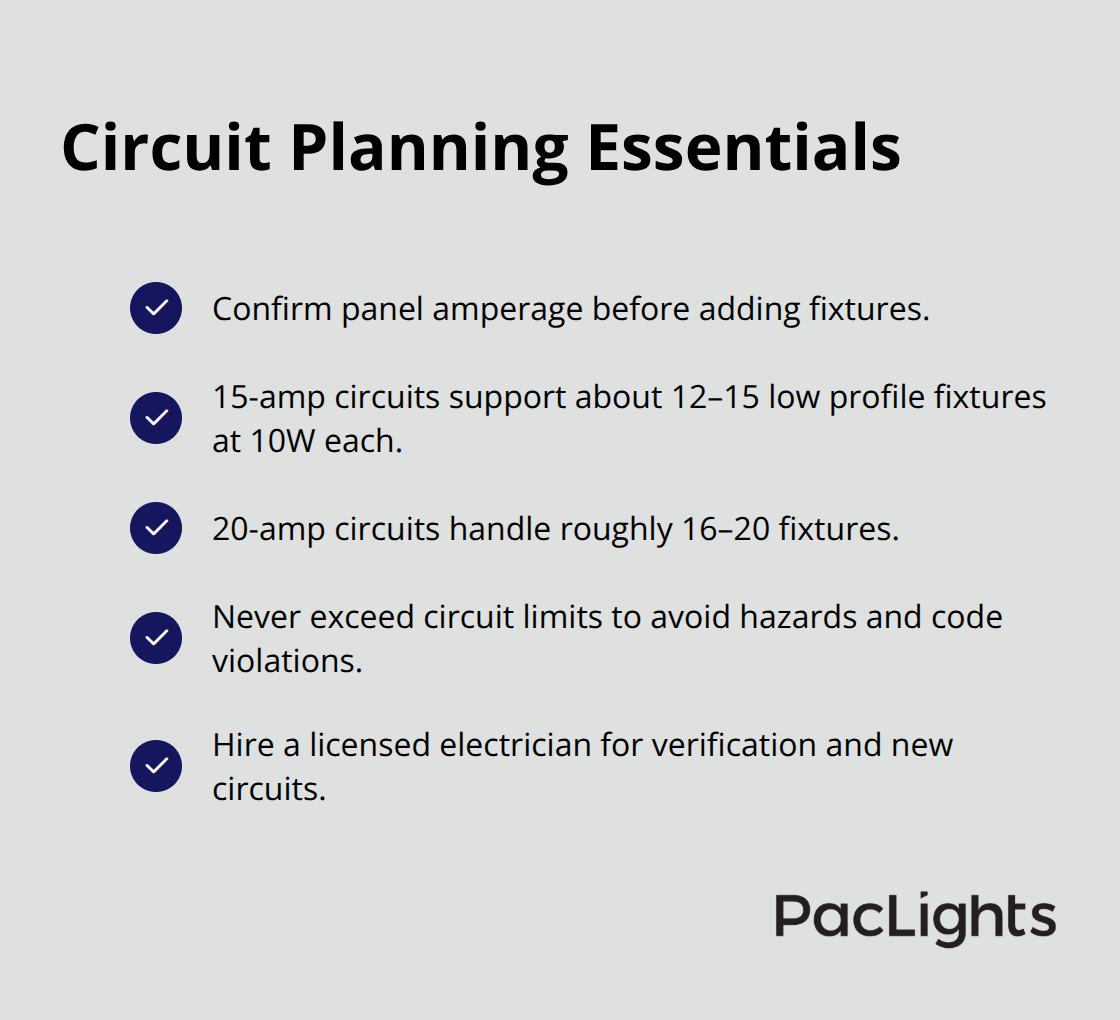
Hire a licensed electrician to verify your panel capacity and install new circuits if needed. This protects your warranty and ensures safety compliance.
Wiring Connections and Dimmer Compatibility
Wiring connections follow standard color coding: black (live) connects to black, white (neutral) to white, and green or bare copper (ground) to ground. Loose connections cause flickering, dimming, and premature failure, so secure all wire connections with appropriate connectors and wrap with electrical tape.
Dimmer compatibility matters significantly. Phase-cut dimmers work with most low profile LED fixtures, but 0-10V systems require dedicated wiring and compatible drivers. Test your dimmer before final installation to confirm smooth operation across the brightness range.
Maintenance and Long-Term Performance
Clean lens and reflective surfaces every three to four months using a microfiber cloth and mild soap solution to restore light output that dust and debris gradually reduce. Inspect mounting hardware twice yearly for looseness or corrosion, especially in moisture-prone areas like kitchens and bathrooms where humidity accelerates wear.
Check for burn marks, discoloration, or thermal damage on housing components that signal overheating or electrical issues requiring immediate replacement. Moisture-rated fixtures rated UL Damp or UL Wet in wet environments like bathrooms and shower areas extend lifespan significantly by preventing corrosion inside the housing.
We at PacLights offer free lighting layout designs and ROI assessments to help you plan installations correctly from the start, reducing the likelihood of compatibility problems and rework costs that compromise project budgets.
Final Thoughts
Low profile flush downlights solve the real constraint that facility managers face constantly: upgrading lighting in spaces where ceiling clearance simply does not exist. Unlike standard recessed fixtures that demand 4 to 6 inches of plenum space, these compact units fit into 0.5 to 1.5 inches, eliminating the need for costly structural modifications or HVAC relocations. This alone makes them the practical choice for retrofit projects where time and budget constraints are tight.
The financial case proves equally compelling. A 20-fixture kitchen running 5 hours daily saves approximately $240 to $300 annually when you switch from incandescent to LED low profile flush downlights. Over a facility’s operational life, combined with reduced maintenance from 50,000-hour lifespans and lower HVAC loads from airtight construction, these savings compound significantly. Motion sensors amplify efficiency gains by cutting energy use 70 to 80% in corridors and intermittently occupied spaces.
We at PacLights understand that lighting decisions impact both your immediate budget and long-term operational efficiency. Contact us to discuss how low profile flush downlights can transform your tight ceiling spaces into functional, efficient areas without compromise. Our team offers free lighting layout designs and ROI assessments to help you plan installations correctly and select fixtures matched to your specific space requirements.
Disclaimer: PacLights is not responsible for any actions taken based on the suggestions and information provided in this article, and readers should consult local building and electrical codes for proper guidance.