

Cylinder pendant lights dimming doesn’t have to be complicated. At PacLights, we’ve seen how the right controller transforms a basic fixture into a flexible lighting solution that adapts to any mood or task.
Most people don’t realize that dimmable controllers also cut energy costs and extend the life of your lights. This guide walks you through everything you need to know about selecting, installing, and getting the most from dimming technology.
How Dimmable Controllers Work with Cylinder Pendant Lights
Dimmable controllers operate using phase-cutting technology that modulates the electrical current flowing to your LED cylinder pendants. The two main approaches are leading-edge and trailing-edge dimming, and this distinction matters far more than most installers acknowledge. Leading-edge dimmers, designed for incandescent bulbs, cut power at the start of each electrical cycle and work poorly with modern LED drivers, causing flicker, buzzing, and shortened lifespan. Trailing-edge dimmers, by contrast, cut power at the end of each cycle and deliver smooth, stable dimming that LED drivers prefer. According to the U.S. Department of Energy, dimming an LED by 50 percent increases its lifespan up to fivefold, making controller selection a direct investment in fixture longevity. The Radiant LED Advanced Dimmer exemplifies this approach as a 2-wire trailing-edge option rated for LED loads up to 150W total, eliminating the need for a neutral wire in older installations where rewiring proves impractical.
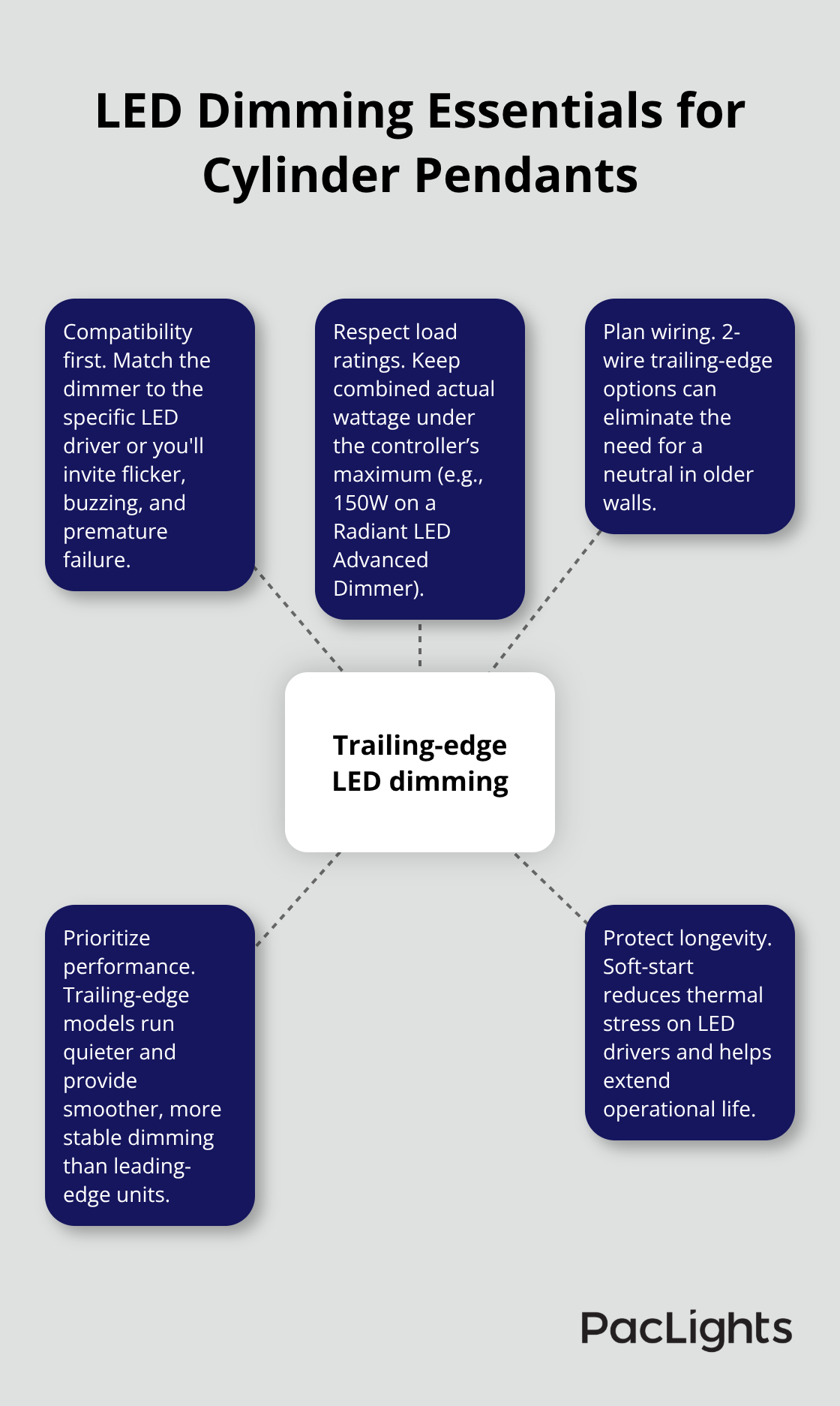
Compatibility between your dimmer and LED driver is non-negotiable; mismatches cause the very problems most people blame on poor fixture quality. Before purchasing any controller, verify that your LED cylinder pendants carry the dimmable designation on their packaging or the manufacturer’s specification sheet, as not all LED bulbs support dimming regardless of controller capability.
Calculate Load and Wattage Requirements
Your first practical step involves calculating the total wattage of all LED cylinder pendants connected to a single controller. Most LED bulbs display an equivalent wattage that bears little resemblance to their actual draw; a bulb labeled 60W equivalent typically consumes only 8–10 watts. Add the real wattages of every pendant on the circuit and compare that total to your controller’s maximum rating. A Radiant dimmer handling 150W can control multiple cylinder pendants simultaneously if their combined actual wattage stays below that ceiling. Overloading a single dimmer forces it to work harder, generating excess heat that accelerates component failure and risks thermal shutdown during operation.
Address Flicker and Compatibility Issues
Flicker when dimming typically stems from three sources: incompatible dimmer-to-driver pairing, insufficient minimum load on the circuit, or environmental electrical noise. Low-wattage LED installations sometimes fall below a dimmer’s minimum load threshold, causing instability even with compatible equipment. If you encounter flicker after installation, switch to a trailing-edge dimmer designed specifically for LED loads rather than attempting to troubleshoot driver-level settings. Many advanced dimmers allow manual adjustment of the dimming range to match your specific LED bulbs, helping eliminate the 20 percent lower limit where some LEDs refuse to dim further.
Verify Dimmer Specifications Before Installation
Trailing-edge dimmers operate more quietly than leading-edge models, which matters in residential spaces or quiet commercial zones featuring cylinder pendants. Check the dimmer’s wattage rating against your total pendant load, and confirm that the dimmer supports the specific LED driver your fixtures use. Some dimmers require a neutral wire to power internal electronics; verify your circuit wiring and plan accordingly before purchasing equipment. Soft-start technology in advanced dimmers gradually increases LED brightness, reducing thermal stress on drivers and extending their operational life. These specifications determine whether your installation delivers smooth dimming or creates the compatibility problems that plague poorly planned projects.
Why Dimmable Controllers Deliver Real Financial and Operational Benefits
Cut Energy Consumption with Proportional Savings
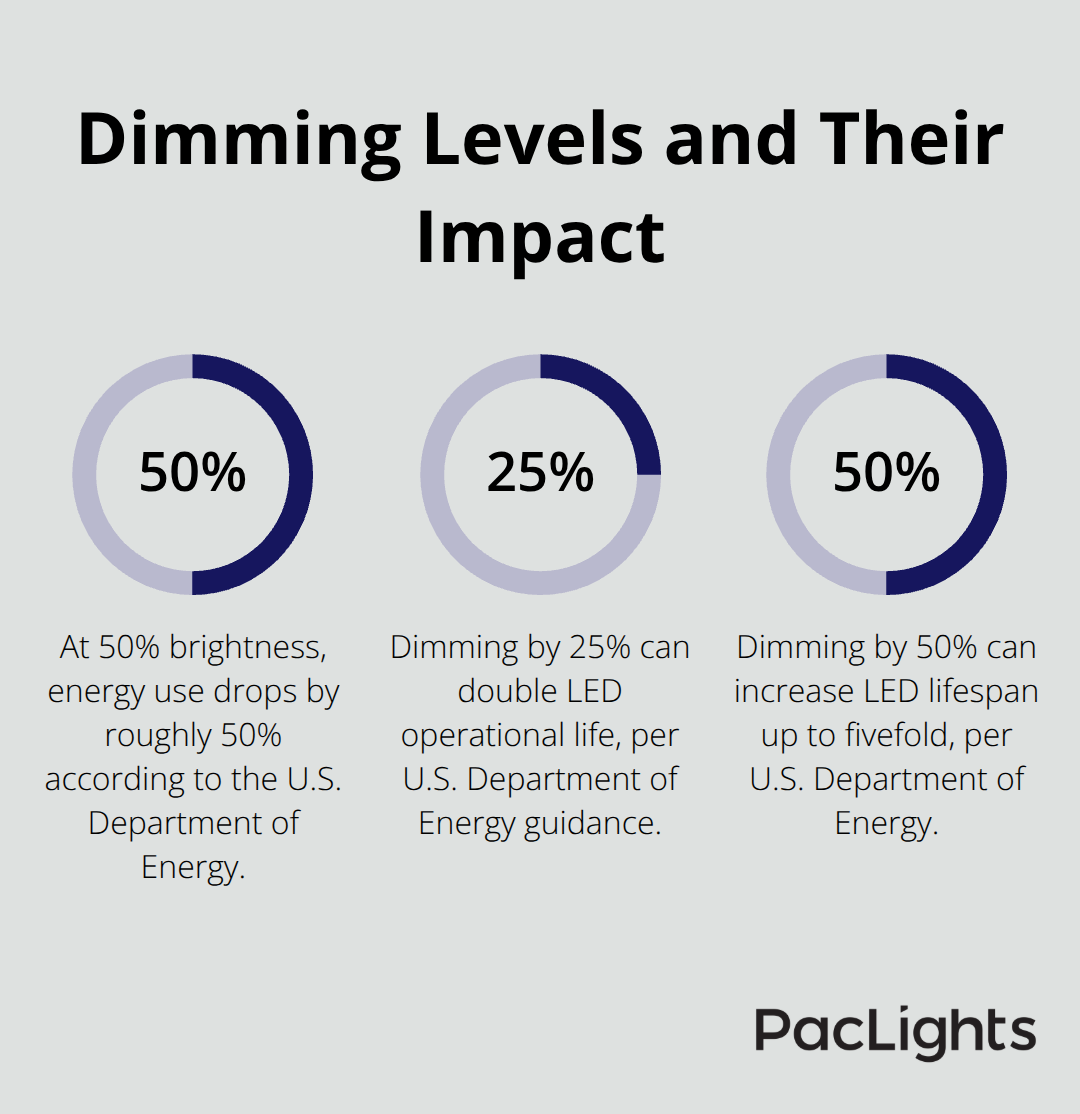
Dimming your cylinder pendant lights reduces energy consumption in direct proportion to brightness reduction. At 50 percent brightness, you achieve roughly 50 percent energy savings depending on your LED driver and dimmer efficiency, according to the U.S. Department of Energy. This translates to measurable monthly utility reductions that compound annually. A commercial space running ten 12-watt cylinder pendants at full brightness consumes 120 watts continuously. Dimming those same fixtures to 50 percent drops consumption to 60 watts, delivering approximately 60 kilowatt-hours of savings per month in a space operating 24 hours daily. Over a year, that single adjustment prevents roughly 720 kilowatt-hours from your electrical bill. Multiply this across multiple zones and the financial case becomes undeniable.
Extend Fixture Lifespan Through Strategic Dimming
Beyond energy reduction, dimming extends LED lifespan dramatically. The U.S. Department of Energy confirms that dimming an LED by 25 percent doubles its operational life, while 50 percent dimming increases lifespan up to fivefold. This means your cylinder pendants survive far longer before requiring replacement, eliminating both material costs and labor expenses associated with fixture maintenance. Thermal stress on LED drivers decreases when soft-start technology in trailing-edge dimmers gradually increases brightness, preventing the abrupt flicker that accelerates component wear.
Adapt Lighting to Task Requirements Without Rewiring
Dimmable controllers let you adjust lighting to match task requirements without rewiring or fixture replacement. A commercial corridor benefits from brighter lighting during business hours and reduced brightness during off-peak periods, improving both safety and comfort while cutting energy waste. Hospitality spaces like lobbies or dining areas gain the ability to establish different moods throughout the day using preset scene settings available on many advanced dimmers. Soft-start technology in trailing-edge dimmers gradually increases LED brightness, reducing thermal stress on drivers and preventing the abrupt flicker that creates visual discomfort and appears unprofessional. This capability matters most in spaces where consistent, reliable lighting directly influences customer perception.
Enhance Occupant Satisfaction and Space Flexibility
Residential applications gain similar flexibility; homeowners adjust ambiance for entertaining, relaxation, or task-focused activities using a single controller. The psychological benefit of lighting control over your environment consistently ranks high in occupant satisfaction surveys, yet most installations ignore this advantage by defaulting to fixed brightness levels. When you install dimmable controllers, you transform static lighting into a responsive system that adapts to occupant needs throughout the day. This flexibility positions your space for future demands without requiring costly upgrades or replacements. The next section examines the practical steps required to select and install the right controller for your specific application.
Setting Up Your Dimming System the Right Way
Start by documenting your existing electrical infrastructure before touching any equipment. Walk through your space with a notebook and identify every cylinder pendant light you plan to control, then locate the nearest wall switch and electrical panel. Measure the actual distance from each pendant to the proposed dimmer location-trailing-edge dimmers work best when installed within 50 feet of the fixtures they control, as longer wire runs introduce voltage drop and instability. Check whether your circuit includes a neutral wire by examining the switch box; if you see only two wires (hot and ground), you’ll need a 2-wire trailing-edge dimmer like the Radiant LED Advanced Dimmer that doesn’t require neutral. Count the total number of pendants and their actual wattage ratings-not the equivalent wattage printed on packaging, but the real watts consumed. A pendant labeled 60W equivalent typically draws only 8–10 watts, so verify this on the manufacturer’s specification sheet or product documentation. Add these real wattages together to determine whether a single 150W-rated dimmer covers all fixtures or whether you need multiple dimmers distributed across different zones. This calculation prevents the most common installation failure: overloading a single controller, which causes thermal shutdown and unreliable dimming performance. Document your findings on a simple diagram showing pendant locations, wattages, and circuit paths-this reference guide prevents mistakes during installation and helps any future technician understand your setup.
Choose the Right Dimmer Type for LED Compatibility
Selecting the wrong controller type wastes money and creates ongoing frustration, so make your choice based on specific compatibility requirements rather than price or convenience. Trailing-edge dimmers are non-negotiable for LED cylinder pendants; leading-edge dimmers designed for incandescent bulbs will cause flicker, buzzing, and premature LED driver failure regardless of how well-built the dimmer itself is. Before purchasing, contact your LED pendant manufacturer and request their official compatibility list for dimmers-some manufacturers test extensively and publish approved models, while others provide vague recommendations that invite problems. Verify that the dimmer supports your specific LED driver type and wattage, as soft-start technology and advanced EMI filtering vary significantly between models.
Plan Multiple Zones for Independent Control
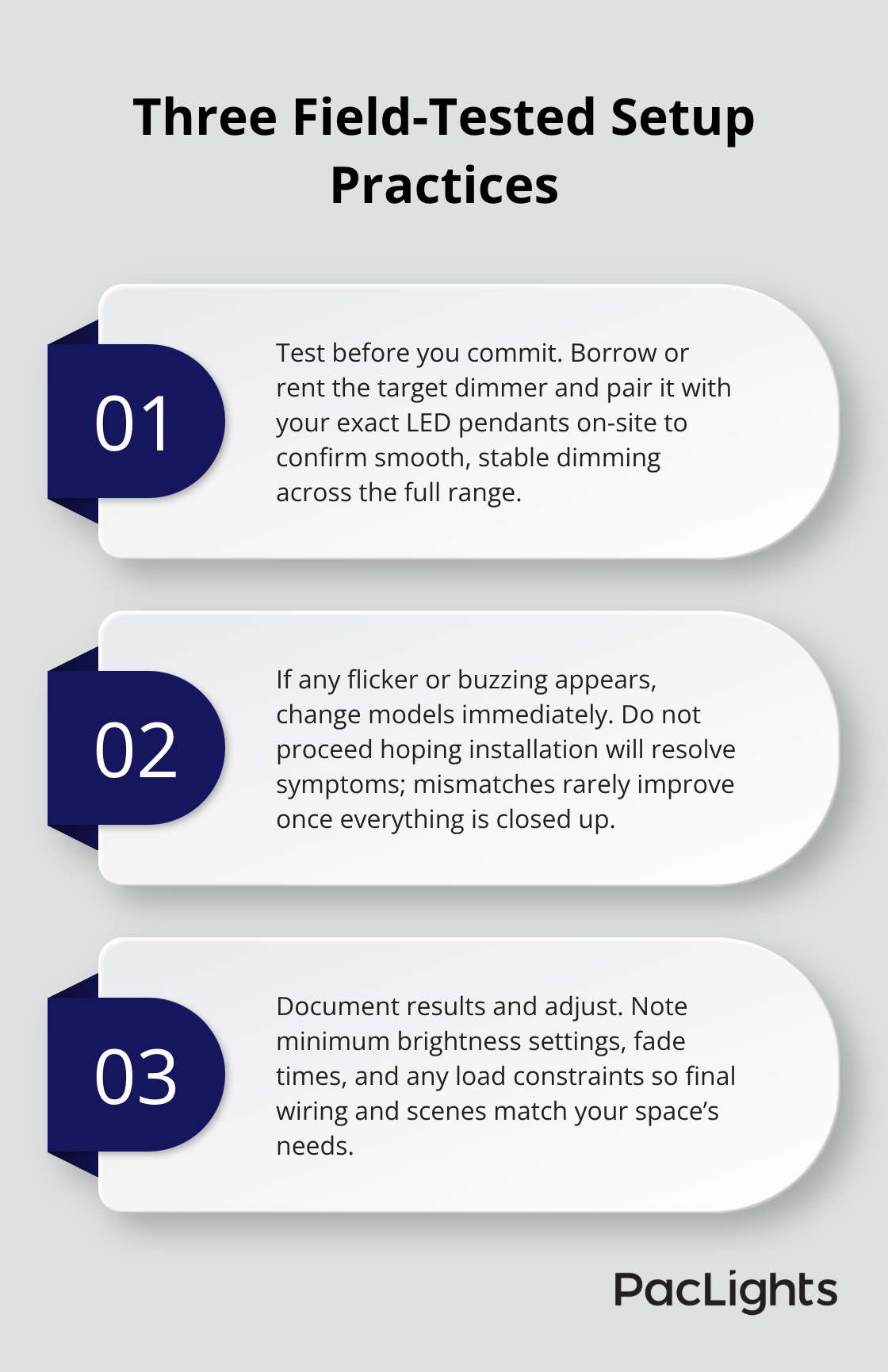
If your installation includes multiple pendants in different rooms, resist the temptation to buy one universal dimmer and split the load across multiple circuits; instead, install separate trailing-edge dimmers in each zone to avoid overloading and to allow independent scene control. Test your dimmer-to-fixture pairing before permanent installation whenever possible-many lighting suppliers will loan or rent equipment for trial periods. If you notice any flicker or buzzing during testing, switch to a different dimmer model immediately rather than hoping the problem resolves after full installation.
Avoid Common Installation Mistakes
Common mistakes include installing dimmers in unventilated spaces where heat buildup triggers thermal protection, failing to adjust the dimmer’s minimum brightness setting to match the LED bulb’s lower dimming limit, and connecting too many pendants to a single circuit without calculating actual load. Electrical codes require proper grounding and accessible control locations, so plan your installation to meet local requirements and avoid the liability of improper wiring. After installation, spend time calibrating your dimmer’s fade rates and scene settings to match your space’s needs-a 2-second fade in a residential bedroom creates comfort, while a 0.5-second fade in a commercial space prevents the sluggish response that feels unresponsive to occupants.
Final Thoughts
Cylinder pendant lights dimming transforms your lighting from a fixed utility into a responsive system that balances comfort, efficiency, and cost control. Dimming to 50 percent brightness cuts energy consumption by roughly 50 percent while extending LED lifespan up to fivefold according to the U.S. Department of Energy. These measurable reductions in your monthly utility bills and maintenance expenses compound year after year.
Your next step involves auditing your current installation and documenting pendant locations, actual wattage (not equivalent wattage), and circuit infrastructure for a trailing-edge dimmer. Contact your fixture manufacturer directly if you’re uncertain about compatibility between your LED drivers and available controllers-this single conversation prevents costly mistakes and ensures reliable performance from day one. Commercial spaces benefit from zone-based dimming that improves safety during business hours while reducing consumption during off-peak periods, while residential applications gain the ability to establish different moods throughout the day using preset scenes.
At PacLights, we understand that lighting decisions impact both your operational costs and occupant satisfaction. Visit PacLights to explore how dimmable lighting controls can transform your space into a more efficient, flexible environment that adapts to your needs.
Disclaimer: PacLights is not responsible for any actions taken based on the suggestions and information provided in this article, and readers should consult local building and electrical codes for proper guidance.