

Linear LED suspension lighting transforms modern spaces with sleek design and superior energy efficiency. These versatile fixtures hang from ceilings to provide even illumination across large areas.
We at PacLights see businesses struggle with choosing the right suspension lighting for their specific needs. The wrong choice leads to poor lighting quality, higher energy costs, and installation headaches.
This guide breaks down the essential factors you need to consider before making your investment.
What Makes Linear LED Suspension Lighting Work
Linear LED suspension lighting consists of elongated light fixtures that hang from ceilings through cables, rods, or chains. These systems house LED chips along aluminum housings that extend from 2 feet to over 8 feet in length. The LED chips generate light through electroluminescence and convert electrical energy directly into visible light with efficiency ratings that exceed 100 lumens per watt (according to the U.S. Department of Energy). Advanced models feature integrated drivers that regulate power flow, control dimming functions, and provide smart connectivity options for building management systems.
Core Components That Drive Performance
The aluminum housing serves as both structure and heat sink. It dissipates thermal energy to maintain LED performance over 50,000-hour lifespans. Optical diffusers distribute light evenly across the fixture length and eliminate hot spots that plague traditional fluorescent strips. Quality suspension systems support fixtures that weigh 15-40 pounds while they maintain precise alignment.
Professional installations require laser levels to prevent sagging that reduces light output by up to 30% in longer runs. Modular designs allow field customization of length, color temperature, and mounting configurations without factory modifications.
Why Linear LEDs Beat Traditional Options
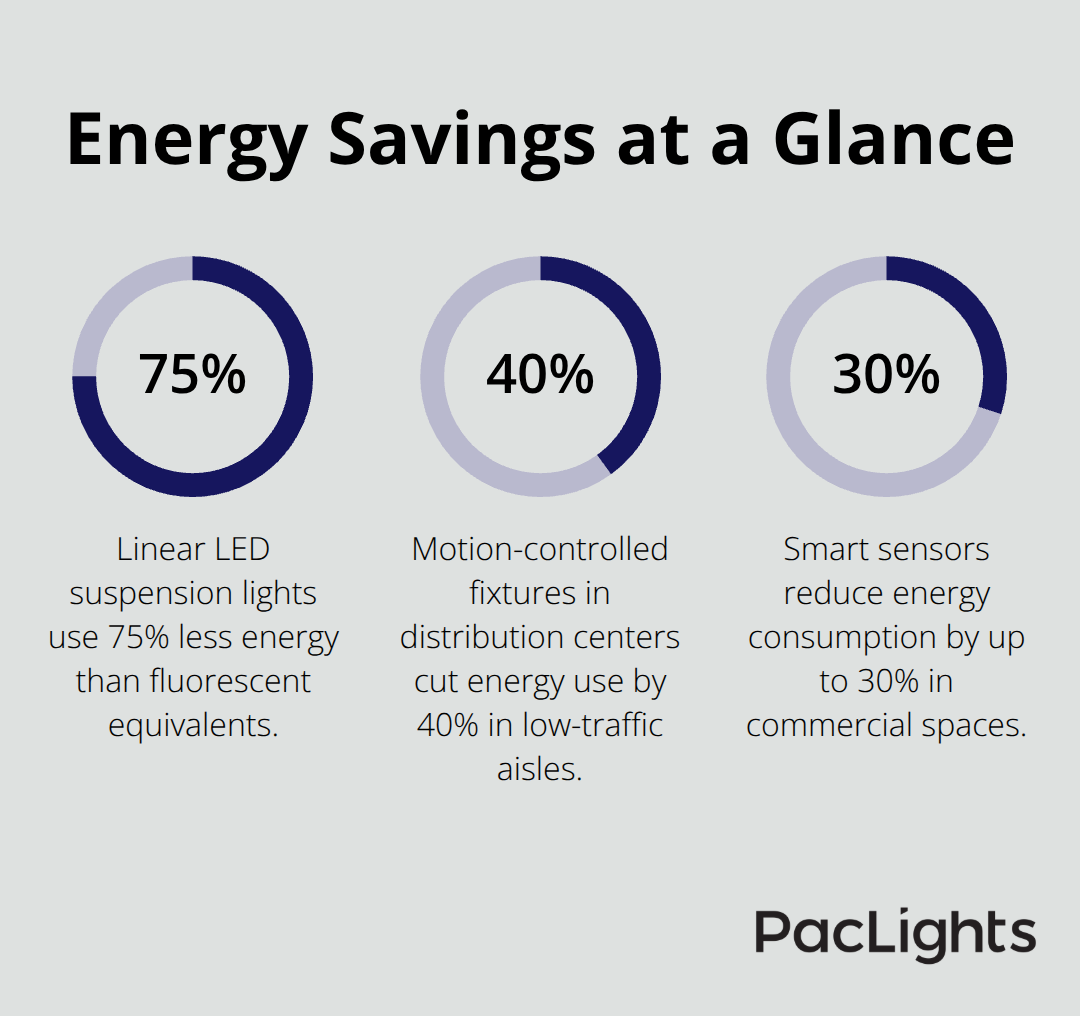
Linear LED suspension lights consume 75% less energy than fluorescent equivalents while they produce superior light quality. Fluorescent fixtures require ballast replacements every 3-5 years and suffer from flickering issues that reduce productivity. LEDs maintain consistent color rendering index values above 80 CRI throughout their lifespan, while fluorescents degrade to yellow tints within 18 months. Installation costs drop significantly since LEDs eliminate ballast wiring complexity and reduce maintenance intervals from monthly to twice yearly. The instant-on capability eliminates the 3-5 minute warm-up period that metal halide systems require, which improves workplace efficiency in commercial applications.
Performance Factors That Matter Most
Light output varies dramatically across different models and manufacturers. Quality fixtures deliver consistent illumination patterns without dark spots or excessive brightness variations. Color temperature options range from warm 2700K to cool 6500K, with 4000K-5000K temperatures proving most effective for task-oriented environments. Dimming capabilities allow energy savings of 20-60% when properly implemented with compatible control systems.
These technical specifications directly impact your space selection criteria and installation requirements.
What Size and Setup Work Best
Room dimensions dictate fixture selection more than aesthetics. Spaces under 200 square feet require single 4-foot fixtures, while areas over 1,000 square feet need multiple 6-8 foot units or continuous runs. The Illuminating Engineering Society recommends 300-500 lux for general office work and up to 1,500 lux for precision tasks. Standard 8-foot ceilings work with fixtures hung 30-36 inches above work surfaces, but ceilings above 10 feet demand longer fixtures or multiple units to prevent dark zones.
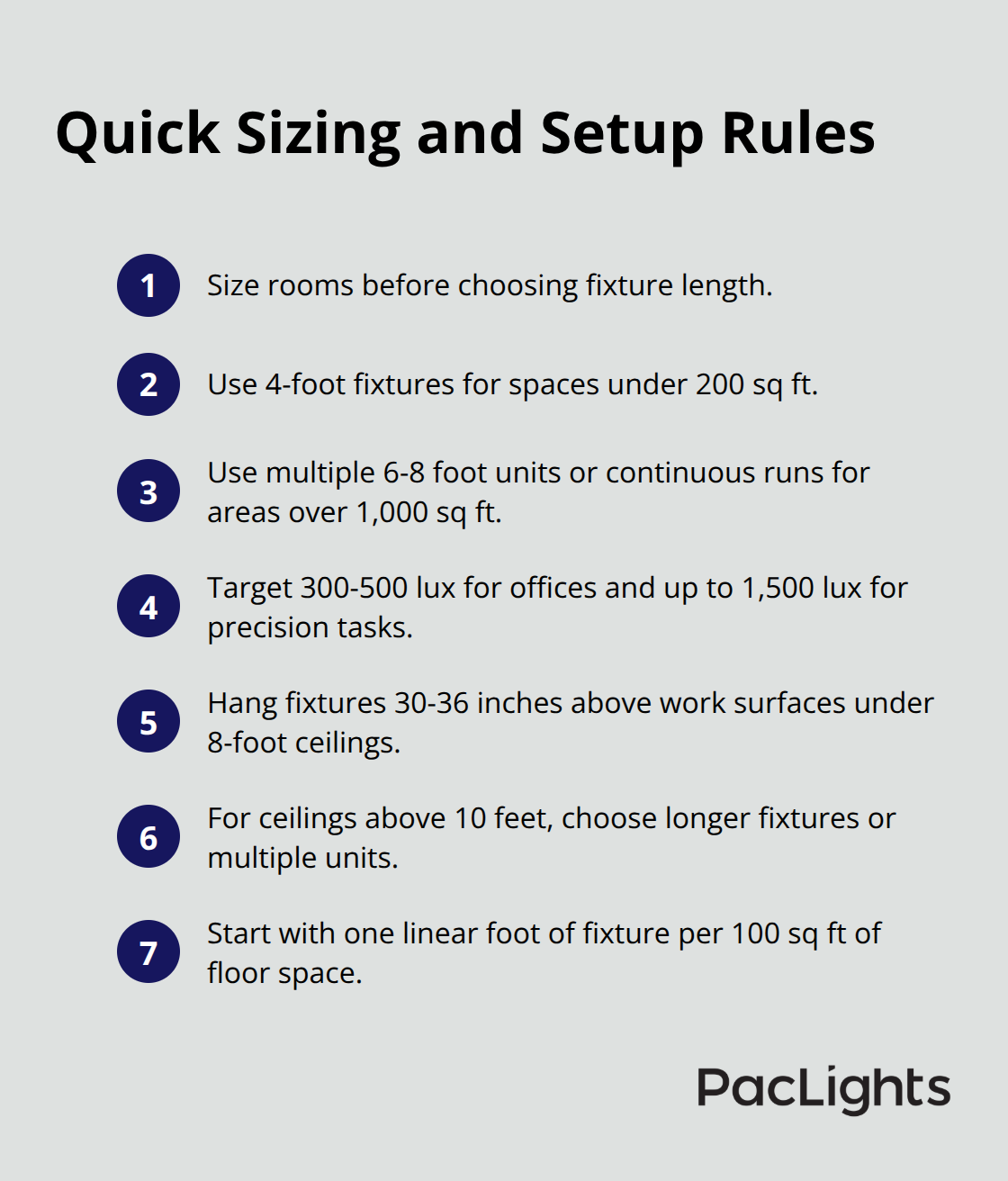
Calculate one linear foot of fixture per 100 square feet of floor space as your starting point for adequate coverage.
Light Output Calculations That Actually Matter
Skip the marketing lumens and focus on delivered foot-candles at your work surface. Quality fixtures produce 100+ lumens per watt with even distribution patterns. Color temperature selection impacts productivity directly – 4000K-5000K temperatures boost alertness in task areas while 2700K-3000K creates relaxed environments for break rooms. Avoid 6500K temperatures in offices as they cause eye strain during extended use. Control systems with dimming capabilities reduce energy consumption by 20-60% (according to Department of Energy studies), but only when users actually adjust settings throughout the day.
Installation Requirements You Cannot Ignore
Electrical load calculations prevent circuit overload before installation starts. Most linear LED fixtures draw 0.5-1.5 amps per foot, which requires dedicated 20-amp circuits for runs over 40 feet. Suspension systems must support 2-4 pounds per linear foot plus dynamic loads from air movement. Professional installation with laser levels prevents sagging that reduces light output by 30% in fixtures over 6 feet long. Junction box ratings must exceed fixture weights by 50% minimum (and cable management systems prevent damage during maintenance access).
Mounting Options That Match Your Space
Pendant mounting works best for open ceilings where fixtures hang freely without obstruction. Surface mounting attaches directly to structural elements and suits spaces with limited clearance. Track systems allow repositioning after installation but require higher initial investment. Cable suspension provides the cleanest aesthetic but demands precise structural analysis to prevent failure. Each mounting method affects both installation cost and long-term maintenance access.
These technical specifications lead directly into how different environments demand specific application approaches and performance optimization strategies.
Where Linear LED Suspension Lights Work Best
Office environments demand precise light placement to maximize productivity and employee comfort. Place linear LED fixtures 30-36 inches above desks and workstations to achieve the Illuminating Engineering Society’s recommended 500 lux for computer work. Open office layouts benefit from continuous runs of 6-8 foot fixtures spaced 12 feet apart to eliminate shadows between workstations. Conference rooms require dimming capabilities with 4000K color temperature for video calls, while break areas perform better with warmer 3000K settings. Retail spaces need higher output fixtures – typically 100+ lumens per square foot – positioned to highlight merchandise without creating glare on display surfaces.
Industrial Applications That Demand Different Specs
Warehouse facilities require fixtures rated for 40-foot ceiling heights with output levels that reach 1000+ lux at floor level for safety compliance. Manufacturing environments need fixtures with IP65 ratings to resist dust and moisture, plus emergency backup systems that maintain 50% light output during power failures. Food processing facilities demand NSF-rated fixtures with stainless steel housings and sealed optics to prevent contamination. Distribution centers benefit from motion-controlled fixtures that reduce energy consumption by 40% in low-traffic aisles while they maintain instant-on capability when workers approach.
Design Strategies That Actually Improve Performance
Avoid mixing color temperatures within the same visual field – this creates eye strain and reduces task performance by 15% (according to lighting research studies). Install fixtures parallel to primary work directions rather than perpendicular to minimize shadows on work surfaces. Use asymmetric light distribution patterns near walls to prevent dark zones that occur with standard symmetric fixtures. Space multiple fixtures at 1.5 times their mounting height for uniform coverage – fixtures mounted 10 feet high should be spaced 15 feet apart maximum.
Control Systems That Optimize Energy Use
Control zones should match usage patterns with separate circuits for perimeter and core areas to optimize energy savings during off-peak hours. Smart sensors detect occupancy and adjust light levels automatically (reducing energy consumption by up to 30% in commercial spaces).
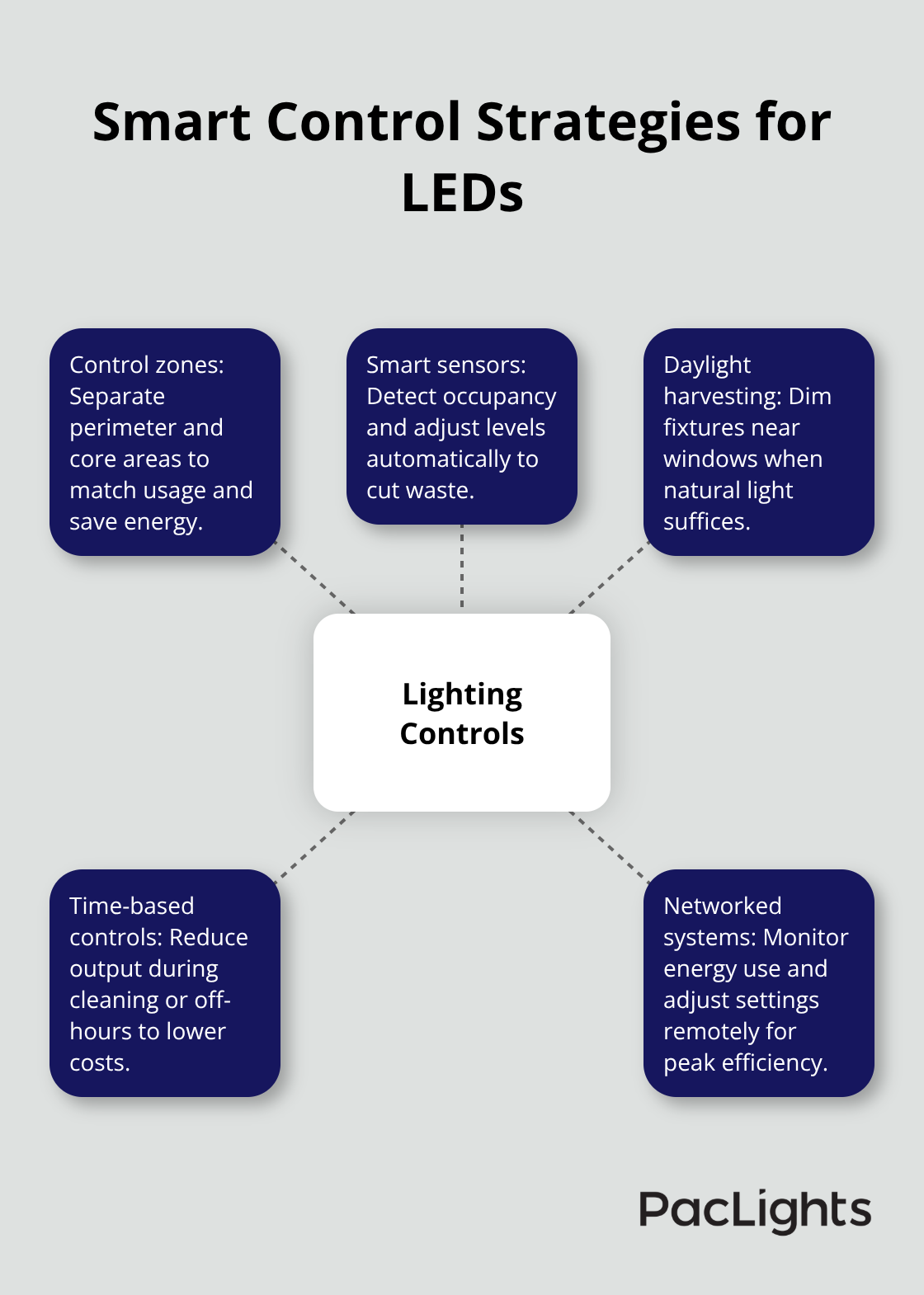
Daylight harvesting systems dim fixtures near windows when natural light is sufficient, while time-based controls reduce output during cleaning hours. Advanced networked systems allow facility managers to monitor energy use and adjust settings remotely for maximum efficiency.
Final Thoughts
Linear LED suspension lighting selection demands careful evaluation of technical specifications against practical application needs. Room dimensions, ceiling height, and light output requirements establish the foundation for your decision. Color temperature choice affects productivity directly – 4000K-5000K works best for task areas while 2700K-3000K creates relaxed environments.
Proper selection delivers benefits that extend far beyond initial installation costs. Energy consumption drops by 75% compared to fluorescent systems while maintenance intervals extend from monthly to twice yearly. Quality fixtures provide consistent 50,000-hour lifespans with stable color rendering throughout their operational life (and smart control integration reduces energy costs by an additional 20-60% through automated dimming and occupancy detection).
Implementation begins with accurate space assessment and load calculations. We at PacLights help optimize your fixture selection and placement through professional consultation. Professional installation with laser-level precision prevents performance issues that affect improperly mounted systems. The investment in quality linear LED suspension lighting delivers reduced operating costs and improved workplace functionality for decades.
Disclaimer: PacLights is not responsible for any actions taken based on the suggestions and information provided in this article, and readers should consult local building and electrical codes for proper guidance.