

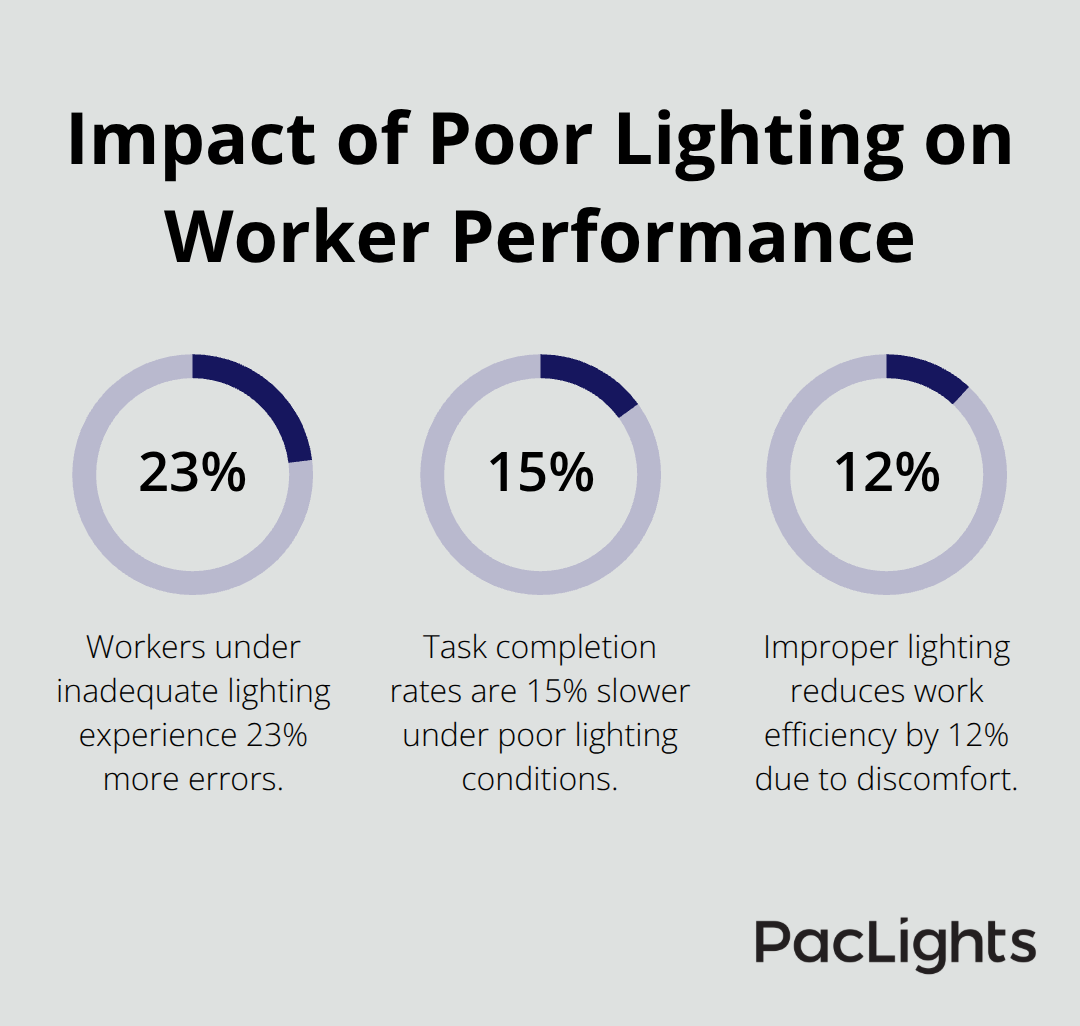
Poor lighting costs businesses billions in lost productivity each year. Studies show that workers under inadequate lighting experience 23% more errors and 15% slower task completion rates.
Smart task lighting solutions can reverse this trend by adapting to individual needs and natural circadian rhythms. We at PacLights have seen companies boost employee performance by up to 20% through strategic lighting upgrades.
Why Light Quality Matters for Performance
The Human Factors and Ergonomics Society found that optimal conditions increase employee productivity by up to 20%. Workers under 4000K to 5000K neutral white systems with 80+ Color Rendering Index show significantly better focus and alertness compared to those under standard fluorescent fixtures. The University of Texas at Austin research demonstrates that well-designed environments create measurably better performance outcomes, while HOK studies confirm that daylight integration improves energy levels throughout workdays.
Poor Conditions Create Expensive Health Problems
Workers exposed to inadequate systems report 40% more headaches and eye strain symptoms. Fluorescent fixtures cause visual fatigue that leads to decreased concentration after just two hours of exposure. The U.S. Department of Energy data shows that poor conditions increase sick days by 15% annually, costing companies an average of $2,000 per employee in lost productivity. Glare from improperly positioned fixtures forces workers to adopt uncomfortable postures, which results in neck and shoulder pain that reduces work efficiency by 12%.
Smart Systems Align with Natural Body Rhythms
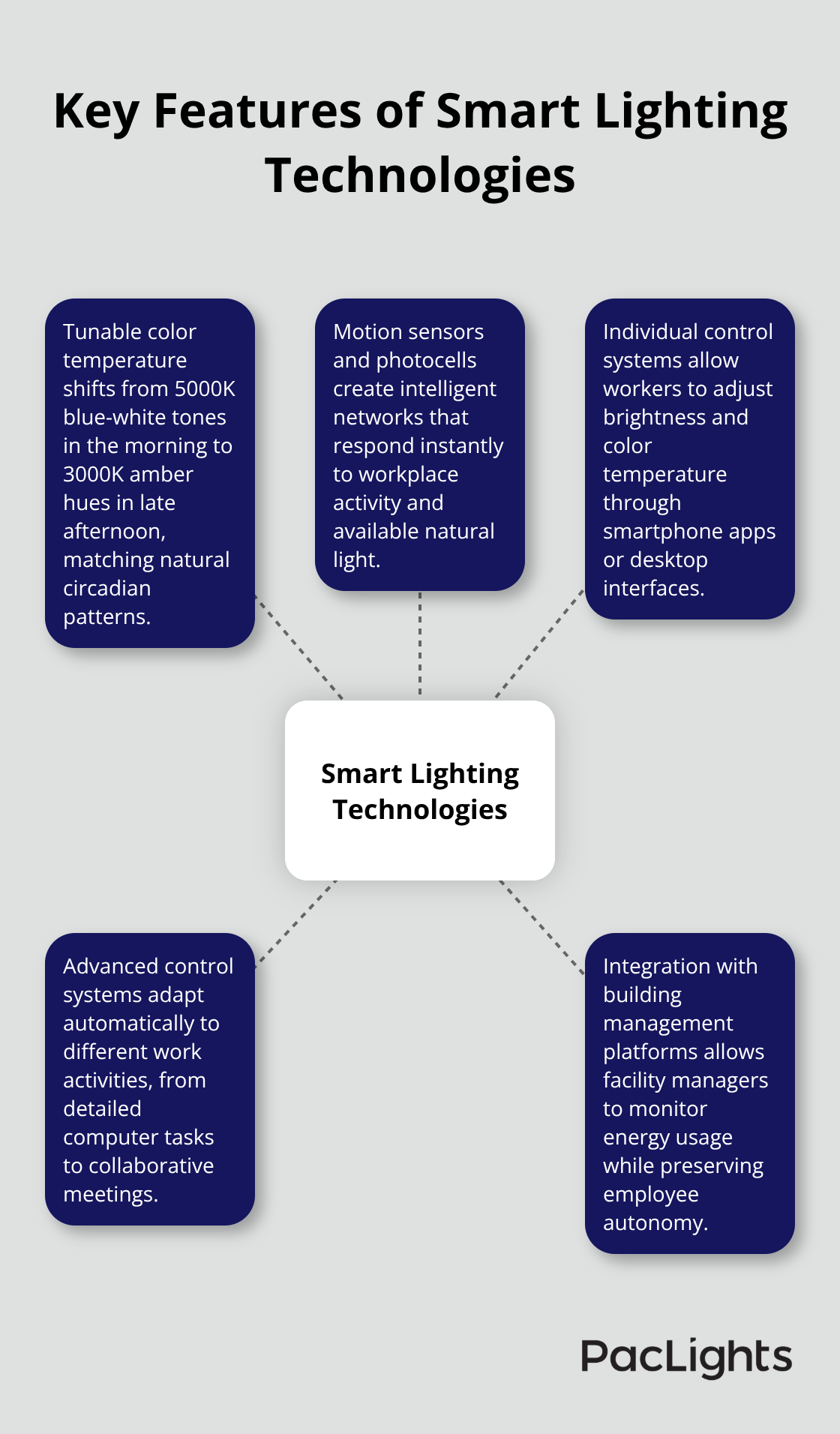
Circadian systems that mimic natural patterns keep employees alert during peak hours and prevent afternoon energy crashes. Tunable white technology adjusts color temperature from cool 5000K morning tones to warm 3000K evening hues, which supports natural melatonin production cycles. Motion sensors and daylight controls automatically optimize levels based on available natural sources (maintaining consistent illumination that supports sustained performance). Networked systems allow individual control, which lets employees customize their workspace to match task requirements and personal preferences.
Technology Features Drive Performance Gains
LED systems with adjustable color temperature provide the foundation for effective workplace solutions. These advanced fixtures respond to occupancy patterns and natural conditions throughout the day. Smart controls integrate seamlessly with existing building management systems (reducing installation complexity while maximizing energy savings). The technology adapts automatically to different work activities, from detailed computer tasks requiring bright, cool tones to collaborative meetings that benefit from warmer, softer illumination.
Which Smart Lighting Technologies Boost Workplace Performance
Modern LED systems with tunable color temperature form the foundation of effective workplace strategies. These fixtures shift automatically from energizing 5000K blue-white tones during morning hours to warmer 3000K amber hues in late afternoon, which matches natural circadian patterns that keep employees alert and productive. The U.S. Department of Energy reports that adjustable color temperature systems reduce energy consumption by 30% compared to static fluorescent installations while they deliver measurable performance improvements. Advanced LED controllers respond within milliseconds to occupancy changes and daylight availability (maintaining optimal illumination levels that prevent eye strain and fatigue).
Motion Detection and Daylight Integration Save Energy
Occupancy sensors paired with photocells create intelligent networks that respond instantly to workplace activity patterns. These systems detect when employees enter spaces and adjust brightness automatically based on available natural light that streams through windows. The technology prevents over-illumination during peak daylight hours while it maintains consistent task-level illumination that supports sustained focus. Smart daylight controls reduce electricity costs by 40% in perimeter zones where natural light varies throughout the day, according to research from the Illuminating Engineering Society.
Individual Control Systems Drive Employee Satisfaction
Networked platforms give workers direct control over their immediate workspace illumination through smartphone apps or desktop interfaces. Employees can adjust brightness levels from 10% to 100% and select color temperatures between 2700K and 6500K to match specific task requirements or personal preferences. Studies from the International Association of Lighting Designers show that individual control increases job satisfaction scores by 38% and reduces complaints about workspace comfort by more than half. These systems integrate seamlessly with building management platforms (allowing facility managers to monitor energy usage patterns while they preserve employee autonomy over their environment).
Smart Controls Optimize Performance Throughout the Day
Advanced control systems adapt automatically to different work activities, from detailed computer tasks that require bright, cool tones to collaborative meetings that benefit from warmer, softer illumination. These intelligent networks learn from usage patterns and adjust settings proactively to support peak performance during critical work hours. The technology responds to seasonal changes in daylight availability and adjusts interior conditions accordingly, which maintains consistent productivity levels year-round. With proper implementation strategies, these smart technologies transform ordinary workspaces into performance-optimized environments.
How to Transform Your Workspace with Smart Task Lighting
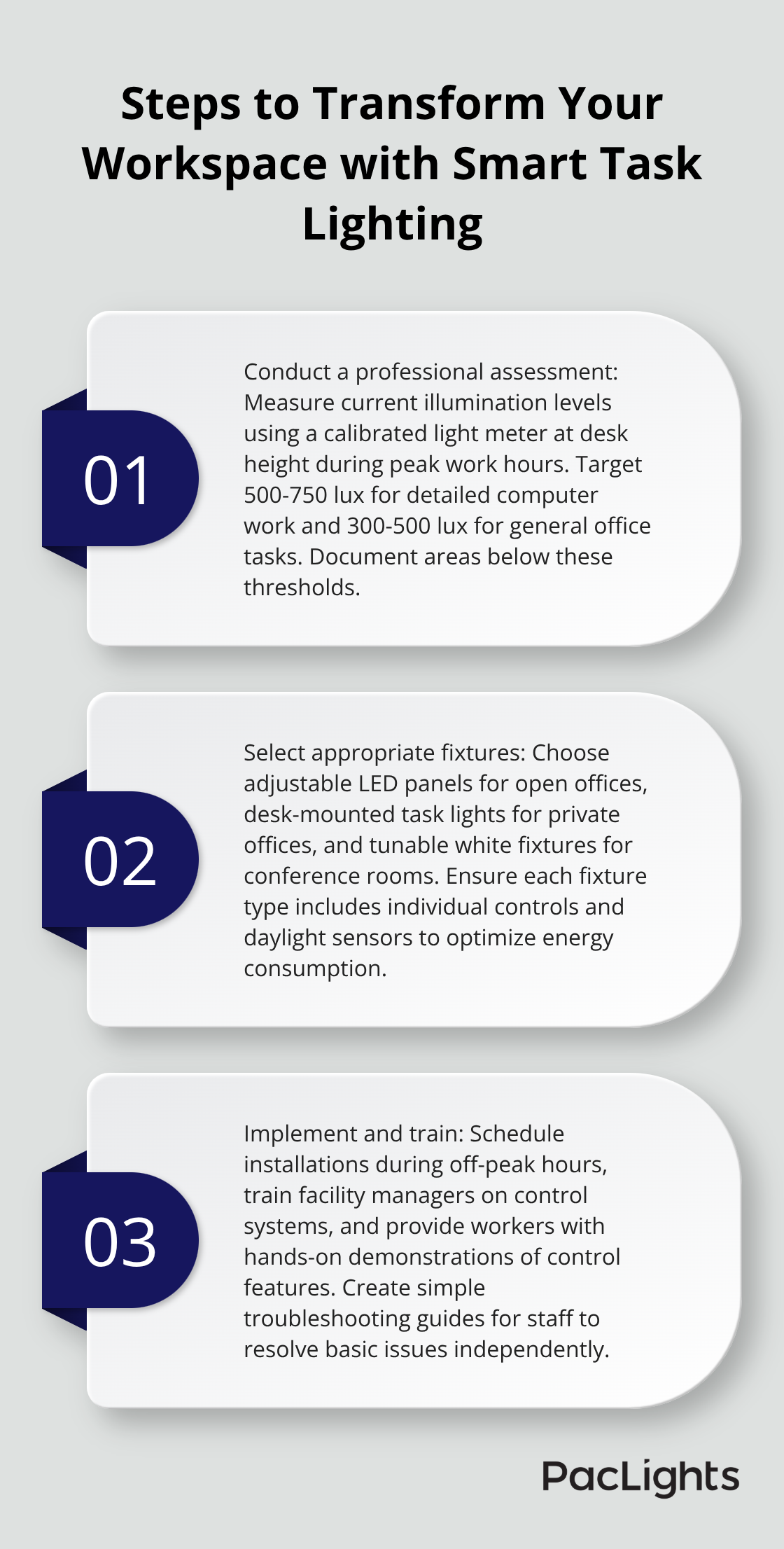
Professional assessment begins with measuring current illumination levels using a calibrated light meter at desk height during peak work hours. Target measurements should reach 500-750 lux for detailed computer work and 300-500 lux for general office tasks, according to Illuminating Engineering Society standards. Document areas where readings fall below these thresholds, especially workstations more than 15 feet from windows or spaces under old fluorescent systems. The International Association of Lighting Designers found that 68% of offices operate below recommended illumination levels (which directly correlates with reduced productivity and increased error rates).
Fixture Selection Drives Performance Results
Open office environments require adjustable LED panels with 4000K color temperature and controls that prevent glare on computer screens. Private offices benefit from desk-mounted task lights paired with overhead ambient systems that workers can control independently. Conference rooms need tunable white fixtures that shift from bright 5000K for presentations to warm 3000K for collaborative discussions. Manufacturing areas demand high-output fixtures with motion sensors that activate instantly when workers enter zones. Each fixture type must include individual controls and daylight sensors to optimize energy consumption while maintaining consistent task-level illumination.
Installation Success Requires Strategic Planning
Schedule installations during off-peak hours to minimize workplace disruption, with electrical work completed in phases that keep critical operations running. Train facility managers on control system interfaces before employee rollout (which reduces support calls by 40% according to the Building Owners and Managers Association). Provide workers with quick-reference cards that show how to adjust brightness and color temperature through mobile apps or wall controls. Monitor usage patterns during the first month and adjust default settings based on actual workplace behavior rather than theoretical recommendations.
Employee Training Maximizes System Benefits
Workers need hands-on demonstrations of control features within the first week of installation to achieve optimal adoption rates. Show employees how to adjust brightness levels for different tasks and explain the benefits of cooler temperatures for focus-intensive work versus warmer tones for collaborative activities. Address common concerns about energy waste when workers control their own settings (smart lighting solutions actually reduce consumption through better utilization patterns). Create simple troubleshooting guides that help staff resolve basic issues without facility management intervention.
Final Thoughts
Smart task lighting solutions deliver measurable returns that justify the investment within 18 months to 3 years. Companies report 20% productivity increases, 15% fewer sick days, and 30% energy savings compared to traditional fluorescent systems. The U.S. Department of Energy confirms that lighting accounts for 40% of building electricity use (making upgrades a prime target for cost reduction).
Long-term savings compound through reduced maintenance costs and extended LED lifespans. Motion sensors and daylight controls cut energy consumption by up to 75%, while individual employee control systems increase job satisfaction by 38%. These improvements translate to lower turnover rates and reduced recruitment expenses.
We at PacLights offer comprehensive lighting solutions that include high bays, troffer lights, and advanced controls with optional daylight and motion sensors. Our team provides free lighting layout designs and ROI assessments to help you plan upgrades that maximize both employee productivity and energy savings. Start with a professional assessment of your current conditions, then select fixtures that match your specific work environments and employee needs.
Disclaimer: PacLights is not responsible for any actions taken based on the suggestions and information provided in this article, and readers should consult local building and electrical codes for proper guidance.