

Square recessed lighting offers a modern alternative to traditional round fixtures, creating clean lines that complement contemporary home design. These fixtures provide excellent illumination while maintaining a sleek, minimalist appearance.
At PacLights, we help homeowners navigate the selection process for square recessed lights. The right choice depends on your room dimensions, lighting needs, and design preferences.
What Makes Square Recessed Lights Different from Round Options
Design Impact and Visual Appeal
Square recessed lights create sharp, geometric lines that round fixtures cannot match. The angular edges cast defined shadows that enhance architectural features like beams, columns, and wall textures. Studies from the Illuminating Engineering Society show that square fixtures provide 15-20% better light distribution uniformity compared to round alternatives due to their wider beam spread pattern. This geometric precision makes square lights the preferred choice for contemporary homes where clean lines define the aesthetic.
Essential Components and Technical Requirements
Square recessed fixtures consist of three main components: the housing unit, the trim ring, and the LED module. The housing typically measures 4-inch or 6-inch square dimensions (with 6-inch options delivering 1,200-1,500 lumens for general needs). Installation requires 3-4 inches of ceiling clearance above the drywall, which makes them unsuitable for shallow ceiling cavities. Most square fixtures use standard electrical boxes and work with existing 120V circuits, though high-output models may need dedicated 20-amp circuits.
Strategic Applications in Modern Homes
Square recessed lights excel in kitchens, home offices, and bathrooms where task lighting demands precision. Kitchen installations typically require 50-75 foot-candles of illumination, achievable with 6-inch square fixtures spaced 4-5 feet apart over countertops. Open-concept living areas benefit from grid patterns that define zones without physical barriers. Hallways and corridors use linear arrangements of 4-inch square fixtures spaced every 6-8 feet to eliminate dark spots while maintaining the clean ceiling plane.
Performance Advantages Over Round Fixtures
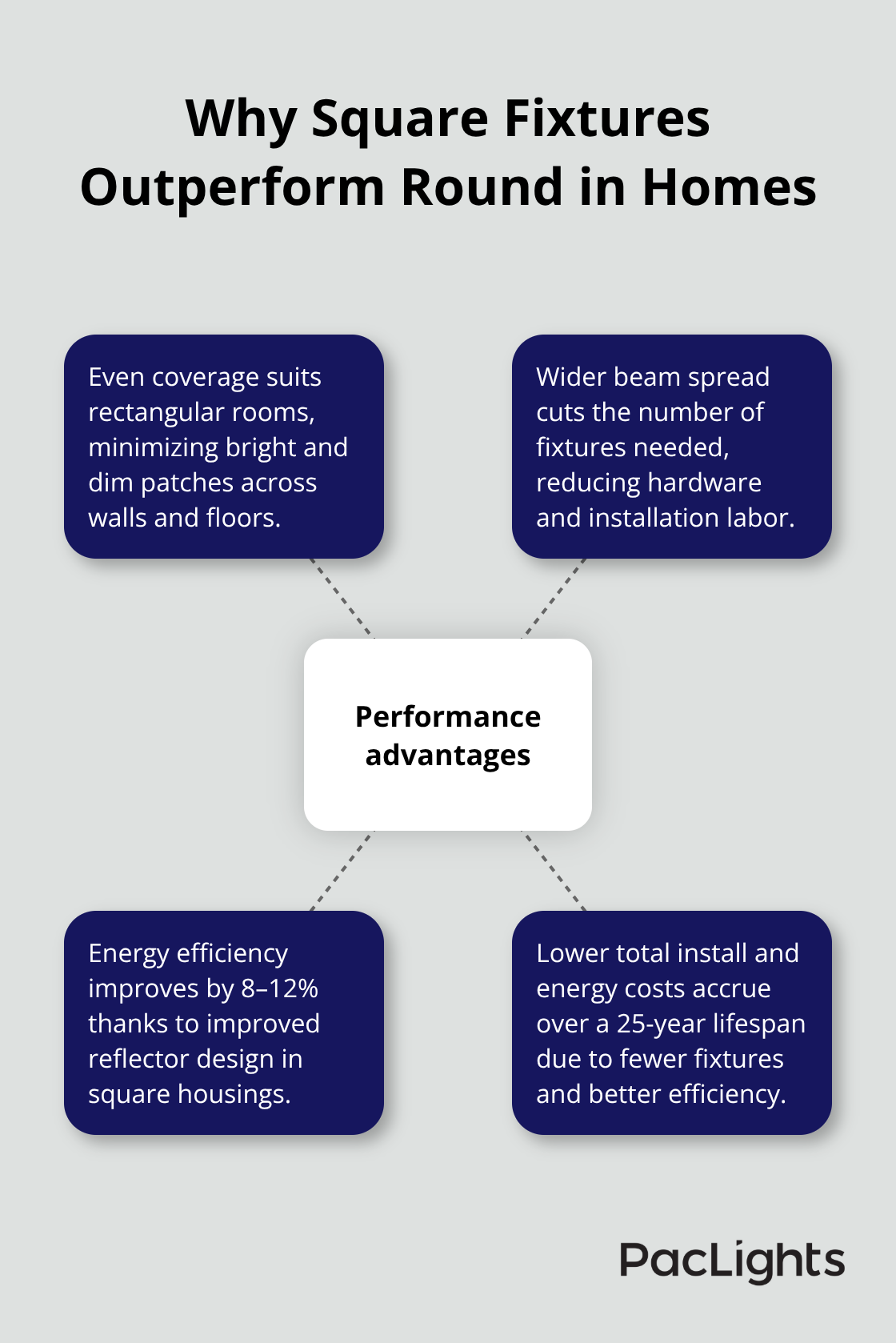
Square fixtures distribute light more evenly across rectangular rooms (which most residential spaces are). The wider beam angle reduces the number of fixtures needed compared to round options. Energy efficiency improves by 8-12% due to better reflector design within the square housing. These performance benefits translate to lower installation costs and reduced energy consumption over the fixture’s 25-year lifespan.
Now that you understand the fundamental differences between square and round recessed lights, the next step involves selecting the right specifications for your specific space requirements.
Key Factors for Selecting the Right Square Recessed Lights
Room Size and Ceiling Height Considerations
Room size determines both the number and size of square recessed lights you need for adequate illumination. Spaces under 100 square feet work best with 4-inch square fixtures that deliver 800-1000 lumens each, spaced 4-6 feet apart. Larger rooms that exceed 150 square feet require 6-inch fixtures that produce 1200-1500 lumens to avoid dark zones. Ceiling height impacts your spacing calculations significantly. Standard 8-foot ceilings need fixtures placed 4-5 feet apart, while 10-foot ceilings allow 6-7 foot spacing without compromising light distribution. The National Electrical Manufacturers Association recommends one fixture per 25-30 square feet for general ambient lighting (though task areas like kitchen islands demand tighter 3-4 foot spacing for adequate work surface illumination).

Light Output and Color Temperature Options
Color temperature selection affects both functionality and mood in each space. Kitchens and home offices benefit from 4000K-5000K daylight temperatures that enhance focus and color accuracy for food preparation and detailed work. Living areas and bedrooms perform better with 2700K-3000K warm white temperatures that create relaxing atmospheres. Light output requirements vary by application. General living spaces need 20-30 lumens per square foot, while task areas require 50-75 lumens per square foot. Bathrooms demand 70-80 lumens per square foot around mirrors for grooming tasks. Dimmable LED modules provide flexibility and allow 10-100% brightness adjustment to match daily activities and time preferences.
Trim Styles and Finish Choices
Trim selection impacts both aesthetics and light performance. White trims blend seamlessly with most ceiling colors, while black trims create dramatic contrast in contemporary spaces. Brushed nickel and bronze finishes complement traditional hardware throughout the home. Baffle trims reduce glare by 40-50% compared to smooth reflector trims (making them ideal for media rooms and bedrooms). Adjustable gimbal trims allow 30-degree tilt angles for accent lighting on artwork or architectural features. IC-rated housings allow direct contact with insulation, while non-IC housings require 3-inch clearance. Wet-rated fixtures with sealed housings prevent moisture damage in bathrooms and covered outdoor areas where humidity levels exceed 60%.
Once you understand these specification requirements, the next step involves planning your layout and installation approach to achieve optimal light distribution throughout your space.
Installation Planning and Layout Design
Spacing Guidelines for Maximum Coverage
Proper spacing prevents dark zones and overlapping light pools that waste energy. For standard 8-foot ceilings, position 6-inch square fixtures 5-6 feet apart in both directions to achieve uniform 30-40 foot-candle illumination levels. Higher 10-foot ceilings allow 7-8 foot spacing without compromising coverage. Kitchen task areas demand tighter 3-4 foot spacing over countertops and islands to deliver the required 50-75 foot-candles for food preparation. Living rooms work well with 6-foot grid patterns that provide adequate ambient lighting at 20-25 foot-candles. Always position fixtures at least 3 feet from walls to prevent harsh shadows and achieve smooth light transitions. The International Association of Lighting Designers recommends that you measure your room dimensions and divide by the number of fixtures plus one to determine optimal spacing intervals.
Electrical Requirements and Circuit Planning
Most square recessed fixtures operate on standard 120V household circuits, but high-output LED arrays may require dedicated 20-amp circuits to prevent breaker trips. Each 6-inch LED fixture draws 12-18 watts, which allows 8-10 fixtures per standard 15-amp circuit without overloading. New construction installations cost 40-60% less than retrofit projects because electricians can run wiring before drywall installation. Retrofit installations require careful planning around existing joists, ductwork, and insulation.

IC-rated housings allow direct insulation contact, while non-IC housings need 3-inch clearance that may require insulation modification.
Professional Installation vs DIY Approach
Professional installation costs $150-250 per fixture (including labor), while DIY installation saves 60-70% but requires electrical permits in most municipalities. Complex layouts with more than 8 fixtures benefit from professional expertise to avoid code violations and safety hazards. DIY installations work well for simple replacements or single-room projects where existing circuits have adequate capacity. Professional electricians handle circuit additions, load calculations, and permit applications that ensure code compliance and safety standards.
Final Thoughts
Square recessed lighting transforms modern homes with clean lines and superior light distribution. Your fixture choice depends on room size (4-inch for smaller spaces, 6-inch for larger areas) and desired atmosphere. Color temperature selection affects daily comfort, with cooler 4000K-5000K temperatures for work areas and warmer 2700K-3000K for relaxation zones.
Professional installation costs more initially but provides code compliance and warranty protection. DIY projects suit simple replacements, while complex layouts require expert guidance to avoid safety issues. Proper fixture spacing eliminates dark zones and creates uniform illumination that enhances home value.
Quality LED fixtures operate efficiently for 25+ years while reducing energy costs by 60-80% compared to traditional options. Advanced controls and customizable features optimize performance throughout your home’s lighting system. We at PacLights offer comprehensive solutions to help you select the right fixtures for your specific needs.
Disclaimer: PacLights is not responsible for any actions taken based on the suggestions and information provided in this article, and readers should consult local building and electrical codes for proper guidance.