

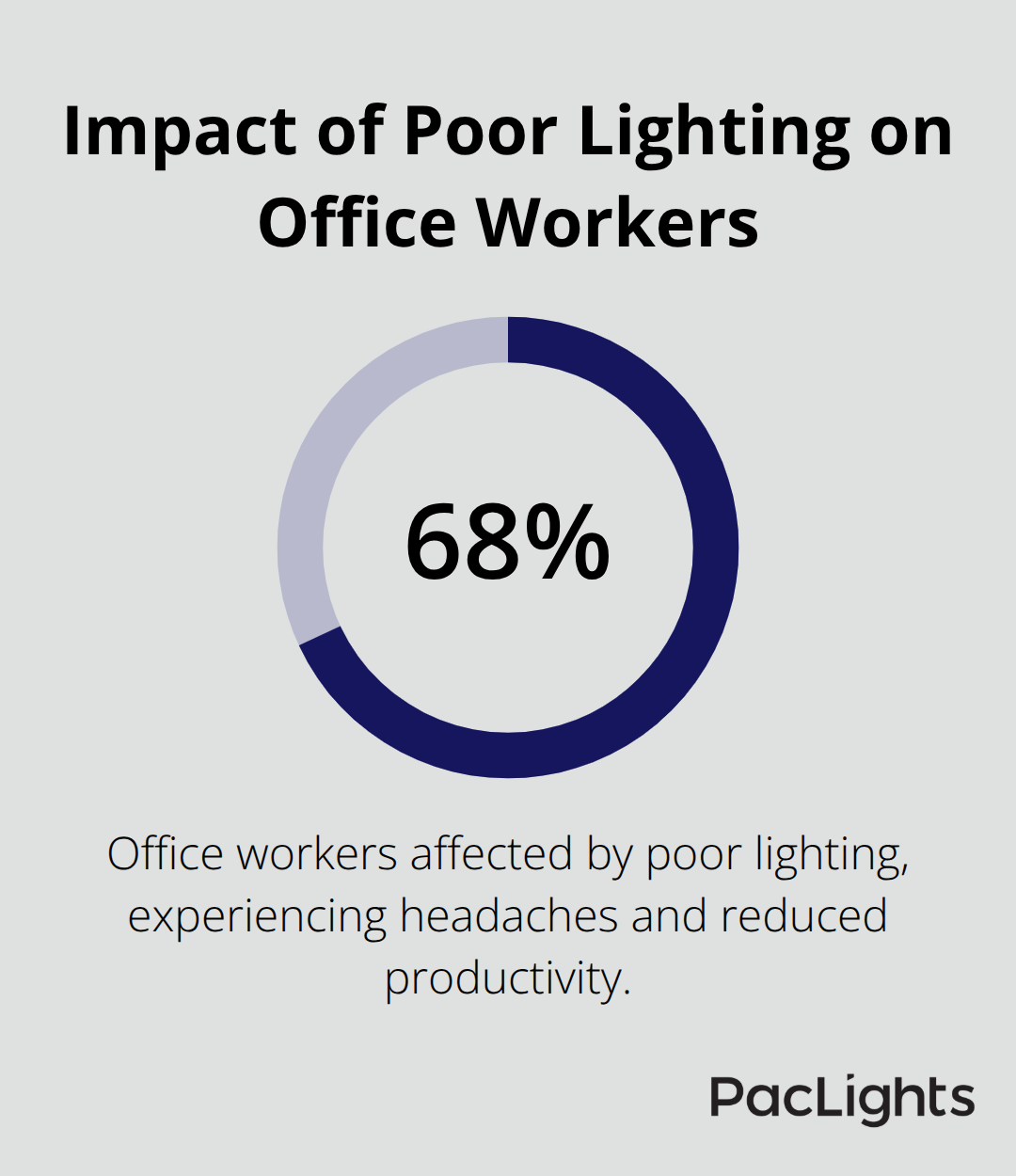
Poor lighting affects 68% of office workers, leading to headaches and reduced productivity. Traditional overhead fixtures create harsh shadows and glare that strain eyes during computer work.
Indirect office lighting offers a better solution by bouncing light off ceilings and walls. We at PacLights have seen how this approach transforms workspaces into comfortable, productive environments where employees thrive.
How Does Indirect Office Lighting Actually Work
Indirect lighting directs light toward ceilings, walls, or other surfaces that reflect and scatter the illumination throughout a space. This technique eliminates the harsh shadows and bright spots that direct lighting creates when it shines straight down from fixtures. The reflected light becomes softer and more evenly distributed, which reduces the contrast between bright and dark areas that causes eye strain during computer work.
The Science Behind Light Reflection
Light bounces off surfaces at predictable angles, and the color and texture of these surfaces determine how much light gets reflected back into the room. White or light-colored ceilings reflect up to 80% of the light that hits them, while darker surfaces absorb more light and reflect less. Smooth surfaces create more focused reflection, while textured surfaces scatter light in multiple directions.
Office spaces with 9-foot ceilings work best for indirect lighting because they provide enough distance for light to spread before it reaches work surfaces. The IESNA recommends maintaining illuminance levels between 300 to 500 lux for office work (which indirect systems achieve more comfortably than direct fixtures that create hot spots and shadows).
Upward-Facing Floor Solutions
Upward-facing floor lamps with 4000K LED bulbs provide balanced brightness without harshness and work well in spaces with standard gypsum board ceilings. These fixtures direct light toward the ceiling, which then reflects down to create even illumination across the workspace. The 4000K color temperature mimics natural daylight and supports employee alertness throughout the day.
Wall-Mounted and Linear Options
Linear LED fixtures mounted along walls or in architectural coves create uniform light distribution across large areas. These systems wash walls with light and make spaces appear larger while they maintain comfortable brightness levels throughout the room. Wall-mounted fixtures also highlight architectural details (such as crown moldings) to create visual interest in professional environments.
Suspended Pendant Systems
Suspended pendant lights that direct light upward rather than downward transform open office spaces through widespread illumination with reduced glare. These fixtures work particularly well in areas with high ceilings where traditional downward-facing lights would create harsh contrasts. The upward light distribution creates a sense of spaciousness that benefits employee well-being.
With these fixture types established, the next consideration becomes where and how to position them for maximum effectiveness in your specific workspace layout.
Why Indirect Lighting Transforms Office Performance
Indirect lighting eliminates the harsh contrasts that cause 58.8% of workstations to fall below IESNA illuminance standards. Light bounces off ceilings and walls and creates uniform distribution that maintains the recommended 300 to 500 lux across entire work surfaces without bright spots or shadows. This consistent illumination reduces the eye fatigue that affects millions of office workers who spend eight hours daily at computer screens.
Computer Work Becomes Less Stressful
Screen-based tasks require lighting that minimizes glare reflection on monitors while it provides adequate illumination for keyboards and documents. Indirect systems achieve this balance because reflected light approaches work surfaces from multiple angles rather than creates a single bright source that competes with screen brightness. Studies show that workers with access to this type of lighting report significantly less eye strain and improved cognitive performance compared to those under traditional fluorescent fixtures. The American Psychological Association confirms that proper lighting influences mood and cognitive performance (which makes indirect systems essential for sustained productivity).
Employee Satisfaction Increases Measurably
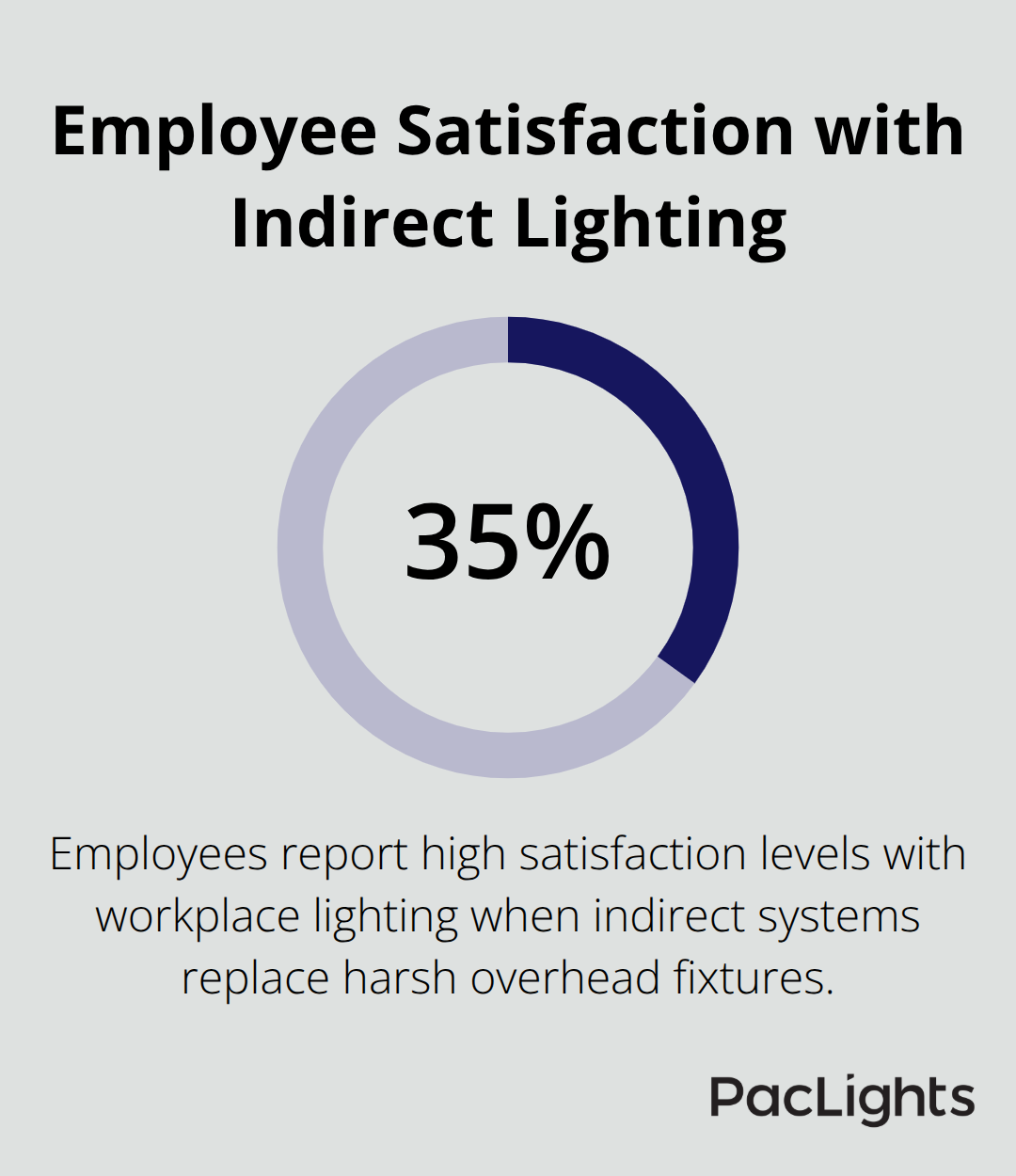
Research shows that 35.8% of employees report high satisfaction levels with workplace lighting when indirect systems replace harsh overhead fixtures. Workers exposed to evenly distributed light experience increased alertness, comfort, and job satisfaction according to multiple workplace studies. The elimination of glare and shadows creates a more inviting atmosphere that reduces stress levels and promotes collaboration among team members. Companies that implement indirect lighting see improved employee retention rates because comfortable lighting conditions directly impact how valued employees feel in their workspace.
Health Benefits Extend Beyond Vision
Indirect lighting supports the biological rhythm through its ability to utilize cooler tones in the morning and warmer tones in the afternoon (when paired with adjustable color temperature systems). This natural progression helps maintain employee alertness throughout the day while it reduces the disruption to sleep patterns that harsh artificial lighting often causes. The soft, dispersed light also minimizes the headaches that 68% of office workers experience under traditional overhead fixtures.
These performance improvements set the foundation for successful implementation, but proper placement and technical specifications determine whether your indirect lighting system delivers these benefits effectively.
How Should You Position Indirect Office Lighting
Ceiling height determines your indirect lighting strategy more than any other factor. Spaces with 9-foot ceilings provide optimal distance for light distribution, while 8-foot ceilings require fixtures positioned closer to walls to prevent hot spots. Mount upward-facing linear fixtures 18 to 24 inches from walls to create even light wash across surfaces without bright bands near the ceiling. Position floor lamps at least 6 feet from workstations to prevent glare on computer screens while you maintain the 300 to 500 lux illuminance that IESNA standards require.

Color Temperature Affects Productivity Directly
Choose 4000K LED bulbs for general office areas because this temperature mimics natural daylight and maintains employee alertness throughout the day. Avoid 3000K temperatures in work zones as they reduce cognitive performance, while 5000K creates harsh conditions that cause eye strain. Install adjustable color temperature systems that shift from 4000K in morning hours to 3500K in afternoon to support biological rhythms. Brightness levels should maintain consistent 50 to 75 lumens per square foot across open areas, with task zones that reach 100 to 150 lumens per square foot through supplemental fixtures.
Natural Light Integration Requires Strategic Planning
Position workstations perpendicular to windows rather than parallel to prevent competing light sources that create uneven illumination. Install daylight sensors that automatically adjust artificial lighting intensity based on available natural light to maintain consistent 400 lux levels throughout the day. Configure sensors to respond within 30 seconds of daylight changes to prevent employee discomfort from sudden brightness shifts.
Fixture Placement Maximizes Coverage
Place indirect fixtures on the interior side of spaces to balance the directional nature of window light with omnidirectional reflected illumination. This configuration reduces the contrast between bright window areas and darker interior zones that causes visual fatigue during computer work. Space linear fixtures 8 to 12 feet apart in open areas to achieve uniform light distribution without gaps or overlapping bright zones (which create visual distractions for employees).
Final Thoughts
Indirect office lighting transforms workspaces when it eliminates the harsh shadows and glare that affect 68% of office workers. This approach maintains the IESNA-recommended 300 to 500 lux illuminance levels while it reduces eye strain during computer work. The reflected light creates uniform distribution that supports employee well-being and increases productivity through improved cognitive performance.
Research confirms that 35.8% of employees report high satisfaction levels when indirect systems replace traditional overhead fixtures. Workers experience reduced headaches, better alertness, and improved job satisfaction. The elimination of bright spots and dark zones creates comfortable conditions that support biological rhythms (and reduce workplace stress).
Strategic planning around ceiling height, fixture placement, and color temperature selection determines successful implementation of indirect office lighting systems. Proper integration with natural light sources through daylight sensors maintains consistent illumination throughout the day. PacLights offers comprehensive solutions that help businesses create comfortable work environments while they reduce operational costs through energy-efficient LED technology.
Disclaimer: PacLights is not responsible for any actions taken based on the suggestions and information provided in this article, and readers should consult local building and electrical codes for proper guidance.