

Corporate spaces demand lighting solutions that balance professional aesthetics with employee productivity. Ceiling cove lighting transforms sterile office environments into sophisticated workspaces through strategic illumination design.
We at PacLights see businesses increasingly choosing cove lighting systems for their ability to reduce glare while creating uniform light distribution. This approach eliminates harsh shadows and creates the welcoming atmosphere modern employees expect.
How Does Ceiling Cove Lighting Work in Corporate Settings
Basic Operation and Light Output
Ceiling cove lighting operates through LED strips or linear fixtures that installers place in recessed channels along the ceiling perimeter. These systems direct light upward to reflect off the ceiling surface and create uniform ambient illumination. This indirect method produces 100 to 1,000 lumens per foot based on application needs, with 24V LED strips that maintain consistent brightness over longer distances without voltage drop issues that affect traditional systems.
Primary Configuration Types
Commercial applications favor three main cove configurations. Perimeter installations wrap around entire ceiling edges to provide comprehensive ambient light. Accent systems highlight architectural features like columns or crown moldings to add visual interest. Floating ceiling designs integrate strips into suspended structures for modern aesthetics that complement contemporary office design.
Advanced Color Temperature Control
The Architectural Dynamic Tunable White Series allows facilities to adjust color temperatures from 2700K to 6200K throughout the day. This technology supports circadian rhythm optimization that studies show can improve employee productivity by up to 23 percent. Facilities can program warmer tones (around 2700K) for relaxation periods and cooler temperatures (5000K-6200K) for focus-intensive work sessions.
Performance Advantages Over Traditional Systems
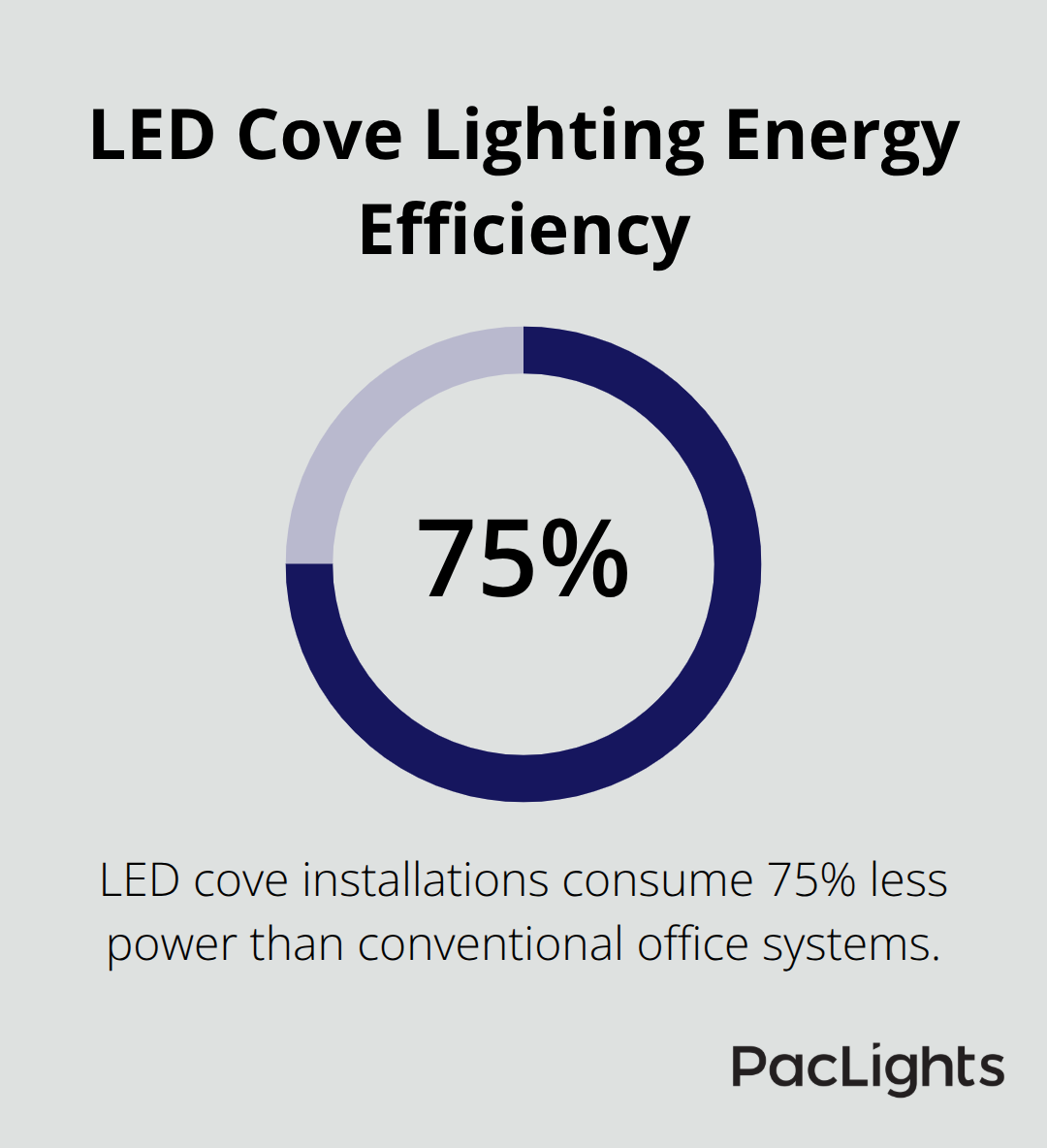
Traditional corporate fluorescent systems create harsh shadows and glare that strain eyes and reduce focus. Cove systems eliminate these problems through diffused illumination that spreads evenly across work surfaces. Energy consumption drops significantly with LED cove installations that consume 75 percent less power than conventional office systems while providing superior color rendering indexes that reach 98 CRI.
Installation and Power Requirements
Installation requires calculating total watts by multiplying strip watts per foot by length and adding 20 percent buffer capacity to prevent power supply overload. Aluminum mounting channels improve light diffusion and conceal strips for professional aesthetics. These technical specifications become essential when planning the layout for different office areas and determining optimal placement strategies.
How Do You Design Effective Cove Lighting for Corporate Spaces
Strategic Placement for Different Office Functions
Reception areas need 200-300 lumens per foot of cove lighting to create welcoming first impressions, while conference rooms function optimally with 150-200 lumens per foot paired with dimmable controls. Open office spaces require consistent 250-400 lumens per foot along perimeter walls to eliminate screen glare and reduce eye strain. Private offices benefit from 100-150 lumens per foot of accent cove lighting combined with task lighting at workstations. Hallways and circulation areas require only 75-125 lumens per foot since they serve transitional functions rather than detailed work activities.
Optimal Color Temperature Programming Throughout the Day
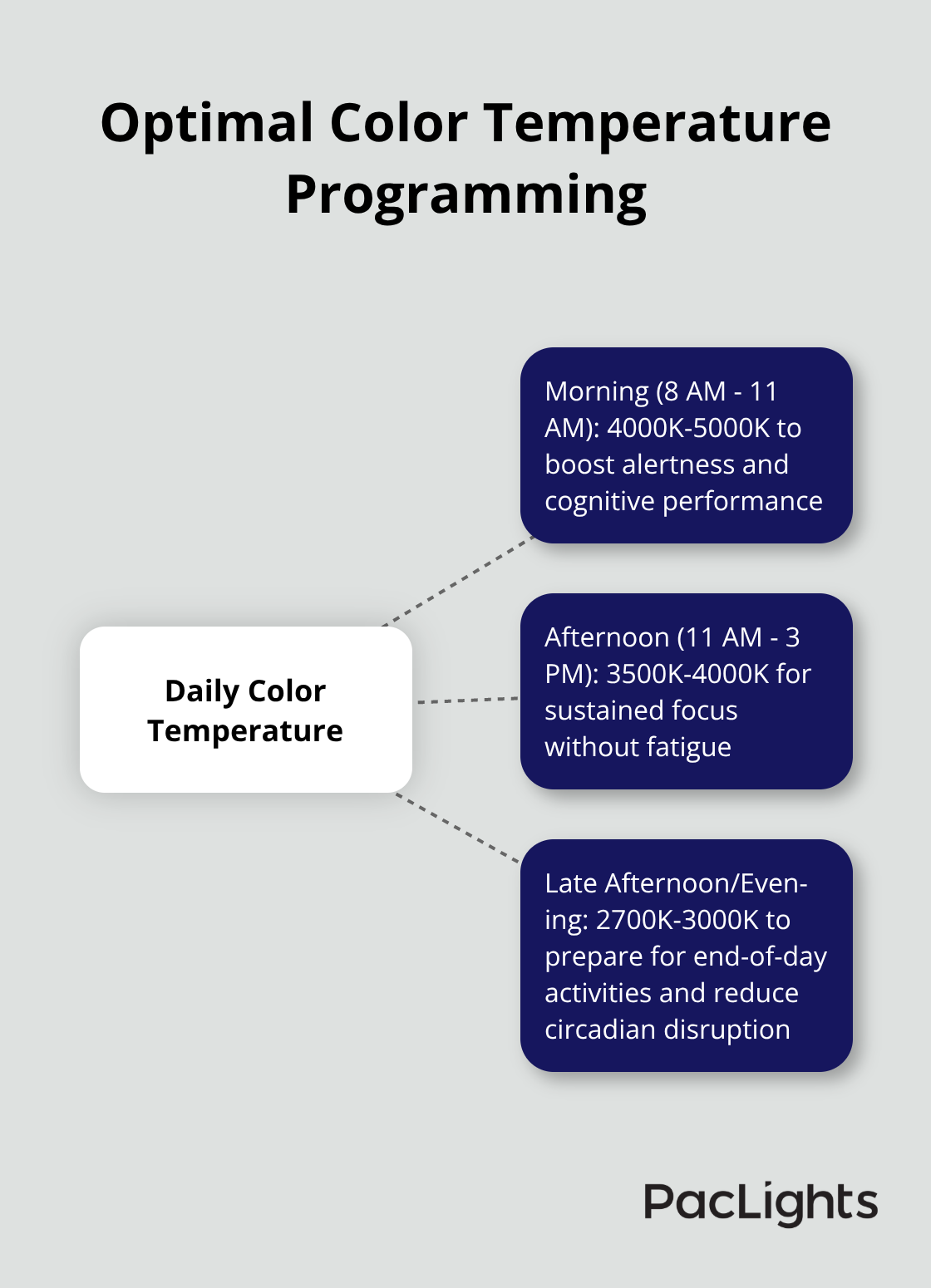
Morning hours from 8 AM to 11 AM should feature 4000K-5000K color temperatures to boost alertness and cognitive performance. Research from Harvard Medical School shows this approach increases productivity by 15 percent during peak work hours. Afternoon sessions from 11 AM to 3 PM maintain 3500K-4000K for sustained focus without fatigue. Late afternoon and evening hours transition to 2700K-3000K to prepare employees for end-of-day activities and reduce circadian disruption.
Integration with Task Lighting Systems
Cove lighting should provide 30-40 percent of total illumination in corporate environments, with task lighting that supplies the remaining 60-70 percent. This ratio prevents over-reliance on ambient lighting while it maintains visual comfort. Desk lamps should output 500-750 lumens directly onto work surfaces, while cove systems handle general room illumination. Motion sensors integrated with LED strips reduce energy consumption by 40 percent in low-traffic areas (like storage rooms and break areas). Smart controls allow facilities managers to adjust both cove and task lighting simultaneously based on occupancy patterns and natural daylight availability.
Power Supply and Control System Requirements
Facilities must calculate total watts by multiplying strip watts per foot by length and adding 20 percent buffer capacity to prevent power supply overload. Lutron and other compatible systems enhance user experience through greater control over lighting scenarios in corporate environments. The Architectural Dynamic Tunable White Series allows businesses to adjust color temperatures from 2700K to 6200K, which accommodates various lighting needs throughout the workday (supporting both productivity and employee wellbeing).
These design considerations directly impact installation requirements and the structural modifications that successful cove lighting implementation demands.
What Technical Requirements Make Cove Lighting Installation Successful
Structural and Electrical Infrastructure Requirements
Structural modifications form the foundation of successful cove lighting projects. Ceiling height requirements demand minimum 9-foot clearances to accommodate recessed channels without compromising headroom. Electrical infrastructure upgrades become necessary in 85 percent of retrofit installations. Facilities need dedicated 20-amp circuits to handle LED strip loads that range from 2.5 to 8 watts per foot.
Aluminum channels must integrate into drywall or suspended ceiling systems with precise measurements. Even 1/8-inch miscalculations create visible light gaps that destroy the seamless appearance corporate spaces require. Professional contractors coordinate with electricians and designers to achieve optimal placement and functionality.
Power Management and Circuit Planning
Circuit calculations prevent the most common installation failures that occur when facilities underestimate power requirements. Each 100-foot run of high-output LED strips demands dedicated 20-amp circuits. Standard residential 15-amp circuits handle only 60-foot maximum runs safely.
Voltage drop calculations become critical beyond 50-foot distances. These situations require 24V systems instead of 12V alternatives to maintain consistent brightness levels. Smart controls from manufacturers like Lutron integrate with existing systems but require neutral wire connections that older commercial buildings often lack (forcing electrical upgrades that add $15-25 per linear foot to installation costs).
Maintenance Access and Component Longevity
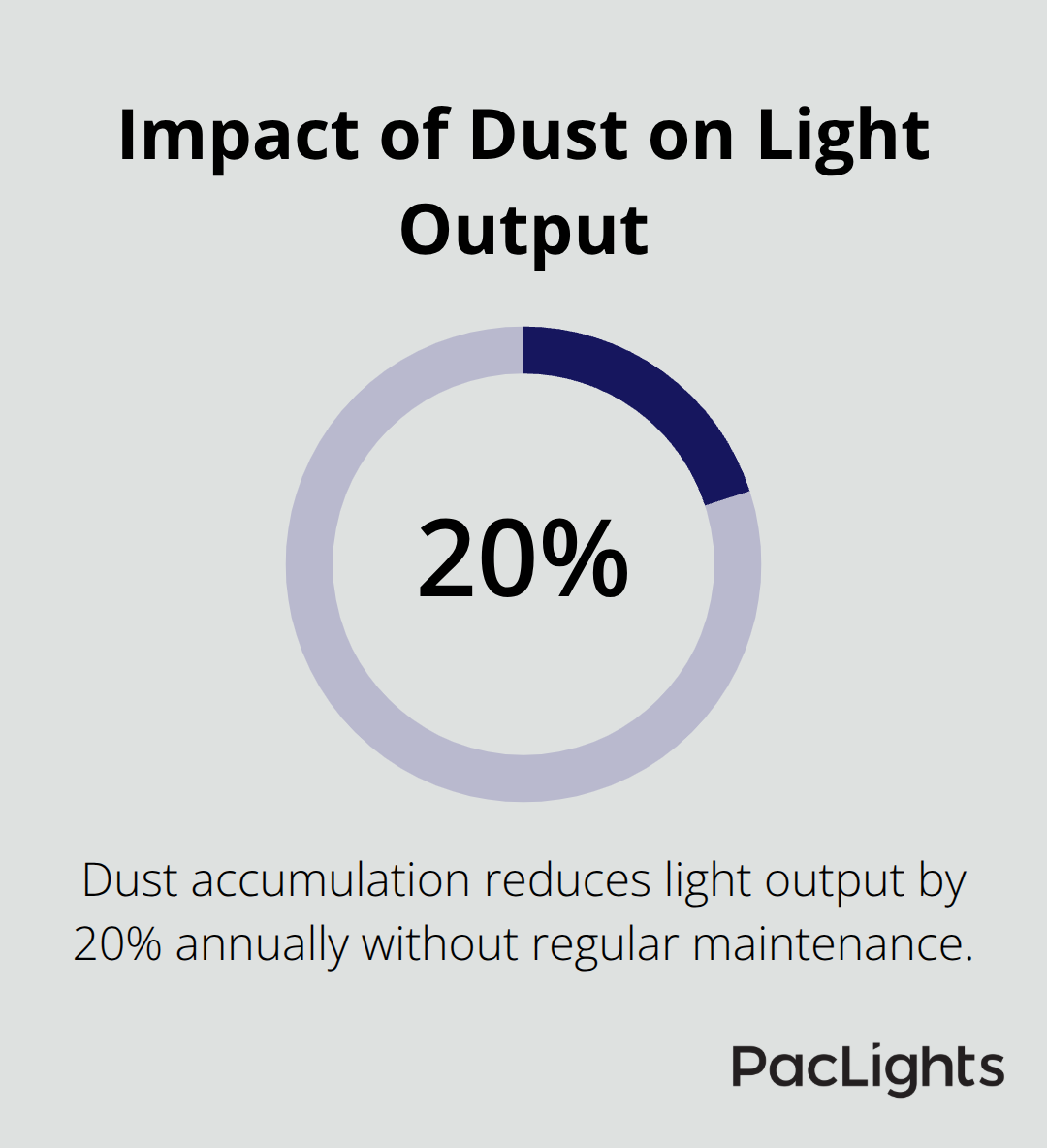
LED strip longevity reaches 50,000-hour ratings under proper thermal management conditions. Dust accumulation reduces light output by 20 percent annually without regular schedules. Aluminum channel systems with removable diffuser covers enable quarterly maintenance access that preserves light quality and extends system life.
Component replacement becomes straightforward with modular LED strip designs that allow section-by-section upgrades rather than complete system overhauls. Temperature control prevents premature failures that occur when ambient heat exceeds 85 degrees Fahrenheit in enclosed ceiling cavities (making ventilation planning essential during initial installation phases).
Final Thoughts
Ceiling cove lighting transforms corporate environments through strategic indirect illumination that reduces glare while it creates sophisticated professional atmospheres. The technology delivers measurable productivity gains of up to 23 percent through circadian rhythm optimization and superior visual comfort compared to traditional fluorescent systems. Energy consumption drops by 75 percent with LED cove installations, while maintenance requirements decrease significantly with 50,000-hour component lifespans.
These factors generate substantial cost savings that typically recover initial investments within 18-24 months through reduced utility bills and lower replacement expenses. Implementation success depends on proper structural planning, adequate electrical infrastructure, and professional installation coordination. Facilities require dedicated 20-amp circuits and precise aluminum channel placement to achieve seamless light distribution that corporate spaces demand.
We at PacLights provide comprehensive lighting solutions that help facilities managers evaluate cove lighting upgrades for their corporate environments. Our team offers technical guidance on LED retrofit options and advanced controls that optimize energy use through daylight and motion sensors. Professional consultation helps determine the most effective ceiling cove lighting approach that enhances both employee wellbeing and operational efficiency (while meeting specific architectural requirements for modern corporate spaces).
Disclaimer: PacLights is not responsible for any actions taken based on the suggestions and information provided in this article, and readers should consult local building and electrical codes for proper guidance.