

Standard lighting fixtures fail in wet environments. Moisture seeps in, corrosion spreads, and equipment breaks down faster than you’d expect.
At PacLights, we’ve seen facilities waste thousands on replacements and repairs that could have been prevented. A vapor tight LED bay is built differently-sealed against moisture, rated for harsh conditions, and designed to last.
Why Wet Environments Destroy Standard Lighting
Moisture does not sit on standard fixture lenses-it penetrates seals, corrodes wiring, and attacks electrical components from the inside out. In food processing facilities, car washes, and cold storage units, humidity levels routinely exceed 80 percent, and water spray remains constant. Standard fixtures with basic gaskets fail within months because they lack the sealed construction needed to withstand repeated temperature swings and direct water exposure. Vapor tight fixtures rated IP65 or higher operate reliably for five years or more in these conditions. The difference is not minor-it separates fixtures that corrode from fixtures that survive.
Corrosion Eats Into Your Bottom Line
Standard metal halide and fluorescent fixtures in wet spaces develop visible discoloration within weeks. Rust spreads across housings, salt spray accelerates corrosion on coastal or marine sites, and moisture-damaged ballasts fail without warning. A facility operating 12 hours daily in a car wash environment will spend roughly 40 to 60 percent more on maintenance and replacement labor than one using vapor tight LED bays. Cold storage operations face an additional problem: condensation forms on non-sealed fixtures when warm air meets freezing surfaces, creating moisture inside the housing itself. That internal condensation shortens fixture life dramatically and creates safety hazards when water contacts live electrical components. Vapor tight designs with silicone gaskets that flex from negative 20 degrees Celsius to 40 degrees Celsius maintain watertight integrity through temperature cycling, preventing this failure mode entirely.
Regulatory Compliance and Workplace Safety
Food and beverage facilities operate under NSF standards that mandate specific sanitation protocols. Non-sealed fixtures collect dirt, bacteria, and product residue in crevices, creating compliance violations during health inspections. NSF-rated vapor tight fixtures eliminate this risk because their sealed construction resists water jets from high-pressure washdown systems used in food processing and dairy operations. Breweries and beverage production plants face similar requirements-their fixtures must withstand daily cleaning without corroding or allowing contaminants near light sources. Beyond food safety, wet environments pose electrical hazards. Water ingress into standard fixtures increases shock risk for workers and creates fire hazards if moisture reaches live circuits. IP67-rated vapor tight bays tolerate temporary immersion up to one meter for roughly 30 minutes, meaning they recover fully after flooding or excessive spray without performance loss. This reliability directly reduces worker injury claims and facility downtime during weather events or operational accidents.
What Vapor Tight Construction Actually Protects
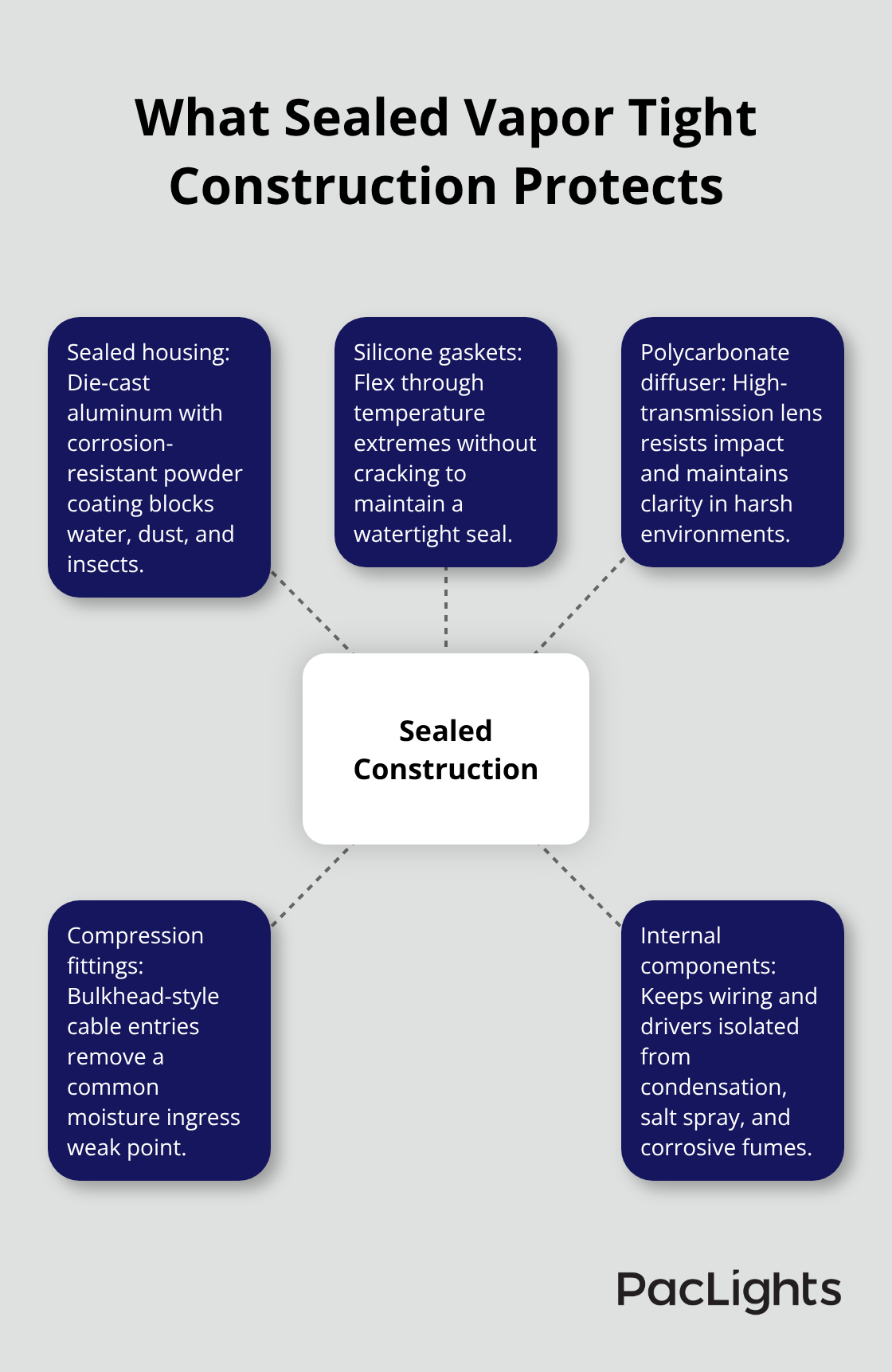
The sealed housing of a vapor tight fixture (die-cast aluminum with corrosion-resistant powder coating) blocks water, dust, and insects at every entry point. Silicone gaskets and high-transmission polycarbonate diffusers flex through temperature extremes without cracking, while bulkhead-style compression fittings at cable entry points eliminate a common weak spot in lesser fixtures. This construction matters most in environments where standard fixtures would fail repeatedly.
Food processing plants, breweries, and car washes all demand fixtures that survive daily high-pressure jets and salt spray without degradation. Vapor tight LED bays deliver that performance, which is why facilities upgrading from conventional systems report approximately 70 percent fewer maintenance calls and up to 60 percent energy savings versus legacy metal halide systems.
Features That Make Vapor Tight LED Bays Superior
IP Ratings Determine Real-World Protection
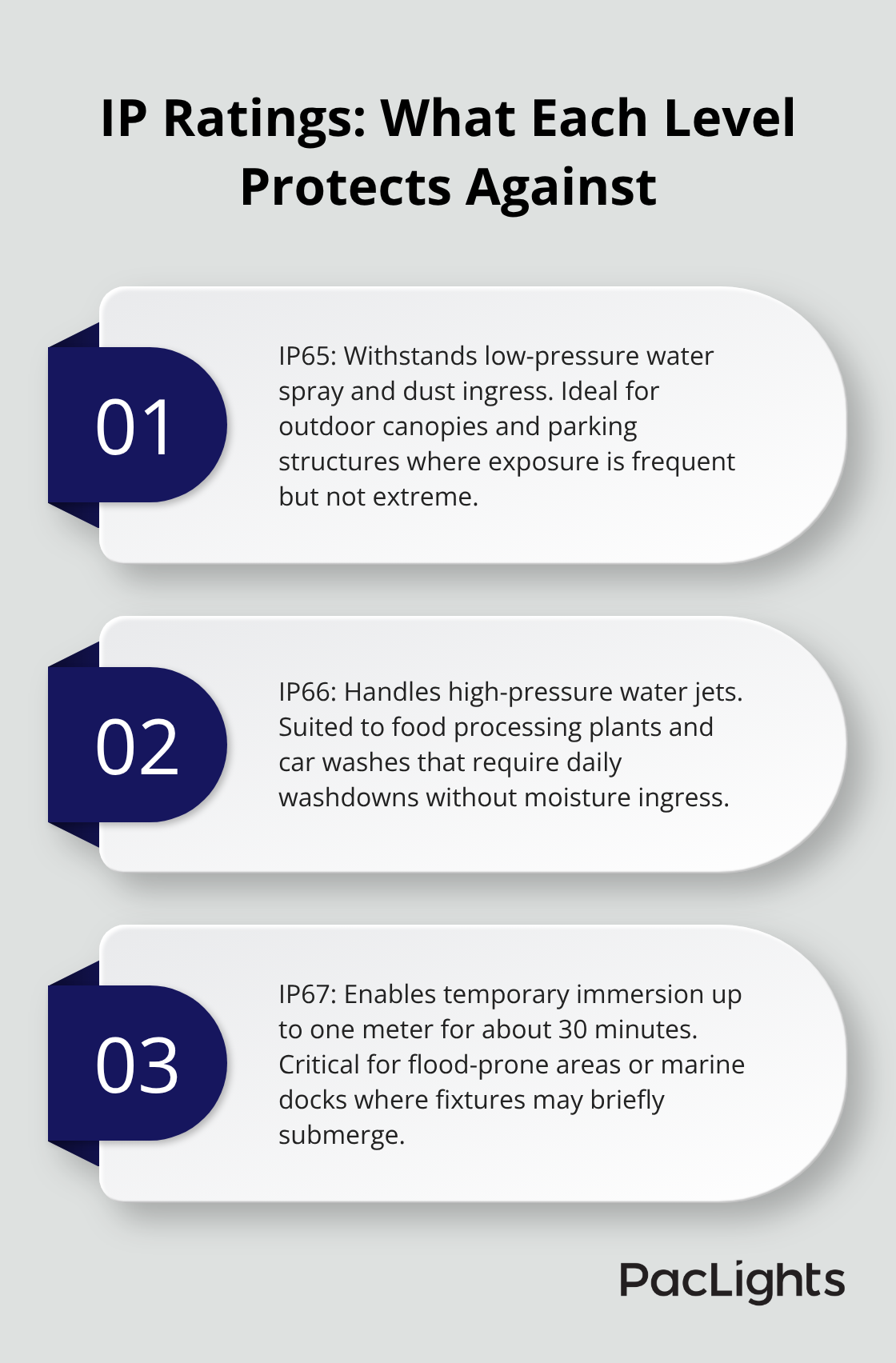
IP ratings tell you exactly how much protection a fixture provides, and this matters more than most facility managers realize. IP65 fixtures withstand low-pressure water spray and dust ingress, making them suitable for outdoor canopies and parking structures. IP66 handles high-pressure water jets, which is why food processing plants and car washes need this level of protection. IP67 enables temporary immersion up to one meter for approximately 30 minutes, a critical feature for flood-prone areas or marine docks where fixtures might briefly submerge.
The sealed construction behind these ratings uses die-cast aluminum housings with corrosion-resistant powder coating, silicone gaskets that flex from negative 20 degrees Celsius to 40 degrees Celsius, and bulkhead-style compression fittings at cable entry points. These details prevent the internal moisture and corrosion that destroy standard fixtures within months. A facility operating in a car wash environment will replace a standard metal halide fixture every 18 to 24 months, while a vapor tight LED bay rated IP66 operates reliably for five years or longer without replacement.
Energy Efficiency Cuts Operating Costs Dramatically
Vapor tight LED bays outpace fluorescent and metal halide systems by a significant margin. Facilities upgrading from legacy systems report up to 60 percent reductions in energy consumption, which translates directly to lower utility bills every month the fixtures operate. A 4-foot vapor tight fixture delivering 4,050 to 7,200 lumens consumes roughly 50 watts, while an 8-foot model producing 8,650 to 10,750 lumens uses approximately 80 watts.
High-bay vapor tight options reach 16,900 to 27,400 lumens in 165-watt models, suitable for tall ceilings and industrial spaces where conventional lighting wastes power through inefficient distribution. Many models include 0–10V dimming capability, allowing you to reduce brightness during low-occupancy periods and cut energy costs further. This combination of lower wattage and dimming flexibility means your facility pays less for electricity month after month.
Sealed Construction Eliminates Maintenance Headaches
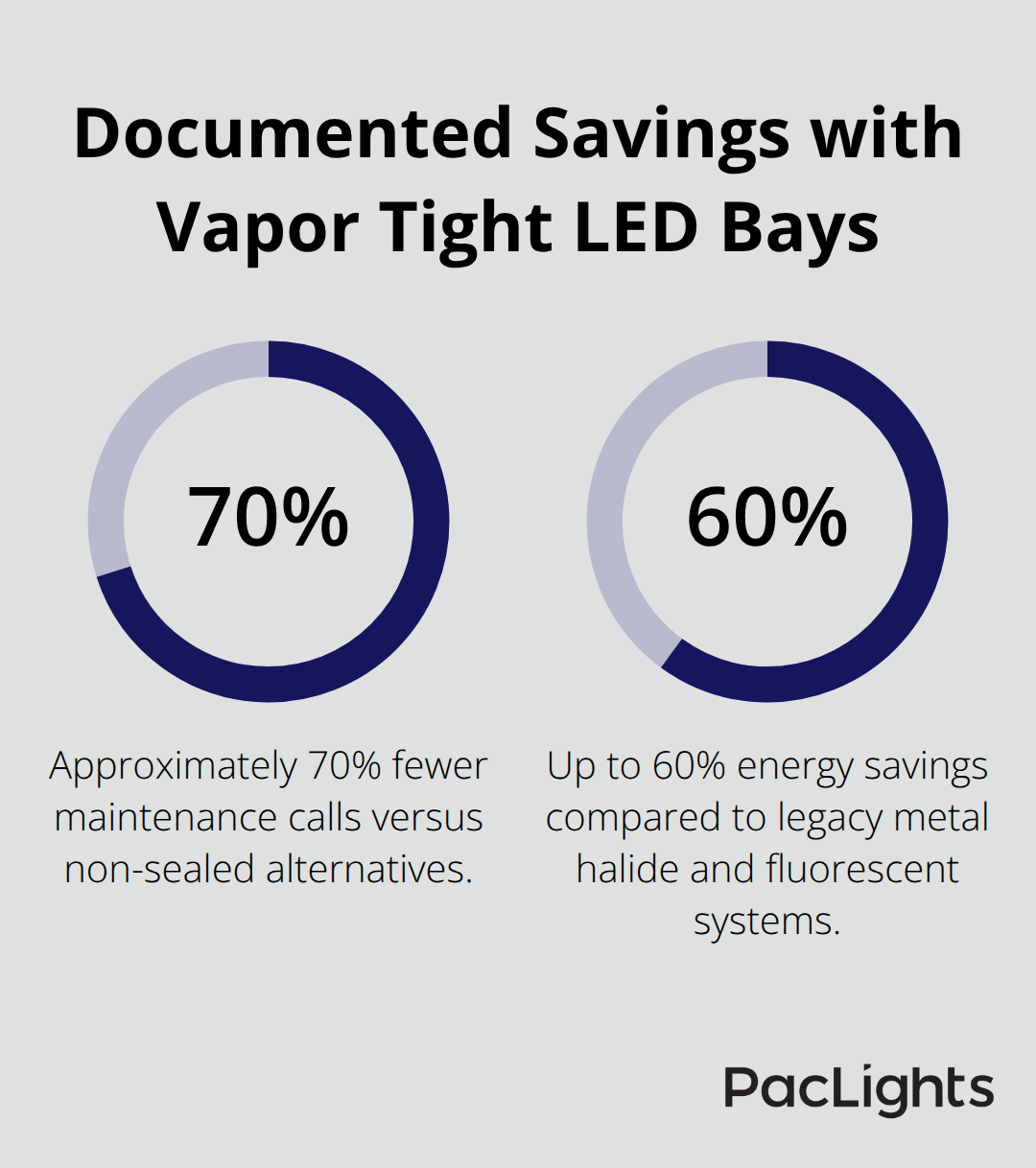
Vapor tight construction reduces maintenance dramatically because sealed housings prevent dirt buildup on lenses and protect wiring from moisture. Facilities report approximately 70 percent fewer maintenance calls compared to non-sealed alternatives. This means your maintenance team spends less time replacing failed fixtures and more time on strategic facility improvements.
NSF-rated vapor tight fixtures eliminate compliance violations in food and beverage facilities by resisting water jets from high-pressure washdown systems without collecting contaminants in crevices. The sealed design also protects internal components from salt spray, corrosive fumes, and temperature swings that would otherwise shorten fixture life. That’s not just durability-it’s a fundamental shift in how you budget maintenance labor and parts costs.
The financial advantage compounds year after year as you avoid replacement cycles, reduce labor hours, and lower energy bills. When you add these savings together, the case for upgrading becomes clear. Understanding which environments benefit most from vapor tight technology helps you prioritize your facility’s lighting needs.
Where Vapor Tight LED Bays Deliver Real Results
Food Processing and Cold Storage Facilities
Food processing plants operate at humidity levels exceeding 80 percent, with daily high-pressure washdowns that spray water directly onto fixtures. Standard lighting fails in this environment within months because water penetrates standard gaskets and corrodes internal components. NSF-rated vapor tight fixtures eliminate this problem entirely. Food facilities that upgrade to vapor tight LED bays stop collecting bacterial residue and product buildup in fixture crevices, which means no more compliance violations during health inspections. Cold storage units present a different challenge: condensation forms on non-sealed fixtures when warm air from loading docks meets freezing surfaces inside the cooler. That internal moisture destroys ballasts and shortens fixture life to 12 to 18 months. Vapor tight fixtures with silicone gaskets rated from negative 20 degrees Celsius to 40 degrees Celsius maintain watertight integrity through these temperature swings, delivering reliable operation for five years or longer. Breweries and dairy operations face identical washdown demands, making vapor tight construction mandatory for compliance with NSF standards that govern food and beverage production.
Car Washes, Laundries, and High-Moisture Warehouses
Car washes expose fixtures to soapy, hot, wet environments where traditional metal halide and fluorescent fixtures corrode or discolor within weeks. Vapor tight LED bays rated IP66 withstand high-pressure water jets without allowing moisture ingress that would damage drivers and electrical components. Laundries operate under similar conditions with constant humidity, steam, and chemical spray that attacks standard fixture housings. High-moisture warehouses storing goods in damp climates demand the same sealed construction to prevent light loss from dirty lenses and internal corrosion. Facilities in these applications report approximately 70 percent fewer maintenance calls and up to 60 percent energy savings compared to legacy systems.
A vapor tight fixture operating 12 hours daily in a car wash environment lasts five years or longer, while a standard fixture requires replacement every 18 to 24 months. That difference translates to thousands in avoided labor costs and fewer operational interruptions when lighting fails during peak business hours. The sealed housings also eliminate the need for frequent lens cleaning because moisture and dirt cannot accumulate inside the fixture.
Parking Garages and Coastal Environments
Parking garages exposed to salt spray and weather cycles benefit equally from vapor tight construction, with corrosion-resistant powder-coated aluminum housings and bulkhead compression fittings that prevent water ingress at cable entry points (the most common failure location in lesser fixtures). These environments demand fixtures that resist the constant assault of moisture, temperature swings, and oxidation that standard systems cannot withstand. Vapor tight LED bays rated IP65 or higher maintain consistent performance through seasons of rain, snow, and salt exposure that would otherwise accelerate corrosion and shorten fixture life dramatically. Facilities that operate parking structures 24/7 see the greatest return on investment because vapor tight fixtures eliminate the replacement cycles that drain maintenance budgets year after year.
Final Thoughts
Vapor tight LED bays solve a problem that standard fixtures cannot handle: they survive in environments where moisture, corrosion, and temperature swings destroy conventional lighting within months. Facilities upgrading from legacy metal halide and fluorescent systems report approximately 70 percent fewer maintenance calls and up to 60 percent energy savings, which means your maintenance team spends less time on replacements and your utility bills drop every single month. The sealed construction and IP65-to-IP67 ratings deliver measurable results across food processing plants, car washes, cold storage facilities, and parking garages.
A vapor tight LED bay operating 12 hours daily in a car wash lasts five years or longer, while standard fixtures require replacement every 18 to 24 months. That difference eliminates thousands in labor costs and prevents operational interruptions when lighting fails during peak business hours. Add in the energy savings from lower wattage consumption and optional 0-10V dimming, and the financial case becomes undeniable.
We at PacLights understand that upgrading your facility’s lighting requires more than just product selection. Our team can evaluate your wet environment conditions, recommend the right IP rating and fixture configuration, and show you exactly what your savings will look like over five years. Contact us at PacLights to discuss your facility’s lighting needs and start your upgrade today.
Disclaimer: PacLights is not responsible for any actions taken based on the suggestions and information provided in this article, and readers should consult local building and electrical codes for proper guidance.