

Hazardous locations demand equipment that performs under extreme conditions. At PacLights, we know that selecting the right vapor tight enclosure options can mean the difference between safe operations and costly failures.
This guide walks you through the main enclosure types, performance standards, and practical steps for choosing the right solution for your facility.
Which Enclosure Type Fits Your Hazardous Location
Explosion-Proof Enclosures for Flammable Atmospheres
Explosion-proof enclosures represent the most stringent option in vapor tight design. These units contain internal explosions by withstanding pressure spikes and preventing flame propagation to the surrounding atmosphere. The National Electrical Code requires explosion-proof enclosures in Class I, Division 1 locations where flammable gases or vapors exist under normal operating conditions.
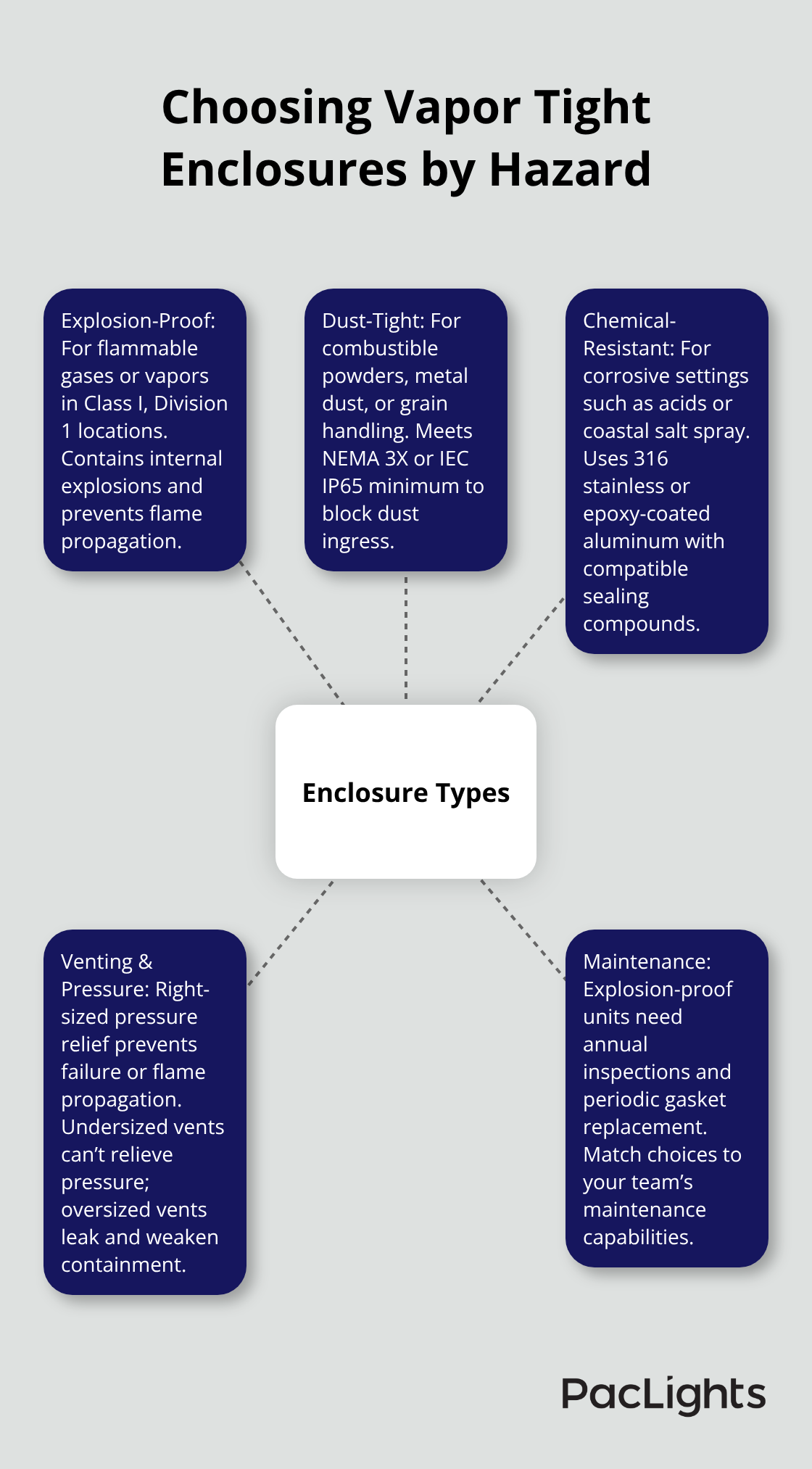
Manufacturers like Eaton and Hubbell rate these enclosures to withstand internal pressures exceeding 1000 psi, though actual operational requirements typically demand 500 to 700 psi ratings. The cost premium ranges from 40% to 60% above standard industrial enclosures, but this investment becomes non-negotiable when working with substances like hydrogen, methane, or acetylene. The sealing methodology matters significantly-threaded entries and gasketed covers must meet NFPA 70 standards precisely, with tolerances measured in thousandths of an inch.
Dust-Tight Enclosures for Particulate Hazards
Dust-tight enclosures serve facilities handling combustible powders, metal dust, or grain particles where the hazard stems from particulate matter rather than gases. These enclosures meet NEMA Type 3X or IEC IP65 ratings minimum, preventing dust ingress that could accumulate and ignite. Annual inspections help maintain their protective integrity over time.
Chemical-Resistant Enclosures for Corrosive Environments
Chemical-resistant enclosures address corrosive environments-think sulfuric acid manufacturing or salt spray coastal facilities-where standard steel corrodes within months. These typically feature stainless steel 316 construction or epoxy-coated aluminum, with sealing compounds rated for specific chemical families.
Matching Your Hazard Classification to Enclosure Type
The selection process hinges on your actual hazard classification. A petrochemical facility faces different requirements than a pharmaceutical powder processing plant, even though both handle potentially explosive substances. Temperature cycling in your location matters too; a 100-degree Fahrenheit swing between day and night operations can stress gaskets and seals, compromising the vapor tight integrity within two to three years if not properly specified.
Pressure relief venting represents another critical consideration. Undersized vents fail to relieve pressure during an internal event, while oversized vents compromise the enclosure’s ability to contain flame. Your facility’s maintenance capabilities also factor into this decision; explosion-proof enclosures require annual inspections and gasket replacement every three to five years depending on environmental exposure. Once you understand these variables, you can move forward with confidence toward selecting specifications that match your operational reality.
What Standards Actually Govern Vapor Tight Enclosures
North American vs. International Rating Systems
Two competing standards systems control vapor tight enclosure specifications, and your location determines which one applies. The National Electrical Code references NEMA ratings for North American installations, while international facilities follow IEC standards. NEMA Type 4X enclosures provide dust-tight and water-resistant protection suitable for many hazardous areas, but they fall short for explosive atmospheres where NEMA Type 7 or Type 9 becomes mandatory. IEC 60529 IP ratings measure ingress protection on a scale from IP54 to IP66, with the first digit addressing solid particle protection and the second addressing liquid intrusion.
Certification Requirements and Costs
A facility in the United States processing flammable vapors must meet NFPA 70 requirements regardless of equipment manufacturer origin, which mandates third-party certification from organizations like UL or CSA. The certification process itself costs manufacturers between 15,000 and 50,000 dollars per enclosure model, which explains why cheaper imported options often lack proper documentation.
Material Selection and Chemical Compatibility
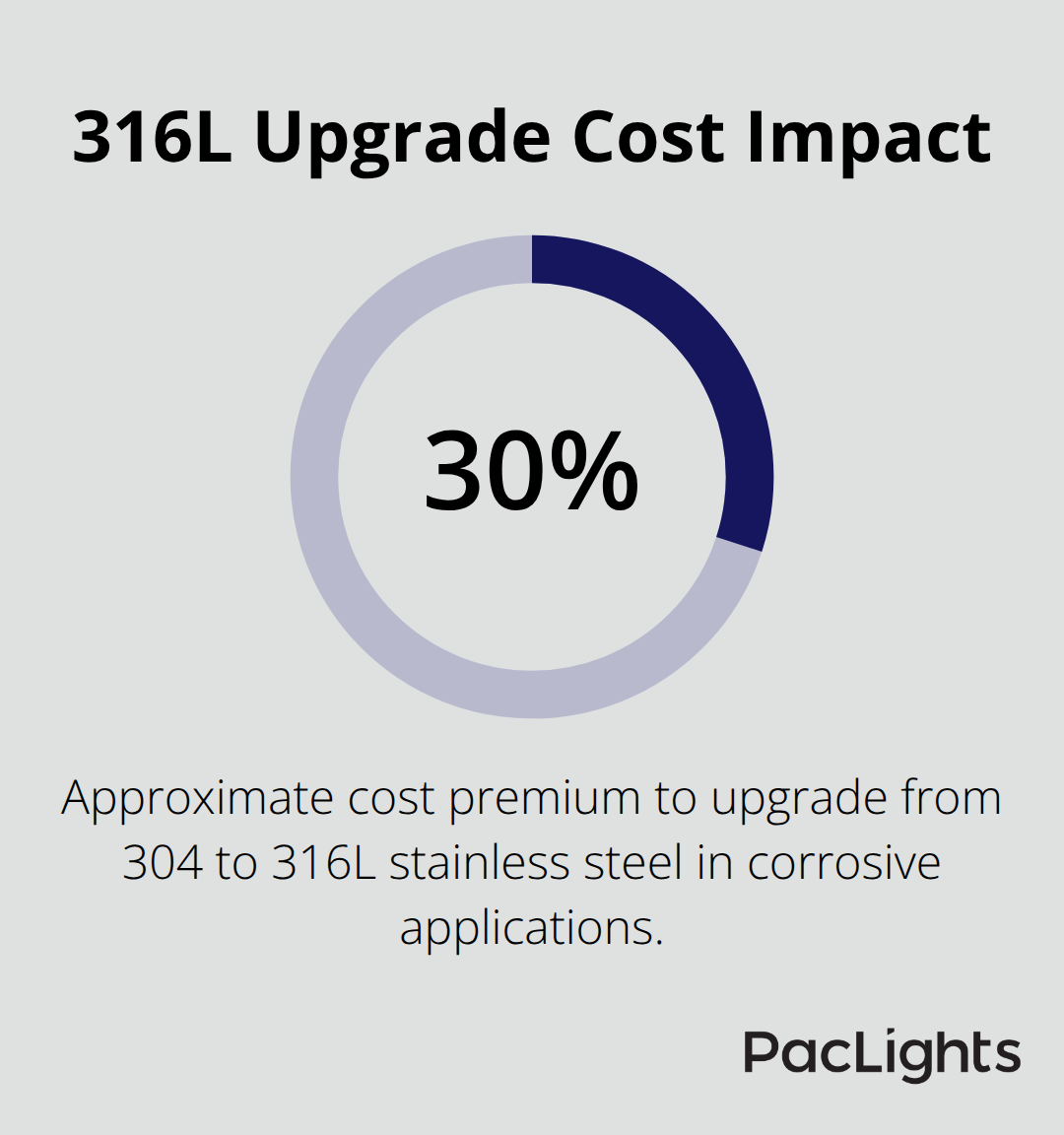
Material selection directly impacts how long your enclosure actually performs. Stainless steel 304 works for mild corrosive environments but fails within eighteen months in chlorine or sulfuric acid applications, requiring an upgrade to 316L stainless steel at roughly 30 percent cost premium. Gasket materials must match your specific chemical exposure; EPDM gaskets handle water and mild acids but swell and fail when exposed to petroleum solvents, while Viton gaskets resist solvents but degrade in ozone-rich environments.
Thermal Cycling and Pressure Specifications
Temperature swing testing reveals the real weakness in many enclosures, as thermal cycling causes differential expansion between the enclosure body and gasket materials, opening microscopic gaps that compromise vapor tightness within two to three years. Pressure ratings printed on nameplates often represent maximum theoretical capacity rather than safe operating limits; try selecting enclosures rated at least double your anticipated internal pressure from combustion events or pressure relief scenarios.
Gasket Compression and Installation Integrity
Sealing integrity depends on gasket compression maintained between 15 and 25 percent across the entire perimeter, meaning loose fasteners or corrosion around bolt holes will degrade protection within months of installation. These material and installation variables directly influence which enclosure specifications will actually protect your facility, making the next step-matching your hazard classification to the right enclosure type-essential for operational safety.
How to Match Your Hazard Classification to the Right Enclosure
Identify Your Facility’s Hazard Classification
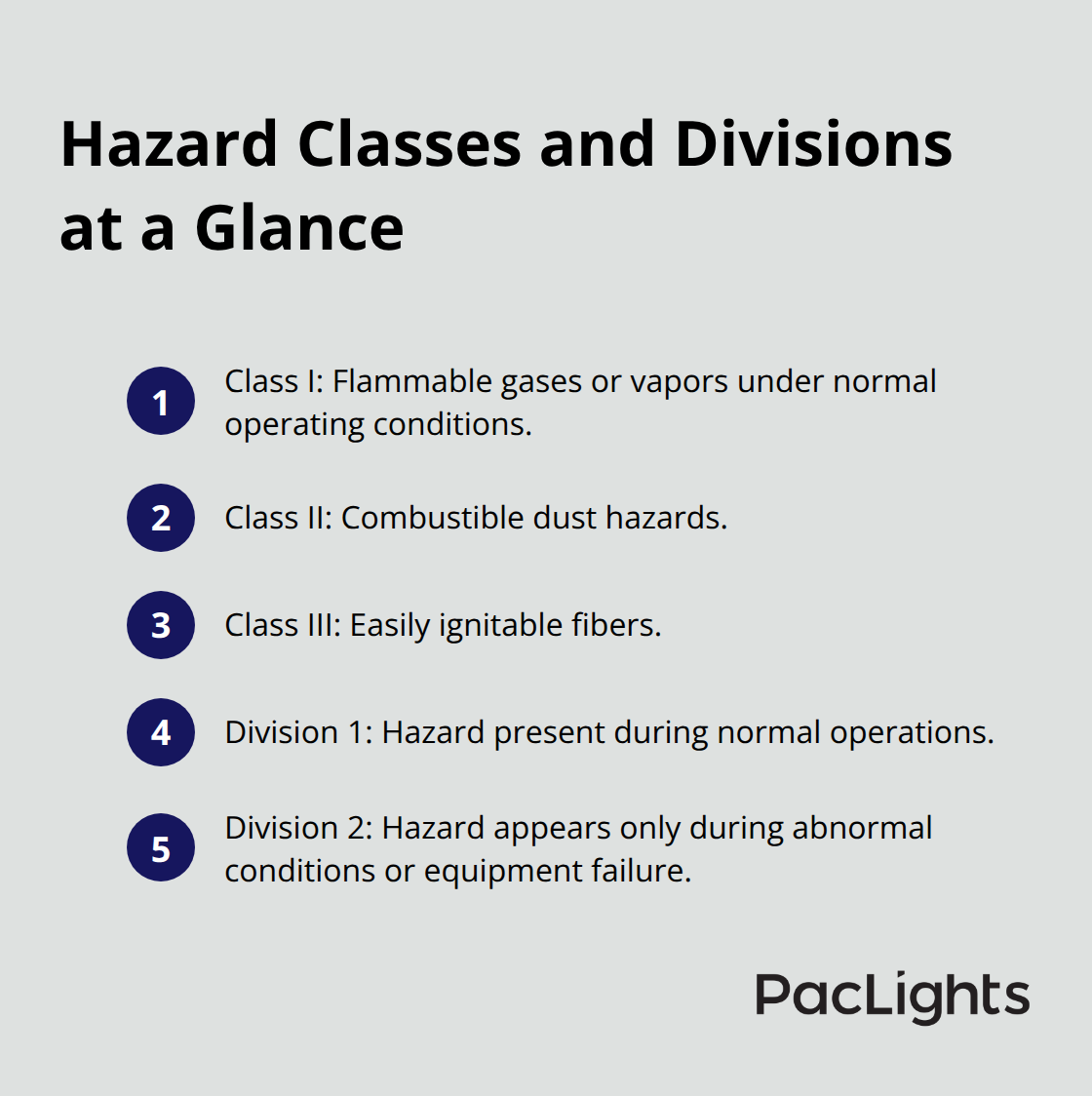
Your facility’s hazard classification determines everything about enclosure selection, and most operations get this step wrong by defaulting to the highest-rated option regardless of actual conditions. The National Electrical Code divides hazardous locations into Classes and Divisions based on what creates the hazard. Class I locations contain flammable gases or vapors under normal operating conditions, Class II involves combustible dust, and Class III addresses easily ignitable fibers. Within each class, Division 1 means the hazard exists during normal operations, while Division 2 means it only appears during abnormal conditions or equipment failure.
A pharmaceutical powder facility processing lactose operates in Class II, Division 1, which demands a dust-tight enclosure rated NEMA 3X minimum. That same facility adding a small hydrogen generation system for testing purposes introduces a Class I, Division 1 hazard in that specific area, requiring explosion-proof enclosures that cost 50 to 60 percent more. The mistake happens when facilities over-specify for their entire operation instead of zone-mapping their actual hazards.
Start by obtaining your facility’s Class, Group, and Division designation from your electrical engineer or insurance underwriter. This document exists somewhere in your compliance files, and it represents the actual legal requirement your equipment must meet. If you cannot locate it, your insurance company will provide it upon request because they underwrite your liability based on these classifications.
Match Environmental Conditions to Materials and Gaskets
Environmental conditions modify which enclosure materials and gasket compounds will survive long-term in your specific location. A stainless steel 304 enclosure handles coastal salt spray for approximately 18 months before corrosion penetrates seals and fasteners, while 316L stainless steel extends this to 4 to 5 years. Chemical facilities storing or processing acids, solvents, or alkalis require gasket materials matched to those specific chemicals rather than generic EPDM rubber.
Viton gaskets resist petroleum solvents and chlorinated hydrocarbons but fail rapidly in ammonia environments, while EPDM handles ammonia but swells in aromatic solvents. Temperature cycling between seasons or between day and night operations stresses gaskets and seals more than steady-state temperatures. A facility experiencing 80-degree Fahrenheit swings between summer and winter operations needs enclosures with thermal cycling test data showing gasket compression retention above 50 percent after 500 cycles.
Size Pressure Relief Vents Correctly
Pressure relief venting sizing matters more than most facilities realize. An undersized vent fails to relieve internal pressure during a combustion event, while oversized vents allow flame propagation and vapor leakage during normal operations. Your facility’s maintenance schedule and technical capabilities directly impact long-term performance.
Explosion-proof enclosures require gasket replacement every three to five years depending on environmental severity, annual bolt torque verification, and documented inspection records. Operations lacking maintenance staff should avoid explosion-proof enclosures entirely and instead specify dust-tight or chemical-resistant options requiring less frequent intervention. Evaluate your actual operational reality against these variables before selecting specifications.
Final Thoughts
Selecting the right vapor tight enclosure options requires matching your facility’s actual hazard classification to appropriate equipment specifications rather than over-specifying across your entire operation. The three enclosure types-explosion-proof, dust-tight, and chemical-resistant-each address specific hazards with different cost and maintenance profiles. Explosion-proof enclosures cost 40 to 60 percent more than standard industrial units but become mandatory in Class I, Division 1 locations, while dust-tight enclosures serve particulate hazards at lower cost and chemical-resistant stainless steel construction protects against corrosion in aggressive environments.
Compliance with NFPA 70, NEMA, or IEC standards isn’t optional-it’s your legal requirement and your insurance company’s baseline expectation. Third-party certification from UL or CSA validates that your equipment actually meets these standards, which explains why cheaper uncertified imports create liability rather than savings. Material selection and gasket compatibility directly determine how long your enclosure performs; stainless steel 316L lasts four to five years in coastal salt spray while 304 fails in eighteen months, and Viton gaskets resist solvents while EPDM fails in the same environment.
Implementation starts with obtaining your facility’s documented hazard classification from your electrical engineer or insurance underwriter. Zone-map your actual hazards rather than applying the highest-rated enclosure everywhere, and plan for maintenance requirements upfront since explosion-proof enclosures demand annual inspections and gasket replacement every three to five years. At PacLights, we provide vapor proof and hazardous location lighting fixtures designed to work alongside your enclosure strategy, offering energy-efficient solutions with optional motion control and advanced lighting controls that reduce operational costs simultaneously.
Disclaimer: PacLights is not responsible for any actions taken based on the suggestions and information provided in this article, and readers should consult local building and electrical codes for proper guidance.