

Vapor tight fixtures aren’t optional in certain environments-they’re mandatory. Whether you operate a warehouse, food processing plant, or chemical facility, choosing the right sealed lighting directly impacts worker safety and regulatory compliance.
At PacLights, we’ve compiled this vapor tight fixtures list to help you navigate the options available. This guide walks you through what these fixtures are, which types suit your facility, and how to select and install them correctly.
What Vapor Tight Fixtures Actually Do
Vapor tight fixtures seal out moisture, dust, and contaminants before they reach electrical components. Gaskets and durable enclosures-typically polycarbonate or glass-create a complete barrier against environmental hazards. The sealing protects against electrical failures, corrosion, and safety risks in harsh conditions. An IP66 rating, common in vapor tight designs, means the fixture resists both water jets and dust completely. A standard fixture in a wet or dusty environment fails within months, while a properly sealed vapor tight unit operates reliably for years. The difference between a sealed and unsealed fixture isn’t just performance; it’s the difference between a functioning workplace and one that faces constant downtime and safety violations.
Where Vapor Tight Fixtures Are Non-Negotiable
Food processing plants require NSF-certified vapor tight fixtures to meet hygiene standards mandated by the FDA and USDA. These fixtures allow you to clean and sanitize without damaging the lighting. Cold storage facilities present a different challenge: fluorescent lamps lose up to 50% of their output at freezing temperatures, while LED vapor tight fixtures maintain consistent performance in extreme cold.
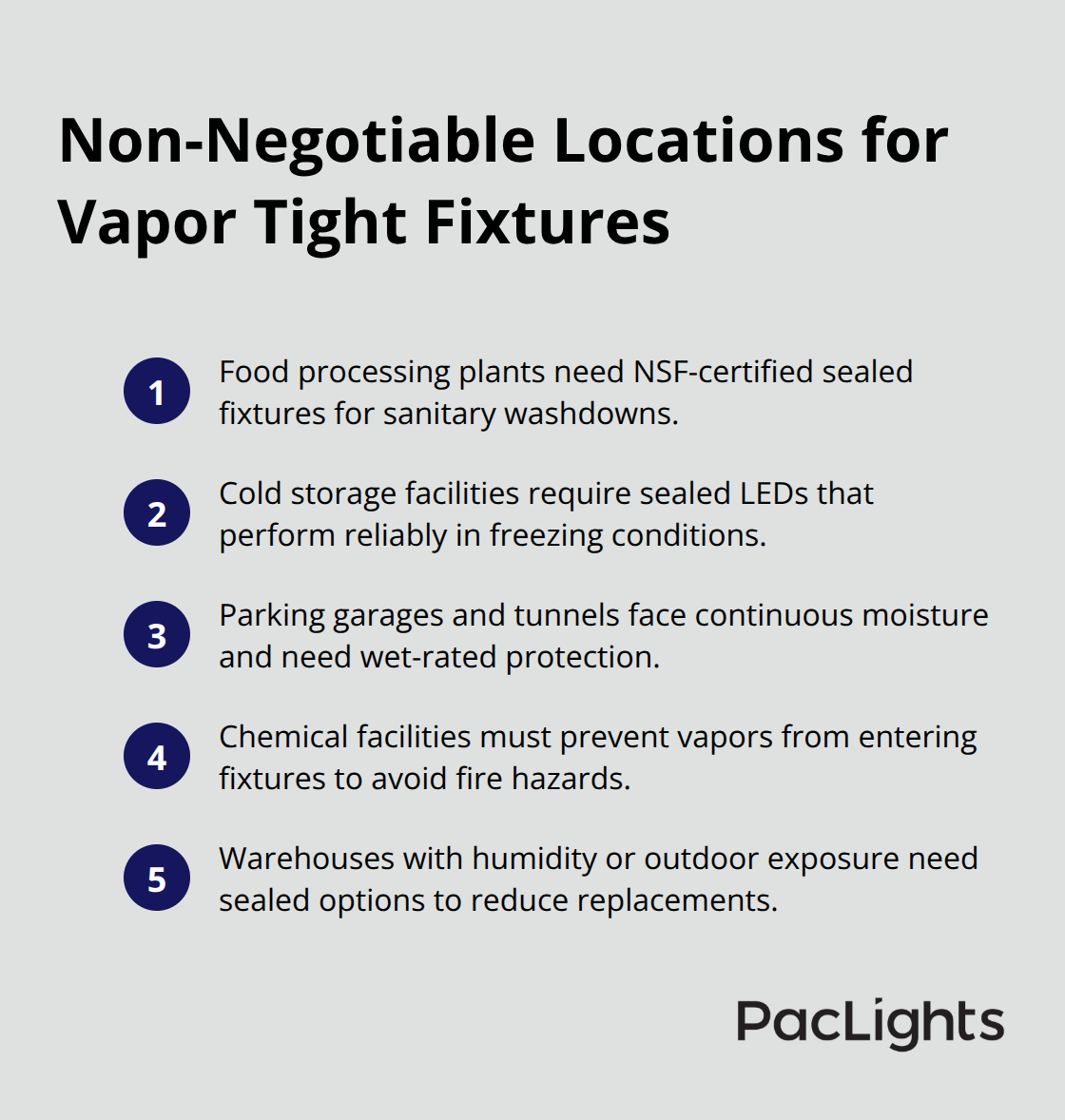
Parking garages and tunnels face constant moisture exposure from vehicle exhaust and humidity. Chemical facilities require sealed lighting to prevent vapors from entering fixtures and creating fire hazards. Warehouses with high humidity or outdoor exposure need vapor tight options to avoid frequent replacements. If your environment has water, dust, temperature extremes, or chemical exposure, vapor tight isn’t optional-it’s the only choice that reduces liability and operational costs.
Energy Savings and Compliance Reality
Switching from fluorescent vapor tight fixtures to LED equivalents typically cuts energy consumption by 40 to 60 percent. Replacing 100 fluorescent vapor tight fixtures with LEDs generates savings exceeding $5,000 annually, according to industry efficiency comparisons. LED vapor tight fixtures also eliminate the maintenance burden of frequent lamp replacements because LEDs last significantly longer and resist cycling stress far better than fluorescent tubes. Local building codes and NFPA standards mandate vapor tight sealing in specific applications; failure to comply results in failed inspections, fines, and liability exposure. The multi-point LED design in modern vapor tight fixtures delivers more uniform light distribution than fluorescent alternatives, improving foot-candle consistency across your space. This uniformity matters in food processing and manufacturing where task accuracy depends on consistent illumination. The upfront cost of LED vapor tight fixtures is higher, but the total cost of ownership-accounting for energy, maintenance, and replacement frequency-makes them the financially rational choice.
What Separates Quality Vapor Tight Fixtures
Not all vapor tight fixtures provide the same value; different manufacturers offer varying levels of performance and total cost of ownership. A responsible supplier starts by understanding your project objectives, budget, energy targets, and required performance. When you select fixtures, consider enclosure integrity, gasketing, IP rating, and suitability for humid or dusty environments. Focus on lifetime cost of ownership, not just upfront price, when you evaluate options. Proper installation and sealing maintain vapor-tight integrity and prevent moisture ingress. Choose fixtures with sustained lumen output over time to minimize future replacement costs. Work with experienced manufacturers or distributors who tailor vapor tight solutions to your project priorities.
Matching Fixture Types to Your Specific Environment
High Bay Fixtures for Industrial Warehouses
Industrial warehouses operate under different lighting demands than food processing plants, and chemical facilities face hazards that neither warehouses nor food plants encounter. High bay vapor tight fixtures deliver the brightness needed for tall ceiling spaces in warehouses, typically ranging from 4-foot to 8-foot configurations with wattage options from 60W to 165W depending on mounting height and task requirements. A 4-foot high bay vapor tight fixture at 165W produces approximately 27,400 lumens, sufficient for spaces with 20-foot or higher ceilings where standard fixtures fail to reach work surfaces. The 8-foot variants generate around 11,000 to 12,000 lumens at 60W to 90W, making them ideal for facilities needing broad light coverage without excessive heat output.
Wet Location vs. Damp Location: Critical Differences
Wet location and damp location fixtures differ critically in their environmental tolerance. Wet location models handle direct water spray and constant moisture exposure, while damp location variants tolerate occasional moisture but not direct water contact. A parking garage requires wet-rated fixtures because vehicle wash-offs and humidity create continuous moisture, whereas a warehouse with occasional humidity needs only damp-location sealing. Food processing facilities demand NSF-certified vapor tight fixtures that withstand frequent washdowns with caustic cleaning agents without corrosion or electrical failure. Chemical facilities require vapor tight sealing to prevent flammable or toxic vapors from entering the fixture enclosure, where they could ignite or degrade components. The IP66 rating standard means the fixture resists water jets from any direction and complete dust ingress, making it suitable for the harshest wet environments. Lower ratings like IP65 allow some dust penetration and work only in moderately damp spaces. Selecting the wrong type wastes money and creates safety gaps; a damp-location fixture installed in a wet parking garage will corrode within 12 to 18 months, forcing costly replacement cycles.
Wattage and Color Temperature Flexibility
Color temperature and wattage flexibility matter more than many facility managers realize. Vapor tight fixtures with selectable wattage let you install a single SKU across multiple zones instead of stocking separate models. A 4-foot fixture offering 30W, 40W, and 50W options lets you adjust brightness for different tasks without rewiring or purchasing additional inventory. Color temperature selection between 3500K, 4000K, and 5000K affects both worker performance and product visibility. Food processing plants benefit from 5000K cool white light because it enhances visual clarity when inspecting product quality and detecting contaminants. Warehouses often use 4000K as a middle ground that balances visibility with reduced eye strain during long shifts.
Performance in Extreme Temperatures
Cold storage facilities present a unique challenge because LED vapor tight fixtures maintain consistent output even at freezing temperatures, whereas fluorescent lamps lose half their brightness below 40°F. This means a facility switching from fluorescent to LED vapor tight lighting in cold storage gains both immediate energy savings and the reliability advantage that prevents product damage from inadequate lighting. Installation height and beam angle determine whether a fixture delivers usable light or creates dark spots. High bay fixtures with wide beam angles work best in spaces with 15-foot ceilings or higher, while lower ceilings benefit from narrower beam patterns that concentrate light where workers actually need it.
Dimming and Operational Flexibility
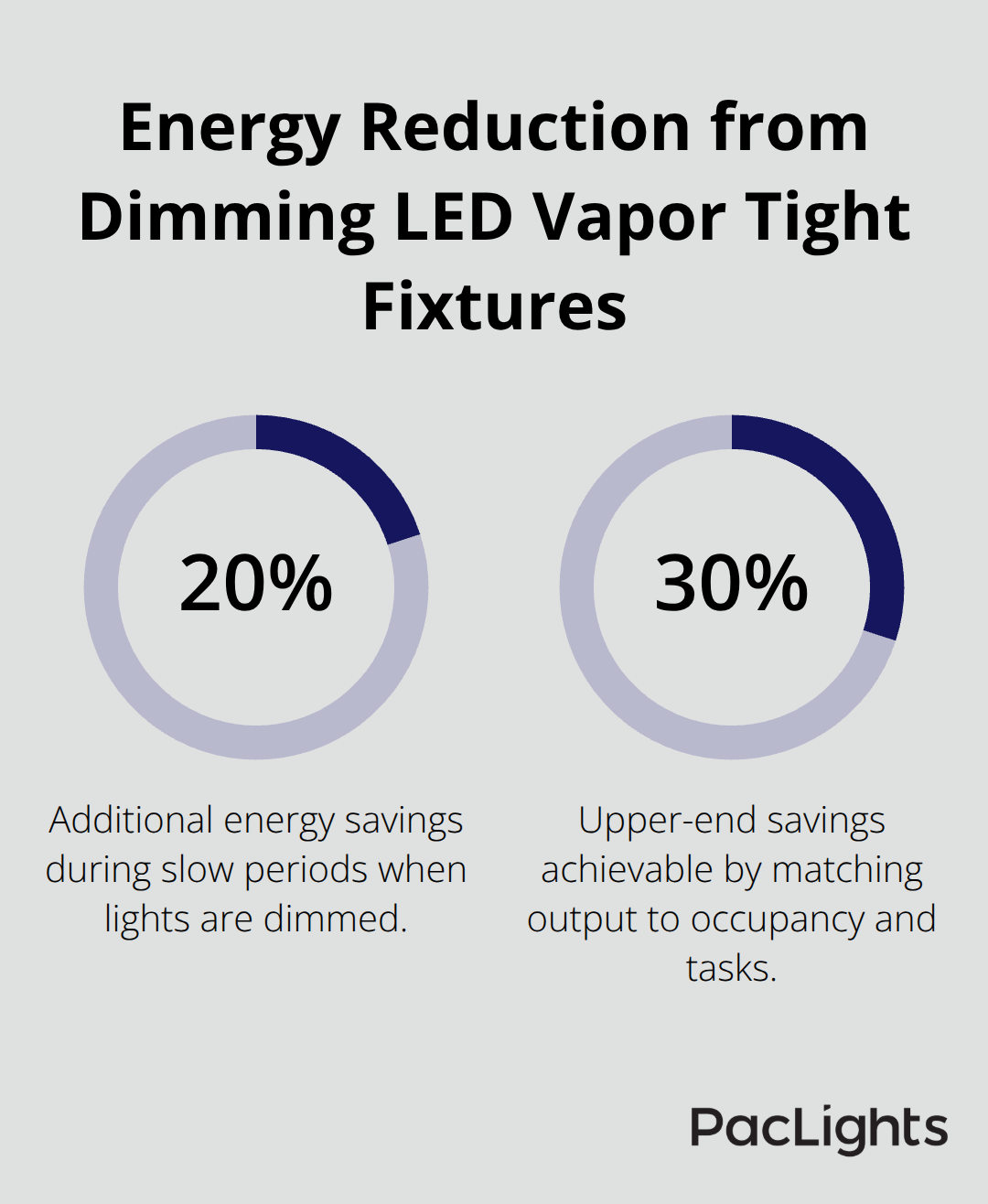
Dimmable variants add flexibility for facilities with varying operational needs throughout the day. A warehouse might dim lights during slow periods to cut energy consumption by an additional 20 to 30 percent beyond the baseline LED efficiency advantage. These adjustable options allow you to match lighting output to actual occupancy and task demands, rather than running fixtures at full capacity regardless of operational requirements.
The next step involves understanding how to assess your facility’s specific environmental conditions and select the right fixture specifications for your space.
How to Select and Install Vapor Tight Fixtures
Assess Your Facility’s Environmental Conditions
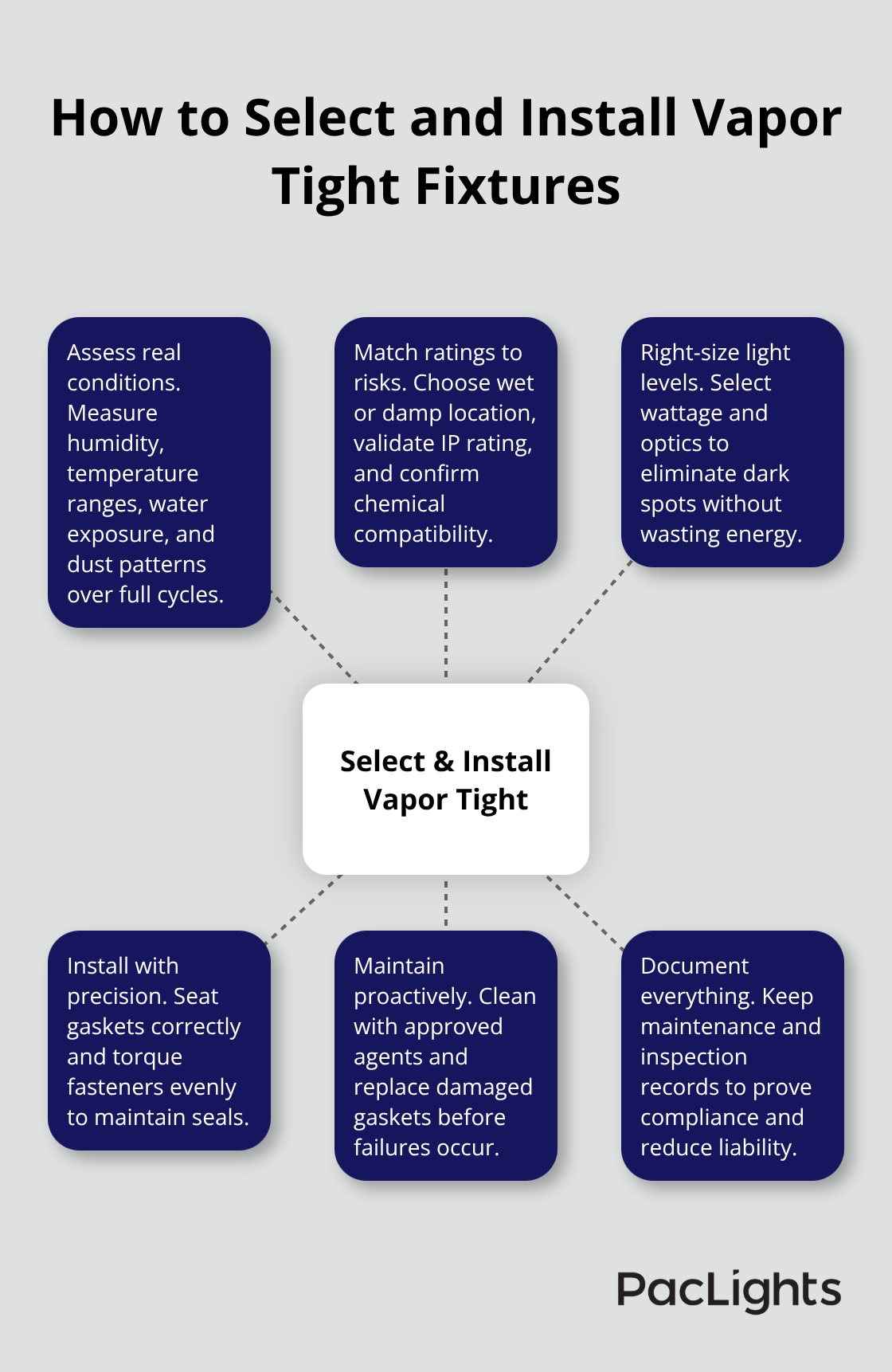
Document your facility’s actual environmental conditions rather than relying on assumptions. Measure humidity levels, temperature ranges, and water exposure patterns over a full operational cycle. A warehouse you think runs dry might experience 85% humidity during morning hours when outdoor air enters through loading docks. Food processing plants vary dramatically: a facility processing fresh produce faces different moisture challenges than one handling frozen goods. Chemical storage areas require vapor tight fixtures rated for specific vapor types, not generic sealed enclosures.
Visit your space during peak operational hours and note where water collects, where dust accumulates, and where temperature swings occur. This data determines whether you need wet-location or damp-location ratings, what IP rating actually protects your investment, and which wattage prevents dark spots in your work zones. A facility manager who skips this step typically oversizes fixtures, wasting energy, or undersizes them, creating safety hazards and productivity losses.
Compare Energy Efficiency and Total Operating Costs
Energy efficiency comparisons must account for total operating costs, not just purchase price. A 4-foot LED vapor tight fixture running at 50W costs roughly $150 to $250 upfront but delivers 3,900 to 6,500 lumens depending on the model. The same footprint in fluorescent costs $80 to $120 initially, yet consumes 2.5 times more electricity annually and requires lamp replacements every 18 to 24 months. Over a 10-year period, the LED fixture saves approximately $800 to $1,200 in energy and maintenance costs compared to fluorescent equivalents.
High bay fixtures amplify these savings: replacing 100 fluorescent high bays with 165W LED variants generates over $5,000 in annual energy savings alone. Lifespan matters equally-LED vapor tight fixtures rated for L70 (70% of original brightness) at 50,000 hours typically outlast fluorescent by 3 to 4 times. This extended lifespan reduces labor costs for replacement cycles in hard-to-access locations like warehouse ceilings or tunnel systems. When you evaluate models, request lumen maintenance curves showing output degradation over time. Fixtures that drop below 80% brightness after 25,000 hours force earlier replacements than those maintaining 90% output at the same interval.
Install Fixtures with Precision and Proper Sealing
Installation demands precision because sealed enclosures fail if gaskets aren’t seated correctly. Turn off power at the breaker before work begins and inspect the mounting surface for debris or damage that prevents proper sealing. Position gaskets exactly as the manufacturer specifies-misalignment by even 1/8 inch allows moisture to migrate into the fixture. Tighten fasteners in a cross pattern to ensure even pressure across the enclosure.
After installation, visually inspect the entire perimeter for gaps, then operate the fixture for 48 hours before declaring the installation complete. This test period reveals any condensation forming inside the enclosure, indicating a failed seal. Proper installation and sealing maintain vapor-tight integrity and prevent moisture ingress.
Maintain Gaskets and Hardware to Extend Fixture Life
Maintenance prevents premature failure and extends fixture life significantly. Clean vapor tight fixtures monthly in food processing environments where sanitizers and residue accumulate on polycarbonate covers. Use only manufacturer-approved cleaners because harsh chemicals degrade polycarbonate and damage gasket materials. Quarterly inspections of gaskets identify cracking or compression loss before moisture breaches the seal.
If a gasket shows visible damage, replace it immediately rather than hoping it lasts another season-replacement costs $20 to $50 versus fixture failure costs thousands in downtime. Check mounting hardware for corrosion in chemical facilities; corroded fasteners loosen over time and compromise seal integrity. Document all maintenance activities because regulatory inspections in food and chemical facilities require proof that sealed fixtures receive proper care. This record demonstrates compliance and protects your facility from liability claims if lighting failure contributes to safety incidents.
Final Thoughts
Vapor tight fixtures transform your facility’s operational costs and safety profile when you match the right fixture type to your actual environmental conditions. Installation precision and ongoing maintenance separate facilities that realize full value from their lighting investment from those that experience premature failures and repeated replacement cycles. Gaskets seated correctly, fasteners tightened properly, and maintenance schedules followed consistently turn a reliable fixture into an asset that protects your workers and your bottom line.
The vapor tight fixtures list you’ve reviewed throughout this guide demonstrates that selecting sealed lighting requires understanding your specific environment, calculating true total cost of ownership, and committing to proper installation. A facility switching 100 fixtures from fluorescent to LED vapor tight models saves over $5,000 annually while gaining the reliability that prevents production downtime and worker safety incidents. Your food processing plant, cold storage facility, warehouse, or chemical facility each demands different fixture specifications-and one-size-fits-all lighting fails to deliver the results you need.
We at PacLights help you navigate this selection process by offering free lighting layout designs and ROI assessments tailored to your facility’s actual needs. Contact PacLights to discuss your vapor tight lighting requirements and discover how sealed, efficient fixtures can transform your operational performance.
Disclaimer: PacLights is not responsible for any actions taken based on the suggestions and information provided in this article, and readers should consult local building and electrical codes for proper guidance.