

Outdoor lighting shapes how people perceive your property. At PacLights, we’ve seen firsthand how cylinder wall lights outdoor installations transform commercial and industrial spaces into well-lit, professional environments.
These fixtures deliver durability that withstands harsh weather while keeping energy costs down. This guide covers everything you need to know about selecting and maintaining cylinder wall lights for lasting performance.
What Are Cylinder Wall Lights
Definition and Design
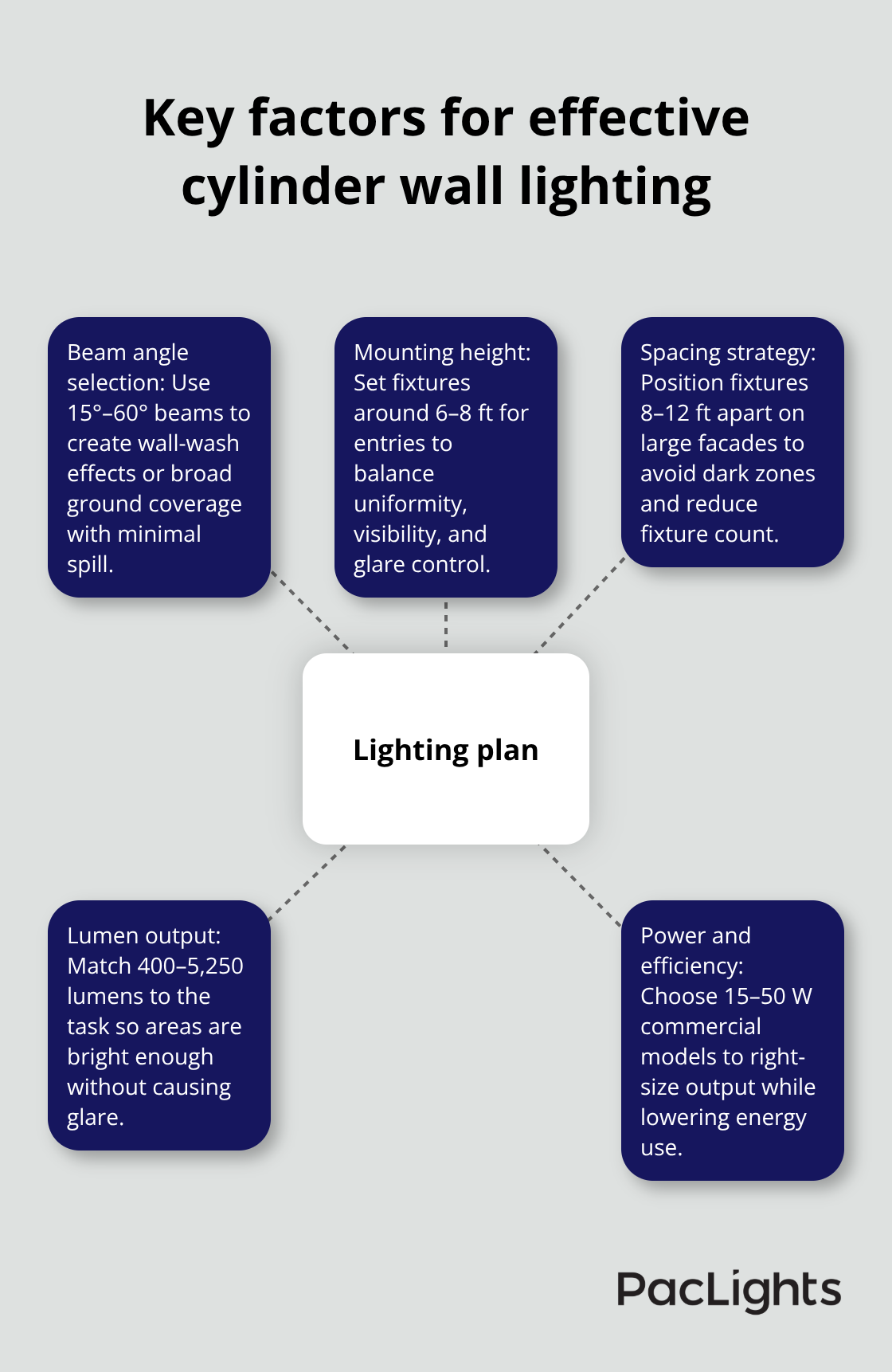
Cylinder wall lights are cylindrical fixtures mounted directly onto exterior walls to provide illumination for building entrances, pathways, facades, and landscape features. The design is straightforward-a compact, tube-shaped housing that directs light either downward, upward, or in both directions depending on the model. This simplicity masks a sophisticated optical system. The cylindrical form factor allows precise optical control, meaning fewer fixtures cover the same area compared to traditional wall packs. A typical cylinder emits between 400 and 5,250 lumens depending on size and wattage, with most commercial-grade models operating at 15 to 50 watts.
The real advantage lies in beam control. Cylinders offer adjustable beam angles from 15 to 60 degrees, allowing you to create dramatic wall-wash effects or broad ground illumination without wasting light upward. This directional precision matters on your energy bills-optical efficiency means you need fewer fixtures to light a commercial facade, reducing both installation costs and ongoing electricity consumption.
Color Temperature and Aesthetic Appeal
Color temperature options typically span 3,000K to 5,000K, with 3,000K delivering warmth for residential entries and 4,000K serving commercial facades where clarity matters. The cylindrical design also pairs perfectly with minimalist architectural trends. Modern commercial and residential buildings favor clean lines, and these fixtures blend seamlessly into contemporary facades rather than protruding like older wall-pack designs.
Commercial and Industrial Performance
Cylinder wall lights excel in commercial and industrial applications because they solve real problems. On office buildings, they illuminate entryways at 6 to 8 feet high, creating a professional first impression while meeting security standards. Spacing them 8 to 12 feet apart on large facades maintains even illumination without dark zones. Industrial facilities benefit from the same precision-parking areas, loading docks, and perimeter security all demand reliable, focused light without glare that disrupts work. Residential projects use smaller cylinders, typically 6 to 8 inches tall emitting 400 to 800 lumens, for garden walls and entry accents.
Energy Savings and Long-Term Value
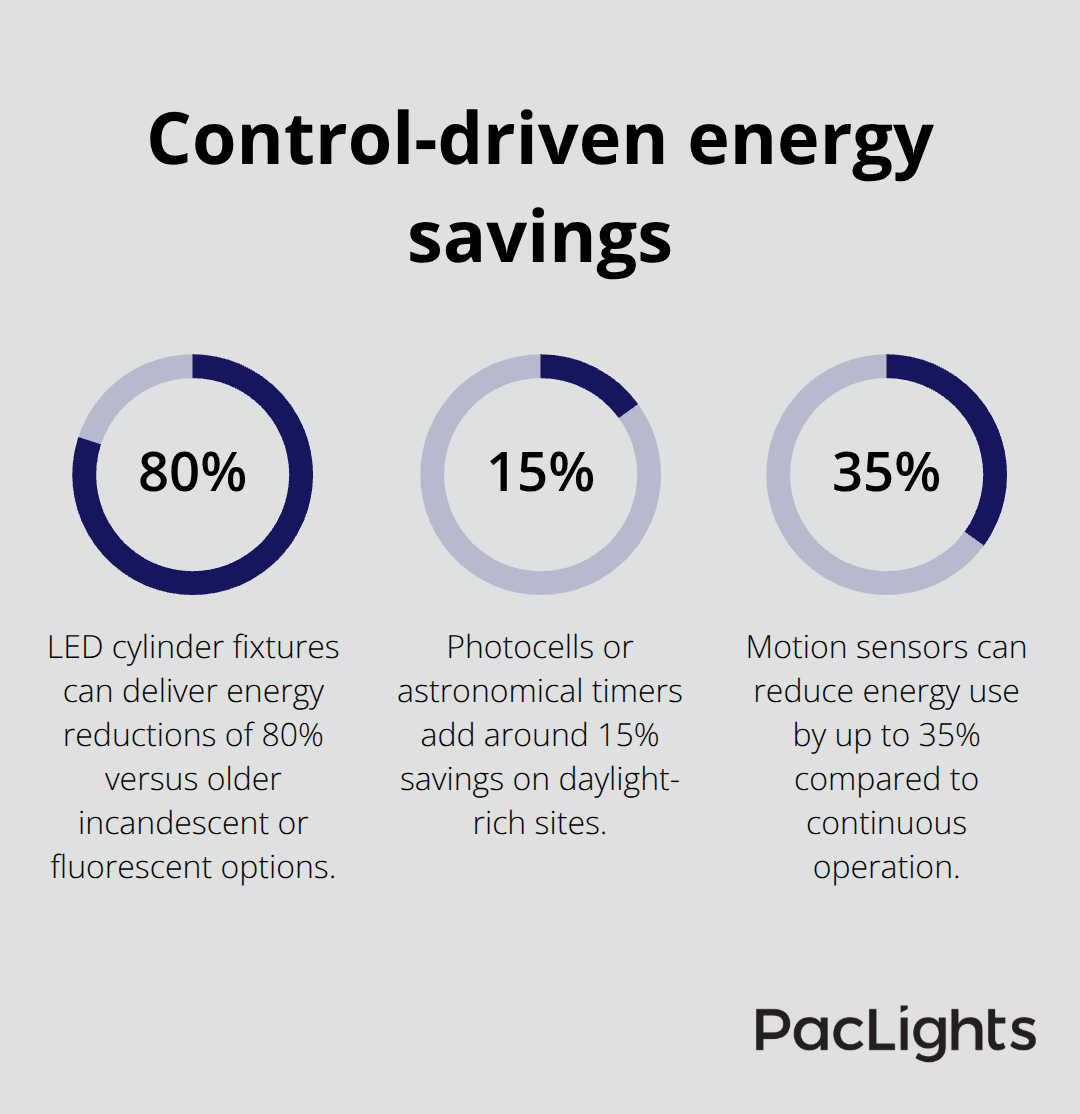
The real ROI emerges when you compare cylinders to older 50 to 100-watt incandescent or fluorescent fixtures. LED cylinders consume 5 to 20 watts and deliver 80 percent energy savings. For a mid-size commercial building running 12 fixtures at 8 hours daily, that translates to roughly 300 to 600 kilowatt-hours saved annually per fixture. At typical commercial electricity rates, that’s meaningful cost reduction. Add a photocell for dusk-to-dawn automation, and you push savings another 15 to 20 percent on daylight-rich sites. The 50,000-hour LED lifespan means maintenance crews visit less frequently-replacement cycles stretch to 5 to 10 years instead of annually.
Durability in Harsh Climates
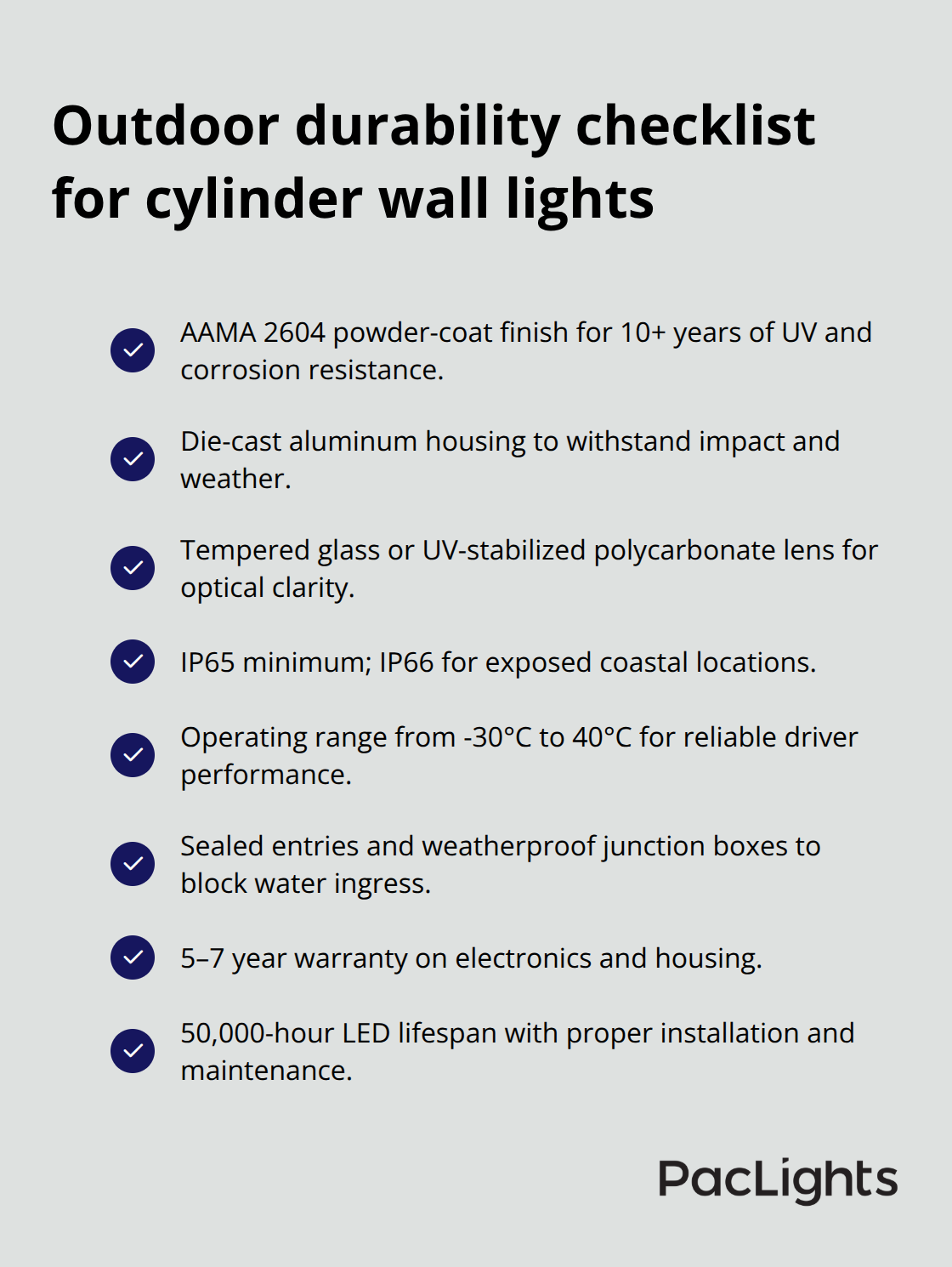
Durability in harsh climates matters equally. Canadian facilities face freeze-thaw cycles, salt spray in coastal regions, and temperature swings from -30°C to 40°C. Quality powder-coat finishes rated AAMA 2604 resist UV fading and corrosion for 10 years or more. Die-cast aluminum housings with tempered glass or UV-stabilized polycarbonate lenses protect the LED module while maintaining clarity. IP65 ratings and wet-location certifications confirm they withstand rain, snow, and moisture without failure.
This durability directly impacts total cost of ownership-a fixture that lasts a decade without premature LED driver failure or lens degradation pays for itself faster than cheaper alternatives requiring replacement after two winters. Understanding these durability features sets the foundation for selecting the right cylinder wall lights. The next section examines the specific materials and construction standards that deliver this long-term performance.
Durability Features and Weather Resistance
Materials That Withstand Harsh Climates
Quality construction separates cylinder wall lights that last a decade from those failing after two winters. Canadian facilities face unforgiving conditions-coastal salt spray corrodes cheap finishes within seasons, freeze-thaw cycles crack inferior housings, and UV exposure degrades lower-grade coatings. Die-cast aluminum housings with powder-coat finishes rated AAMA 2604 resist corrosion, UV fading, and salt spray for 10 years or longer. This rating reflects laboratory testing under accelerated salt-fog conditions that simulate real coastal environments. Cheaper powder coats rated AAMA 2603 or lower peel and chip after two to three winters, forcing replacement.
Lenses demand equal attention. Tempered glass or UV-stabilized polycarbonate protects the LED module while maintaining optical clarity under direct sunlight. Polycarbonate yellows over time in harsh UV exposure, so verify the lens material before purchasing-tempered glass preserves clarity longer on south-facing installations.
Protection Standards and Temperature Performance
IP65 ratings confirm dust and water-jet protection, but IP66 is preferable for exposed coastal locations where salt spray and heavy moisture are constant threats. Operating temperature ranges from -30°C to 40°C ensure LED drivers function reliably through Canadian winters without premature failure. Budget fixtures with lower-quality drivers fail at -20°C, leaving you dark during peak security seasons. The difference between a reliable driver and a cheap one becomes obvious when temperatures drop-quality manufacturers engineer their drivers to handle extreme cold, while cost-cutting alternatives simply cannot.
Maintenance Practices That Extend Lifespan
Maintenance determines whether durability translates to actual lifespan. Clean fixtures quarterly with a soft damp cloth and inspect lenses for condensation or cracks-trapped moisture inside the housing accelerates corrosion and shortens LED life. Check mounting bolts annually and tighten any that have loosened from vibration or thermal expansion. Weatherproof junction boxes and sealed entry points prevent water ingress that kills drivers faster than any external factor.
The 50,000-hour LED lifespan assumes proper installation and maintenance. A fixture running continuously in a damp coastal environment without sealed connections fails at 25,000 hours. For commercial properties, this means replacement cycles stretch to 5 to 10 years with proper care, versus 2 to 3 years for poorly maintained installations.
Warranty as a Reliability Indicator
The warranty confirms quality-reputable manufacturers offer 5 to 7 years on electronics and housing, signaling confidence in construction standards. Cheaper alternatives with 2-year warranties hide reliability problems that surface once you’ve committed to installation. When you compare fixtures, the warranty length reveals what manufacturers actually trust their products to deliver. A 7-year warranty on housing and electronics means the manufacturer stands behind durability claims with financial backing.
Understanding these material standards and maintenance requirements prepares you to evaluate the true cost of ownership. The next section examines how energy efficiency and LED technology transform those durability benefits into measurable financial returns for your facility.
Energy Efficiency and Cost Savings
LED Power Consumption vs. Traditional Fixtures
LED cylinder wall lights consume 5 to 20 watts compared to the 50 to 100 watts that older incandescent and fluorescent fixtures demand. That 80 percent energy reduction hits your bottom line immediately. A commercial facility with 12 cylinder fixtures running 8 hours daily saves roughly 300 to 600 kilowatt-hours annually per fixture. At average commercial electricity rates of 12 to 15 cents per kilowatt-hour, that amounts to approximately 36 to 90 dollars saved per fixture yearly. Scale that across a larger installation-say 40 fixtures on a mid-size office building-and annual savings reach 1,440 to 3,600 dollars without touching controls or dimming.
Lifespan Impact on Maintenance Costs
The 50,000-hour LED lifespan eliminates the constant replacement cycle that drains maintenance budgets. You stop replacing bulbs every year or two. Maintenance crews visit less frequently, reducing labor costs that accumulate quickly when you manage dozens of fixtures across multiple properties. The payback period for a typical commercial retrofit ranges from 2 to 4 years, after which the savings compound for another 5 to 10 years of fixture lifespan. That’s real money, not theoretical projections.
Automation and Control Systems
Photocells or astronomical timers for dusk-to-dawn operation add another 15 to 20 percent in savings on daylight-rich sites where fixtures would otherwise run during twilight hours when ambient light already illuminates your facade. Motion sensors push savings even further-occupancy-based controls reduce outdoor lighting energy use by 25 to 35 percent compared to continuous operation, according to Department of Energy research. For facilities with variable usage patterns, this matters enormously. A parking area that runs fixtures all night but sees traffic only during evening hours cuts consumption dramatically with motion activation.
Advanced Control Integration
Dimmable 0-10V controls or networked lighting systems let you adjust brightness based on weather, season, or security needs without replacing fixtures. These systems transform a standard retrofit into an exceptional financial investment. The combination of LED efficiency, long lifespan, and intelligent automation creates a system where energy costs drop substantially while reliability improves. You gain the durability you need with costs that justify the initial investment.
Final Thoughts
Cylinder wall lights outdoor installations transform your facility’s energy profile while protecting property value through reliable, professional illumination. A mid-size commercial building with 40 fixtures saves 1,440 to 3,600 dollars annually through LED power consumption alone, with payback periods typically reaching 2 to 4 years. Quality powder-coat finishes rated AAMA 2604 resist coastal salt spray and freeze-thaw cycles for 10 years or longer, protecting your investment through Canadian winters without premature failure.
The 50,000-hour LED lifespan eliminates constant replacement cycles that drain maintenance budgets and disrupt operations. Photocells for dusk-to-dawn automation and motion sensors for occupancy-based control accelerate savings by another 15 to 35 percent depending on usage patterns. Potential tenants and buyers notice well-lit facades that signal security and maintenance standards, directly increasing property perception and value.
We at PacLights understand that selecting the right outdoor lighting requires more than product specifications-it demands a partner who evaluates total cost of ownership, not just purchase price. Our team offers free lighting layout designs and ROI assessments tailored to your specific facility, usage patterns, and local conditions. Contact PacLights to discuss how cylinder wall lights can enhance your property while reducing operating costs.
Disclaimer: PacLights is not responsible for any actions taken based on the suggestions and information provided in this article, and readers should consult local building and electrical codes for proper guidance.