

Cylinder wall light fixtures are built to last, but only when you get the design right from the start. At PacLights, we’ve seen countless installations fail prematurely because facility managers overlooked basic durability principles.
This guide walks you through material selection, weather protection, thermal management, and energy efficiency-everything you need to choose fixtures that perform reliably for years.
Material Selection and Thermal Management for Durable Cylinder Wall Lights
Choosing Materials That Withstand Outdoor Conditions
Aluminum housings dominate cylinder wall light fixtures for good reason-they resist corrosion far better than steel or plastic when exposed to salt spray, humidity, and temperature swings. We recommend aluminum with a powder-coated finish as the baseline for any outdoor installation. Powder coating adds a protective layer that extends the fixture’s working life significantly compared to bare or anodized finishes alone. The coating thickness matters: try 2 to 3 mils minimum for coastal or high-humidity environments. Stainless steel is another solid option, particularly 304-grade, which handles corrosive conditions without the maintenance burden of painted finishes alone.
Copper and brass fixtures look elegant but require regular maintenance to prevent patina buildup that can trap moisture and accelerate deterioration. For indoor spaces, standard painted steel works adequately, but outdoor fixtures in wet or corrosive environments will fail prematurely with this material. Glass or acrylic diffusers should be tempered or impact-resistant to withstand temperature shock when cold rain hits a warm fixture-standard glass can fracture under these conditions.
Protecting Diffusers from UV and Temperature Damage
UV-stabilized acrylic outperforms untreated plastic in direct sunlight, maintaining clarity for years rather than months. Always verify material specifications from the manufacturer before purchase; vague descriptions like “stainless” or “weather-resistant” tell you nothing about actual performance. Request technical datasheets that specify material grades, coating thickness, and environmental ratings. This step prevents costly failures after installation.
Managing Heat to Preserve LED Performance
LED components generate less heat than incandescent bulbs, but that heat still needs somewhere to go. Poor thermal management causes LED color shift, reduced brightness, and premature failure-often within 2 to 3 years instead of the rated 25,000-plus hours. Aluminum housings act as heat sinks, conducting warmth away from the LED driver and bulb. Fixtures with active cooling fins or extended surface area dissipate heat more efficiently than smooth cylindrical designs.
Interior mounting orientation also affects thermal performance: upward-facing cylinders trap heat more readily than downward-facing or wall-mounted units. The ambient temperature where you install matters too; a fixture rated for 40°C operation will throttle output or fail if mounted in a 50°C environment like a sunlit wall in direct afternoon sun. Check the manufacturer’s thermal specifications and de-rating curves-these tell you actual performance at various temperatures, not just ideal conditions.
Ventilation and Thermal Protection Systems
Poor ventilation around fixtures accelerates thermal stress, so avoid mounting them in enclosed soffits or tight corners without airflow.
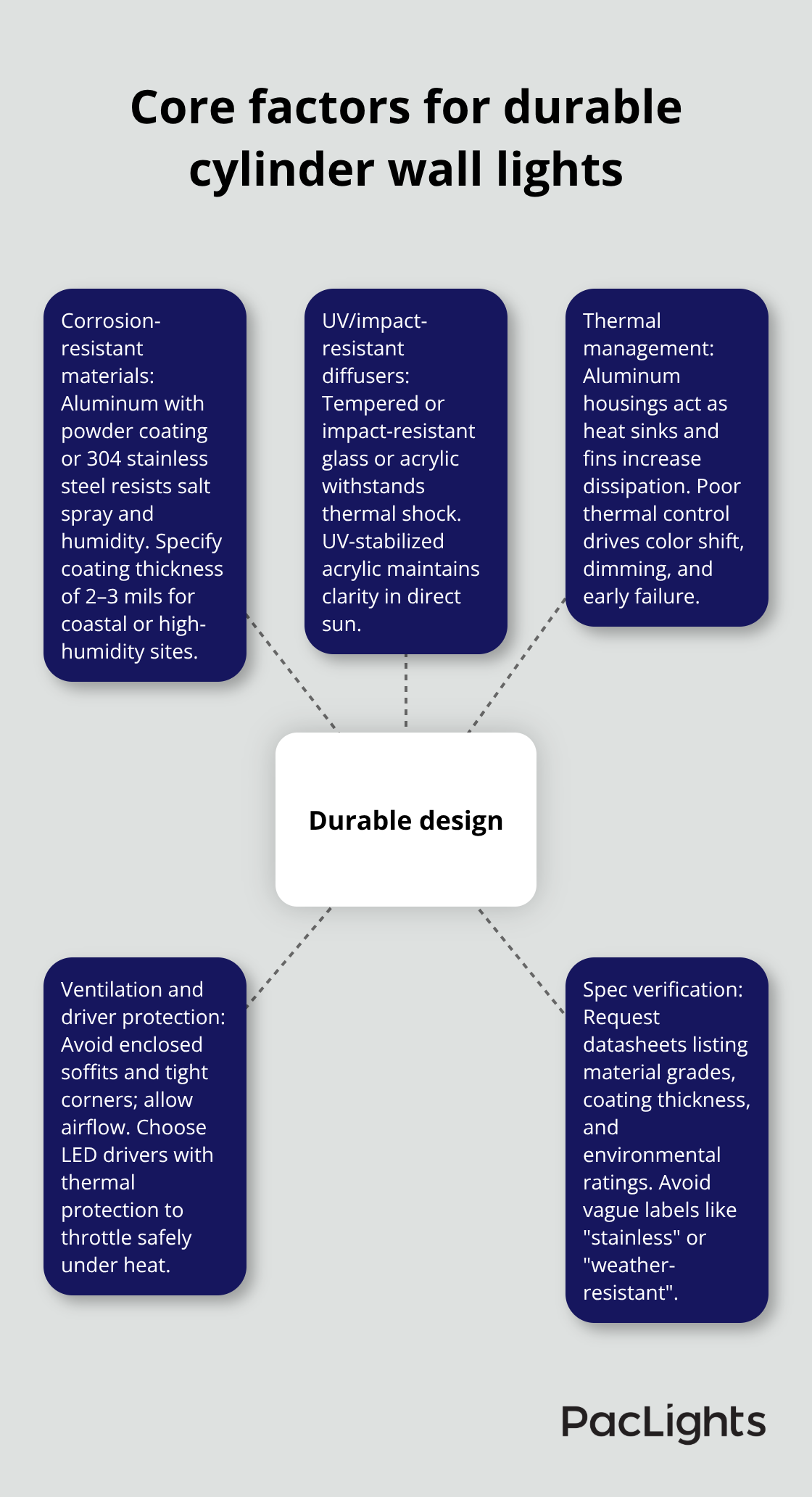
High-quality LED drivers with thermal protection automatically reduce power when temperatures climb, preserving component life but dimming output noticeably. This is preferable to fixtures without protection, which simply fail without warning. With material and thermal challenges addressed, the next step involves selecting the right fixture type and brightness level for your specific application.
Matching Fixture Specs to Your Installation Environment
Indoor versus Outdoor Material Requirements
Indoor cylinder wall lights tolerate much wider operating ranges than outdoor fixtures, which means you can prioritize aesthetics over environmental protection in climate-controlled spaces. A standard painted steel cylinder with basic acrylic diffuser works fine for hallways, offices, or retail interiors where temperature stays between 60°F and 75°F. Outdoor installations demand different thinking entirely. Coastal installations require 304-grade stainless steel or aluminum with 3-mil minimum powder coating because salt spray corrodes standard finishes within months, not years. High-altitude or desert locations expose fixtures to extreme UV and temperature swings that degrade untreated acrylic diffusers rapidly. If your facility sits within five miles of saltwater, budget 40 percent more upfront for corrosion-resistant materials-the alternative is replacing fixtures every three years at double the cost.
Brightness and Color Temperature for Function
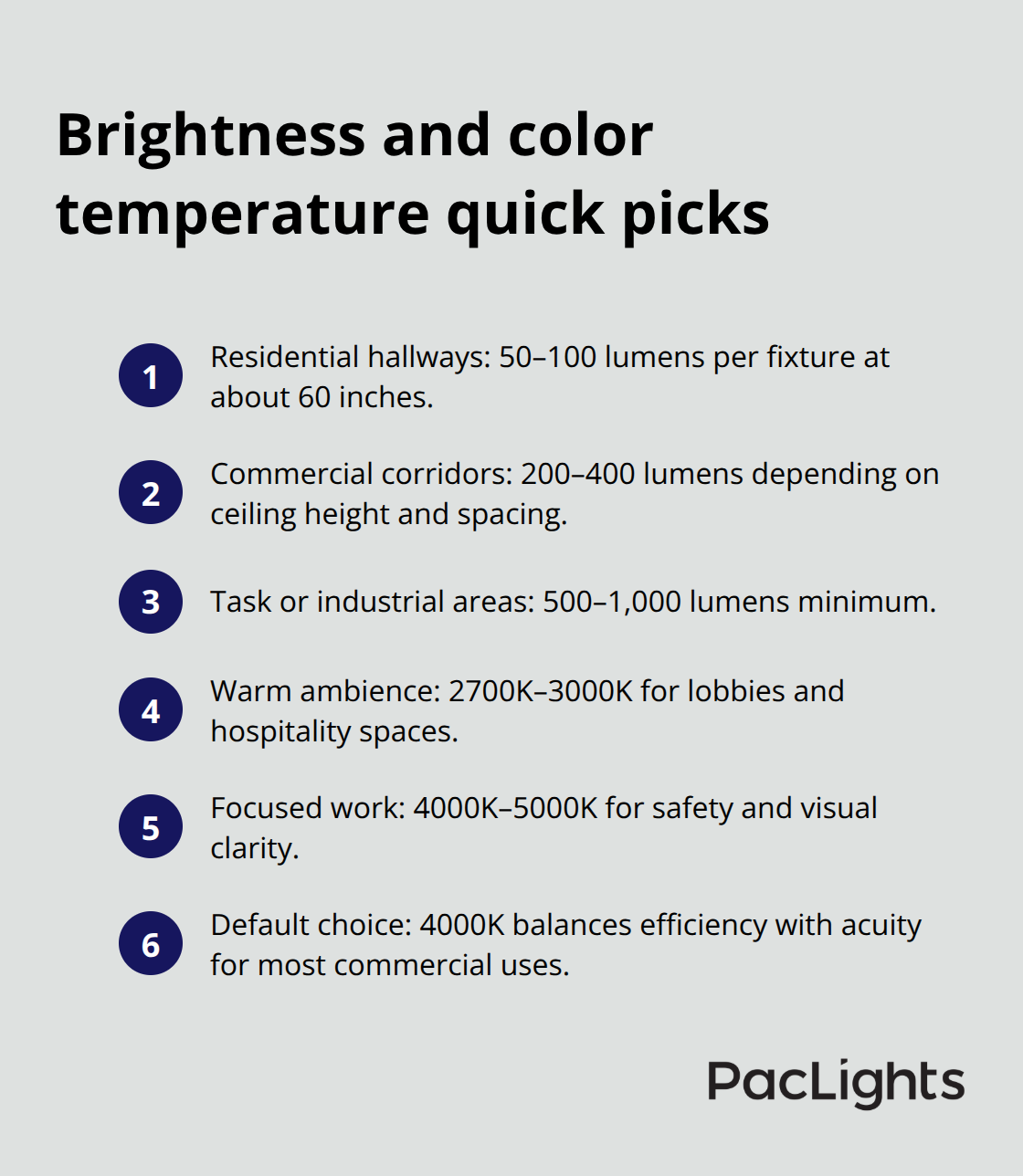
Brightness requirements depend entirely on function, and this is where most facility managers overshoot their needs. A residential hallway needs 50 to 100 lumens per fixture at 60 inches height, while a commercial corridor requires 200 to 400 lumens depending on ceiling height and spacing. Warehouses or industrial areas with task-specific lighting need 500 to 1,000 lumens minimum, but exceeding this wastes energy without improving visibility. Color temperature selection is equally specific: 2700K to 3000K creates warm, comfortable spaces suitable for lobbies or hospitality settings, while 4000K to 5000K supports focus and safety in work areas. Try 4000K as the standard for commercial and industrial facilities because it balances energy efficiency with visual acuity without the eye strain that cooler 5000K fixtures sometimes cause during extended shifts.
Mounting Height and Spacing Strategies
Mounting height and spacing directly affect illumination uniformity and glare perception. Wall sconces mounted at 60 to 72 inches from the floor work well for general ambient lighting, but task-focused fixtures like reading lights or workbench illumination benefit from lower mounting at 48 to 54 inches. Hallways and corridors perform best with fixtures spaced 6 to 8 feet apart, though this varies with ceiling height and wall reflectance-darker walls need closer spacing. Hardwired installations offer cleaner aesthetics and eliminate plug-in cord hazards, making them preferable for commercial spaces, while plug-in options provide flexibility in temporary or retrofit scenarios.
Dimming Compatibility and Energy Control
Dimmer compatibility matters significantly for energy savings and operational flexibility. Fixtures with 0-10V dimming or smart controls allow you to reduce output during low-occupancy periods, cutting energy consumption by 30 to 50 percent compared to full-brightness operation. Verify that your fixture’s LED driver supports dimming before purchase-not all LED drivers are compatible with standard wall dimmers, and incompatible combinations cause flicker or premature failure. Once you confirm that your fixtures meet these environmental and functional requirements, the next step involves calculating the actual energy savings and long-term cost benefits that proper specification delivers.
Energy Efficiency and Cost Savings with Cylinder Wall Lights
LED Power Consumption and Immediate Savings
LED cylinder wall fixtures consume 75 to 80 percent less power than incandescent equivalents while delivering identical or superior brightness, directly lowering your electricity bills from day one. A 10-watt LED cylinder producing 800 lumens replaces a 50-watt incandescent fixture without any compromise on output or color quality. Scale this across a 50-fixture installation in a commercial hallway, and you cut energy consumption by roughly 2,000 watts continuously during operating hours. If your facility runs these fixtures 12 hours daily at a regional average of $0.14 per kilowatt-hour, that amounts to approximately $1,050 in annual savings from LED conversion alone. The math improves further when you factor in reduced cooling costs from lower heat generation-LED fixtures produce minimal thermal load compared to incandescent sources, which means your HVAC system works less during warm months. This secondary benefit often adds another 10 to 15 percent to total energy savings in climate-controlled facilities.
Extended Lifespan Eliminates Replacement Cycles
Lifespan differences between LED and traditional sources create the real financial advantage over multi-year periods. Standard incandescent bulbs last 1,000 to 2,000 hours before failure, requiring replacement every few months in continuously operated fixtures. LED sources rated for 25,000 to 50,000 hours eliminate bulb replacement for 5 to 10 years depending on operating hours, drastically reducing maintenance labor and material costs. A facility manager spending 20 hours annually replacing burned-out bulbs across 100 fixtures can eliminate that work entirely with LED conversion-that’s roughly $500 to $1,000 in annual labor savings for a mid-sized commercial installation.
Motion Sensors Reduce Energy Consumption
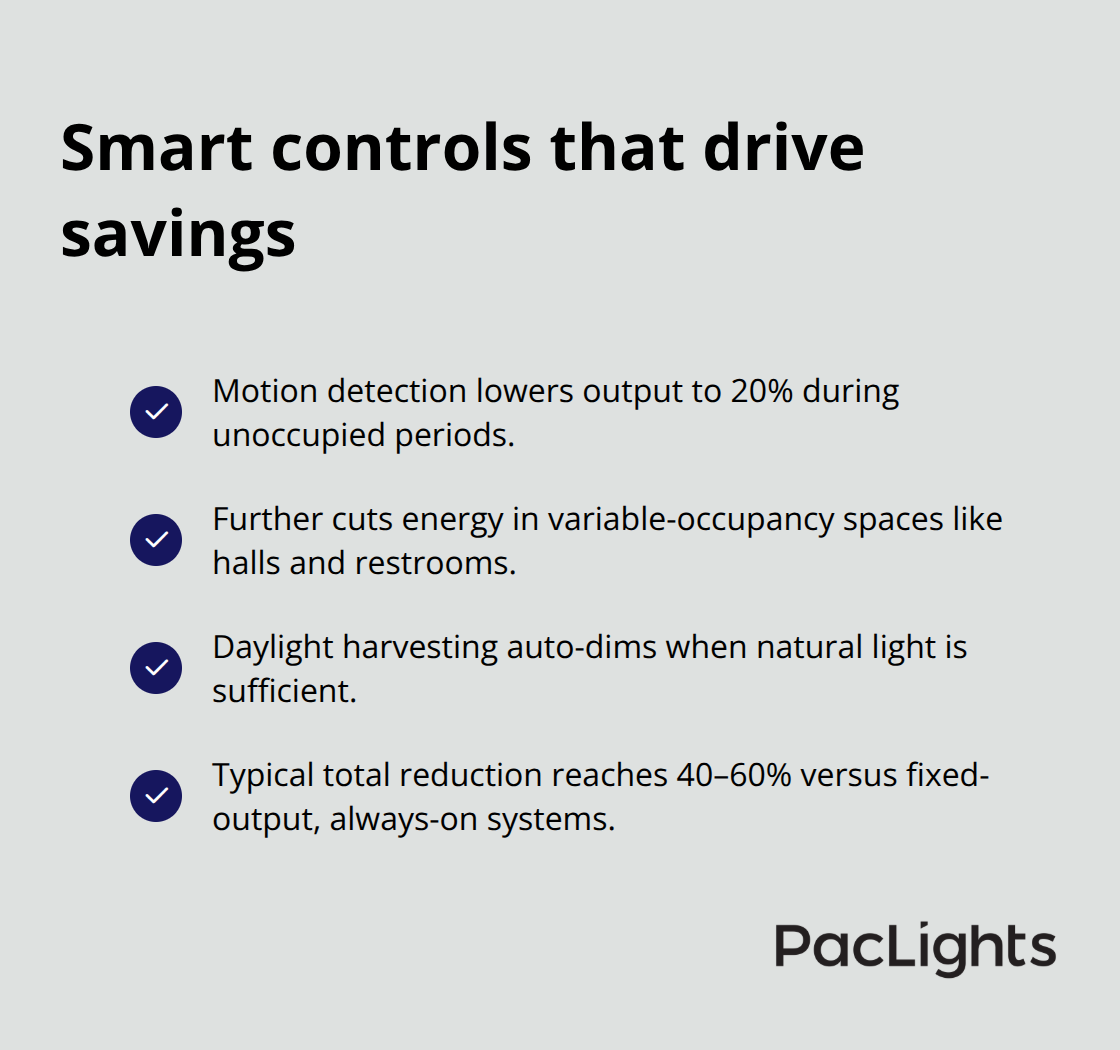
Motion sensors and daylight harvesting controls amplify these benefits substantially. Fixtures equipped with motion detection reduce output to 20 percent brightness during unoccupied periods, cutting energy use by an additional 70 to 80 percent in spaces with variable occupancy like hallways, restrooms, or storage areas. Daylight harvesting automatically dims fixtures when sufficient natural light is available, providing similar reductions in perimeter offices or corridors adjacent to windows. Facilities implementing these controls typically achieve total energy reductions of 40 to 60 percent compared to fixed-output, always-on cylinder lighting systems.
Control Compatibility and System Integration
Verify that your chosen fixtures support 0-10V dimming protocols or wireless control compatibility before purchase-this ensures you can retrofit sensors and controllers without replacing the fixtures themselves. PacLights offers advanced lighting controls such as networked lighting controls to further optimize energy use alongside motion and daylight control options. The combination of LED efficiency, extended lifespan, and intelligent controls transforms cylinder wall lighting from a recurring expense into a one-time investment that pays for itself within 2 to 3 years while cutting operational costs for the remainder of the fixture’s 10-plus year working life.
Final Thoughts
Cylinder wall light fixtures succeed when material durability, appropriate brightness, and energy-efficient LED technology align from the start. Aluminum with powder coating, stainless steel, and UV-stabilized diffusers aren’t premium upgrades-they’re baseline requirements for outdoor installations that perform as promised. Thermal management through proper housing design and ventilation prevents the premature LED failures that plague poorly specified systems, while motion sensors and daylight controls cut energy consumption by 40 to 60 percent compared to older fixed-output installations.
A 50-fixture commercial installation saves approximately $1,050 annually in electricity costs alone, with additional HVAC savings in climate-controlled spaces. The elimination of bulb replacement cycles frees maintenance staff from routine tasks and redirects labor toward higher-value work. Request technical datasheets from manufacturers that detail material grades, thermal specifications, and environmental ratings-vague marketing language masks poor durability and wastes your budget on fixtures that fail prematurely.
We at PacLights understand that lighting decisions affect both your budget and facility operations. Our team provides free lighting layout designs and ROI assessments to help you make informed decisions backed by actual performance data for your specific space. Start with a professional assessment of your current system, then move forward with confidence that your investment will deliver reliable performance and measurable cost savings for years to come.
Disclaimer: PacLights is not responsible for any actions taken based on the suggestions and information provided in this article, and readers should consult local building and electrical codes for proper guidance.