

Ceiling mounted linear LED lighting transforms commercial and residential spaces with clean, efficient illumination. These fixtures offer superior energy savings compared to traditional fluorescent systems.
We at PacLights see businesses reduce lighting costs by up to 60% after switching to linear LED solutions. The right fixture selection depends on your specific space requirements and performance needs.
Which Linear LED Fixture Type Works Best
Linear LED fixtures come in three primary configurations that serve different architectural needs. Surface-mounted fixtures attach directly to ceiling surfaces and work best in spaces with low ceilings or exposed structural elements. These units typically measure 4 to 8 feet in length and provide direct downward illumination with minimal ceiling penetration required.
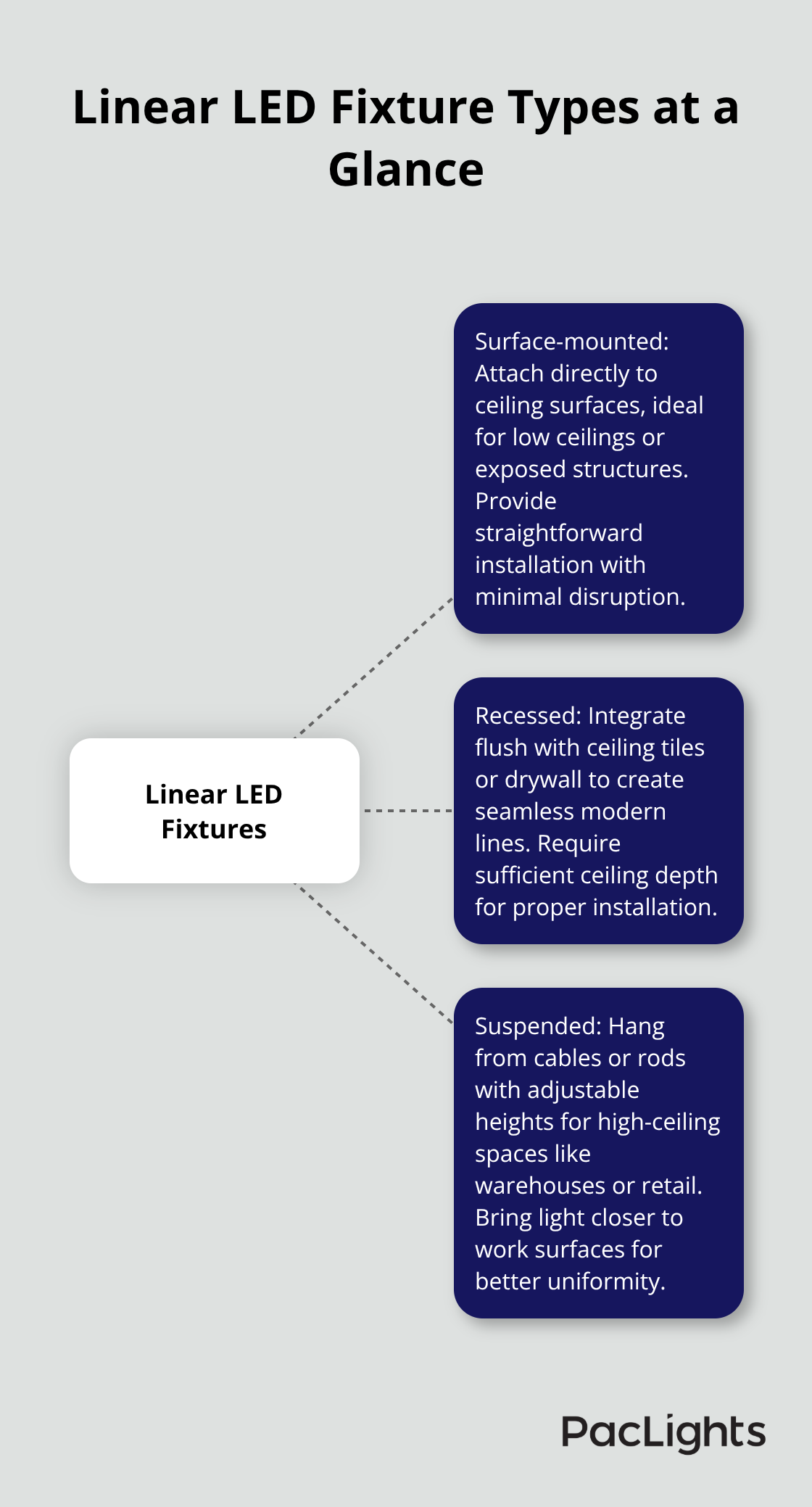
Recessed linear fixtures integrate flush with ceiling tiles or drywall, which creates seamless lines that complement modern architectural designs. These require ceiling depths of at least 6 inches for proper installation. Suspended linear fixtures hang from cables or rods and offer adjustable height positions ideal for high-ceiling environments like warehouses or retail spaces.
Installation Requirements Shape Your Options
Installation complexity varies significantly between methods. Surface-mounted fixtures require basic electrical connections and mechanical attachment to structural members, which makes them suitable for retrofit projects. Recessed installations demand ceiling modifications and precise measurements to align with architectural grids (most commercial recessed systems follow standard 2×2 or 2×4 foot patterns).
Suspended fixtures need adequate structural support for cable attachment points and require careful planning for optimal height positions. Professional installation becomes necessary when you deal with high ceilings above 12 feet or when you integrate with existing control systems.
Performance Specifications Drive Selection Decisions
Lumen output determines brightness levels, with typical linear LEDs that produce 3,000 to 5,000 lumens per 4-foot fixture. Color temperature affects workspace productivity, with 4000K to 5000K that provides optimal visibility for office environments according to the Illuminating Engineering Society. Efficacy ratings above 100 lumens per watt indicate superior energy performance.
Controls add approximately 15% to fixture costs but enable significant energy savings through automated schedules. L70 ratings that exceed 50,000 hours work best for commercial applications to minimize maintenance disruptions (this specification indicates when LED output drops to 70% of initial levels).
These technical specifications directly impact how you plan your space layout and calculate total project costs.
What Space Factors Drive Your Linear LED Selection
Room dimensions and ceiling height directly impact fixture performance and energy efficiency. Spaces below 10 feet require surface-mounted units to avoid head clearance issues, while areas above 14 feet benefit from suspended fixtures that bring light closer to work surfaces. The U.S. Department of Energy reports that proper fixture placement reduces energy consumption by 20% compared to poorly planned installations.

Calculate 30 to 50 footcandles for general office work and 75 to 100 footcandles for detailed tasks like drafting or inspection work according to Illuminating Engineering Society standards. Linear fixtures should span the room length with units placed every 8 to 12 feet for uniform coverage. Wider spaces create dark zones that force higher wattage compensations and increased costs.
Ceiling Grid Alignment Affects Installation Costs
Standard commercial ceilings use 2×2 or 2×4 foot grid patterns that determine fixture compatibility and labor requirements. Fixtures that align with existing grids reduce installation time by 40% compared to custom layouts that require structural modifications. Retrofits work best when new LED dimensions match existing fluorescent housings to minimize ceiling work and electrical changes.
Light Distribution Patterns Match Application Needs
Direct distribution patterns concentrate 90% of light output downward for task-oriented environments like manufacturing floors and laboratories. Indirect fixtures bounce light off ceilings to create softer illumination that works well in conference rooms and lobbies but require 25% higher wattage for equivalent brightness levels. Mixed distribution combines both approaches and provides balanced illumination for open office environments where you need both ambient and task light without harsh shadows or glare points.
Energy Performance Calculations
Energy payback periods average 2.3 years for LED conversions in commercial spaces when you select fixtures with efficacy ratings above 120 lumens per watt. Occupancy controls reduce runtime by 30% during off-peak hours (this feature alone can justify the additional control costs within 18 months). These performance metrics become the foundation for calculating your total project investment and long-term operational savings.
How Should You Install Linear LED Fixtures
Professional installation becomes mandatory for projects with electrical modifications, high ceilings above 12 feet, or integration with building management systems. Licensed electricians reduce installation time by 35% and prevent costly code violations that delay project completion according to the National Electrical Contractors Association. DIY approaches work only for surface-mounted fixtures in spaces below 10 feet with existing electrical infrastructure and basic mechanical skills.
Proper Fixture Placement Maximizes Performance
Install linear fixtures every 8 to 10 feet for uniform illumination in office environments and every 6 to 8 feet for task-intensive areas like manufacturing floors. The Illuminating Engineering Society recommends maximum spacing ratios of 1.2 times the mounting height for direct fixtures and 1.5 times for indirect units to prevent dark zones between fixtures. Position fixtures parallel to the longest room dimension and maintain 2 to 3 feet from walls to avoid harsh shadows on vertical surfaces.

Height and Clearance Requirements
Suspended fixtures require 18 to 24 inches minimum clearance from ceilings for proper heat dissipation and maintenance access. Mount fixtures at heights that provide optimal light distribution without creating glare issues for occupants. Standard office installations work best with fixtures positioned 8 to 10 feet above floor level, while warehouse applications may require heights up to 20 feet depending on rack configurations.
Maintenance Schedules Extend Fixture Lifespan
Clean fixture lenses every 6 months in standard environments and quarterly in dusty conditions to maintain 95% light output levels. Replace drivers after 50,000 hours of operation or when controls become erratic (this typically occurs 10,000 hours before LED degradation). Driver replacement costs average $45 per fixture but prevents complete unit replacement that costs $180 per fixture.
Performance Monitoring Prevents Failures
Track runtime hours through building automation systems to predict maintenance needs and order replacement components before failures occur. Schedule maintenance contracts for facilities with more than 50 fixtures to prevent unexpected failures and maintain warranty coverage. Monitor light output levels annually to identify fixtures that require lens cleaning or component replacement before performance drops below acceptable levels.
Final Thoughts
Ceiling mounted linear LED lighting selection requires you to balance fixture type, space requirements, and performance specifications. Surface-mounted units work best for low ceilings, while recessed fixtures provide seamless integration and suspended options suit high-ceiling environments. Proper spacing every 8 to 10 feet prevents dark zones and maximizes energy efficiency.
Professional installation becomes necessary for complex electrical work and high-ceiling applications. Licensed electricians reduce installation time by 35% and prevent code violations that delay projects. DIY approaches only work for basic surface-mounted installations in accessible locations.
Energy payback periods average 2.3 years when you select fixtures with efficacy ratings above 120 lumens per watt (this metric directly impacts your long-term operational savings). Regular maintenance every 6 months maintains 95% light output and extends fixture lifespan beyond 50,000 hours. PacLights provides comprehensive linear LED solutions that help reduce operational costs and carbon footprints for commercial and industrial facilities.
Disclaimer: PacLights is not responsible for any actions taken based on the suggestions and information provided in this article, and readers should consult local building and electrical codes for proper guidance.