

Low ceilings don’t have to mean poor lighting. A recessed surface mount downlight gives you professional illumination without eating into your overhead space, making it the smart choice for warehouses, retail stores, and offices where every inch counts.
At PacLights, we’ve seen firsthand how the right fixture transforms tight spaces. This guide walks you through everything you need to know to get it right.
What Are Recessed Surface Mount Downlights
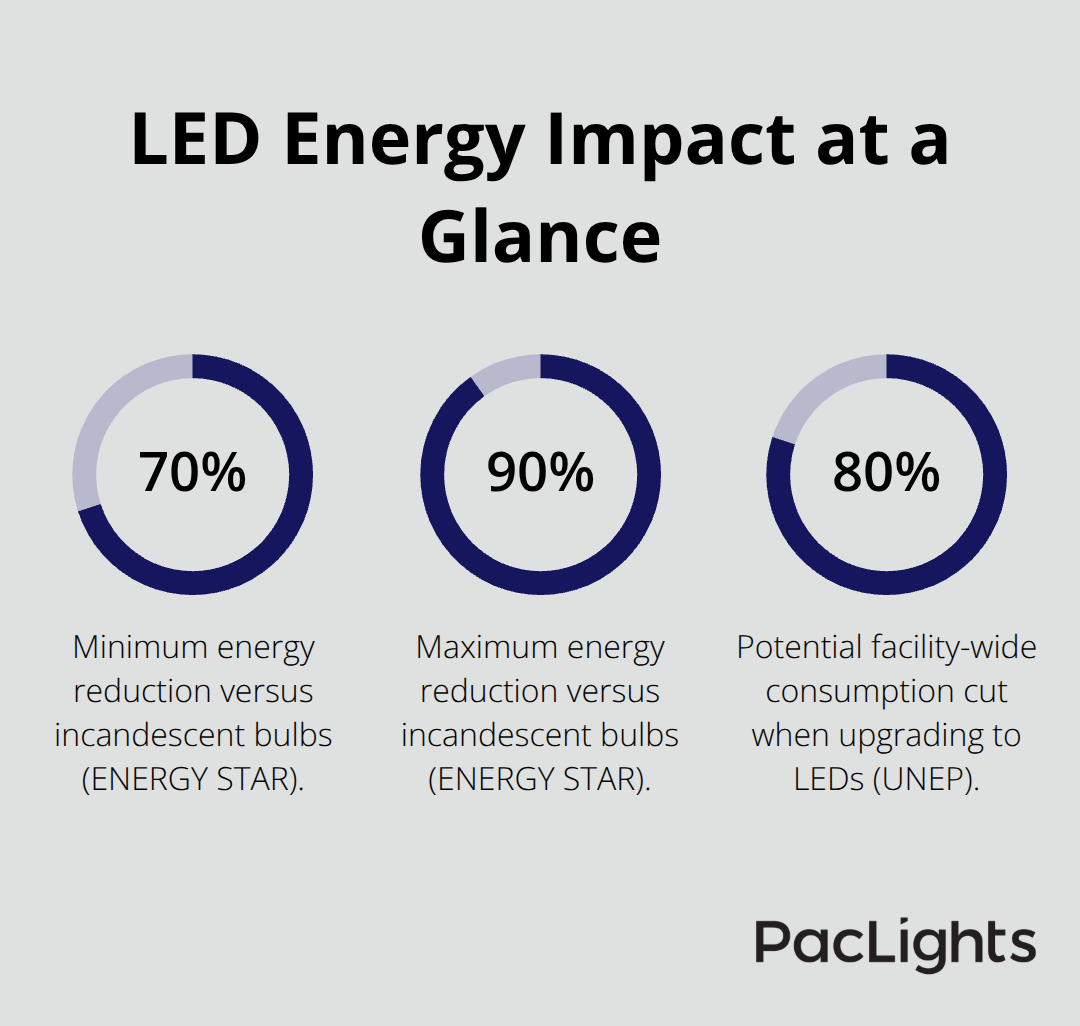
Recessed surface mount downlights sit directly on your ceiling rather than requiring a recessed can housing cut into the structure. The fixture mounts flush against the ceiling surface, with light output directed downward through a lens or reflector. Inside, an LED driver converts standard electrical current into the precise voltage and current the LED needs, while a heat sink manages thermal buildup to extend the fixture’s operational life. This design eliminates the need for deep cavity space behind your ceiling, making installation feasible in buildings where traditional recessed lights simply won’t fit. The ENERGY STAR LED recessed downlight program notes that these fixtures use 70 to 90 percent less energy than incandescent bulbs while lasting roughly 15 times longer, which directly translates to lower electricity bills and fewer replacement cycles across your facility.
How Installation Differs from Traditional Recessed Lights
Traditional recessed downlights require cutting large holes into your ceiling and installing a housing can that extends several inches above or below the ceiling plane. Surface mount versions skip this step entirely. You mark your fixture locations, run electrical wiring to each point, and mount the fixture directly to the ceiling surface with a bracket and fasteners. No ceiling demolition, no complex framing adjustments, and no risk of damaging existing structural elements occur with this approach. For retrofit projects in warehouses or retail spaces, this matters enormously because you avoid the downtime and labor costs associated with major ceiling work. Installation time drops substantially, and electricians unfamiliar with complex recessed housing installation face a gentler learning curve. The fixture’s slim profile (often as shallow as 1.5 inches) means even facilities with extremely tight plenums can add professional lighting without costly structural modifications.
Why Tight Ceilings Demand This Approach
Spaces with limited overhead clearance represent the core use case for surface mount downlights. Older warehouses, retrofit projects, and buildings with low-hanging mechanical systems frequently lack the 6 to 8 inches of cavity space that traditional recessed fixtures demand. Fortune Business Insights reports the global LED lighting market will grow from USD 70.12 billion in 2022 to USD 126.96 billion by 2030, driven largely by demand for compact, efficient solutions that fit existing infrastructure. Surface mount downlights deliver brightness levels of 700 lumens or higher while consuming only 6 to 15 watts, compared with 60 to 100 watts for incandescent equivalents. You get effective illumination without sacrificing headroom or requiring structural work that extends project timelines. For commercial facilities, this efficiency gain translates to measurable cost reduction from day one.
What Happens Next in Your Installation
Understanding how these fixtures work sets the stage for proper installation. The next section covers the specific advantages they bring to commercial spaces and how they perform under real-world conditions in your facility.
Advantages of Recessed Surface Mount Downlights for Commercial Spaces
Energy Efficiency and Cost Savings
Surface mount downlights cut your electricity consumption dramatically compared to older lighting technologies. ENERGY STAR data shows LED recessed downlights consume 70 to 90 percent less energy than incandescent bulbs, and because these fixtures typically draw only 6 to 15 watts each, a warehouse or retail space achieves full illumination at a fraction of previous operating costs. When you retrofit a 10,000-square-foot facility with 40 surface mount fixtures replacing 60-watt incandescent downlights, you eliminate roughly 2,400 watts of continuous draw. Over a year, that translates to measurable reductions in your energy bill and immediate payback on fixture investment. The United Nations Environment Programme Enlighten Initiative reports that lighting accounts for approximately 15 percent of global electricity consumption, and upgrading to LED solutions can trim consumption by up to 80 percent across an entire facility.
For commercial operators, this means lower monthly utility expenses and improved bottom-line profitability without compromising illumination quality.
Installation Speed and Labor Efficiency
Surface mount fixtures eliminate the ceiling demolition and complex housing installation that traditional recessed options demand. You avoid the associated labor costs that extend timelines by weeks. Electricians mount these fixtures to existing ceiling surfaces in hours rather than days, meaning your facility experiences minimal operational disruption during upgrades. This speed advantage matters most in retail environments where every hour of downtime affects sales, or in warehouses where production schedules cannot tolerate extended construction work. The straightforward mounting process reduces the skill level required, allowing your maintenance team to handle future replacements without specialized training.
Design Flexibility Across Your Facility
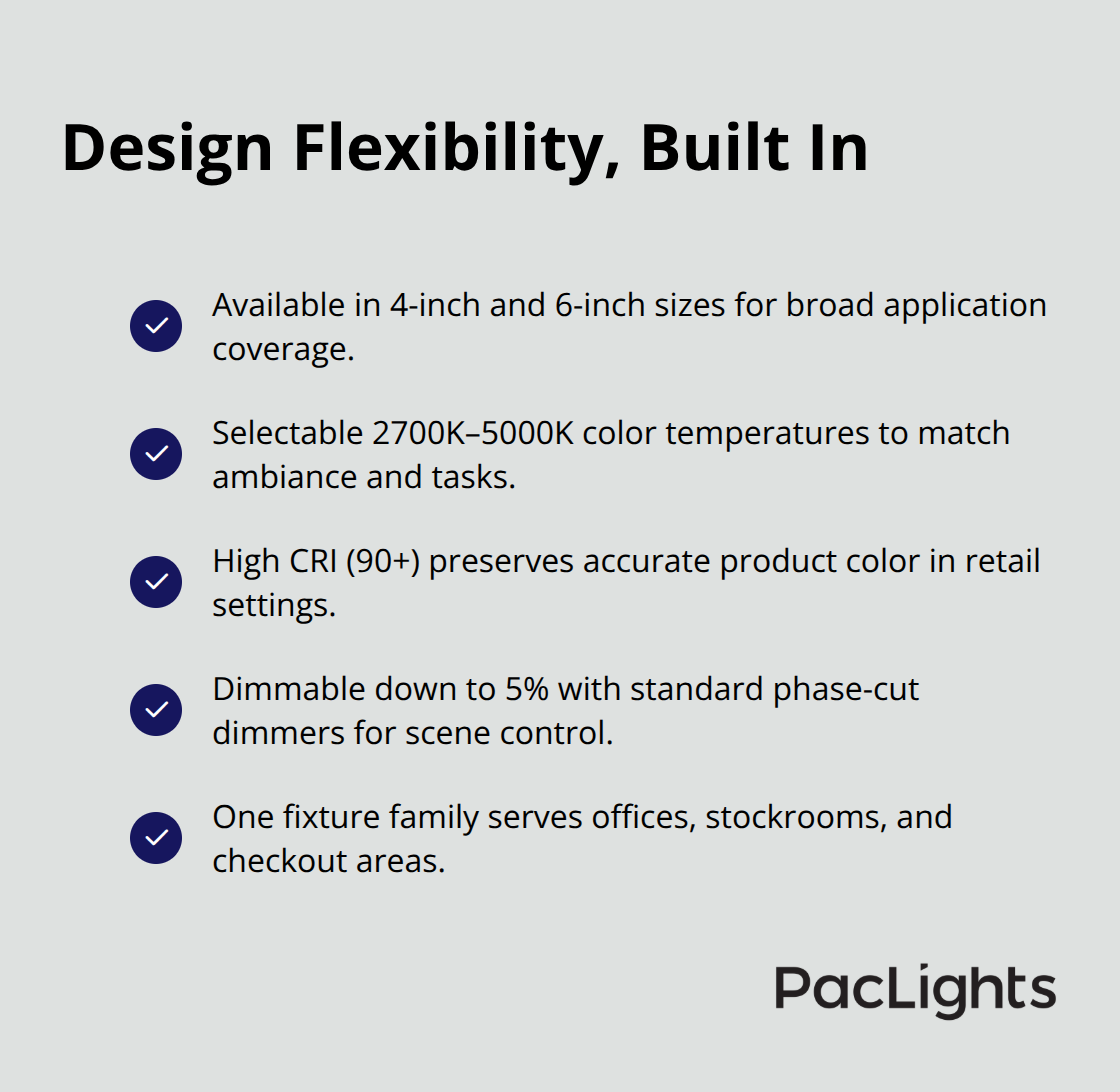
Surface mount downlights come in 4-inch and 6-inch sizes with selectable color temperatures ranging from 2700K to 5000K, so you match warm ambient light in office areas with crisp 4000K illumination in task-intensive zones like stockrooms or checkout areas. High color rendering index ratings of 90 or higher ensure accurate color perception in retail environments where product appearance directly influences purchasing decisions. Dimmable options that work down to 5 percent brightness with standard phase-cut dimmers give facility managers precise control over lighting scenes, adapting spaces for different times of day or operational needs without rewiring. This flexibility means a single fixture type solves multiple lighting challenges across your building, simplifying procurement and maintenance protocols while delivering professional results in spaces where traditional recessed lighting simply cannot fit.
Why Installation Challenges Disappear
The compact design (often as shallow as 1.5 inches) eliminates the structural modifications that traditional recessed fixtures require. You avoid damage to existing ceiling systems, mechanical infrastructure, or fire-rated assemblies that complicate retrofit work. Facilities with low-hanging ductwork, piping, or cable trays that would normally block recessed housing installation now accommodate surface mount fixtures without rerouting expensive mechanical systems. This advantage transforms projects that seemed impossible into straightforward upgrades, opening lighting improvements to buildings previously considered unsuitable for professional illumination solutions.
The combination of energy savings, installation speed, and design flexibility positions surface mount downlights as the practical solution for commercial spaces facing tight ceiling constraints. Understanding these advantages sets the foundation for recognizing the installation mistakes that undermine performance and how to prevent them in your facility.
Common Installation Mistakes and How to Avoid Them
Spacing Fixtures Too Far Apart
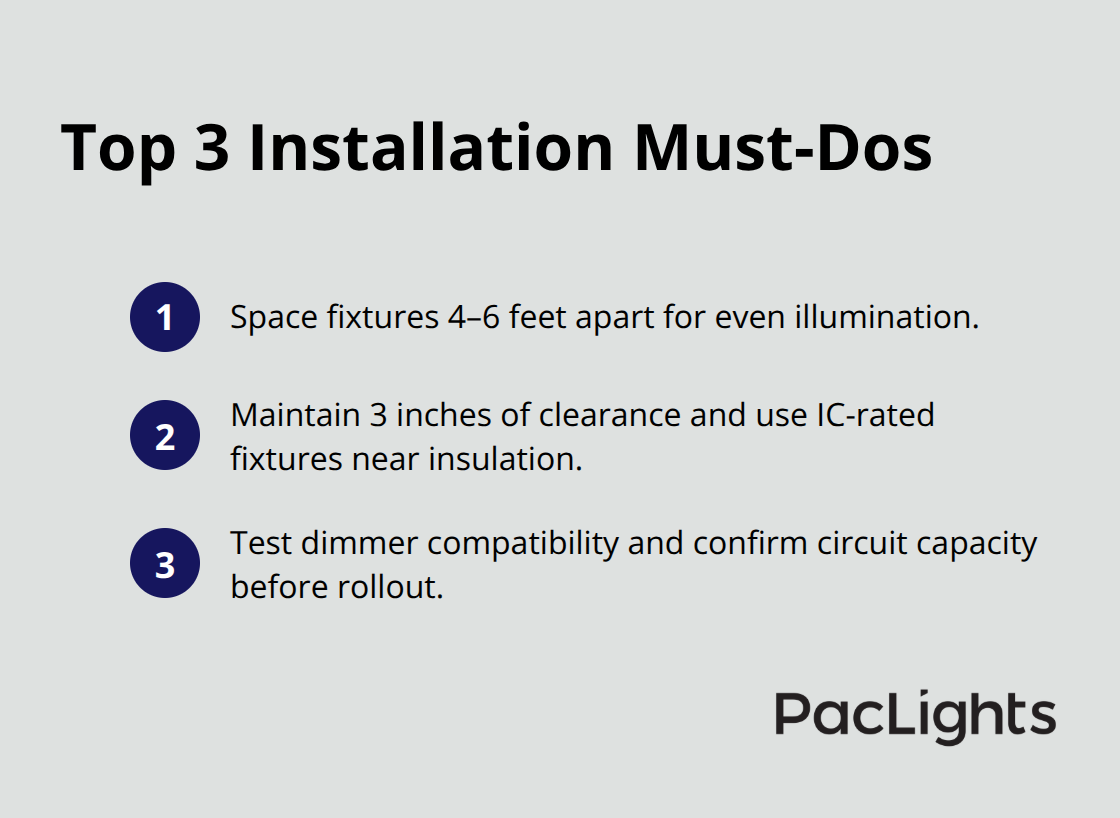
Spacing fixtures too far apart remains the most common error in tight-ceiling installations. The IES (Illuminating Engineering Society) recommends spacing recessed downlights approximately 4 to 6 feet apart to achieve even illumination without bright spots or dark zones, yet many facility managers space them 8 to 10 feet apart to reduce fixture count and upfront costs. This decision backfires immediately. Uneven lighting creates shadows that make spaces feel cramped and unprofessional, customers notice the poor quality in retail environments, and workers in warehouses struggle with visibility in darker zones.
When you calculate the actual cost difference, purchasing two additional 15-watt fixtures costs roughly $400 to $600, while the energy savings from proper spacing and avoiding task lighting complaints pays back that investment within months. Measure your room dimensions first, divide by 5 feet (the midpoint of the recommended range), and round up. A 20-by-30-foot retail space needs a minimum of 24 fixtures spaced on a 5-foot grid, not the 12 to 16 fixtures many installers propose.
Managing Heat to Extend Fixture Life
Thermal management directly affects how long your fixtures actually last. LED drivers generate heat, and if that heat cannot escape into the surrounding air, the driver fails prematurely. The DOE SSL Program emphasizes that aluminum housings and proper heat sinks extend LED life significantly, yet installers frequently mount fixtures directly against insulation or in sealed ceiling plenums without ventilation gaps. Your 50,000-hour rated fixture might deliver only 30,000 hours of actual service under poor thermal conditions.
Leave at least 3 inches of clearance around each fixture if insulation is present, verify the fixture carries an IC rating (suitable for contact with insulation), and ensure your ceiling plenum has adequate air circulation. These three steps prevent premature driver failure and protect your investment in professional lighting infrastructure.
Verifying Dimmer Compatibility Before Installation
Compatibility issues emerge when you retrofit existing dimmer systems without verifying driver specifications. Standard phase-cut dimmers work with most LED drivers, but some older TRIAC dimmers cause flicker or prevent smooth dimming below 20 percent brightness. Test your existing dimmer with a single fixture before committing to 20 or 30 installations. If flicker occurs, you need either a compatible 0-10V dimmer or an LED driver with advanced dimming circuitry.
Many facilities waste thousands retrofitting dimmer infrastructure when a $150 dimmer replacement solves the problem entirely. Verify your electrical circuit capacity as well-surface mount fixtures pull less power than traditional recessed lights, but a 15-amp circuit can safely support only 10 to 12 fixtures at full brightness depending on wire gauge and circuit length. Undersized circuits cause voltage drop that dims fixtures noticeably and stresses your electrical infrastructure.
Conclusion
Recessed surface mount downlights solve the problem that has blocked facility managers for years: how to deliver professional illumination in spaces where traditional fixtures simply cannot fit. These fixtures consume 70 to 90 percent less energy than incandescent bulbs, install without ceiling demolition, and deliver brightness levels of 700 lumens or higher from units as shallow as 1.5 inches. For warehouses, retail stores, and offices with tight overhead clearance, this represents a genuine shift in what becomes possible.
The real payoff emerges when you avoid the three installation mistakes covered earlier. Proper spacing at 4 to 6 feet apart creates even illumination that makes your space feel professional and functional. Adequate thermal management with IC-rated fixtures and proper clearance extends your 50,000-hour rated lifespan to its full potential rather than cutting it short. Verifying dimmer compatibility before installation prevents costly retrofits and flicker problems that frustrate both staff and customers.
A 10,000-square-foot facility retrofitting 40 fixtures eliminates roughly 2,400 watts of continuous electrical draw, translating to measurable reductions in monthly utility expenses and faster payback on your fixture investment. We at PacLights offer recessed surface mount downlights tailored to commercial and industrial facilities, with energy-efficient designs that reduce both costs and carbon footprints. Contact PacLights to explore how our lighting solutions transform facilities facing ceiling limitations into professionally illuminated environments that support your operations and bottom line.
Disclaimer: PacLights is not responsible for any actions taken based on the suggestions and information provided in this article, and readers should consult local building and electrical codes for proper guidance.