

Building owners face mounting pressure to reduce energy costs while improving occupant comfort. Traditional lighting systems waste up to 40% of their energy through inefficient controls and outdated technology.
We at PacLights help facility managers navigate the complex world of intelligent building systems for lighting. The right system can cut energy consumption by 50% while providing better lighting quality and automated controls.
What Makes Building Lighting Intelligent
Smart Sensors and Control Networks
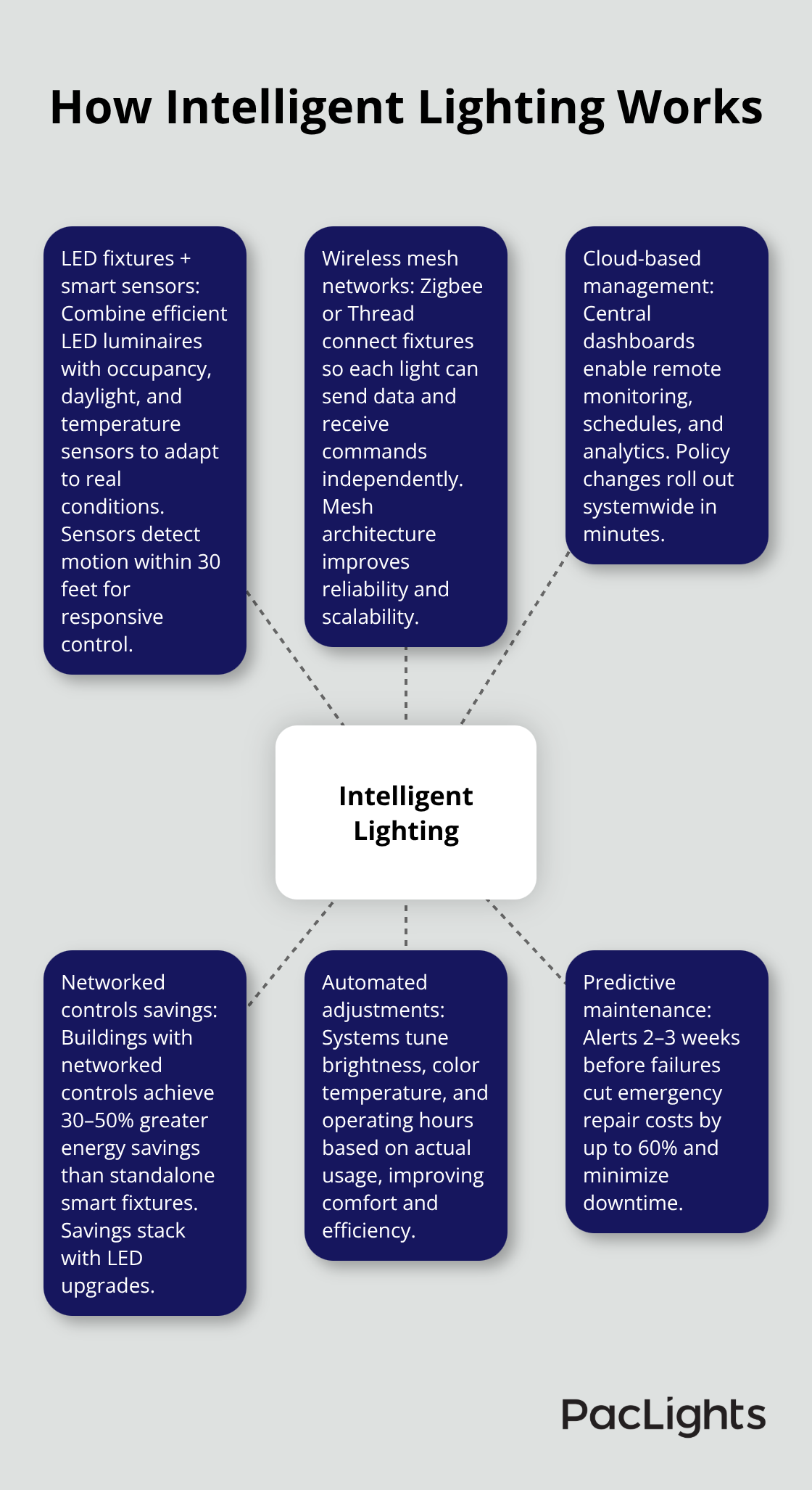
Intelligent building lighting systems combine LED fixtures with networked sensors, wireless controllers, and cloud-based management platforms. These systems use occupancy sensors that detect movement within 30 feet, daylight sensors that adjust brightness based on natural light levels, and temperature sensors that monitor environmental conditions.
The wireless mesh networks connect individual fixtures through Zigbee or Thread protocols. Each light communicates data and receives commands independently. McKinsey research shows that buildings with networked controls achieve 30-50% greater energy savings compared to standalone smart fixtures.
Advanced Data Analytics Transform Operations
Modern intelligent systems generate over 1,000 data points per fixture daily. They track energy consumption, occupancy patterns, and maintenance needs in real-time. JLL reports that 75% of facility managers struggle with budget constraints, which makes this operational data essential for cost management.
The systems provide predictive maintenance alerts 2-3 weeks before fixture failures occur. This capability reduces emergency repair costs by up to 60%. Traditional systems operate on fixed schedules with manual switches, while intelligent systems automatically adjust brightness, color temperature, and operational hours based on actual usage patterns.
Installation and Retrofit Advantages
Wireless systems reduce installation labor costs by 80% compared to hardwired controls (making retrofits financially viable for most commercial buildings). The distributed processing architecture allows individual zones to continue operations even when central controllers experience connectivity issues.
This architecture maintains consistent performance across the facility. The next consideration involves evaluating specific features that determine which system best fits your building’s operational requirements.
What Features Matter Most in Smart Lighting Selection
Energy Monitoring That Delivers Real Results
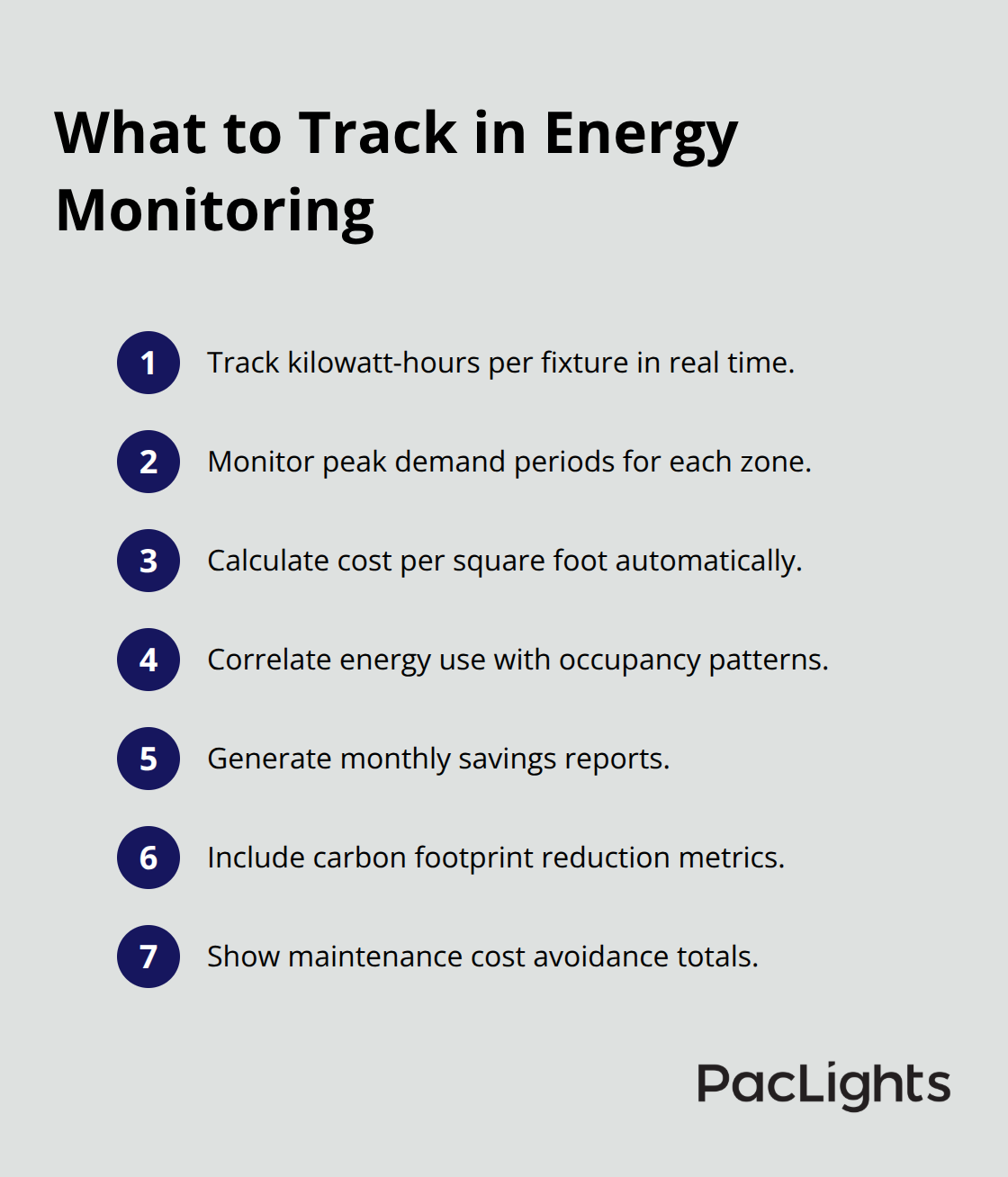
Smart lighting systems must provide granular energy tracking at the fixture level, not just zone-wide estimates. Systems that generate detailed consumption data enable facility managers to identify which areas waste the most energy. Buildings that use fixture-level monitoring achieve 15-20% additional savings beyond basic LED upgrades according to Department of Energy studies.
The system should track kilowatt-hours per fixture, peak demand periods, and cost per square foot in real-time. Advanced systems correlate energy use with occupancy patterns to reveal opportunities for schedule optimization. Look for platforms that generate automated reports which show monthly savings, carbon footprint reduction, and maintenance cost avoidance.
Integration Capabilities That Connect Systems
The lighting system must communicate with existing building management systems through standard protocols like BACnet or Modbus. Buildings with integrated systems reduce operational costs by 25% compared to standalone lighting controls. Thread and Matter protocols offer the strongest future-proofing as they support direct internet connectivity and cross-brand compatibility.
Wireless systems that use Zigbee mesh networks handle up to 65,000 devices per network (supporting massive facility expansion). Over-the-air update capability prevents obsolescence as it adds new features without hardware replacement.
Scalability Options for Future Growth
Choose systems that support both centralized and distributed processing to maintain operations during network outages. The platform should accommodate additional sensor types like air quality monitors and people counters as building intelligence requirements evolve. Systems with modular architecture allow facility managers to add zones and features incrementally without complete system replacement.
Wireless controls facilitate retrofit scenarios better than wired alternatives, which makes upgrades simpler and less invasive. The next step involves understanding how to implement these systems effectively while maximizing their operational benefits.
How to Execute Smart Lighting Implementation
Start with Professional Energy Assessment
Facility managers must conduct comprehensive assessments before they select intelligent systems. The assessment should measure current energy consumption per square foot, identify fixtures that operate beyond their rated life, and document existing control infrastructure. Professional auditors use calibrated light meters to measure foot-candle levels throughout the building and compare them against IES standards for each space type.
Buildings that skip this assessment phase waste 20-30% of their smart lighting investment on unnecessary upgrades (according to Lawrence Berkeley National Laboratory research). The audit should include a detailed fixture inventory, electrical load analysis, and occupancy pattern documentation across all zones.
Choose Implementation Partners Carefully
Certified lighting professionals reduce project delays by 40% and prevent costly specification errors. Look for contractors with NCQLP certification and specific experience in your building type. Healthcare facilities require different expertise than warehouses or office buildings.

The contractor should provide detailed reports that verify sensor calibration, network connectivity, and integration with existing building systems. Demand references from at least three similar projects completed within the past two years. Poor installation quality causes 60% of smart lighting system failures within the first year.
Plan Staff Training Requirements
Staff training requirements vary significantly between systems. Some platforms need 40 hours of initial training while others require only 8 hours for basic operation and troubleshooting. The training should cover system diagnostics, sensor adjustment procedures, and integration with existing building management platforms.
Facility teams must understand how to interpret energy reports, adjust occupancy sensitivity settings, and perform basic maintenance tasks. Systems with intuitive interfaces reduce ongoing training costs and minimize operational errors that can compromise energy savings.
Final Thoughts
Intelligent building systems for lighting deliver measurable benefits that extend far beyond simple energy reduction. Buildings that implement comprehensive smart lighting achieve 50-75% energy savings while they improve occupant comfort through automated controls and tunable white lighting. The typical ROI period ranges from 18 months to 3 years, with additional HVAC savings of 15-30% due to reduced heat load from efficient fixtures.
The data analytics capabilities transform facility operations as they provide real-time insights into space utilization, occupancy patterns, and predictive maintenance needs. This operational intelligence reduces emergency repair costs by 60% and enables proactive facility management decisions. Professional energy assessments help building owners identify the highest-impact upgrade opportunities (while certified contractors provide expertise for specific building types and operational requirements).
We at PacLights provide comprehensive lighting solutions that include LED fixtures with optional daylight and motion controls, plus advanced networked systems. Our team offers lighting layout designs and ROI assessments to help facility managers make informed decisions about their intelligent lighting investments. Staff training investments pay dividends through proper system operation and maintenance across all facility types.
Disclaimer: PacLights is not responsible for any actions taken based on the suggestions and information provided in this article, and readers should consult local building and electrical codes for proper guidance.