

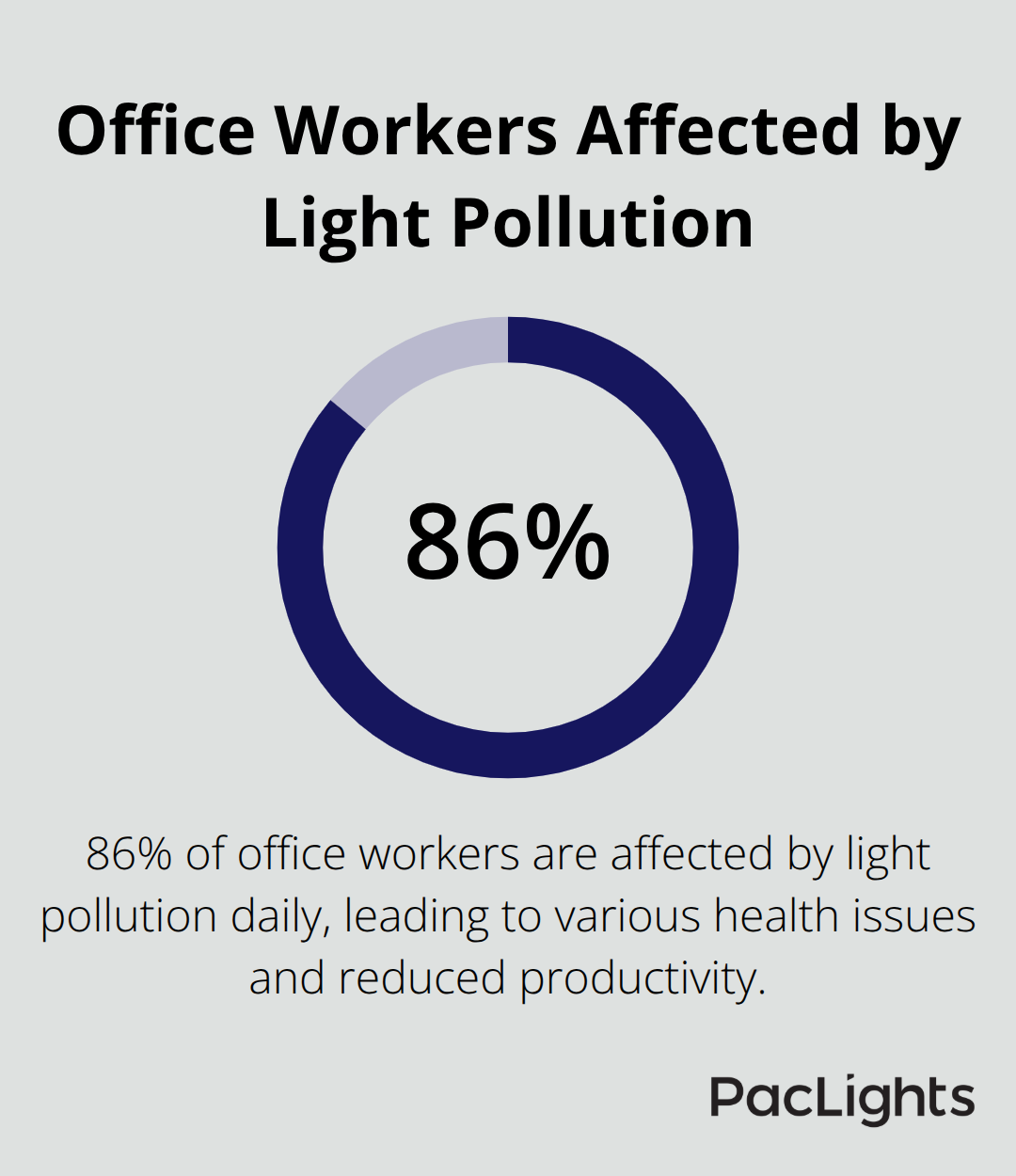
Office light pollution affects 86% of office workers daily, leading to eye strain, headaches, and reduced productivity. Poor lighting design wastes energy while harming employee wellbeing.
We at PacLights see companies struggling with outdated fluorescent systems and excessive glare from windows. The solution involves strategic lighting upgrades and smart controls.
This guide shows you how to identify problem areas and implement practical solutions that improve both worker health and energy efficiency.
What Causes Office Light Pollution
Office light pollution stems from three primary sources that plague modern workplaces. Excessive artificial light creates over-illumination when spaces receive 50% more light than needed, while poor fixture placement generates harsh glare that forces employees to squint and strain their eyes throughout the day. Light trespass occurs when bright lights spill into areas where they serve no purpose, creating visual chaos and disrupting natural light patterns.
The Hidden Health Crisis in Your Office
Workers exposed to poor office light experience an 84% increase in headaches, eyestrain, and blurred vision according to Cornell University research. Northwestern Medicine found that employees with limited natural light exposure sleep 46 minutes less per night, directly impacting their cognitive performance and decision-making abilities the following day. The University of Oregon discovered that workers in poorly lit environments take 6.5% more sick leave, costing companies thousands in lost productivity and replacement staff.
Energy Waste That Drains Your Budget
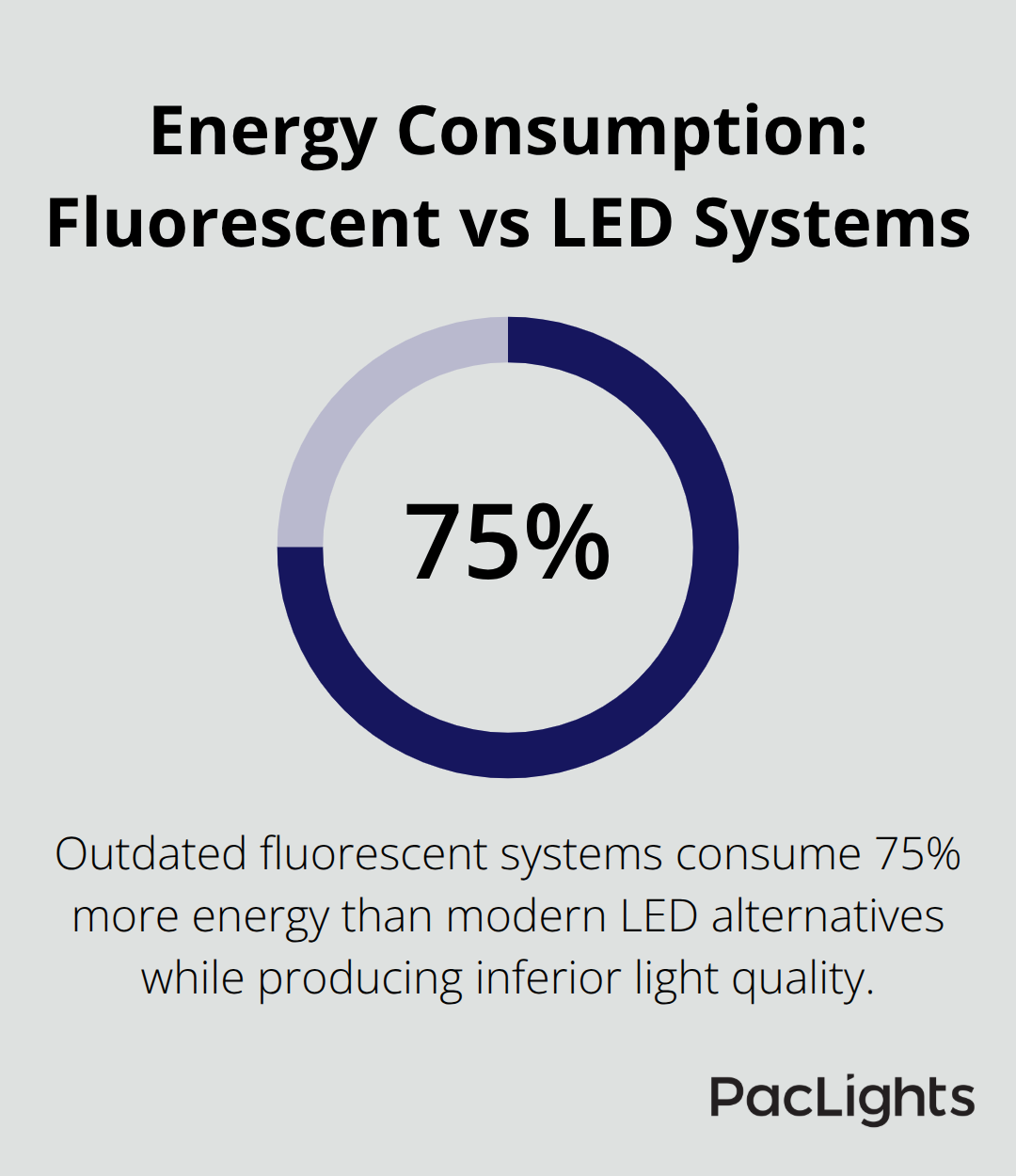
Poorly designed light systems waste 30-50% of energy consumption in typical office buildings. Over-illuminated spaces burn through electricity costs while contributing nothing to productivity or comfort. Outdated fluorescent systems consume 75% more energy than modern LED alternatives while producing inferior light quality that harms employee wellbeing. Smart controls can reduce energy usage by up to 60% when properly implemented (yet most offices still operate with basic on-off switches that ignore occupancy patterns and daylight availability).
Common Sources of Light Problems
Fluorescent fixtures create the most widespread issues in office environments. These systems produce harsh, flickering light that strains eyes and disrupts natural circadian rhythms. Unshielded windows allow excessive glare during peak daylight hours, forcing workers to adjust their screens and squint constantly. Task lights positioned incorrectly cast shadows on work surfaces, creating uneven illumination that reduces visual comfort and accuracy.
Now that you understand the root causes of office light pollution, the next step involves identifying specific problem areas within your workplace to target your improvement efforts effectively.
Where Your Office Light Fails You
Walk through your office at different times throughout the day to start your assessment. The most problematic areas consistently appear near windows where uncontrolled sunlight creates harsh glare during morning and afternoon hours. Workstations positioned directly under fluorescent fixtures suffer from over-illumination that measures 800-1000 lux when optimal comfort sits between 300-500 lux according to the Illuminating Engineering Society. Conference rooms with central overhead lighting cast shadows on faces during video calls, while break areas often remain dim with insufficient task lighting for reading or detailed work.
Simple Tools Reveal Light Problems
Use a smartphone light meter app to document illumination levels across your workspace during peak hours. Readings above 750 lux indicate over-illumination, while areas below 200 lux create eye strain and reduce productivity. Take measurements at desk height rather than floor level for accurate results. Document glare sources with photographs of reflective surfaces, computer screens, and windows during different times of day. The Human Factors and Ergonomics Society recommends luminance ratios no greater than 3:1 between task areas and immediate surroundings (yet most offices show ratios that exceed 10:1 in problem zones).

Warning Signs That Demand Action
Watch for employees who adjust their computer screens multiple times per day, squint during normal tasks, or position desk lamps to counteract overhead light. Frequent complaints about headaches after 2 PM indicate circadian disruption from poor light quality. Empty workstations near windows signal that harsh glare makes these areas unusable during peak daylight hours. Energy bills that show lighting costs above $2.50 per square foot annually reveal inefficient systems that waste money while they create uncomfortable work conditions (these indicators point to specific areas where targeted improvements will deliver the most significant impact on both employee comfort and operational costs).
Once you identify these problem areas, you can implement targeted solutions that address each specific issue without overhauling your entire lighting system.
How to Fix Your Office Light Problems
Replace your fluorescent fixtures with LED systems that deliver 75% energy savings while they produce superior light quality. Install LED panels with 3000K color temperature to reduce eye strain and support natural circadian rhythms. Add occupancy sensors and daylight controls that automatically adjust light levels based on natural light availability and room usage. Pacific Gas & Electric found that smart controls reduce energy consumption by 40-60% in typical office environments. Dimmer switches allow workers to customize illumination levels throughout the day, while motion sensors prevent lights from running in empty spaces during lunch breaks and after hours.
Natural Light Management Without Glare
Install motorized blinds with light sensors that automatically adjust throughout the day to maintain consistent illumination levels. Position workstations perpendicular to windows rather than face them directly to minimize screen glare while you maximize natural light benefits. Use light shelves or reflective surfaces to bounce daylight deeper into interior spaces where workers receive limited natural light exposure. Northwestern Medicine research shows employees with adequate natural light sleep 46 minutes longer per night and take less sick leave. Add anti-glare films to windows that reduce harsh sunlight while they preserve the view and natural light quality that supports employee wellbeing.
Zone Your Space for Maximum Efficiency
Create distinct zones that match specific work activities rather than flood entire areas with uniform illumination. Install task lights at individual workstations that provide 500-700 lux for detailed work while you maintain lower ambient levels of 200-300 lux in circulation areas. Conference rooms need adjustable systems that support both presentation mode with reduced glare on screens and meeting mode with adequate facial illumination for video calls (these dual requirements demand flexible controls that adapt to different activities throughout the day).
Smart Controls That Adapt to Your Needs
Program automatic schedules that dim lights during peak daylight hours and brighten them as natural light fades. Set occupancy sensors to turn off lights within 15 minutes of vacancy to prevent energy waste in unused areas. Install daylight sensors that measure ambient light levels and adjust artificial illumination accordingly (this prevents over-illumination while it maintains consistent work conditions). Break areas should feature warm 2700K temperature that helps employees relax and reset their circadian clocks during lunch breaks. Regular maintenance includes cleaning fixtures to remove dust and grime that can dull light output.
Final Thoughts
Office light pollution affects workplace health and productivity in measurable ways. Cornell University research confirms an 84% reduction in headaches and eye strain when proper systems replace harsh fluorescent fixtures. Northwestern Medicine found employees with adequate natural light sleep 46 minutes longer per night, while the University of Oregon documented 6.5% less sick leave in well-lit environments.
Start with immediate changes that cost nothing. Reposition workstations away from direct window glare and clean existing fixtures to improve light output. Replace the most problematic fluorescent fixtures with LED systems that cut energy costs by 75% while they eliminate flicker and harsh glare (these upgrades often pay for themselves within 18-24 months through reduced electricity bills and lower maintenance costs).
We at PacLights help companies address office light pollution through LED retrofit options, daylight controls, and motion sensors. Our team provides lighting assessments that identify problem areas and recommend solutions based on your specific workplace needs. Employee productivity gains from better office environments often exceed energy savings in total value.
Disclaimer: PacLights is not responsible for any actions taken based on the suggestions and information provided in this article, and readers should consult local building and electrical codes for proper guidance.