

Vapor tight lighting codes exist for a reason: they protect your facility, your products, and your people. At PacLights, we’ve seen firsthand how the right lighting solution makes the difference between a compliant operation and costly violations.
This guide walks you through everything you need to know about meeting these standards, from understanding what makes a fixture vapor tight to implementing best practices in your specific environment.
What Makes a Fixture Vapor Tight
A vapor tight fixture stops moisture, dust, and corrosive elements from reaching the internal electrical and LED components. The difference between a standard fixture and a vapor tight one comes down to three core elements: sealed housing, gasket integrity, and rated ingress protection. We at PacLights design our vapor proof fixtures with reinforced housings and high-quality gaskets specifically to withstand the harshest environments. The housing itself must resist corrosion-stainless steel, powder-coated aluminum, or polycarbonate work best depending on the chemical exposure risk.
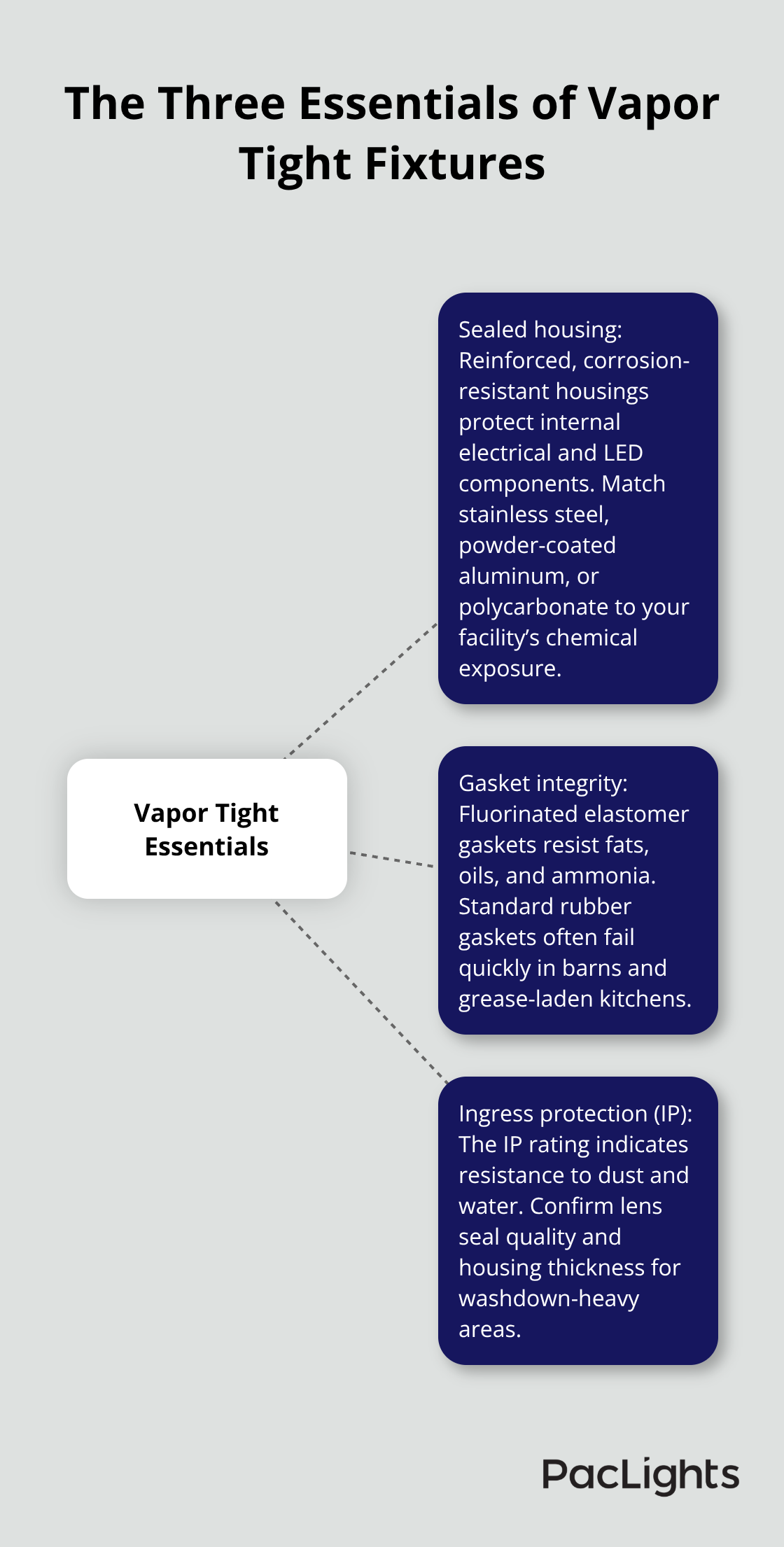
Gaskets serve as the second line of defense, and they matter far more than most facility managers realize. Standard rubber gaskets fail quickly in ammonia-rich barn environments or grease-laden commercial kitchens; fluorinated elastomer gaskets resist permeation from fats, oils, and ammonia far better. The third element is the ingress protection rating, which tells you exactly how well a fixture resists water and dust.
IP Ratings Explained in Real Terms
IP ratings follow the IEC 60529 standard and use a two-digit code. The first digit (0–6) measures dust protection; the second (0–9) measures liquid protection. For practical applications, you need to know the difference between the common ratings. IP65 protects against low-pressure water jets and dust, making it suitable for outdoor wall packs and parking lot fixtures where rain and spray occur but high-pressure washdowns do not. IP66 withstands powerful water jets and is the minimum for food processing facilities, car washes, and coastal environments where salt spray accelerates corrosion. IP67 handles temporary immersion up to one meter for 30 minutes, appropriate for fixtures that may sit in standing water or brief submersion. IP68 covers continuous immersion and is manufacturer-defined; verify the depth and duration in the technical data. Many facility managers stop at the IP rating alone, but a fixture rated IP65 does not automatically withstand high-pressure washdowns. Verify the gasket material, housing thickness, and lens seal before selecting it for washdown-heavy areas. NSF certification becomes critical in food processing plants because it confirms the fixture is suitable for sanitary environments and won’t harbor bacteria or contaminants.
Codes, Standards, and What Your Facility Actually Needs
NEC Article 410 requires vapor tight luminaires in wet or damp locations to use appropriate IP ratings or NEMA enclosure types to prevent moisture ingress. NEC Article 547 governs agricultural buildings and mandates corrosion-resistant wiring and dedicated distribution points-a detail that changes how you wire daisy-chained fixtures in barns. OSHA emphasizes adequate lighting in moisture-prone workplaces, and vapor tight fixtures help meet those safety requirements while reducing your facility’s liability from electrical hazards. The International Building Code interacts with the NEC and local energy codes through amendments, influencing whether you must select high-efficiency LED vapor tight solutions. This means energy efficiency isn’t optional in many jurisdictions; it’s a code requirement. UL 1598 certification confirms a fixture is suitable for wet locations, and UL 8750 ensures the internal LED drivers meet electrical safety standards. For utility rebates, check the DesignLights Consortium Qualified Products List to verify that your fixture meets efficacy thresholds-this typically ranges from 100 to 140 lumens per watt depending on the fixture type. Local amendments often impose higher vapor tight standards than the base code, so always verify requirements with your Authority Having Jurisdiction before specifying fixtures. Documentation of code compliance, installation details, and manufacturer data is essential for inspections and audits; keep IES photometric files, LM-79 test reports, and certification copies on file.
Your facility’s specific environment determines which standards apply and which IP rating you actually need. The next section walks you through how to assess your conditions and select the right fixture for your operation.
Which Environments Demand the Strictest Vapor Tight Standards
Food Processing and Cold Storage
Food processing facilities operate under NSF certification requirements that extend far beyond standard IP ratings. NSF certification confirms that your fixture won’t harbor bacteria, mold, or contaminants on its housing or lens-a non-negotiable requirement for plants handling meat, dairy, or produce. IP66 serves as the baseline for food processing, but ammonia-rich cold storage areas require more aggressive specifications. Standard rubber gaskets permeate when exposed to ammonia vapor, allowing moisture to reach internal components within months. Fluorinated elastomer gaskets resist ammonia permeation far better and should become your default choice in any cold storage retrofit.
Pharmaceutical and Chemical Manufacturing
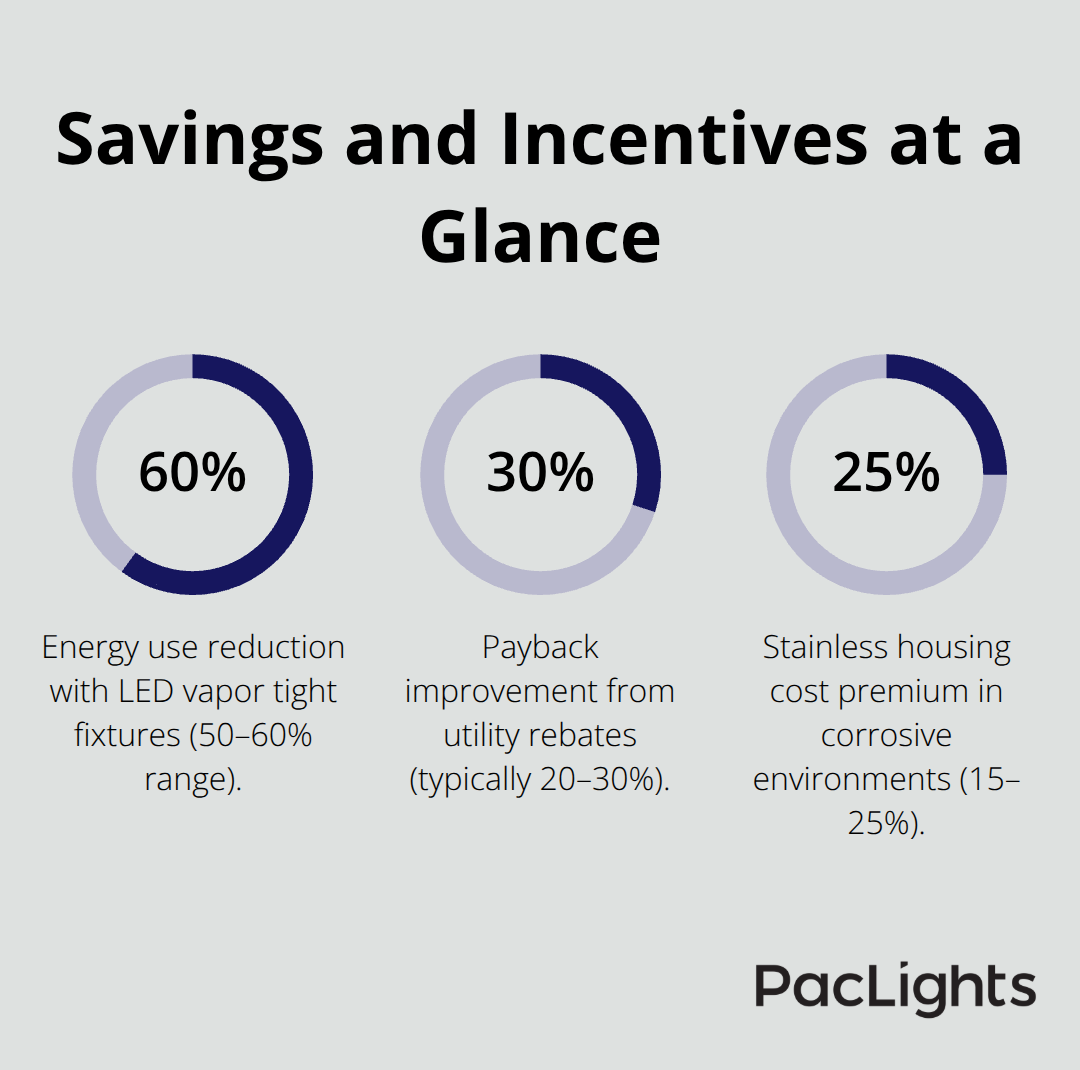
Pharmaceutical and chemical manufacturing plants face different pressures. These facilities often operate under NEC Article 500 hazardous location classifications if they handle flammable gases, combustible dusts, or reactive chemicals. If your area is classified as Class I Division 2, you cannot simply install a standard vapor tight fixture-you need documented non-incendive evidence and explicit approval from your Authority Having Jurisdiction and a Professional Engineer. This approval process adds weeks to project timelines, so plan accordingly. Chemical exposure also demands material compatibility; stainless steel housings resist corrosion from harsh vapors far better than standard aluminum. The cost difference typically runs 15–25% higher, but replacement cycles stretch from 5–7 years to 10–12 years in corrosive environments.
Wet Indoor Spaces and Washdown Areas
Wet indoor spaces and washdown areas present a different challenge entirely. IP65 fixtures fail under high-pressure washdowns because the test standard assumes a 6.3 mm nozzle from a distance, not industrial pressure washers running at 2000+ PSI. Select IP66 or IP69K-rated fixtures and verify gasket material and lens seal thickness before committing to an order. Grease-laden commercial kitchens require a Suitable for Grease supplement to your IP66 rating-many fixtures meet IP66 but degrade rapidly when exposed to cooking fats and oils. Request this supplement explicitly from your supplier; it’s not standard.
Documentation and Testing Requirements
Documentation matters more than most facility managers expect. Retain IES LM-79 photometric reports, LM-80 lumen maintenance data, and certification copies for every fixture installed. Inspectors and auditors will request these files, and missing documentation can trigger compliance violations even if your fixtures are technically correct. Annual megger insulation-resistance testing on circuits serving vapor tight fixtures should target readings above 2 MΩ; anything below 1 MΩ indicates seal or insulation damage and demands immediate replacement.
Your environment’s specific classification determines which standards apply and which IP rating you actually need. The next section walks you through how to assess your conditions and select the right fixture for your operation.
Selecting and Installing Fixtures That Actually Work
Start by documenting your facility’s exact environmental conditions before you contact a supplier or electrician. This step separates compliant installations from costly mistakes. Walk through your space and note moisture levels, chemical exposure, temperature extremes, dust concentration, and cleaning methods. If you operate a food processing facility, identify areas where ammonia vapor concentrates-typically near refrigeration compressors and evaporator coils. In pharmaceutical manufacturing, pinpoint zones classified under NEC Article 500 and confirm whether Division 1 or Division 2 applies. For washdown areas, observe the pressure washer PSI and spray patterns; facilities using equipment above 1500 PSI need IP66 minimum, not IP65. Temperature matters more than most managers realize: fluorinated elastomer gaskets remain effective from -40°F to 180°F, while standard rubber fails rapidly outside -10°F to 140°F. Record ambient humidity, salt spray exposure if coastal, and any grease buildup on existing fixtures. This assessment takes two to four hours and directly determines fixture selection, wiring requirements, and maintenance intervals. Without it, you’ll either overspecify and waste budget or underspecify and face compliance failures within months. Document these conditions in writing and share them with your electrician and equipment supplier before specifications are finalized.
Engage Engineers and Cross-Functional Teams Early
Never let an electrician or lighting supplier make fixture selections alone. Involve your facility manager, maintenance lead, and a Professional Engineer or your Authority Having Jurisdiction if the space falls under NEC Article 500 classifications. This cross-functional review catches hidden requirements that single-discipline decisions miss. In agricultural facilities governed by NEC Article 547, a dedicated distribution point must originate from a separate panel-a requirement that changes conduit routing and labor costs dramatically if discovered mid-installation. Chemical plants operating in Class I Division 2 zones cannot proceed without non-incendive evidence documentation and formal AHJ approval, a process that typically consumes four to six weeks. Build these reviews into your timeline upfront to prevent project delays and change orders. Request IES LM-79 photometric files, LM-80 lumen maintenance data, and certification documentation from suppliers before purchase; this verification step adds one week to procurement but eliminates fixture compatibility problems later. Verify that fixtures carry UL 1598 wet-location certification and UL 8750 driver compliance-these are non-negotiable for vapor tight applications. If rebates matter to your project economics, confirm DLC Qualified Products List eligibility during specification; this typically improves payback by 20–30% through utility incentives ranging from $20 to $60 per unit depending on your region. DSIRE database searches reveal regional subsidy details and application deadlines specific to your state and utility.
Seal Conduits and Verify Electrical Integrity
Proper installation determines whether your fixture remains vapor tight or fails within two years. Seal all conduit entries with liquid-tight connectors rated for your IP requirement; loose knockouts and improperly sealed conduits create moisture pathways that bypass gasket protection entirely. Use silicone-filled gel-sealed wire connectors as a moisture barrier at terminal points inside fixture housings. Before you energize any circuit, perform megger insulation-resistance testing targeting readings above 2 MΩ; results below 1 MΩ indicate seal or insulation damage and demand fixture replacement before operation. This testing follows IEC 60364-6 standards and protects your facility from electrical hazards that moisture introduces.
Establish Annual Inspection and Maintenance Schedules
Establish an annual inspection schedule to maintain vapor tight integrity over time. Verify gasket integrity through visual inspection and feel for hardening or cracking, confirm all conduit fittings remain tight, and repeat megger testing on critical circuits.
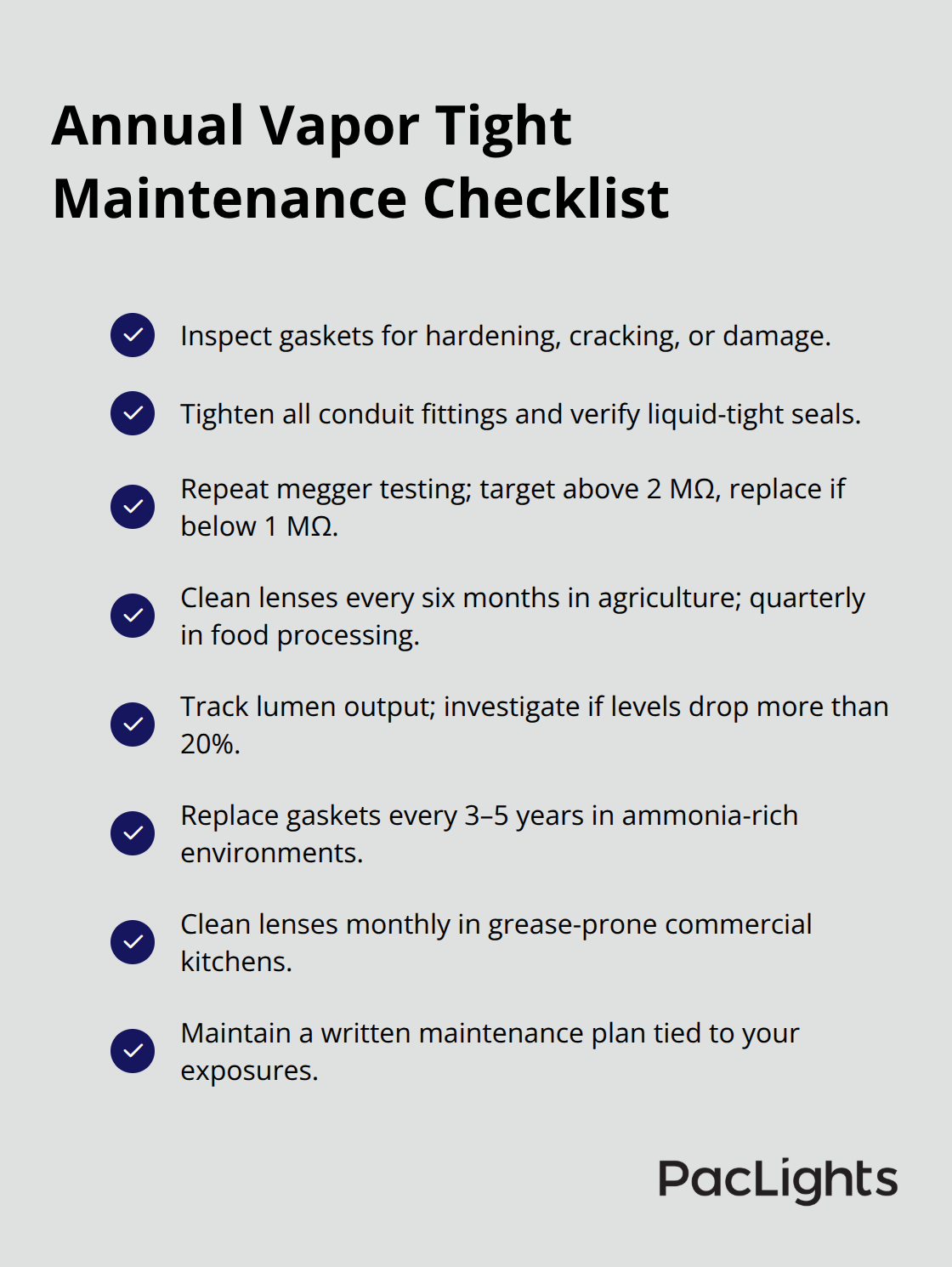
Lens fouling from dust and biofilms accumulates faster than most facilities anticipate-plan cleaning intervals every six months in agricultural settings and quarterly in food processing environments. IES LM-79-19 baseline data helps you track lumen output; if light levels drop more than 20% between inspections, investigate for fouling or LED degradation before assuming fixture failure. Ammonia-rich environments demand gasket replacement every three to five years rather than the typical seven to ten year cycles; schedule this maintenance proactively rather than responding to failures. In grease-prone commercial kitchens, lens cleaning becomes monthly rather than quarterly because fats and oils accumulate faster than dust alone. Maintain a documented maintenance plan tied to your facility’s specific chemical and environmental exposures; this record protects you during inspections and provides liability protection if equipment failures occur.
Final Thoughts
Vapor tight lighting codes protect your operation from electrical hazards, product contamination, and regulatory violations. Meeting these standards requires three concrete actions: document your facility’s environmental conditions, select fixtures with appropriate IP ratings and certifications, and establish maintenance schedules that preserve gasket and seal integrity over time. The cost of compliance remains far lower than the cost of failures-a single electrical incident in a food processing facility halts production for weeks, triggers OSHA fines exceeding $15,000, and damages your facility’s reputation with customers and regulators.
LED vapor tight fixtures reduce energy consumption by 50–60% compared to legacy fluorescent or incandescent systems, lowering utility costs by $15 or more per fixture annually. A facility with 50 fixtures realizes over $1,500 in annual savings, and utility rebates ranging from $20 to $60 per unit further improve project economics, often cutting payback periods to under two years.
Fewer replacements mean lower maintenance labor costs and reduced operational disruption, while gaskets rated for your specific environment last 7–10 years rather than failing within months.
Selecting the right partner matters when you implement vapor tight lighting codes in your facility. We at PacLights offer vapor proof and hazardous location fixtures tailored to industrial environments, along with free lighting layout designs and ROI assessments to guide your investment decisions. Contact us to assess your facility’s needs and identify the fixtures that deliver compliance, efficiency, and long-term reliability.
Disclaimer: PacLights is not responsible for any actions taken based on the suggestions and information provided in this article, and readers should consult local building and electrical codes for proper guidance.