

Modular electrical units power everything from manufacturing plants to data centers, but poor lighting integration can waste energy and compromise safety. At PacLights, we’ve seen firsthand how the right modular electrical unit lighting setup transforms workspace efficiency and reduces operational costs.
This guide walks you through selecting, installing, and optimizing lighting for your modular systems. You’ll learn practical strategies that work in real industrial environments.
What Lighting Setup Works Best Inside Modular Electrical Units
Modular electrical units come in different configurations depending on their purpose. Data centers typically house servers in racks reaching 10 kW per rack or higher, where lighting heat becomes a significant design constraint. Manufacturing facilities use modular units for equipment control and power distribution in confined spaces. Telecommunications hubs pack components tightly with minimal clearance. Each environment demands different lighting approaches because standard office or warehouse fixtures simply fail in these tight, hot conditions. The Global Modular Lighting Systems Market reached USD 10.07 billion in 2025 and is projected to grow to USD 16.13 billion by 2032 according to OG Analysis, driven largely by demand for energy-efficient solutions that fit confined spaces.
Thermal Performance Determines Fixture Lifespan
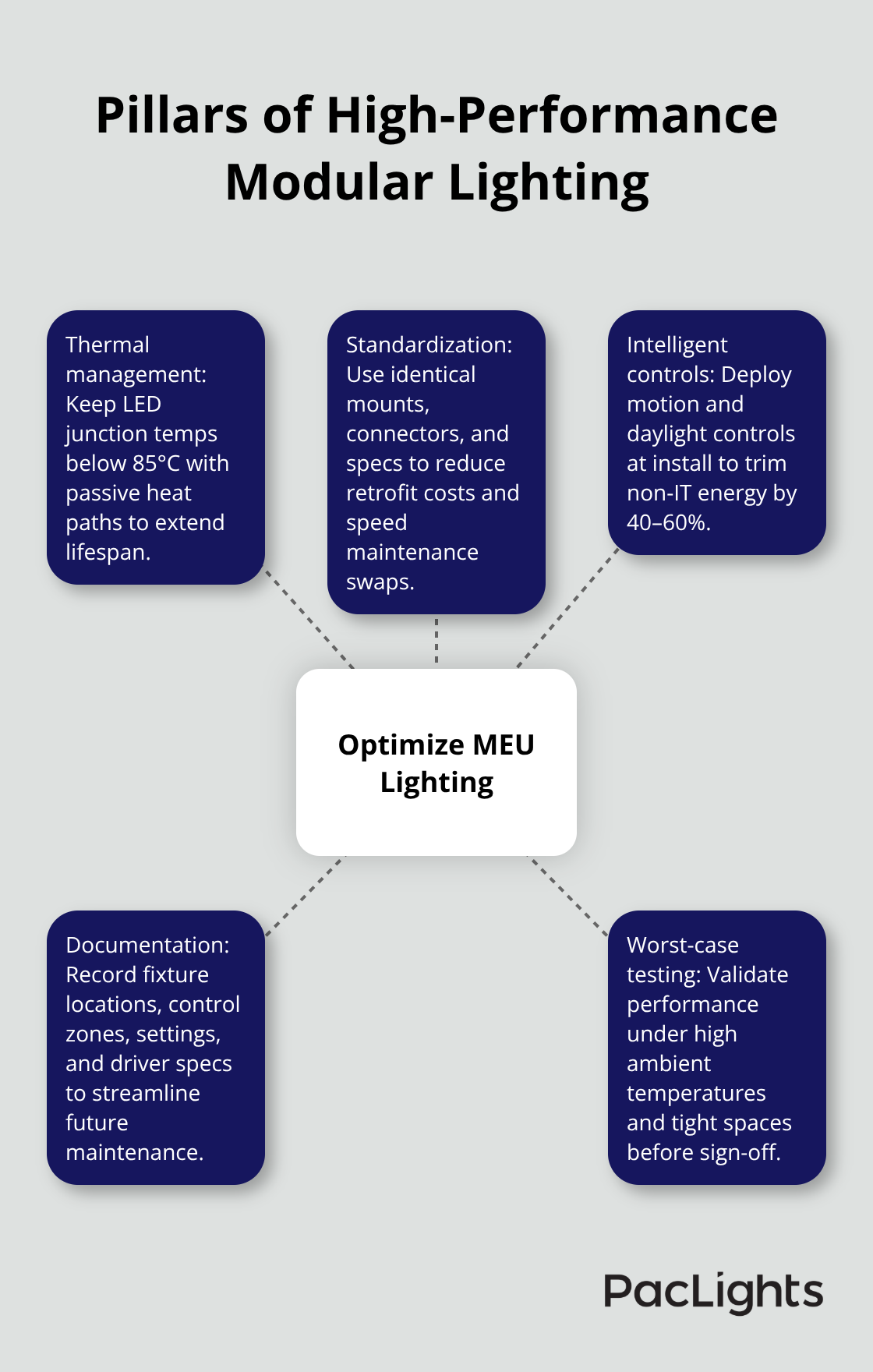
Inside modular electrical units, junction temperatures above 85°C degrade LED lifespan significantly. This means passive thermal management becomes non-negotiable. Choose fixtures with aluminum heat sinks and metal-core boards that move heat away from LED junctions without requiring active cooling fans.
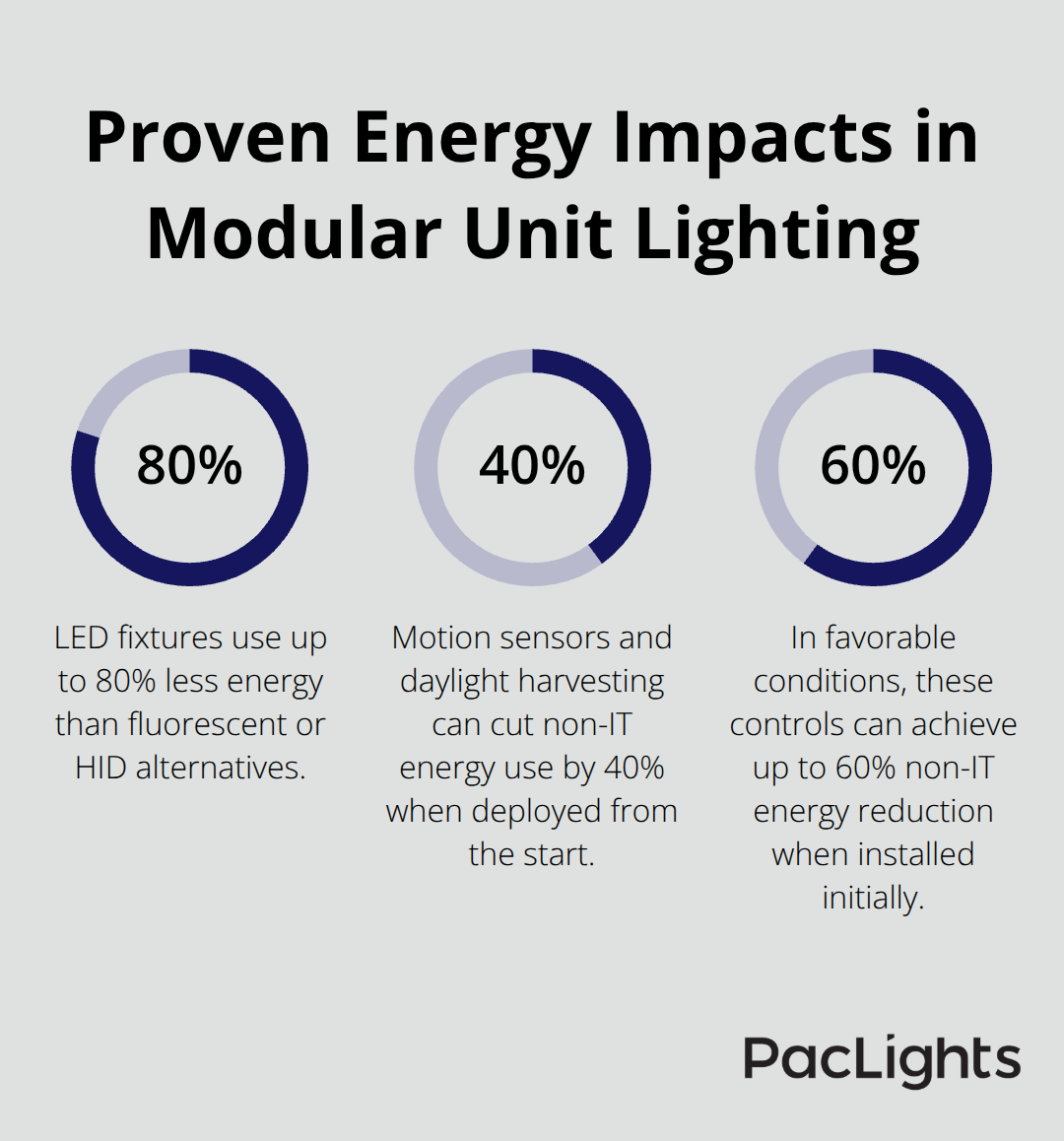
LED fixtures use up to 80% less energy than fluorescent or HID alternatives and generate substantially less ambient heat, helping reduce cooling demand at the source. In high-density racks, this heat reduction directly impacts your facility’s total cooling costs. Verify manufacturers’ thermal resistance ratings and worst-case junction temperature data before selecting any fixture. This single decision often determines whether your lighting lasts five years or fifteen years in these demanding environments.
Standardization Reduces Retrofit Costs
Installing identical mounting interfaces, connector types, and electrical specifications across all fixtures reduces retrofit costs by 3 to 5 times according to industry standards. When components eventually fail, technicians swap replacements without troubleshooting compatibility issues. Quick-release fasteners on fixtures further reduce maintenance downtime during equipment reconfigurations and swaps. This standardized approach supports rapid multi-site deployments without disruptive retrofits. Plan your modular lighting layout with proper lumen targets and glare control from the beginning. Baseline measurements should indicate corridors around 200 lux and server aisles around 500 lux to set realistic targets. Use occupancy data from your facility management logs to tailor control strategies to actual technician access times rather than guessing usage patterns.
Controls and Compliance Integration
Motion sensors and daylight harvesting cut non-IT energy use by 40 to 60 percent when deployed from the start according to Department of Energy guidance. Install these controls during initial installation rather than retrofitting later, as retrofits typically yield lower results. Schedule quarterly sensor maintenance to prevent drift from dust and thermal cycling. Networked lighting controls integrate with your cooling schedules and workload patterns for automatic adaptation. LED drivers regulate current and voltage to protect LEDs and maintain uniform brightness across modules (modern drivers include digital interfaces and IoT connectivity, enabling remote monitoring, configuration, and automation). These capabilities reduce maintenance time and enable quick responses to outages that could impact operations.
With your modular unit lighting foundation in place, the next step involves selecting the specific fixtures that match your space constraints and operational demands.
Selecting Fixtures That Perform in High Heat and Tight Spaces
Confined spaces inside modular electrical units demand fixtures engineered specifically for thermal stress and compact installation. Standard commercial fixtures fail because they lack adequate heat dissipation pathways and consume excessive power that compounds cooling loads. Inside data centers exceeding 10 kW per rack, fixture selection becomes a direct factor in your total facility energy consumption.
Strip Lights and Linear Configurations
Strip lights with aluminum channels and metal-core boards outperform enclosed designs because they expose more surface area for passive heat transfer. Linear configurations fit between equipment racks and cable trays without blocking airflow, which passive thermal management depends on. Flat panel lights work well in confined spaces with limited vertical clearance, though you should verify that manufacturers provide thermal resistance ratings showing junction temperatures stay below 85°C under worst-case ambient conditions inside your units.
Indoor Fixtures for Manufacturing and Telecom
Manufacturing facilities and telecommunications hubs benefit from compact troffer lights and recessed downlights that integrate flush against cabinet surfaces. Vapor-tight or sealed fixtures become mandatory in environments where moisture or washdown procedures occur, protecting electronics from corrosion that forces premature replacement. PacLights offers high bays, troffer lights, flat panel lights, linear strip lights, wrap lights, and recessed downlights tailored to diverse industrial needs, with energy-efficient designs that reduce costs and carbon footprints.
Outdoor and Specialty Lighting Solutions
When outdoor equipment cabinets or exterior control boxes require illumination, area lighting and floodlights handle weather exposure while maintaining consistent brightness across mounting surfaces. Wall lights and canopy fixtures work for equipment access points and emergency exits. These fixtures must carry NSF certification indicating safety and sanitation compliance, which matters when facilities require documented compliance for regulatory audits or insurance purposes.
Controls That Deliver Real Energy Savings
Motion sensors and daylight harvesting controls determine whether your fixture investment actually delivers energy savings or simply consumes power inefficiently. Department of Energy guidance confirms that motion sensors and daylight harvesting cut non-IT energy use by 40 to 60 percent when deployed during initial installation rather than retrofitted afterward. The difference matters because early deployment allows control wiring to integrate with your layout design, while retrofits require expensive conduit runs and often fail to cover all relevant zones.
Constant current LED drivers with digital interfaces and IoT connectivity enable remote monitoring and automatic dimming based on occupancy patterns and ambient light levels. Quarterly sensor maintenance prevents drift from dust accumulation and thermal cycling, which degrades motion detection responsiveness over time. Networked lighting controls that integrate with your facility management system allow automatic adaptation to cooling schedules and workload patterns, reducing energy waste during off-peak hours when technician access drops significantly. Advanced drivers provide remote fault reporting, cutting maintenance response time when failures occur in hard-to-reach locations inside modular units.
Select fixtures and control systems from manufacturers offering complete documentation on compatibility, thermal performance, and control integration. Interoperability issues with legacy electrical infrastructure represent the largest retrofit challenge according to market research on modular lighting systems. With the right fixtures and controls selected, your next focus shifts to the installation process itself-where proper planning and integration strategies determine whether your lighting system performs reliably for years to come.
Installation and Integration Best Practices
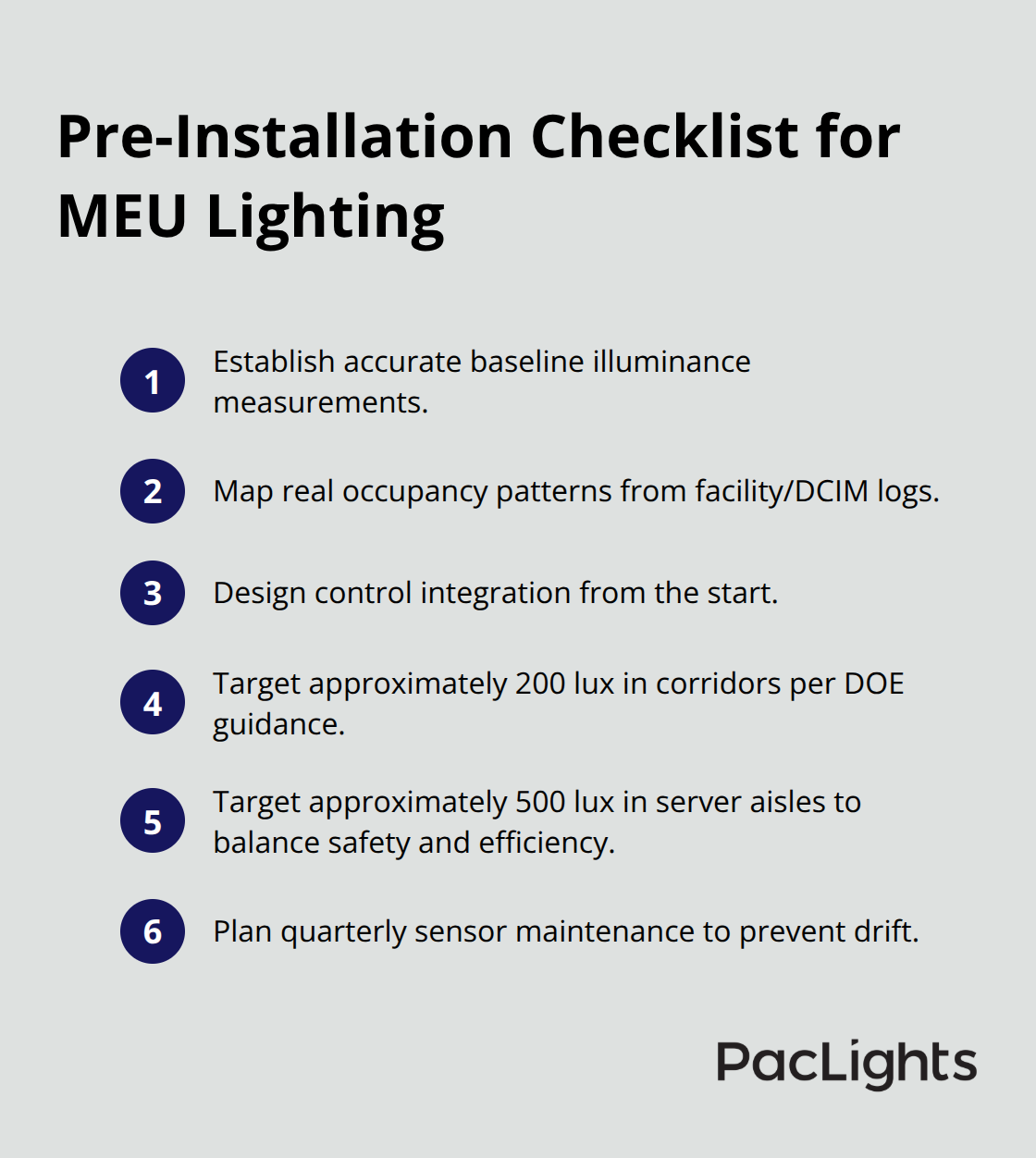
Installation success depends on three decisions made before any electrician touches a wire: establishing accurate baseline measurements, mapping your actual occupancy patterns, and designing control integration from the start rather than retrofitting later. Thermal imaging reveals heat hotspots near cooling equipment, allowing you to avoid over-lighting critical zones and position fixtures strategically for maximum coverage in server aisles and maintenance areas while minimizing waste in unused corridors. Department of Energy guidance emphasizes that baseline pre-install audits should measure corridors around 200 lux and server aisles around 500 lux to set realistic targets that prevent both under-lighting safety issues and energy-wasting over-illumination.
Plan Your Layout with Real Occupancy Data
Extract occupancy data from your facility management system or DCIM logs to understand when technicians actually access different zones rather than assuming uniform usage patterns. This data-driven approach lets you tailor motion sensor sensitivity and daylight harvesting schedules to real behavior, not theoretical occupancy. Install all controls during initial installation, not afterward, because retrofits typically achieve 30 to 40 percent lower energy savings than planned deployments. Early control integration also eliminates expensive conduit runs and ensures sensor placement covers all relevant zones without gaps.
Match Drivers to Your Electrical Infrastructure
Wiring design matters as much as fixture selection because poor integration with existing electrical infrastructure creates the interoperability problems that plague most modular lighting retrofits. Standard constant current LED drivers require specific voltage and current matching to your power supply and LED module specifications, so verify compatibility documentation before purchase rather than discovering mismatches during installation. Modern drivers with digital interfaces and IoT connectivity enable remote monitoring and automatic dimming, but only if your facility network supports the required connectivity protocols.
Test Under Worst-Case Conditions
Test all connections under worst-case ambient conditions inside your modular units because junction temperatures above 85°C degrade LED performance, and drivers must regulate output correctly even when surrounding air temperatures exceed normal office environments. Standardized mounting interfaces and connector types across all fixtures prevent compatibility headaches during maintenance and support rapid equipment swaps when racks require reconfiguration.
Maintain Sensor Performance Over Time
Schedule quarterly sensor maintenance from the start because dust accumulation and thermal cycling cause motion detector drift within three to six months of installation, degrading energy savings if left unchecked. Quick-release fasteners on fixtures allow technicians to swap components without tools, reducing downtime when replacements become necessary. Document your complete installation including fixture locations, control zones, sensor calibration settings, and driver specifications so future maintenance teams understand your system without reverse-engineering it.
Final Thoughts
Modular electrical unit lighting delivers measurable returns when you prioritize thermal performance, standardization, and control integration from day one. LED fixtures consume up to 80% less energy than fluorescent alternatives, motion sensors and daylight harvesting cut non-IT energy use by 40 to 60 percent, and standardized installations reduce retrofit costs by 3 to 5 times. These aren’t theoretical savings-they’re real reductions that compound across months and years of operation.
Your long-term cost advantage comes from three sources: lower energy consumption directly reduces monthly utility bills as electricity rates climb, passive thermal management extends fixture lifespan from five years to fifteen years by keeping junction temperatures below 85°C, and standardized fixtures with quick-release fasteners slash maintenance labor costs because technicians swap components without troubleshooting compatibility issues. Reliability depends on maintenance discipline after installation completes-schedule quarterly sensor calibration to prevent motion detector drift from dust and thermal cycling, which degrades energy savings within months if ignored. Test connections under worst-case ambient conditions before declaring the project finished, because failures discovered later cost far more than verification upfront.
We at PacLights offer free lighting layout designs and ROI assessments that quantify exactly how much you’ll save with energy-efficient fixtures and advanced controls tailored to your space. Our team provides the specific fixture recommendations, thermal performance data, and control integration guidance that transforms modular electrical unit lighting into a strategic efficiency investment. Contact us to start your assessment today.
Disclaimer: PacLights is not responsible for any actions taken based on the suggestions and information provided in this article, and readers should consult local building and electrical codes for proper guidance.