

Moisture and contaminants destroy lighting systems in harsh environments. When equipment fails unexpectedly, production stops and safety risks multiply.
Vapor tight lighting fixtures are built to withstand these challenges. At PacLights, we’ve seen firsthand how the right sealed fixtures prevent costly downtime and keep operations running safely in food processing plants, chemical facilities, and cleanrooms.
How Vapor Tight Fixtures Seal Out Moisture and Contaminants
Three-Layer Defense Against Environmental Threats
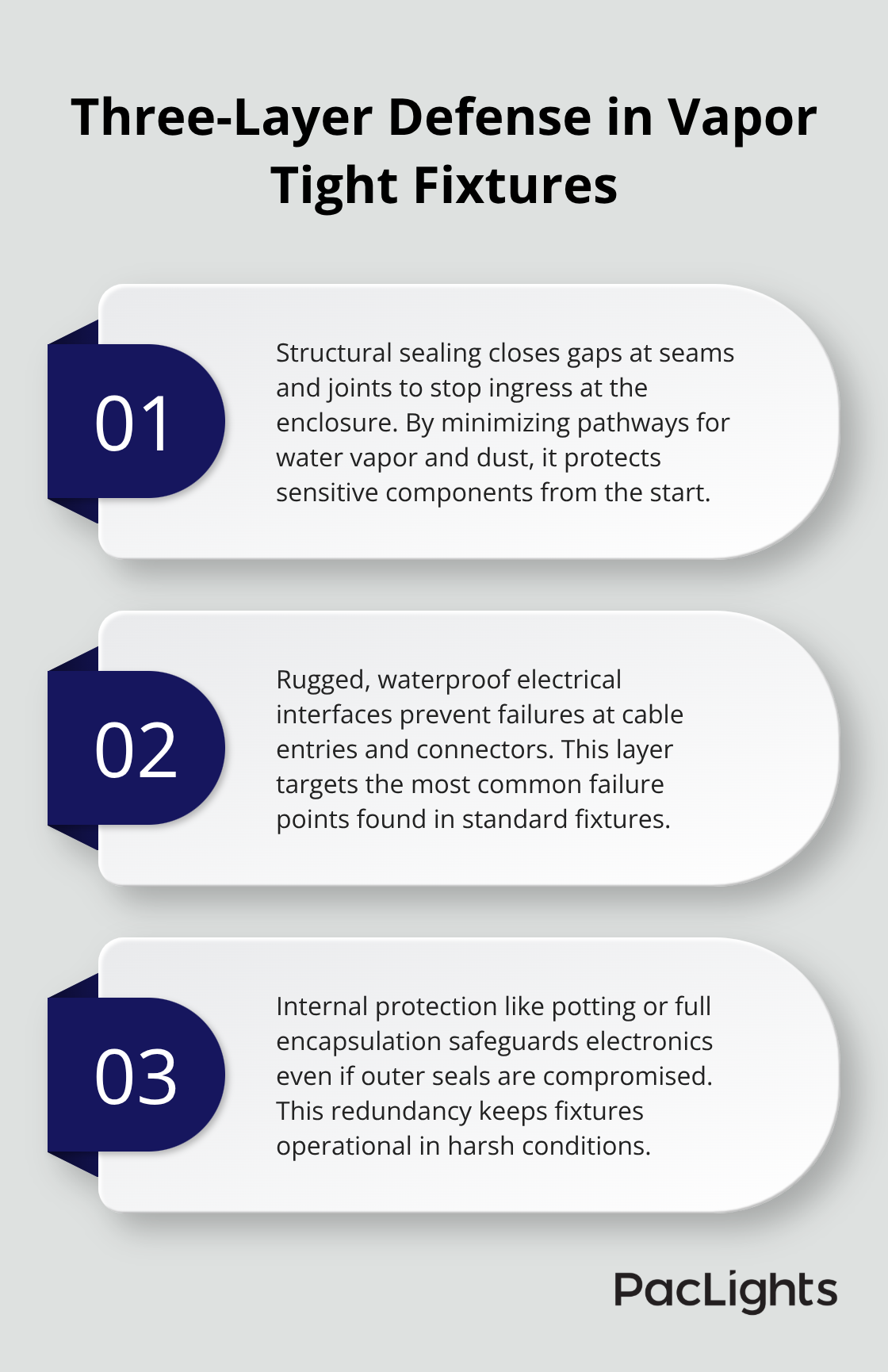
Vapor tight fixtures stop moisture and contaminants through three distinct design mechanisms that protect sensitive internal components. A structural seal minimizes gaps throughout the housing, preventing water vapor and dust from entering through cracks or seams. Waterproof connectors and interface protection at electrical entry points form the second layer-this is where most failures occur in standard fixtures. Internal protection methods such as potting or encapsulation of circuitry create the third layer, so even if moisture penetrates the outer seal, the electronics remain protected. These three mechanisms work together as a defense system rather than relying on a single barrier.
Understanding IP Ratings and Code Compliance
IP ratings quantify protection levels and directly affect safety and compliance. IP65 fixtures are dust-tight and withstand water jets, IP66 fixtures handle more powerful jets, and IP67 fixtures tolerate temporary immersion. NEC Article 410 requires fixtures in wet or damp locations to meet these standards, so specifying the correct IP rating isn’t optional-it’s a code requirement that protects both your facility and your workers.
Material Selection Determines Real-World Performance
The materials selected for vapor tight construction determine durability under specific conditions. Polycarbonate and reinforced fiberglass housings resist corrosion from moisture and chemicals better than standard aluminum in harsh environments like food processing plants and chemical storage facilities. Stainless steel hardware and gaskets made from EPDM or silicone rubber maintain their sealing properties across temperature swings and humidity extremes. For cold storage and walk-in coolers operating at extreme temperatures, polycarbonate lenses remain shatter-resistant where standard glass would fail. In saltwater or corrosive atmospheres, stainless steel cage-style designs like Jelly Jar fixtures outperform standard enclosures because the metal cage protects the bulb from direct salt spray exposure.
Match the material composition to your specific hazard profile-a food processing plant with steam exposure requires different materials than a parking garage with moisture and salt air. The gasket material matters too: EPDM gaskets work well in most wet locations, but for steam-prone environments like saunas or industrial kitchens, you need IP68-rated fixtures with superior sealing compounds that withstand heat and humidity cycling without degrading.
Matching Fixtures to Your Environmental Hazards
The right fixture selection starts with identifying what your facility actually faces. Temperature extremes, chemical exposure, salt spray, steam, and dust levels all influence which materials and IP ratings will perform reliably. Once you understand your specific environmental threats, you can specify fixtures that won’t fail prematurely and will keep your operations running safely. This assessment becomes critical when you evaluate which features matter most for your next lighting upgrade.
Where Vapor Tight Fixtures Make the Biggest Operational Difference
Food Processing Plants Depend on Sealed Lighting for Safety and Compliance
Food processing and beverage manufacturing facilities operate in environments where moisture control directly impacts product safety and regulatory compliance. Steam from cooking and cleaning processes, combined with high humidity and water spray, creates constant threats to standard lighting systems. The FDA requires facilities to maintain documented lighting performance in processing areas, and fixture failures interrupt production lines that operate 24/7 in many plants. IP66-rated vapor tight fixtures with polycarbonate lenses withstand these conditions without degradation, while NSF-certified options meet food safety standards for direct overhead installation in preparation and packaging areas.
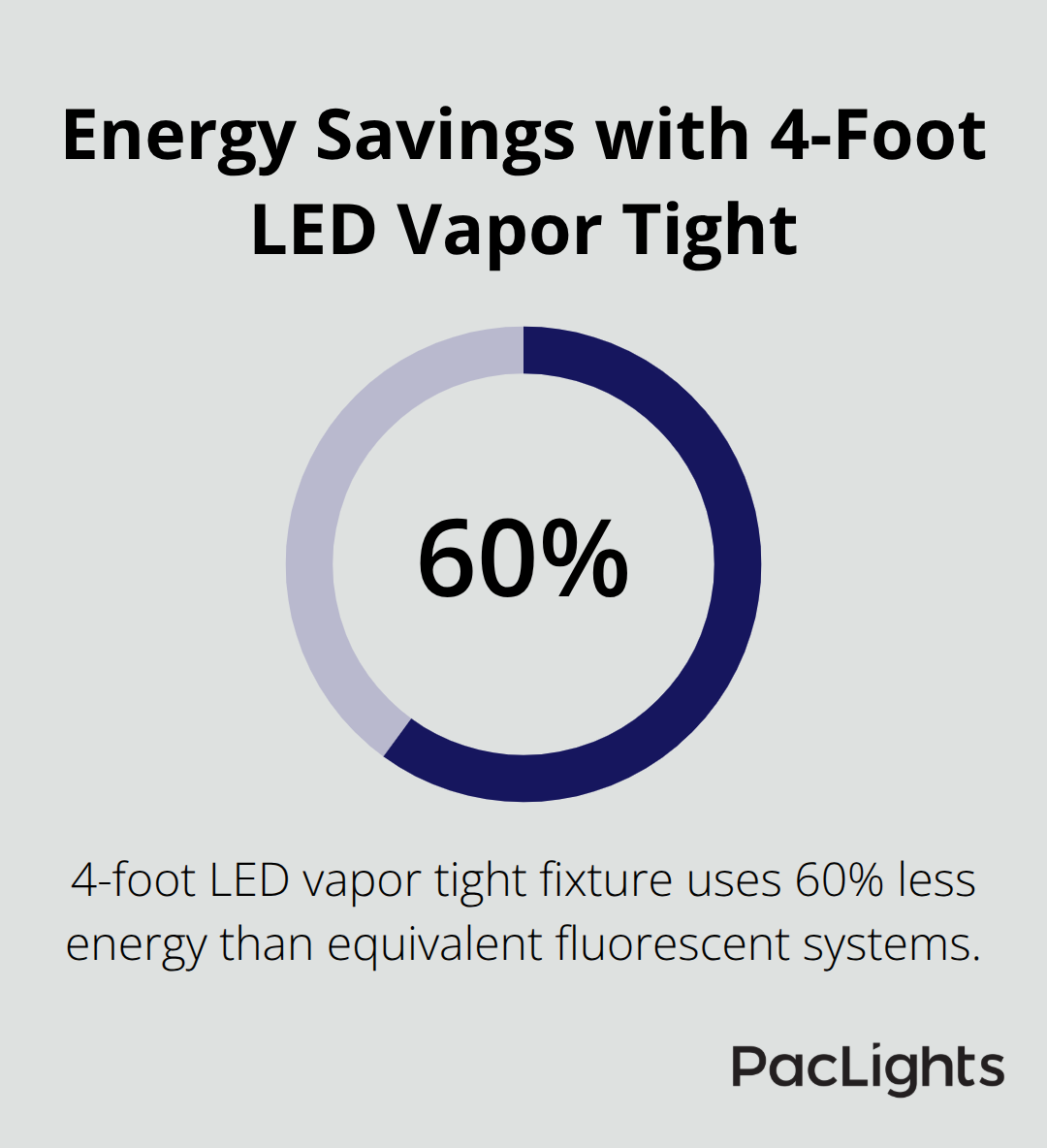
A 4-foot LED vapor tight fixture delivers 3,580 lumens at 28W and uses 60 percent less energy than equivalent fluorescent systems while lasting 50,000 hours or more. This performance dramatically reduces the labor costs associated with frequent replacements in high-bay production spaces. Facilities that switch to LED vapor tight fixtures recover their investment through lower energy bills and reduced maintenance downtime within two to three years.
Chemical and Pharmaceutical Environments Require Superior Material Selection
Chemical manufacturing and storage facilities face corrosive vapors, explosive atmospheres, and temperature extremes that degrade standard fixtures within months. Stainless steel hardware and EPDM gaskets in vapor tight designs resist chemical attack where aluminum enclosures fail and corrode. Cold storage facilities operating at minus 20 degrees Fahrenheit require fixtures with polycarbonate lenses that remain shatter-resistant under thermal stress; standard glass lenses become brittle and fail catastrophically.
Pharmaceutical cleanrooms demand IP67-rated fixtures with sealed connectors to prevent particulate contamination of sensitive manufacturing processes. Many cleanroom operations specify fixtures with tool-less access panels to minimize contamination risk during maintenance. These environments justify the upfront investment in quality vapor tight lighting because a single production interruption costs thousands of dollars per hour, making fixture reliability non-negotiable rather than optional.
Selecting the Right Fixture for Your Specific Hazards
Temperature extremes, chemical exposure, salt spray, and dust levels all influence which materials and IP ratings will perform reliably in your facility. Once you identify what your operation actually faces, you can specify fixtures that won’t fail prematurely and will keep your operations running safely. This assessment becomes critical when you evaluate which features matter most for your next lighting upgrade, and understanding your environmental threats helps you make informed decisions about fixture specifications and long-term performance expectations.
Key Features to Look For When Selecting Vapor Tight Lighting
Match IP Ratings to Your Actual Environmental Threats
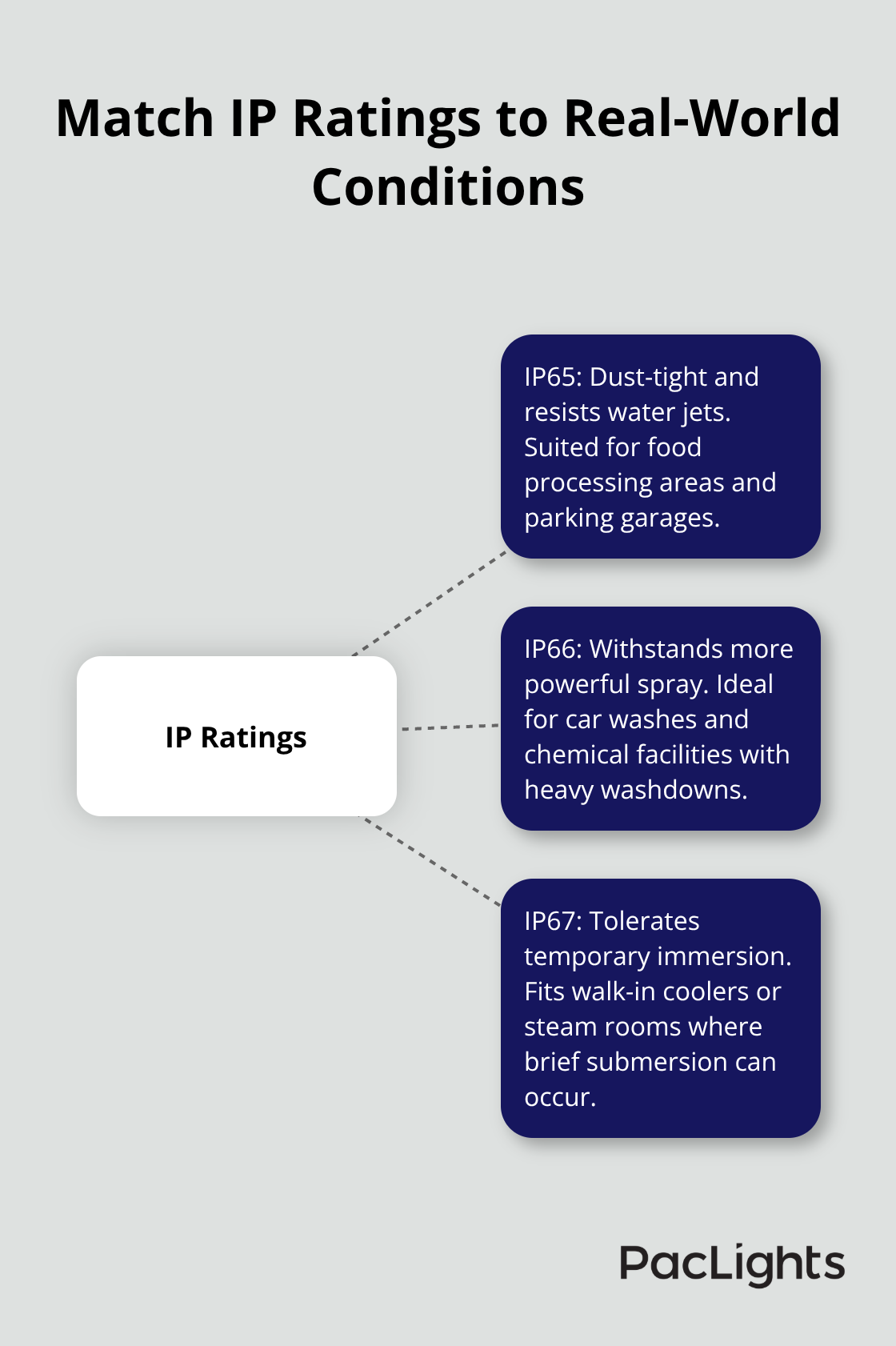
IP ratings quantify environmental protection, but the standard alone doesn’t tell you which fixtures will survive your specific hazards. IP65 fixtures handle dust and water jets common in food processing and parking garages, while IP66 fixtures withstand more powerful spray found in car washes and chemical facilities, and IP67 fixtures tolerate temporary immersion in walk-in coolers or steam rooms. NEC Article 410 mandates that wet or damp location fixtures meet these standards, so your choice isn’t discretionary-it’s a code requirement that protects workers and prevents electrical failures. The real decision comes down to matching the IP rating to your actual environmental threats rather than over-specifying protection you don’t need or under-specifying and risking premature failure.
Thermal Management Determines Fixture Lifespan in Sealed Housings
LED vapor tight fixtures generate heat that must dissipate through sealed housings without venting, which is fundamentally different from open luminaires. An 8-foot LED vapor tight fixture delivering 11,700 lumens at 90W requires effective heat sinking to maintain the 50,000-hour lifespan that justifies the upfront investment. Polycarbonate lenses and metal heat sinks pull thermal energy away from LEDs before it degrades the semiconductor and shortens service life. Facilities operating in extreme temperatures-whether minus 20 degrees in cold storage or plus 130 degrees in industrial kitchens-must specify fixtures with thermal management designed for those conditions.
Retrofit Compatibility Reduces Installation Costs and Complexity
Retrofit compatibility matters equally because replacing every fixture in an existing facility costs significantly more than upgrading to LED-ready vapor tight options that accept standard T8 LED tubes. A 4-foot T8 LED-ready vapor tight fixture lets you reuse existing sockets and wiring while gaining the sealed protection your operation needs, cutting installation labor and electrical costs compared to complete fixture replacement. Evaluate whether your facility’s electrical infrastructure supports direct LED retrofit or requires new fixtures, because this decision determines whether you invest thousands or tens of thousands in the upgrade.
Phase Your Upgrade Strategy to Balance Safety and Budget
The most practical approach assesses your current infrastructure, identifies which circuits can support retrofit tubes, and phases upgrades to balance immediate safety needs with long-term budget constraints. Start with areas where fixture failures create the highest safety risks or production losses (food processing lines, chemical storage, cleanrooms). Then move to secondary areas where moisture exposure threatens equipment but failures cause less immediate disruption. This staged approach lets you recover costs through energy savings and reduced maintenance on early phases while planning subsequent upgrades with confidence in your fixture specifications and performance expectations.
Final Thoughts
Vapor tight lighting fixtures eliminate the false choice between operational safety and budget constraints. The real cost of standard fixtures in harsh environments isn’t the purchase price-it’s the production downtime, safety incidents, and constant replacement cycles that drain resources year after year. A food processing plant replacing fluorescent fixtures every 18 months spends far more on labor and lost production than investing once in LED vapor tight fixtures rated for 50,000 hours.
Fixture failures in wet locations create electrical hazards that endanger workers and violate NEC Article 410 compliance requirements. Vapor tight lighting fixtures with proper IP ratings and thermal management eliminate these risks while maintaining consistent illumination that improves visibility and reduces accidents. When your facility operates 24/7, reliable lighting isn’t a luxury-it’s a requirement that directly impacts worker safety and regulatory compliance.
Start by assessing your current infrastructure and identifying which areas face the highest moisture, chemical, or temperature exposure. We at PacLights understand these challenges because we work with facilities across food processing, chemical manufacturing, pharmaceuticals, and industrial operations. Contact us for a free lighting layout design and ROI assessment to see exactly how upgrading to quality vapor tight fixtures impacts your bottom line and operational safety.
Disclaimer: PacLights is not responsible for any actions taken based on the suggestions and information provided in this article, and readers should consult local building and electrical codes for proper guidance.