

Poor kitchen lighting costs restaurants money and creates safety risks. At PacLights, we’ve seen how wrap lighting in kitchen areas transforms food prep zones by eliminating shadows and cutting energy waste.
The right lighting setup pays for itself through lower utility bills and fewer accidents. This guide shows you exactly how to implement wrap lighting solutions that work.
Why Wrap Lighting Outperforms Traditional Kitchen Fixtures
Wrap lighting eliminates the uneven illumination that plagues conventional ceiling fixtures in food prep zones. A 4-foot round wrap produces 4,200 lumens at 4000K color temperature, distributing light uniformly across countertops and cutting prep stations without the dark spots that force cooks to work slower and less safely. Traditional recessed or pendant fixtures create shadows directly below work surfaces, forcing staff to compensate by leaning closer to food or using handheld lights-inefficient practices that slow production. The wrap design emits light outward and downward simultaneously, covering prep areas evenly so knife work, plating, and ingredient measurement happen under consistent brightness. This matters because inconsistent lighting increases food safety risks; poor visibility correlates with higher rates of kitchen injuries and cross-contamination incidents.
LED wrap fixtures slash energy consumption
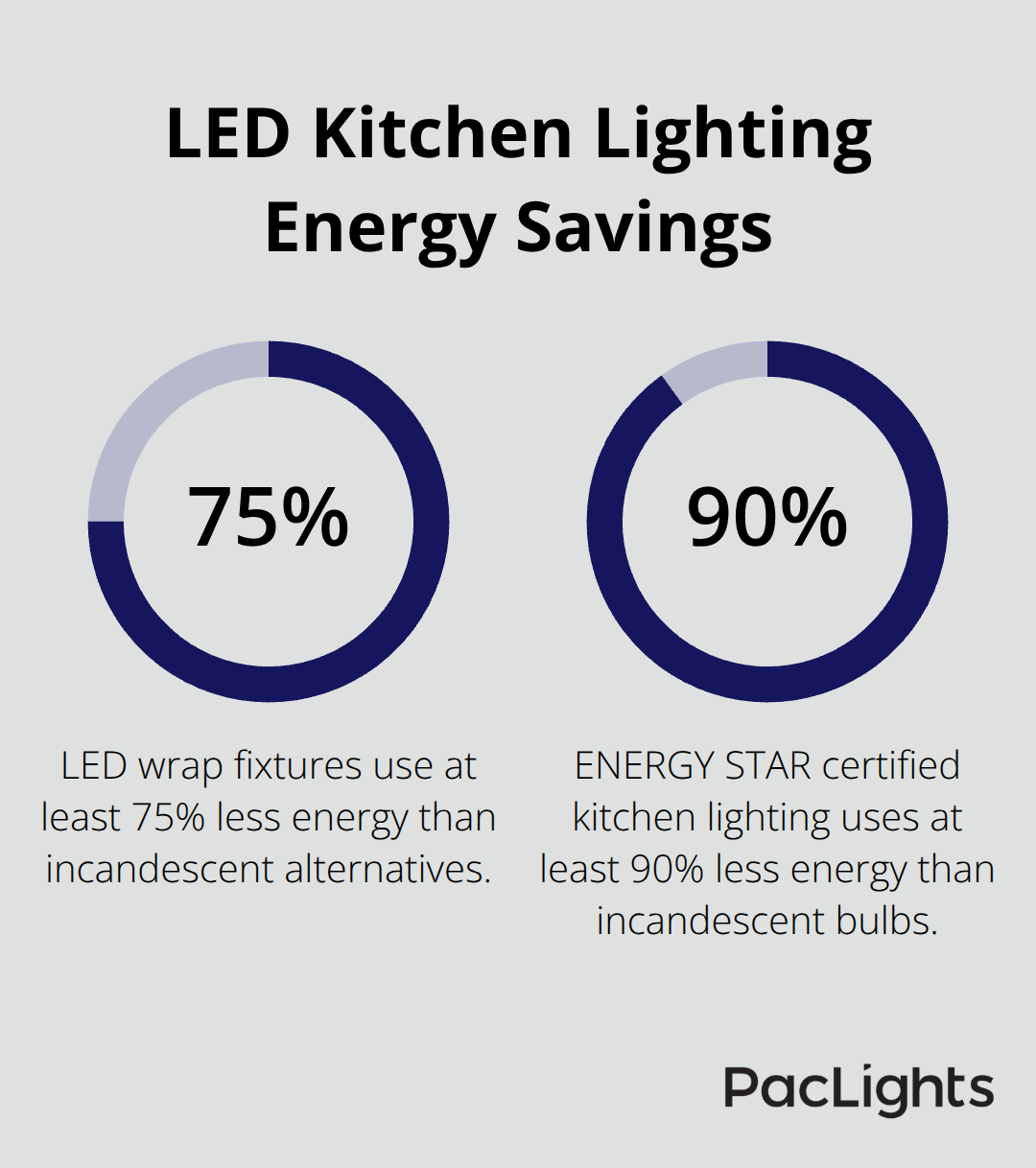
LED wrap fixtures consume at least 75% less energy than incandescent alternatives, according to the U.S. Department of Energy. A 4-foot surface wrap delivering 6,750 lumens uses a fraction of what older fluorescent or incandescent systems require to achieve the same output. In commercial kitchens running 12-16 hours daily, this difference compounds monthly into thousands of dollars in utility savings. ENERGY STAR certified kitchen lighting uses at least 90% less energy than incandescent bulbs and typically lasts about 15 times longer, with warranties of at least three years.
Kitchens see measurable reductions on electricity bills within the first full billing cycle after installation. Wrap lights also eliminate flickering and turn on instantly, removing warm-up delays that older fluorescent systems required.
Color temperature affects food quality assessment
The 4000K neutral daylight temperature standard for kitchen wrap lighting matches how professional food services evaluate color, texture, and doneness. Warmer temperatures mask discoloration and make spoiled ingredients harder to spot; cooler temperatures cause food to appear less appetizing and can slow customer perception of quality. At 4000K, prep staff accurately assess meat color, vegetable freshness, and sauce consistency without guessing. This precision prevents costly waste and reduces the risk of serving substandard product. Dimming-capable wrap models offer flexibility for different prep tasks-brighter for knife work, slightly reduced for plating and presentation areas where harsh shadows matter less.
Installation flexibility supports existing kitchen layouts
Wrap lighting mounts directly to walls or ceilings with minimal structural modifications, making retrofit installation straightforward in established kitchens. The surface-mount design works when traditional ceiling fixtures aren’t feasible, particularly in older facilities or spaces with limited overhead access. Installation requires basic mounting with screws or anchors, standard wiring connections, and testing-no complex modifications to existing electrical infrastructure. Available in 2-foot and 4-foot configurations (round or surface wrap), wrap fixtures fit varied prep zone dimensions and counter layouts. This adaptability means kitchens upgrade lighting without expensive construction or extended downtime.
The combination of superior light distribution, dramatic energy savings, and practical installation sets wrap lighting apart from conventional options. These advantages position wrap solutions as the foundation for efficient food prep zones, and understanding how to select and place them correctly determines whether your kitchen realizes the full performance potential.
Where to Position Wrap Lights for Maximum Prep Zone Impact
Mount Fixtures at the Right Height Above Work Surfaces
Position wrap lighting directly above prep stations and countertops at 24 to 36 inches above work surfaces for food prep zones. This height delivers the performance gains discussed earlier, but placement precision determines whether you achieve that 4,200-lumen output efficiency or waste light hitting the wrong surfaces.
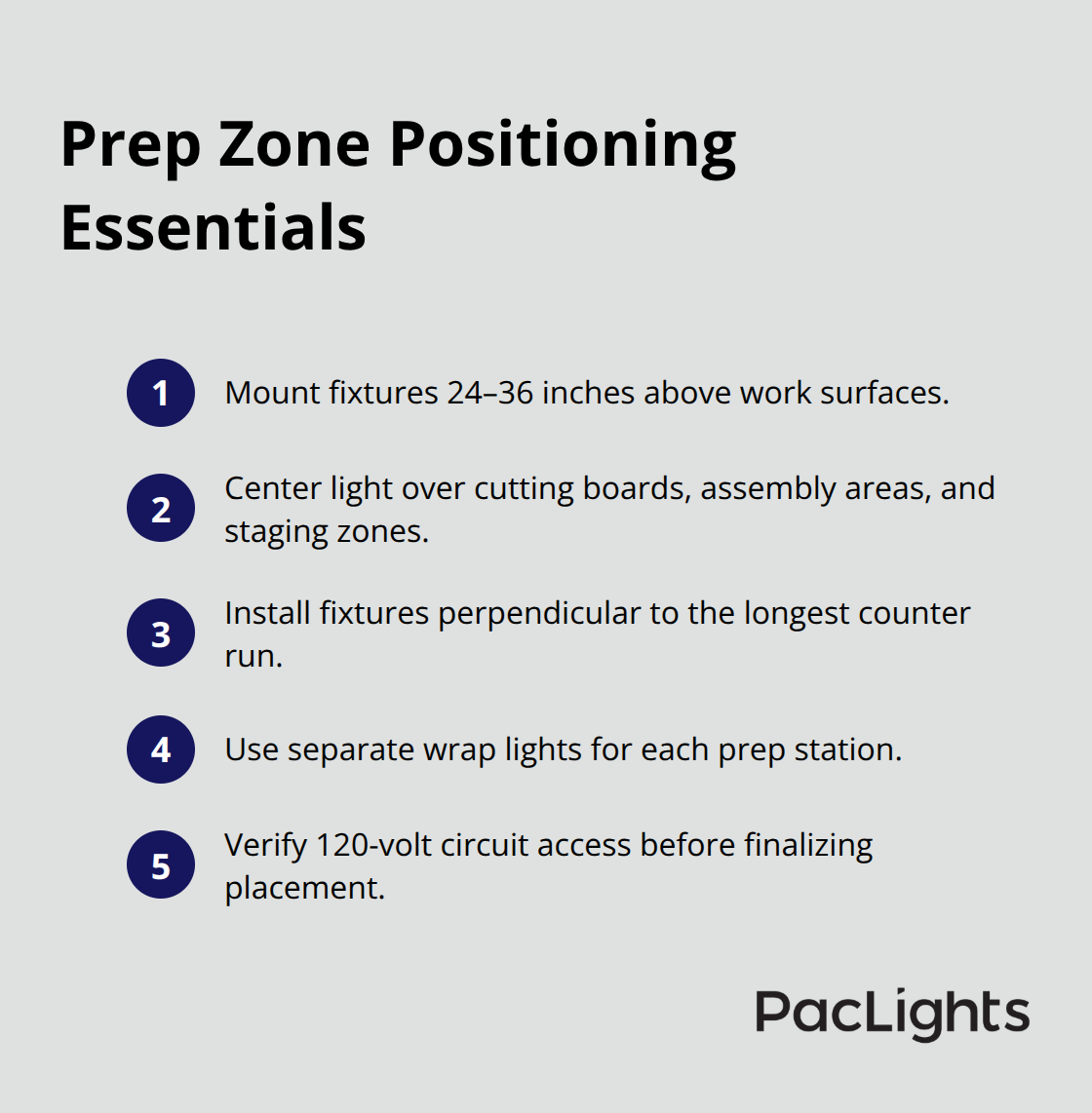
Mount fixtures to center light over cutting boards, assembly areas, and ingredient staging zones rather than spreading fixtures across the entire kitchen ceiling. This focused placement concentrates illumination where staff spend the most time and where visibility errors carry the highest cost. A 4-foot round wrap at 4000K produces 4,200 lumens; centering it above your main prep station ensures consistent brightness across knife work and plating surfaces without excessive spillover into storage or pass-through areas.
Create Zone-Specific Lighting for Multiple Prep Areas
Install separate wrap fixtures for each prep station rather than relying on one overhead source if your kitchen operates multiple zones. This zone-specific approach prevents the uneven shadows that plague single-fixture layouts and gives you independent control over brightness in different work areas. For kitchens with limited ceiling height or structural constraints, surface wrap mounting on walls near prep stations works effectively, though overhead positioning remains superior for eliminating shadows on countertops. Install wrap lights perpendicular to your longest counter dimension so light spreads evenly along the full prep surface rather than creating bright and dim zones. Verify electrical access before finalizing placement; wrap fixtures require standard 120-volt circuits with minimal wiring modifications in most commercial kitchens.
Optimize Dimming Strategy for Operational Flexibility
Color temperature selection at 4000K neutral daylight has already been established as the professional standard for food prep, but your dimming strategy matters equally for operational flexibility. Install dimming-capable wrap models in plating and presentation areas where staff assess finished dishes under slightly softer light to reduce glare and eye strain during extended shifts. Reserve full 4000K brightness for knife work and ingredient measurement zones where precision matters most. If your kitchen serves different daylight conditions throughout the day, dimmable wrap lights recoup installation costs through reduced energy consumption during peak natural light hours and improved staff comfort during evening service. Wrap lighting products support optional dimming capabilities that integrate with existing kitchen controls, allowing you to adjust output without replacing fixtures.
Maintain Color Consistency Across All Prep Zones
Avoid mixing color temperatures across adjacent prep zones; warm and cool light side-by-side creates visible discontinuity that confuses staff assessing food quality and slows workflow. Stick exclusively to 4000K across all prep areas to maintain consistent color perception and professional standards. Test color rendering before finalizing installation (place prepared dishes under your selected wrap fixtures and compare appearance to reference standards your kitchen uses for quality control). Test the installed fixture at full brightness before staff begin work to confirm shadow elimination and adjust mounting height if needed. Once your wrap fixtures are positioned and tested, the next critical step involves integrating these lights with your existing electrical systems to ensure safe, reliable operation throughout your kitchen’s daily service demands.
What Wrap Lighting Costs and What It Returns
Calculate Your Energy Savings in the First Month
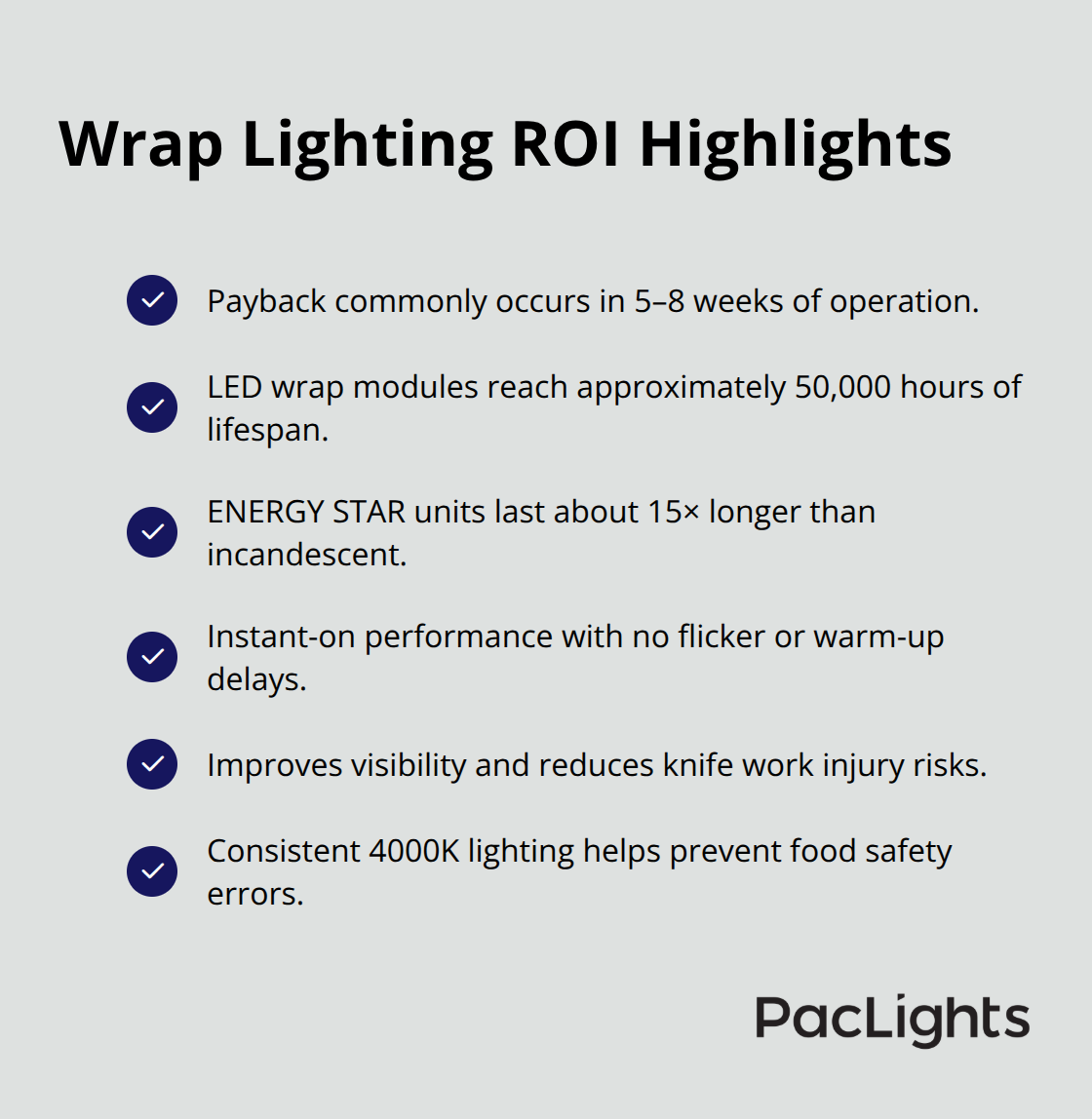
LED wrap fixtures recover their installation cost faster than most kitchen equipment upgrades because energy consumption drops immediately upon activation. A commercial kitchen operating 14 hours daily consumes roughly 2,800 kilowatt-hours monthly under traditional fluorescent lighting for prep zones; switching to LED wrap fixtures cuts this to approximately 700 kilowatt-hours, according to the U.S. Department of Energy’s findings that LED technology uses at least 75% less energy than incandescent systems. At an average commercial electricity rate of $0.14 per kilowatt-hour, this difference amounts to $2,940 in monthly savings for a single large prep area. Most wrap lighting installations cost between $1,200 and $2,400 per fixture depending on size and dimming capability, meaning payback occurs within 5 to 8 weeks of operation. After the first year, every subsequent month delivers pure margin improvement as utility costs decline without additional capital expenditure.
Extend Your Equipment Lifespan and Reduce Replacement Labor
ENERGY STAR certified kitchen lighting units typically last about 15 times longer than incandescent bulbs with warranties of at least three years, but LED wrap modules reach approximately 50,000 hours of lifespan compared to roughly 3,000 hours for traditional incandescent systems. This longevity translates to replacement costs that occur once every 8 to 10 years rather than annually, eliminating labor expenses associated with frequent fixture changes and reducing operational disruption during service hours. Your maintenance team spends less time on ladder work and fixture swaps, freeing staff for higher-value kitchen tasks. The instant-on capability without flickering removes the warm-up delays of older fluorescent systems, allowing prep staff to start work immediately without waiting for lighting stabilization.
Prevent Food Safety Losses That Exceed Equipment Costs
Staff working under consistent 4000K neutral daylight accurately identify spoiled ingredients, cross-contamination risks, and preparation errors that dim or shadowed lighting allows to pass undetected. A single foodborne illness incident costs restaurants an average of $75,000 to $250,000 in medical claims, lost customers, and potential legal expenses, according to industry risk assessments. Wrap lighting’s elimination of shadows and glare reduces knife work injuries (improving depth perception and visibility of hand positioning around cutting surfaces), lowering workers’ compensation claims that typically cost $15,000 to $50,000 per incident in commercial kitchens. One prevented contamination event or serious injury pays for your entire wrap lighting installation multiple times over.
Optimize Brightness Levels for Additional Savings
Dimmable wrap models offer flexibility for kitchens with varying operational demands; reducing brightness during slower service periods cuts energy consumption further while maintaining adequate visibility for essential tasks. Your control system adjusts output based on actual prep activity rather than running at full capacity throughout every shift. This adaptive approach compounds your monthly savings beyond the baseline 75% reduction, particularly in kitchens with inconsistent service volumes or extended operating hours.
Final Thoughts
Wrap lighting kitchen areas deliver measurable returns that extend far beyond reduced electricity bills. The combination of even light distribution, instant-on performance, and 50,000-hour LED lifespan creates a financial case that justifies immediate action for any commercial kitchen serious about operational efficiency and staff safety. Most installations recover their cost within 5 to 8 weeks through energy savings alone, after which every month generates additional margin as utility expenses drop permanently.
A single prevented foodborne illness incident or workplace injury pays for your entire wrap lighting system multiple times over, making this upgrade one of the highest-return investments available to food service operations. While traditional fluorescent systems require annual replacement cycles and constant maintenance labor, LED wrap fixtures operate reliably for 8 to 10 years with minimal intervention. Your maintenance team shifts focus from ladder work and fixture swaps to higher-value kitchen tasks, and staff working under consistent 4000K neutral daylight accurately assess food quality and identify preparation errors that shadowed lighting allows to slip past undetected.
Contact PacLights today to schedule your free lighting assessment and discover how wrap lighting positions your kitchen for sustainable cost reduction and improved operational safety. Our team works with you to select fixtures that match your prep station dimensions, operational hours, and budget constraints, then delivers customized recommendations backed by real performance data.
Disclaimer: PacLights is not responsible for any actions taken based on the suggestions and information provided in this article, and readers should consult local building and electrical codes for proper guidance.