

Transparent cylinder pendant lighting has become a staple in modern interiors because it balances form and function effortlessly. The clean lines and unobstructed light output make these fixtures work in kitchens, dining areas, retail spaces, and beyond.
At PacLights, we’ve seen firsthand how the right pendant can transform a room’s entire feel. This guide covers everything from design principles to practical installation tips.
Why Transparent Cylinder Pendants Dominate Modern Design
The Visible Light Source Advantage
Transparent cylinder pendants solve a real problem: most pendant fixtures hide their light source or create visual clutter. The transparent design lets you see exactly what you’re getting before installation, which matters more than designers admit. A 4-inch diameter matte black cylinder with a 10W LED delivers around 800 lumens of focused downward light, giving you concrete numbers to work with instead of vague promises. You can assess light quality and intensity immediately, without guesswork or installation regrets.
How Vertical Form Transforms Space
The vertical cylinder form lengthens ceilings visually, making open-plan spaces feel more expansive without requiring any structural changes. This effect works across residential and commercial projects because it addresses a fundamental design challenge: most pendant styles add visual weight to a room. Architects and interior designers specify transparent cylinders consistently because they solve this problem while delivering measurable light output.
Finish Selection and Maintenance Reality
The real advantage lies in how these fixtures handle finishes and light quality. Satin or brushed nickel resists fingerprints far better than polished metals, which matters in kitchens where you’ll touch surfaces regularly. Brass or copper tones add warmth without feeling dated, while matte finishes reduce maintenance burden by roughly 10–15% compared to high-gloss alternatives. Glass diffusers provide crisp light distribution and a sense of clarity, though they show dust more readily than frosted options.
Color Temperature and Ambiance Control
For dining and living spaces, warmer 2700K cylinders with frosted diffusers create cozier ambiance compared with cooler 4000K versions that feel clinical. The key is matching your finish choice to your actual lifestyle: if you hate cleaning, matte finishes win every time. If you want visual drama, clear glass with brass hardware delivers impact that neutral finishes simply cannot match.
Design Flexibility Across Aesthetics
Transparent cylinders pair easily with black, brass, chrome, or neutral finishes across residential and commercial settings, giving you genuine flexibility rather than forcing you into a single aesthetic direction. This adaptability means you can coordinate fixtures with existing hardware, wall colors, and architectural details without compromise. The next step involves understanding how to apply these design principles to specific rooms and spaces, where placement and quantity transform theory into actual results.
Where to Position Cylinder Pendants for Maximum Impact
Kitchen Islands: Spacing and Height Matter
Kitchen islands demand precise pendant placement because the wrong spacing ruins both function and aesthetics. For an eight-foot island, install three pendants approximately two feet apart center-to-center; a ten-foot island needs four pendants spaced the same way. This spacing delivers 2,400–2,500 lumens of concentrated task light on eight-foot surfaces and 3,200–3,300 lumens on ten-foot surfaces, which means you actually see what you’re cutting without shadows.
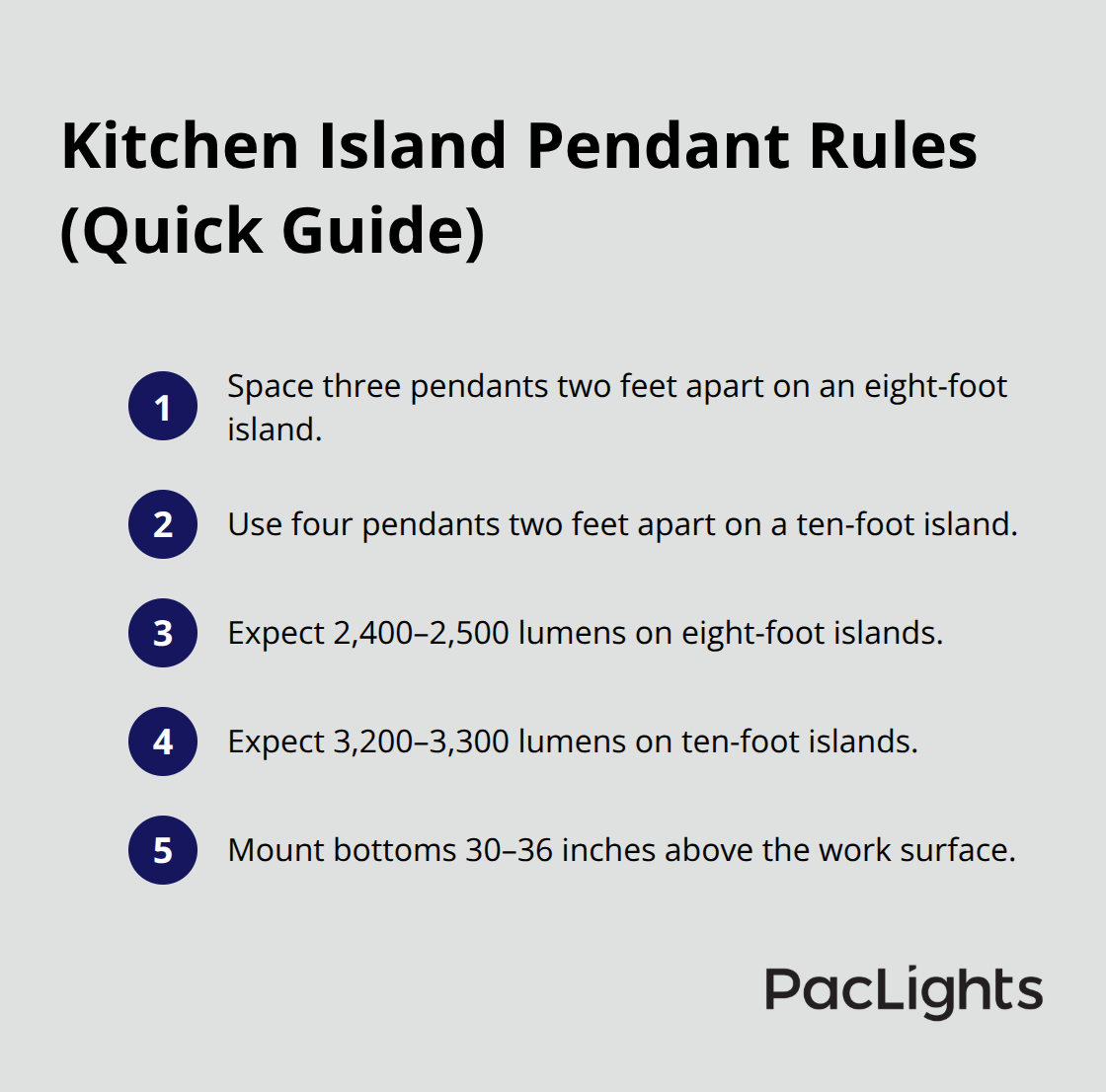
Mount the bottom of each cylinder 30–36 inches above the work surface-this height prevents head bumps while keeping light precisely where you need it. Go lower than 24 inches and you’ll feel trapped; higher than 36 inches and shadows creep back across your countertop.
Dining Tables and Sightlines
For dining tables, the math shifts entirely. One large cylinder or two to three smaller pendants hung 18–20 inches above the table frame the surface without blocking sightlines, which matters because people want to see each other’s faces, not the insides of light fixtures. This approach balances visual interest with practical conversation comfort.
Retail and Commercial Spaces
Retail and commercial spaces operate under different rules because the goal is showcasing products, not just preventing eye strain. High-CRI LEDs at 4000K with diffusers deliver even light distribution across merchandise, typically spaced 18–24 inches apart to eliminate dark pockets that make customers hesitant to browse. Commercial installations with eight pendants running 10–12 hours daily save approximately $400–$500 annually compared to incandescent alternatives, which adds real weight to the energy conversation with facility managers.
Layering and Ambient Control
Layering matters more than most designers admit, and it’s where transparent cylinders truly prove their worth. Pendant-only lighting creates dark zones around walls and in corners, which feels cheap and looks worse. Instead, combine pendants with recessed lights or wall sconces to distribute illumination evenly throughout the space. In tall lobbies, mount pendants higher to create architectural drama-think 7–8 feet high in entryways and hallways where slender cylinders guide movement without obstructing sightlines or causing head bumps. Space pendants by dividing ceiling height by three; a twelve-foot ceiling suggests roughly four-foot spacing, while ten-foot ceilings typically need three to four feet between fixtures. Standard 2700K color temperature creates warm, inviting ambiance for dining areas, but 3000K–4000K works better in offices where task focus matters more than coziness-though dimming to 60–70% during off-peak hours cuts energy use by roughly 30% without sacrificing perceived light quality.
Testing and Control Integration
Test mounting heights with temporary fixtures first because a six-inch difference noticeably alters light distribution and overall ambiance. Coordinate fixture placement with electrical infrastructure and controls (dimming or occupancy sensors) to maximize energy efficiency and lighting quality. These practical steps set the stage for understanding how LED technology and smart controls transform cylinder pendants from simple fixtures into long-term investments that pay for themselves through measurable energy and maintenance savings.
Energy Efficiency and Long-Term Financial Returns
The Math Behind LED Cylinder Savings
A 10W LED cylinder delivers around 800 lumens while consuming just 8–10 watts of power, compared to a 60W incandescent bulb producing similar brightness. That 75% energy reduction compounds quickly across installations. In a residential setting with four pendants running 12 hours daily, you save roughly 250 kWh per year per fixture-about $40 annually at typical electricity rates. For commercial spaces, eight pendants operating 10–12 hours daily cut approximately $400–$500 from annual energy bills compared to incandescent alternatives.
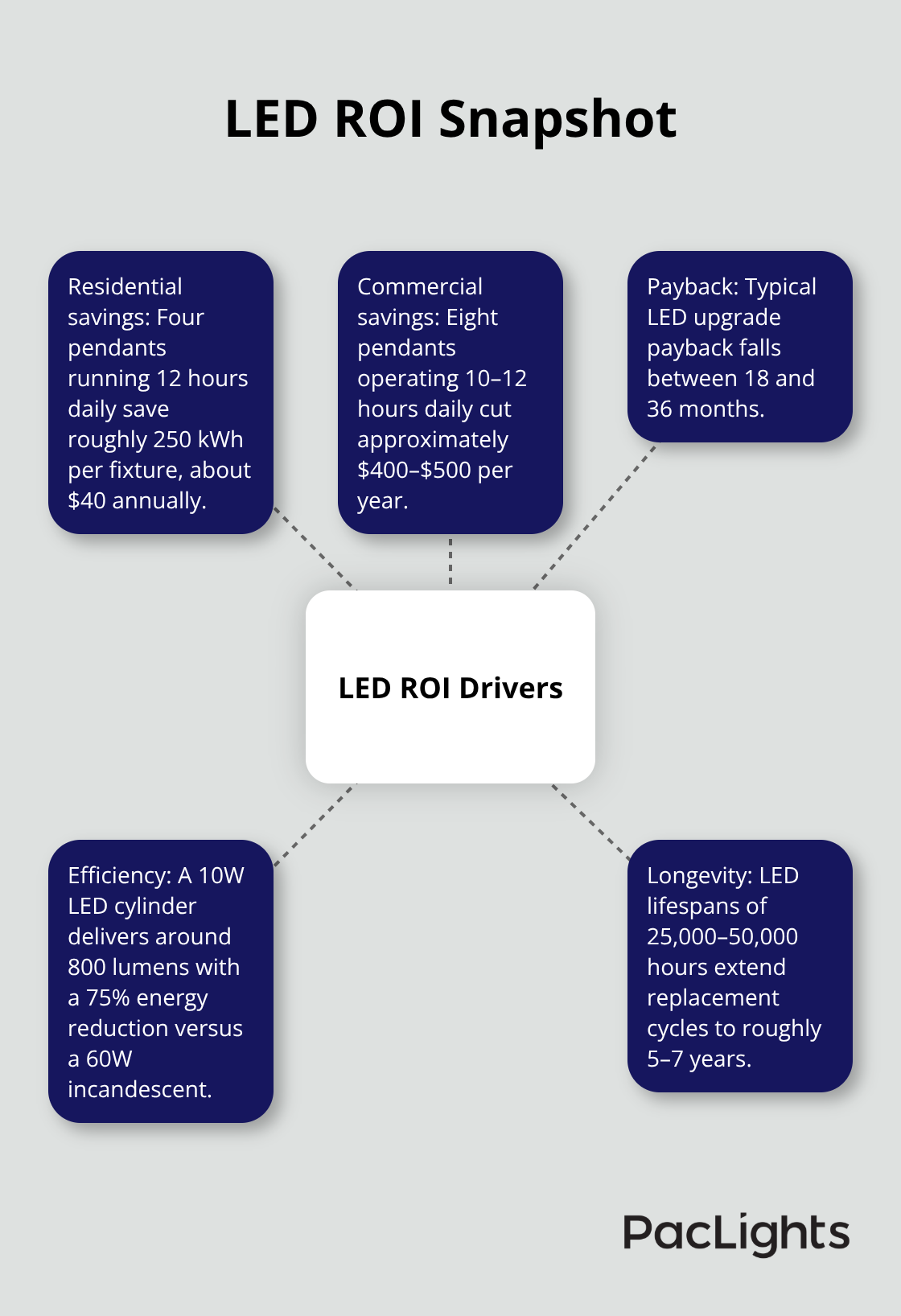
The payback period for LED upgrades typically falls between 18 and 36 months, which means these fixtures fund their own replacement within the time most people keep the same design.
Lifespan and Maintenance Cost Reduction
LED lifespans range from 25,000 to 50,000 hours, translating to roughly 5–7 years before replacement becomes necessary. Incandescent bulbs last around 1,000 hours by comparison, so the maintenance burden shrinks dramatically. In a hospitality project with 40 LED cylinders, energy and maintenance savings alone deliver payoff in approximately 2.5 to 3 years, with long-term maintenance costs dropping substantially since LED lifespans eliminate frequent bulb changes that would otherwise cost $30,000–$60,000 in labor over a decade.
Smart Controls and Advanced Dimming
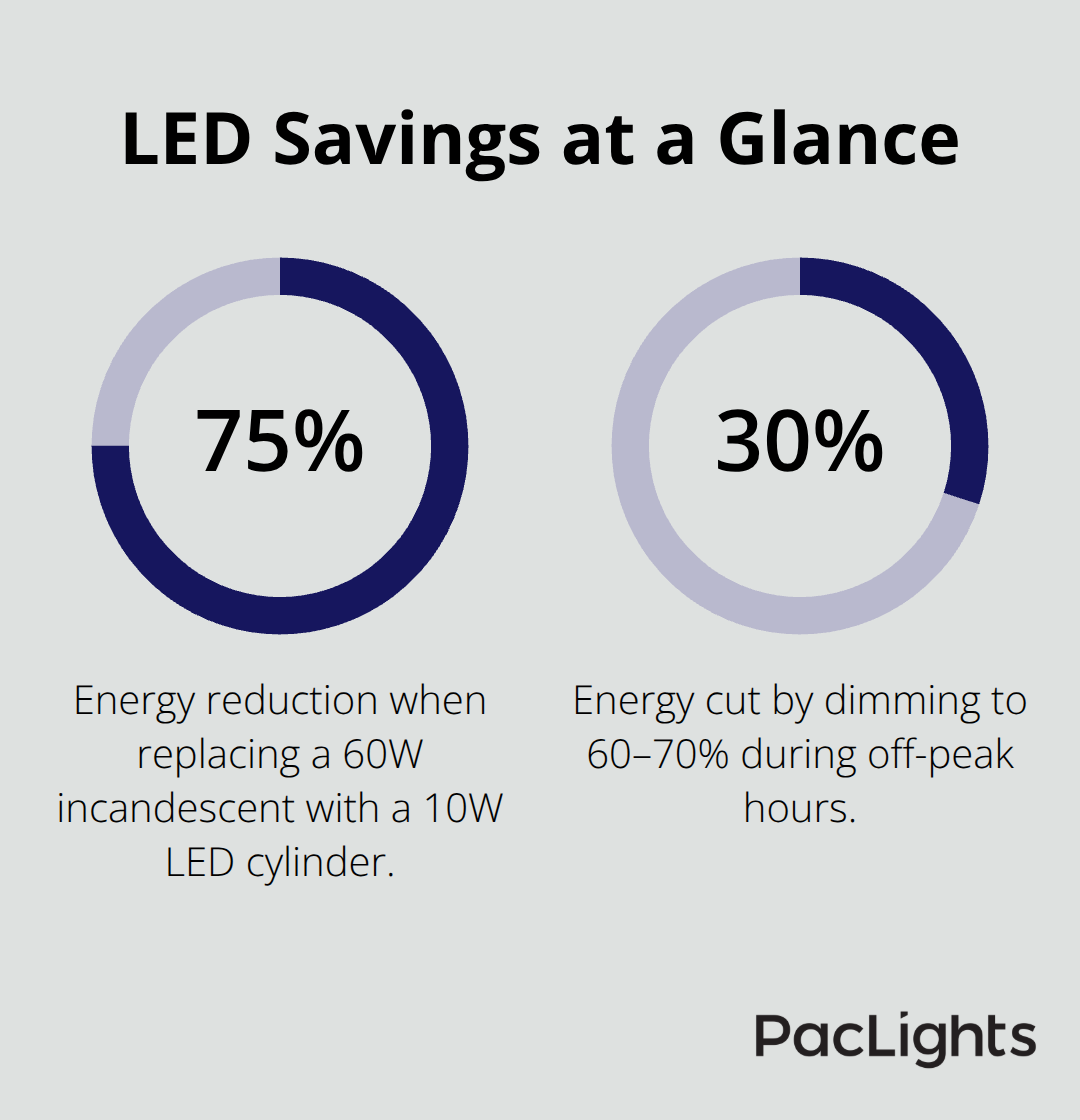
Dimmable LED bulbs paired with smart controls amplify savings further-dimming to 60–70% during off-peak hours cuts energy consumption by roughly 30% without sacrificing perceived light quality. Motion sensors and daylight harvesting reduce runtime by 20–40%, making them essential for commercial installations where lights run continuously regardless of actual occupancy. Networked controls like DALI-2 or wireless systems enable real-time dimming and occupancy-based automation, reducing energy use by 40–60% when combined with sensors and daylight harvesting.
In retail environments, high-CRI LEDs at 4000K with networked dimming maintain optimal product visibility while cutting power during slow hours.
Material Quality and Durability Standards
Tempered glass and quality metal finishes resist degradation from cleaning chemicals and environmental exposure, meaning your cylinders maintain light output and appearance for years without performance loss. Matte finishes reduce fingerprint visibility and cut cleaning time by roughly 10–15% compared to polished metals, lowering maintenance labor costs in high-touch environments. Energy Star certified LED pendants deliver an additional 15–20% in energy savings due to smarter drivers and superior thermal management, making certification status worth verifying during selection. Test dimming compatibility before purchasing, since not all LED bulbs work smoothly with all dimmer types-poor compatibility creates flicker that defeats the entire point of having quality fixtures.
Final Thoughts
Transparent cylinder pendant lighting delivers measurable advantages that extend far beyond aesthetics. The combination of visible light sources, precise lumens output, and design flexibility means you make informed decisions rather than guessing about fixture performance. These pendants work across kitchens, dining areas, retail spaces, and commercial environments because they solve real problems: they eliminate visual clutter, prevent shadows on work surfaces, and adapt to virtually any interior style without compromise.
The financial case proves equally compelling. A 10W LED cylinder consumes just 8–10 watts while replacing a 60W incandescent and delivering identical brightness, cutting energy costs by roughly 75%. Residential installations save approximately $40 annually per fixture, while commercial spaces with eight pendants operating 10–12 hours daily save $400–$500 per year. LED lifespans of 25,000 to 50,000 hours stretch replacement cycles to 5–7 years instead of months, eliminating the constant maintenance burden that drains budgets in larger installations.
We at PacLights recognize that informed decisions drive better outcomes, which is why we offer free lighting layout designs and ROI assessments to help you evaluate upgrades and anticipate cost savings before installation. Test mounting heights with temporary fixtures first, coordinate placement with electrical infrastructure, and verify dimming compatibility before purchasing. This approach transforms transparent cylinder pendant lighting from design choices into strategic investments that pay dividends through energy efficiency, durability, and long-term performance.
Disclaimer: PacLights is not responsible for any actions taken based on the suggestions and information provided in this article, and readers should consult local building and electrical codes for proper guidance.