

Cylinder wall lights with dimmers give you precise control over your lighting environment. At PacLights, we’ve seen firsthand how this simple upgrade transforms both comfort and energy bills across commercial spaces.
The right dimmer setup reduces energy waste while keeping your facility perfectly lit for any task. This introduction walks you through the technology, savings potential, and real-world applications that make dimmers worth the investment.
How Cylinder Wall Lights with Dimmers Work
Understanding Dimmer Technology
Dimmers regulate electrical power delivered to your cylinder wall lights, reducing brightness without changing color temperature. The mechanism works through phase-cut technology, which interrupts the AC power wave to lower voltage reaching the bulb. This simple principle creates profound practical differences depending on dimmer type.
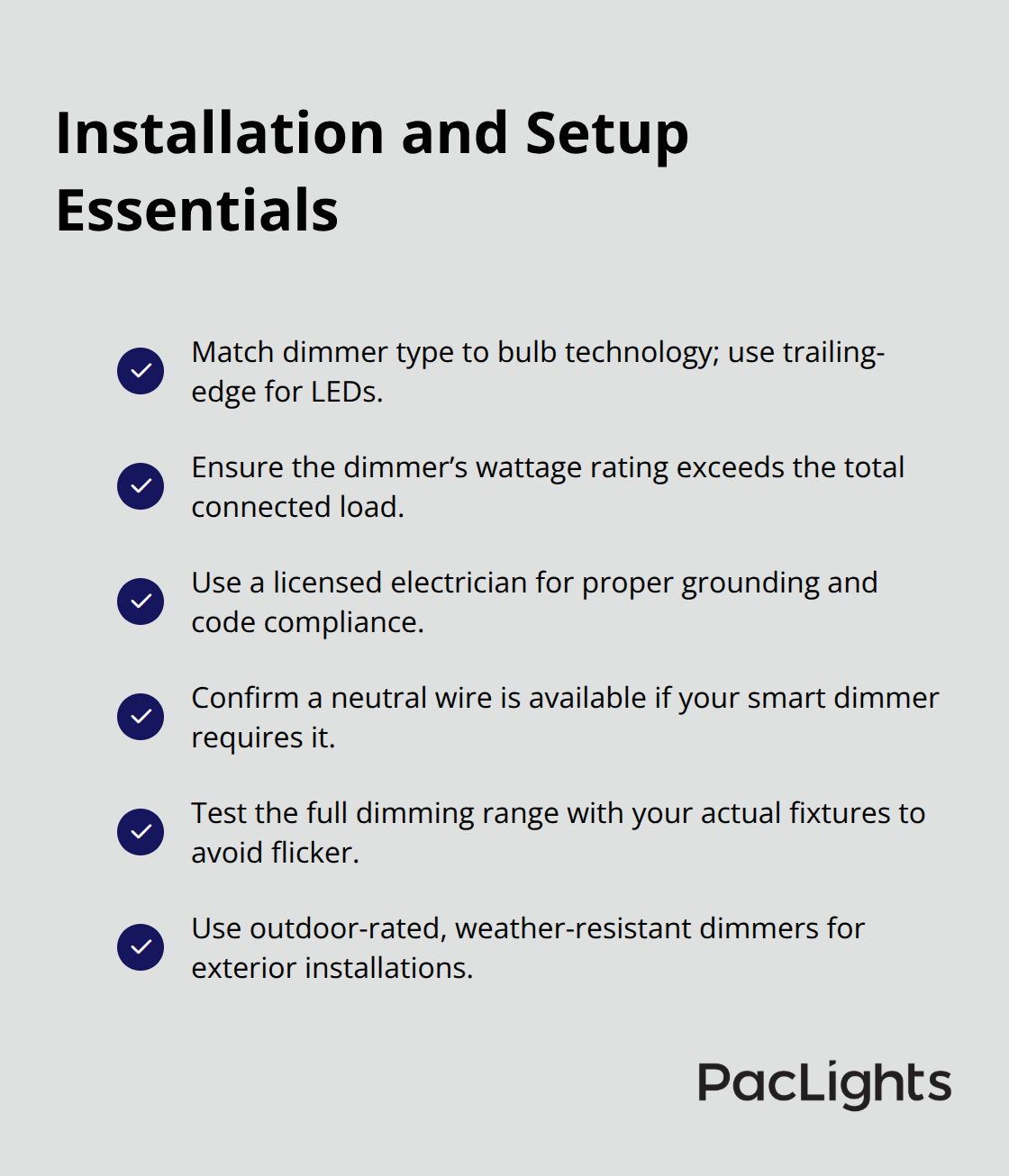
Trailing-edge dimmers (also called reverse-phase dimmers) work best with LED cylinder lights because they provide smoother dimming across the full range without the flicker or buzzing that leading-edge dimmers can cause at low brightness levels. Leading-edge dimmers, common in older installations, were designed for incandescent and halogen bulbs and often create visible flicker when paired with LEDs. The difference matters in practice: trailing-edge dimmers run cooler, consume less energy themselves, and deliver consistent light output as you adjust brightness.
Matching Dimmers to Your Bulbs and Fixtures
Your dimmer’s load rating-typically measured in watts-must equal or exceed the total wattage of all connected cylinder lights. A 300-watt dimmer cannot safely handle a 400-watt load, and undersizing creates overheating risk and poor performance. Most modern LED bulbs labeled dimmable will work with trailing-edge dimmers, but compatibility varies by manufacturer.
Non-dimmable LEDs paired with any dimmer cause immediate problems: flickering, buzzing, or permanent bulb damage. Before purchasing, verify that your cylinder lights and bulbs explicitly support dimming, and match the dimmer type to your bulb technology. This verification step prevents costly mistakes and ensures smooth operation from day one.
Professional Installation and Testing
Installation requires more than screwing in a dimmer switch. A licensed electrician should handle the work because proper grounding, circuit compatibility, and wiring verification prevent safety hazards and code violations. Many smart dimmers require a neutral wire-a white wire in your electrical box-which older installations may lack.
Testing after installation matters: run the dimmer across its full range with your actual bulbs and fixtures to confirm smooth operation without flicker. Outdoor-rated, weather-resistant dimmers are essential for cylinder wall lights exposed to moisture, temperature swings, and UV exposure. Standard indoor dimmers fail quickly in these conditions.
Monitoring Performance and Maintenance
Energy monitoring features on smart dimmers let you track actual power consumption at different brightness levels, giving you concrete data on savings rather than estimates. Regular maintenance prevents performance degradation: dust accumulation on dimmer terminals increases resistance and wastes energy, while firmware updates on smart models maintain security and compatibility with your home automation system.
Verify all three components-fixture, dimmer, and bulb-work together before finalizing installation. This compatibility check eliminates surprises and ensures your dimmer investment delivers the comfort and efficiency gains you expect. With proper setup and maintenance in place, your cylinder wall lights are ready to demonstrate measurable energy reductions across your facility.
How Much Energy Do Dimmers Actually Save
The Math Behind Dimming and Power Reduction
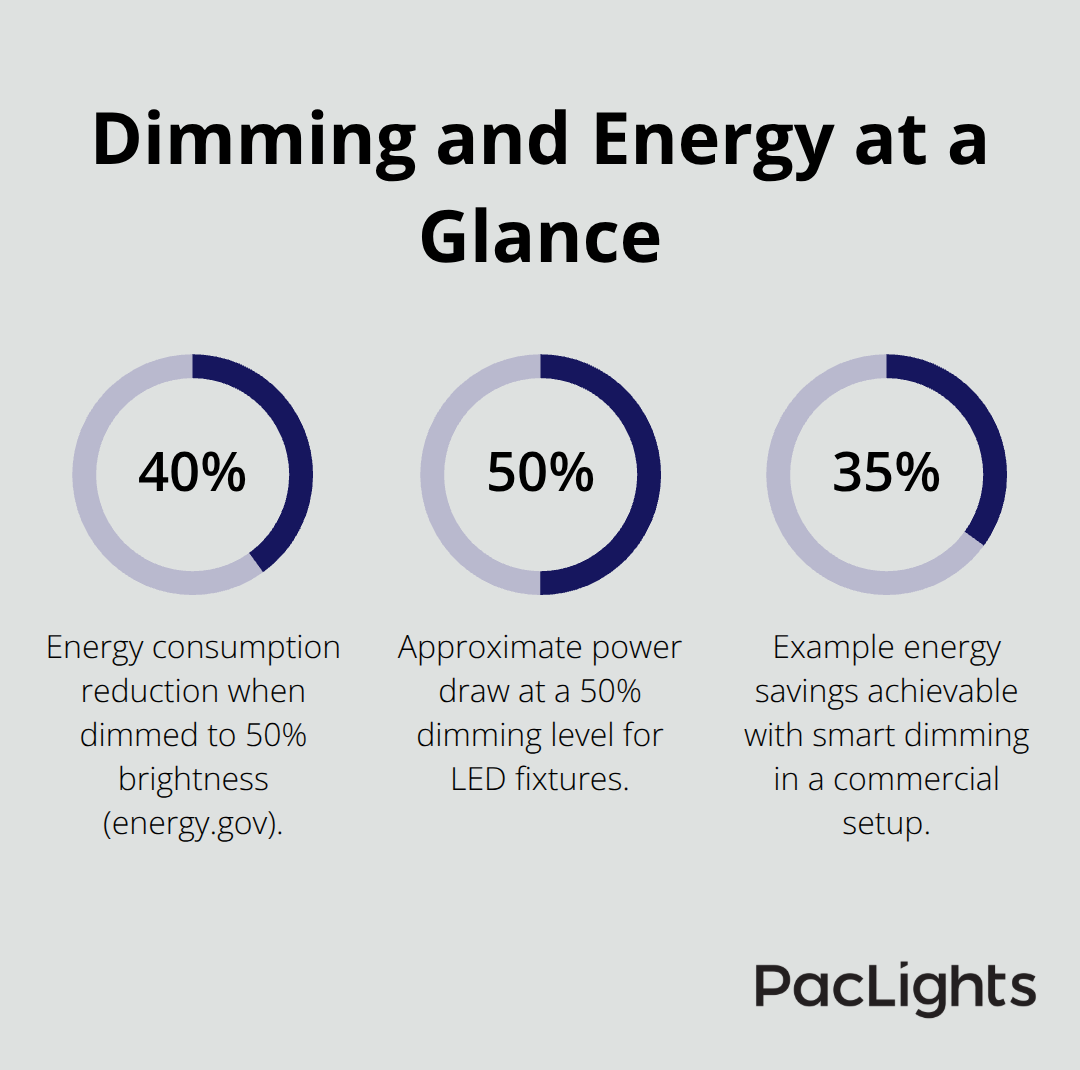
Dimming cylinder wall lights to 50% brightness cuts energy consumption by roughly 40%, according to energy.gov. This isn’t theoretical-it’s what happens when you reduce the electrical power flowing to your fixture. LED bulbs respond proportionally to power reduction, so a 50% dimming level delivers approximately 50% of the original power draw. In commercial facilities running outdoor lighting 10–12 hours daily, this translates to measurable monthly reductions on your utility bill.
A warehouse with 20 cylinder wall lights at 400 watts each operating at full brightness consumes 8,000 watts per night. Dimming those same fixtures to 60% brightness drops consumption to roughly 4,800 watts, saving 3,200 watts every operating hour. Over a year, that single change eliminates thousands of kilowatt-hours from your electrical demand.
Automation Multiplies Your Savings
The actual savings depend on three factors: how low you dim, how often lights operate at reduced levels, and whether your dimmer system includes automation. Manual dimming delivers savings only when someone adjusts brightness, making it inconsistent and dependent on user behavior. Smart dimmers with occupancy sensors and scheduling automation capture 30–50% energy reductions in commercial offices by dimming lights during unoccupied periods and adjusting for daylight availability.
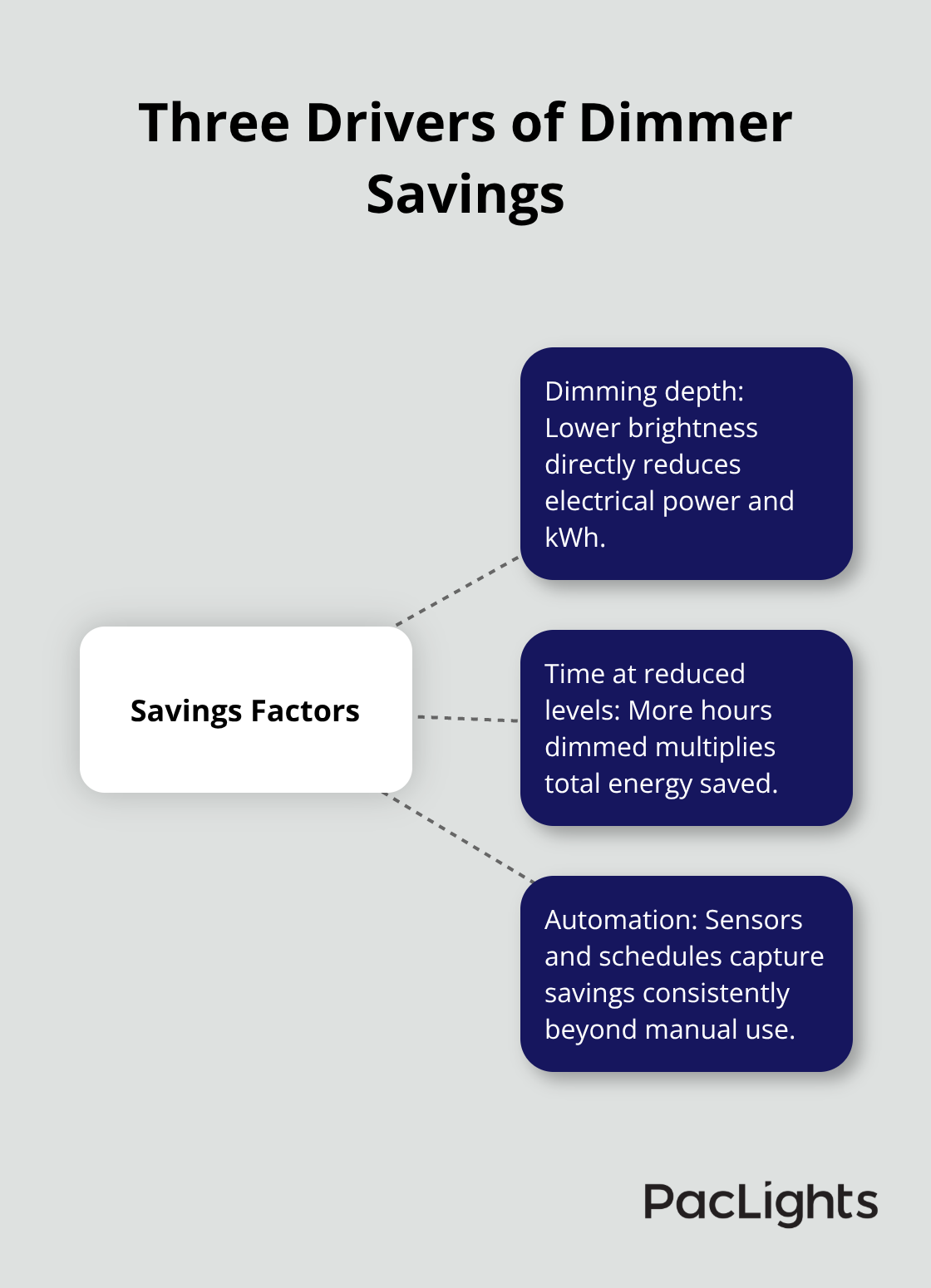
Outdoor cylinder wall lights with photocontrols and dimmers achieve 20–60% savings by automatically lowering brightness during twilight hours or when ambient light increases. Pairing dimmers with motion sensors and daylight harvesting controls eliminates guesswork and captures savings consistently. A retail environment dimming façade lighting during low-traffic hours and adjusting for seasonal daylight changes sees compounded savings throughout the year. Track your baseline energy consumption at full brightness, then measure actual consumption across your typical dimming scenarios-this gives you concrete data rather than estimates.
Real Costs and Payback Periods
Commercial facilities recover dimmer installation costs faster than most people expect. A typical dimmer retrofit costs $150–$400 per fixture including the dimmer, wiring, and professional installation. For a 20-fixture outdoor installation, budget $3,000–$8,000 in upfront costs. If those fixtures consume 8,000 watts combined and you achieve 35% energy savings through smart dimming, you eliminate approximately 9,800 kilowatt-hours annually.
At an average commercial electricity rate of $0.12 per kilowatt-hour, that equals roughly $1,176 in annual savings. Your payoff period falls between 3–7 years depending on local electricity rates and your specific dimming patterns. Facilities in regions with higher electricity costs-California at $0.18 per kilowatt-hour or parts of New England at $0.20 per kilowatt-hour-achieve payback in 2–4 years. This math improves further when you factor in extended bulb life and reduced maintenance labor.
LED bulbs dimmed regularly experience less thermal stress than those running continuously at full brightness, extending operational life from the typical 50,000 hours to potentially 60,000+ hours. Lower operating temperatures reduce cooling costs in enclosed spaces and decrease HVAC demand during warm months. A warehouse reducing exterior lighting load by 3,200 watts also decreases the heat radiating into the building during summer, lowering air conditioning runtime. These secondary savings rarely appear on electricity bills as separate line items, but they accumulate across your facility operations.
Some utility companies offer rebates for dimmer installations-typically $25–$75 per fixture-which directly reduce your net investment. Check with your local utility about demand-response programs; facilities that reduce peak electrical demand during designated hours qualify for rate discounts or direct incentives. These programs exist specifically because utilities benefit when customers shift consumption away from peak periods, and dimmers enable exactly that behavior through automation.
Measuring What Matters
Stop relying on manufacturer estimates and measure your actual consumption. Install a power meter on your dimmer circuit before and after implementation to capture real baseline data. Run your cylinder lights at full brightness for one week, recording total kilowatt-hours consumed. Then operate at your target dimming level for another week under identical conditions-same weather, same operating hours, same fixture count. The difference between these two measurements is your actual savings, not a percentage from a chart.
Smart dimmers with built-in energy monitoring eliminate this manual work; they track consumption continuously and display historical trends through mobile apps. This data identifies which times and spaces generate the most savings, letting you refine your dimming schedules. If your monitored data shows 28% savings instead of the expected 35%, you can adjust dimming levels or add motion sensors to capture the missing efficiency. Facilities that don’t measure never know whether their dimmer system performs as intended or underperforms due to compatibility issues or suboptimal settings.
Schedule quarterly reviews of your energy monitoring data; this discipline catches performance degradation before it costs you thousands in wasted electricity. Once you establish your baseline performance and understand where your facility captures the most savings, you’re ready to explore how different commercial environments apply these principles to their specific operational needs.
Practical Applications in Commercial and Industrial Settings
Retail Storefronts and Customer Experience
Retail storefronts and shopping centers face constant pressure to balance visibility with operating costs, and cylinder wall lights with dimmers solve this problem directly. A typical retail façade runs exterior lighting 12–16 hours daily, consuming substantial energy even during daylight hours and low-traffic periods. Retailers that install smart dimmers with photocontrols reduce façade lighting by 40–60% during afternoon and early evening hours when natural daylight supplements artificial illumination. Facilities measuring actual consumption before and after dimmer installation consistently report 20–40% reductions in exterior lighting energy. The financial impact matters: a mid-sized retail location spending $2,000 annually on façade lighting cuts that cost to $1,200–$1,600 through intelligent dimming.
Dimmed lighting during slow business hours creates intentional ambiance that influences customer perception. Research from the International Energy Agency shows that moderate, warm-dimmed lighting in retail environments correlates with longer customer dwell times and increased purchase intent compared to harsh, constant-brightness lighting. Your dimmer investment simultaneously reduces costs and enhances the customer experience-a rare combination that justifies the installation expense within 2–3 years.
Warehouses and Manufacturing Facilities
Warehouses and manufacturing facilities operate cylinder wall lights continuously, often at full brightness regardless of actual task requirements or time of day. A 50,000-square-foot warehouse with 40 wall-mounted fixtures consuming 500 watts each operates at 20,000 watts continuously. Dimming to 60% brightness during nighttime hours and low-activity periods cuts this to 12,000 watts, eliminating 8,000 watts of constant draw. Over a year of 16 hours daily operation at reduced levels, this single facility saves approximately 46,700 kilowatt-hours-worth $5,600 at average industrial rates of $0.12 per kilowatt-hour.
Warehouse managers often resist dimming, fearing reduced visibility compromises safety. This concern is unfounded when dimming strategy matches actual task lighting needs. Motion-activated dimmers solve this perfectly: lights remain at full brightness only in active work zones where employees perform tasks, while storage areas and transit corridors operate at 50–70% brightness. This layered approach maintains safety where it matters while capturing substantial energy savings in low-activity spaces. Industrial facilities with hazardous locations or specialized processes have additional constraints-dimmers must maintain consistent light quality across dimming ranges and work reliably with specialized fixture types. Vapor-proof and hazardous-location lighting designed for these demanding environments can include optional dimming controls that maintain performance standards while enabling energy optimization.
Office Spaces and Daylight Integration
Open-plan offices with extensive window exposure experience dramatic daylight variation throughout the day and seasons. A north-facing office receives minimal direct sunlight, while south-facing spaces flood with natural light during midday hours. Fixed-brightness cylinder wall lights waste energy during peak daylight periods when occupants need minimal artificial illumination. Offices implementing daylight-responsive dimmers automatically reduce artificial lighting as natural light increases, capturing 25–35% energy savings according to the Department of Energy. Employees in these spaces report reduced eye strain and fatigue-benefits that improve productivity and reduce absenteeism.
The American Society of Heating, Refrigerating and Air-Conditioning Engineers documents that lighting comfort directly affects cognitive performance; dimmed, daylight-integrated lighting in office spaces correlates with 5–10% improvements in task completion speed and accuracy. This performance gain translates to measurable productivity improvements that far exceed the energy savings in total financial value.
Conference Rooms and Meeting Spaces
Conference rooms and meeting spaces benefit dramatically from scene-based dimming. A single dimmer switch controlling multiple cylinder wall lights and allowing preset brightness levels eliminates the distraction of manual adjustment during meetings. Preset scenes-bright for presentations, moderate for collaboration, dim for video conferencing-let occupants optimize lighting instantly without touching controls. Facilities tracking meeting room utilization find that proper lighting control increases room booking frequency by 15–20% because users perceive better environmental quality.
Smart dimmers enable scheduling that automatically adjusts lighting based on calendar reservations, dimming lights in unoccupied conference rooms to 20% brightness and restoring full brightness 10 minutes before scheduled meetings. This automation captures savings without requiring occupant participation-the most reliable path to consistent energy reduction.
Final Thoughts
Cylinder wall lights with dimmers reduce energy consumption by 20–60% depending on your dimming strategy and automation level, translating directly to lower utility bills and faster payback periods than most facility upgrades. They extend bulb life by reducing thermal stress, cutting replacement labor and material costs over time. They improve occupant comfort and perception of your space, which influences customer behavior in retail environments and employee productivity in offices.
Implementation requires attention to three practical details: your dimmer type must match your bulb technology (trailing-edge dimmers for LEDs, leading-edge for halogen), the dimmer’s wattage rating must exceed your total fixture load, and professional installation by a licensed electrician ensures proper grounding, circuit compatibility, and code compliance. Weather-resistant, outdoor-rated dimmers are non-negotiable for cylinder wall lights exposed to moisture and temperature swings. Measuring actual performance through power monitoring before and after your retrofit separates real savings from estimates, and automation through occupancy sensors and daylight harvesting multiplies savings beyond manual dimming alone.
We at PacLights understand that energy-efficient lighting requires controls that match your facility’s specific needs. Our cylinder wall lights work seamlessly with dimming systems, and we offer optional daylight and motion controls to optimize performance. Contact our team for a free lighting layout design and ROI assessment to understand exactly what your facility will save.
Disclaimer: PacLights is not responsible for any actions taken based on the suggestions and information provided in this article, and readers should consult local building and electrical codes for proper guidance.