

Car park lighting plays a vital role in ensuring safety, security, and efficiency in parking facilities. At PacLights, we understand the unique challenges and requirements of illuminating these spaces effectively.
This blog post will explore key considerations for car park lighting, including fixture selection, smart control systems, and energy-saving strategies. We’ll also share practical tips to help you create a well-lit, secure environment for both vehicles and pedestrians.
How to Optimize Car Park Lighting
Safety and Energy Efficiency: A Balancing Act
Car park lighting design requires a careful balance between safety and energy efficiency. The Illuminating Engineering Society recommends a minimum horizontal illuminance of 0.2 footcandles for regular parking lots, with high-activity areas needing up to 5 footcandles. LED lighting has transformed car park illumination, reducing energy consumption by up to 75% compared to traditional systems. A 150-watt LED light on a 20-foot pole can effectively illuminate about 6,000 square feet of parking space.

Uniform Light Distribution: Eliminating Dark Spots
Consistent visibility throughout the parking area depends on uniform lighting. The Illuminating Engineering Society specifies a maximum-to-minimum ratio of 20:1 in non-enhanced security parking lots (meaning the brightest areas should not exceed 20 times the brightness of the darkest areas). Careful fixture placement is essential to achieve this uniformity. Parking lot light poles typically stand between 15 and 20 feet tall, maximizing coverage while minimizing the number of poles needed.
Glare Reduction: Enhancing Comfort and Safety
Excessive glare can cause discomfort and temporarily impair vision, potentially leading to accidents. To mitigate this issue, car park operators should use fixtures that minimize glare, shadows, and gloomy areas by evenly distributing light across the parking garage. Fixtures with a color temperature between 3000K and 4000K provide good visibility without causing excessive glare. Implementing lighting controls that adjust brightness based on time of day or occupancy can further reduce glare during low-traffic periods.
Smart Lighting Controls: Maximizing Efficiency
Modern car park lighting systems often incorporate smart controls to further optimize energy use and enhance safety. Motion sensors and occupancy detection can automatically adjust light levels based on activity, while daylight harvesting techniques take advantage of natural light to reduce artificial lighting needs. These smart systems can significantly cut energy costs while maintaining optimal illumination levels.
Professional Lighting Design: Ensuring Optimal Results
The complexities of car park lighting design underscore the importance of professional expertise. A skilled lighting designer can create a tailored solution that addresses the unique needs of each parking facility, taking into account factors such as layout, traffic patterns, and local regulations. This expertise ensures that the lighting system not only meets safety and efficiency standards but also provides a comfortable and welcoming environment for users.
As we move forward, let’s explore the specific types of fixtures that best suit car park applications and how to choose the right lights for your project.
Selecting Optimal Fixtures for Car Parks
LED Efficiency and Longevity
LED technology has revolutionized car park lighting. These fixtures consume up to 75% less energy than traditional lighting solutions, which significantly reduces operational costs and carbon footprints. LEDs boast an impressive lifespan of 50,000 to 100,000 hours, which translates to reduced maintenance costs and fewer disruptions to car park operations. They maintain over 90% of their original brightness even after years of use, ensuring consistent illumination throughout their lifecycle.
Fixture Types for Different Car Park Areas
Different areas within a car park require specific lighting solutions. Open parking areas often use area lights or shoebox fixtures. These provide broad, even illumination and mount on poles ranging from 15 to 30 feet tall. Covered parking structures typically prefer linear fixtures or low-profile canopy lights due to their ability to provide uniform lighting in confined spaces.
The Illuminating Engineering Society recommends specific illuminance levels for parking lots:
- Regular parking lots: minimum 0.2 footcandles
- High-activity zones: up to 5 footcandles
When you select fixtures, consider their light output and distribution pattern to meet these standards efficiently.
Weather Resistance and Durability
Car park lighting fixtures must withstand harsh outdoor conditions (extreme temperatures, moisture, and sometimes salt exposure). Look for fixtures with high IP (Ingress Protection) ratings, such as IP65 or IP66, which indicate excellent protection against dust and water ingress. Fixtures made from corrosion-resistant materials like die-cast aluminum or stainless steel offer superior durability in challenging environments.
You should also consider fixtures with impact-resistant lenses or guards to protect against accidental damage or vandalism. These features extend the life of your lighting system and reduce long-term maintenance costs.
Smart Lighting Integration
Modern car park lighting often incorporates smart features. These can include:
- Motion sensors for occupancy-based lighting
- Daylight harvesting to adjust artificial light based on natural light levels
- Networked control systems for centralized management
These smart features further optimize energy use and enhance the overall lighting experience for car park users.
Color Temperature and Light Quality
The color temperature of your lighting affects visibility and comfort. For car parks, experts often recommend a color temperature between 3000K and 4000K. This range provides good visibility without causing excessive glare. Additionally, fixtures with a high Color Rendering Index (CRI) improve the ability to distinguish colors accurately, which can be important for security and safety.

The selection of optimal fixtures for car parks involves a careful balance of efficiency, durability, and specific lighting requirements. As we move forward, we’ll explore how smart lighting controls can further enhance the performance and efficiency of your car park lighting system.
How Smart Controls Revolutionize Car Park Lighting
The Power of Occupancy Detection
Motion sensors and occupancy detection systems transform car park illumination. These devices reduce energy consumption by up to 80% by dimming or turning off lights in unoccupied areas. A U.S. Department of Energy study found that occupancy sensors in parking garages lead to energy savings of 30-60% compared to systems without controls.
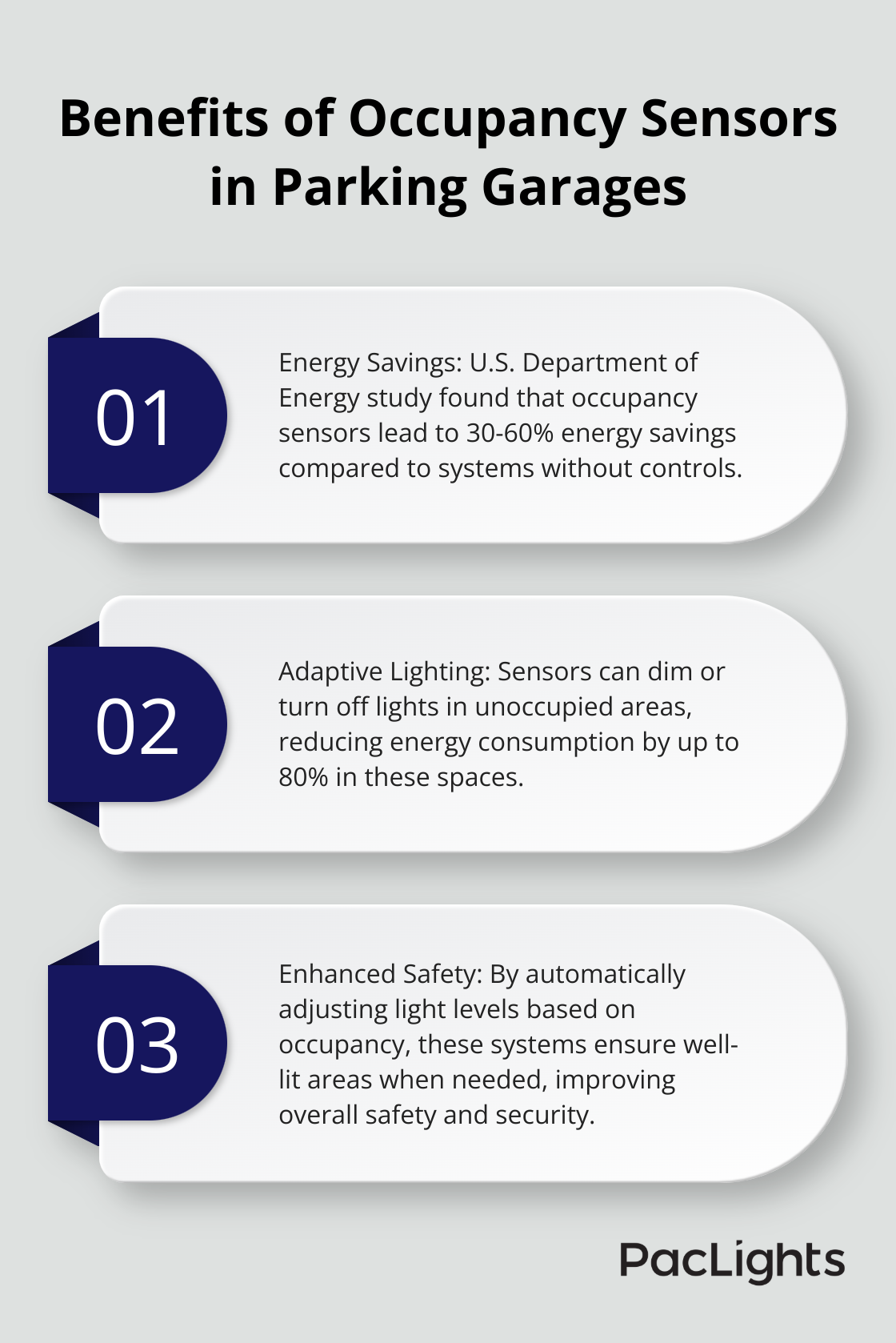
Strategic placement of sensors ensures coverage of all areas without blind spots. Multi-level car parks require each level to have its own set of sensors for accurate detection. The selection of sensors with appropriate range and sensitivity for the specific layout of your car park is essential.
Harnessing Natural Light
Daylight harvesting techniques significantly reduce artificial lighting needs during daylight hours. Photosensors measure ambient light levels and adjust artificial lighting accordingly. This approach leads to energy savings of up to 40% in areas with good natural light exposure.
Optimal results require calibration of photosensors to maintain consistent light levels throughout the day. In multi-story car parks, sensors on different levels may require different settings to account for varying natural light penetration.
Benefits of Networked Systems
Networked lighting control systems offer centralized management and data collection capabilities. These systems allow facility managers to monitor energy usage, adjust lighting schedules, and quickly identify maintenance needs.
A Northwest Energy Efficiency Alliance case study found that networked controls in a parking structure reduced lighting energy use by 74% compared to the baseline. These systems enable more sophisticated strategies like predictive maintenance (which can reduce downtime and extend fixture lifespan).
Adaptive Scheduling for Optimal Efficiency
Adaptive lighting schedules consider factors like time of day, day of the week, and seasonal variations. For instance, a car park serving an office building might have different lighting needs on weekdays versus weekends.
The U.S. Department of Energy reports that adaptive scheduling leads to energy savings of 20-30% compared to static schedules. Effective adaptive scheduling requires analysis of historical usage patterns and consideration of factors like local events that might affect car park occupancy.
Choosing the Right Smart Control System
The selection of a smart control system compatible with existing infrastructure and scalable for future needs is important. The system should integrate seamlessly with various control systems, ensuring optimal performance and energy efficiency in car park environments.
Final Thoughts
Car park lighting requires a balance of safety, efficiency, and user comfort. Effective illumination enhances security while optimizing energy use through smart controls and LED technology. Professional lighting design addresses unique facility challenges, ensuring compliance with regulations and industry standards.
We at PacLights offer energy-efficient lighting solutions designed for parking applications. Our products provide durability, versatility, and advanced control options to meet diverse car park environment needs. A comprehensive site evaluation will identify the most suitable fixtures and control systems for your project.
Car park lighting creates a safe, efficient, and welcoming environment for users. The next steps involve assessing your specific needs and consulting with lighting professionals. Consider your facility layout, traffic patterns, local regulations, and energy-saving goals when planning your car park lighting project.
Disclaimer: PacLights is not responsible for any actions taken based on the suggestions and information provided in this article, and readers should consult local building and electrical codes for proper guidance.