

Linear lighting transforms ordinary spaces into extraordinary environments through strategic placement and thoughtful design. The right approach creates dramatic visual impact while providing functional illumination.
We at PacLights have seen how vibrant linear lighting elevates everything from modern offices to residential kitchens. This guide covers the essential techniques for achieving professional results in any setting.
What Makes Linear Lighting Design Actually Work?
Color Temperature Strategy for Real Results
Color temperature directly impacts how people feel and perform in your space. Warm white light at 2700K to 3000K works best for restaurants, hotels, and residential areas where comfort matters most. Cool white at 4000K to 5000K increases productivity in offices and retail spaces by 23% according to the Lighting Research Center. Daylight temperatures above 5000K suit warehouses and facilities where accuracy is critical.

The wrong temperature choice kills the atmosphere instantly. Warm light in a modern office feels sluggish, while cool light in a restaurant feels harsh and unwelcoming. Match your temperature to your space’s primary function rather than personal preference.
Brightness Levels That Actually Function
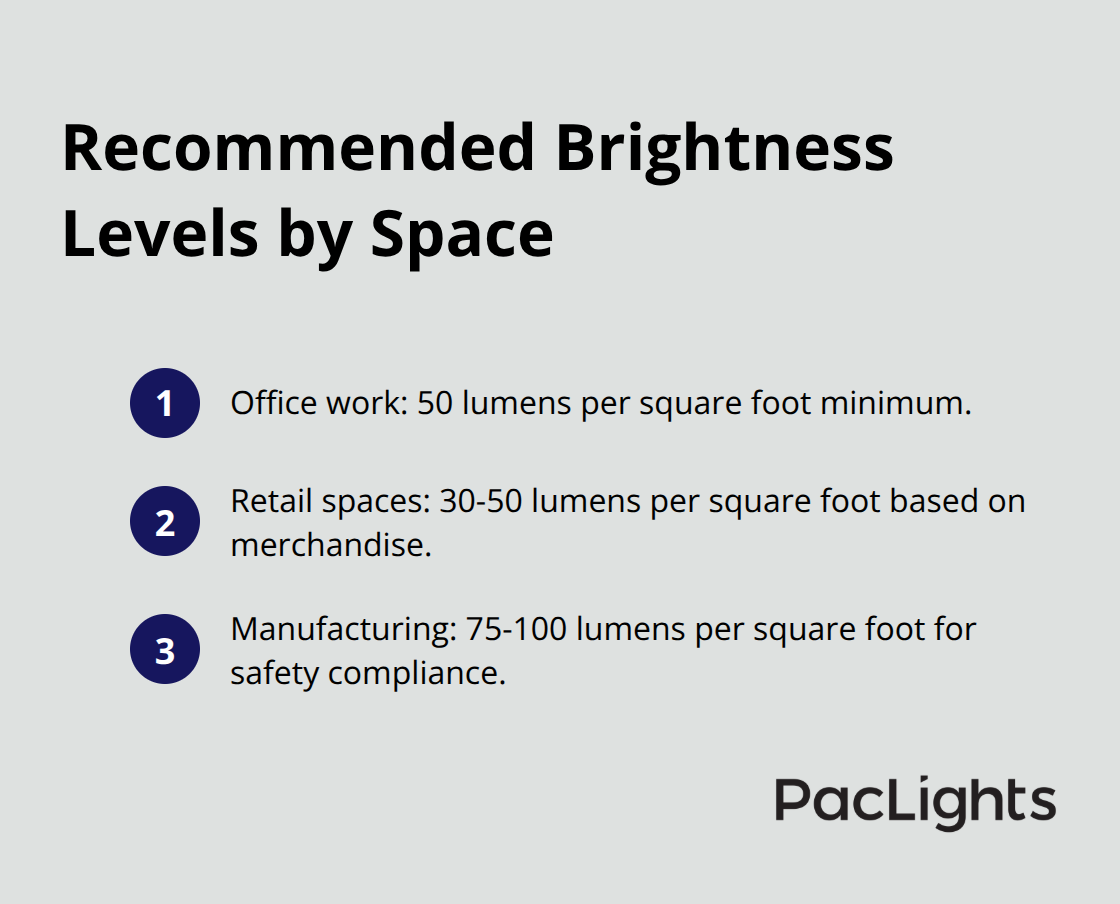
Most spaces fail because they use generic brightness recommendations instead of actual calculations. Office environments require 50 lumens per square foot minimum for computer work, while retail spaces need 30-50 lumens per square foot (depending on merchandise type). Manufacturing areas demand 75-100 lumens per square foot for safety compliance.
The 20 lumens per square foot rule that many follow creates dim, unusable spaces. Linear fixtures should provide consistent output across their length. A 4-foot LED strip that produces 4000 lumens gives you 1000 lumens per foot, which translates to proper task illumination when spaced correctly.
Spacing and Positioning Rules That Work
Linear fixtures perform best when spaced at 1.5 times their mounting height. Mount a fixture 10 feet high, space the next one 15 feet away maximum. This prevents dark spots between fixtures while avoiding overlap waste. Corner installations need fixtures within 3 feet of walls to prevent shadows.
Parallel runs should maintain 6-8 feet between rows for even coverage. Most installations fail because they space fixtures too far apart, which creates zebra striping effects that look unprofessional and reduce functionality.
Now that you understand the design fundamentals, the next step involves selecting the right fixtures to execute your vision effectively.
Which Linear Fixtures Work Best for Your Space
LED Strip Lights vs Linear Pendant Systems
LED strip lights dominate residential and accent applications because they cost 40% less than pendant systems and install faster. Strip lights work perfectly for under-cabinet kitchen installations, cove setups, and retail display cases where you need continuous runs without visible joints. The major limitation hits when you need suspension mounts or higher lumen output. Strips max out around 1200 lumens per foot, while linear pendants deliver up to 4000 lumens per foot for warehouses and large commercial spaces.
Linear pendant systems win in commercial environments where aesthetics and performance matter equally. These fixtures handle 277V commercial power directly without transformers, which reduces installation costs by 25% according to the National Electrical Contractors Association. Pendants also offer better heat dissipation, which extends LED life to 100,000 hours versus 50,000 for enclosed strips. Choose pendants when your mount height exceeds 12 feet or when local codes require listed fixtures.
Smart Controls That Actually Save Money
Dimmable linear fixtures reduce energy consumption by up to 60% when you program them correctly. The key lies in 0-10V protocols, which maintain smooth operation down to 1% brightness without flicker. Avoid cheap PWM systems that cause headaches and eye strain. Color-tunable RGBW fixtures cost triple the price but justify themselves in hospitality and retail where ambiance drives revenue. Hotels report 15% higher guest satisfaction scores with tunable white systems that shift from 2700K warmth in the morning to 4000K alertness in the afternoon.
Durability Standards You Cannot Ignore
IP65 ratings become mandatory for any fixture within 8 feet of water sources or in high-humidity environments above 80%. Food processing facilities require IP66 minimum for washdown compatibility. Outdoor installations demand fixtures rated for your specific climate zone. Miami installations need fixtures tested to 140°F ambient temperature, while Chicago requires -30°F cold start capability. IK08 impact resistance protects fixtures in environments where forklifts operate.

Standard office fixtures with IK02 ratings fail within months in industrial settings, which creates safety hazards and replacement costs.
The right fixture selection sets the foundation, but proper installation techniques determine whether your linear system delivers its full potential.
How Do You Install Linear Lighting for Professional Results
Surface Mount vs Recessed Installation Strategy
Surface mounts win for retrofits and spaces where ceiling access is limited because installation costs drop 60% compared to recessed options. Mount fixtures directly to ceiling joists or structural supports rated for the fixture weight plus 50% safety margin. Surface mounts work perfectly in warehouses, retail spaces, and industrial facilities where aesthetics take second place to function. The major advantage shows in maintenance access – you can replace drivers and modules without cutting ceiling materials.
Recessed installations deliver the premium appearance that modern offices and hospitality venues demand, but require structural modifications that add $45-75 per linear foot (according to the National Association of Electrical Distributors). Recessed fixtures need fire-rated housings in commercial applications, which adds complexity but prevents code violations.
Electrical Planning That Prevents Failures
Circuit design makes or breaks linear installations because most electricians underestimate voltage drop calculations. Voltage drop that exceeds 3% causes LED flicker and premature failure. A 20-amp circuit at 277V handles maximum 150 feet of high-output linear fixtures before voltage drop becomes problematic.
Use 12 AWG wire minimum for commercial installations, even when 14 AWG meets basic code requirements. The extra copper cost of $3 per foot prevents service calls and warranty claims. Smart control integration requires dedicated low-voltage wiring for 0-10V dimming signals. Run control wires in separate conduits from line voltage to prevent interference that causes erratic dimming behavior.
Control Integration That Actually Functions
Networked lighting controls increase installation complexity but reduce operating costs by 40% over 10 years through occupancy sensors and daylight harvesting. Install wireless mesh systems when retrofit budgets cannot accommodate control wiring. These systems cost $150 per fixture but eliminate trenching and conduit runs that add $25 per linear foot.
Zone controls every 400 square feet for optimal energy savings. Larger zones waste energy, while smaller zones create management complexity. Program automatic shutoff after 15 minutes of no occupancy detection. The International Association of Lighting Designers reports that properly configured controls reduce energy consumption more than fixture efficiency improvements alone.
Final Thoughts
Vibrant linear lighting transforms spaces through strategic design choices that balance aesthetics with functionality. The right color temperature selection, proper brightness calculations, and precise spacing create environments that enhance productivity while reducing energy consumption by up to 60% through smart controls. Professional installation techniques prevent common failures that plague DIY projects.
Surface mounting reduces costs for retrofits, while recessed systems deliver premium appearances in modern facilities. Proper electrical planning with adequate wire sizing and voltage drop calculations extends fixture life to 100,000 hours. The financial benefits compound over time through reduced maintenance costs and energy savings.
Commercial installations typically recover their investment within 3-4 years through lower utility bills and improved worker productivity. Smart controls add initial complexity but deliver 40% operating cost reductions over 10 years (according to industry studies). PacLights provides comprehensive lighting solutions that help optimize your investment with energy-efficient fixtures and retrofit options.
Disclaimer: PacLights is not responsible for any actions taken based on the suggestions and information provided in this article, and readers should consult local building and electrical codes for proper guidance.