

Selecting the best high bay lighting for your space can be a game-changer for your facility’s productivity and energy efficiency. At PacLights, we understand the importance of proper illumination in high-ceiling environments.
This guide will walk you through the essential factors to consider when choosing high bay lights, ensuring you make an informed decision tailored to your specific needs.
What is High Bay Lighting?
Definition and Purpose
High bay lighting refers to powerful illumination solutions designed for spaces with ceilings 20 feet or higher. These fixtures provide bright, uniform light distribution across large areas, making them essential in various industrial and commercial settings.
Common Applications
High bay lighting finds use in diverse environments:
- Warehouses: These fixtures illuminate vast storage areas, enabling workers to navigate safely and locate inventory efficiently.
- Manufacturing Facilities: High bay lights provide the necessary brightness for precision work on assembly lines.
- Retail Spaces: In big-box stores, these lights create an inviting atmosphere while effectively showcasing products.
- Sports Arenas and Gymnasiums: High bay lighting ensures clear visibility during fast-paced activities.
Key Selection Factors
Several critical factors influence the choice of high bay lighting:
Mounting Height
The ceiling height determines the required power of your fixtures. Higher ceilings (e.g., 30 feet) demand fixtures with greater lumen output compared to lower ceilings (e.g., 20 feet).
Lumen Efficiency
Select fixtures that offer high lumens per watt, indicating better energy efficiency.
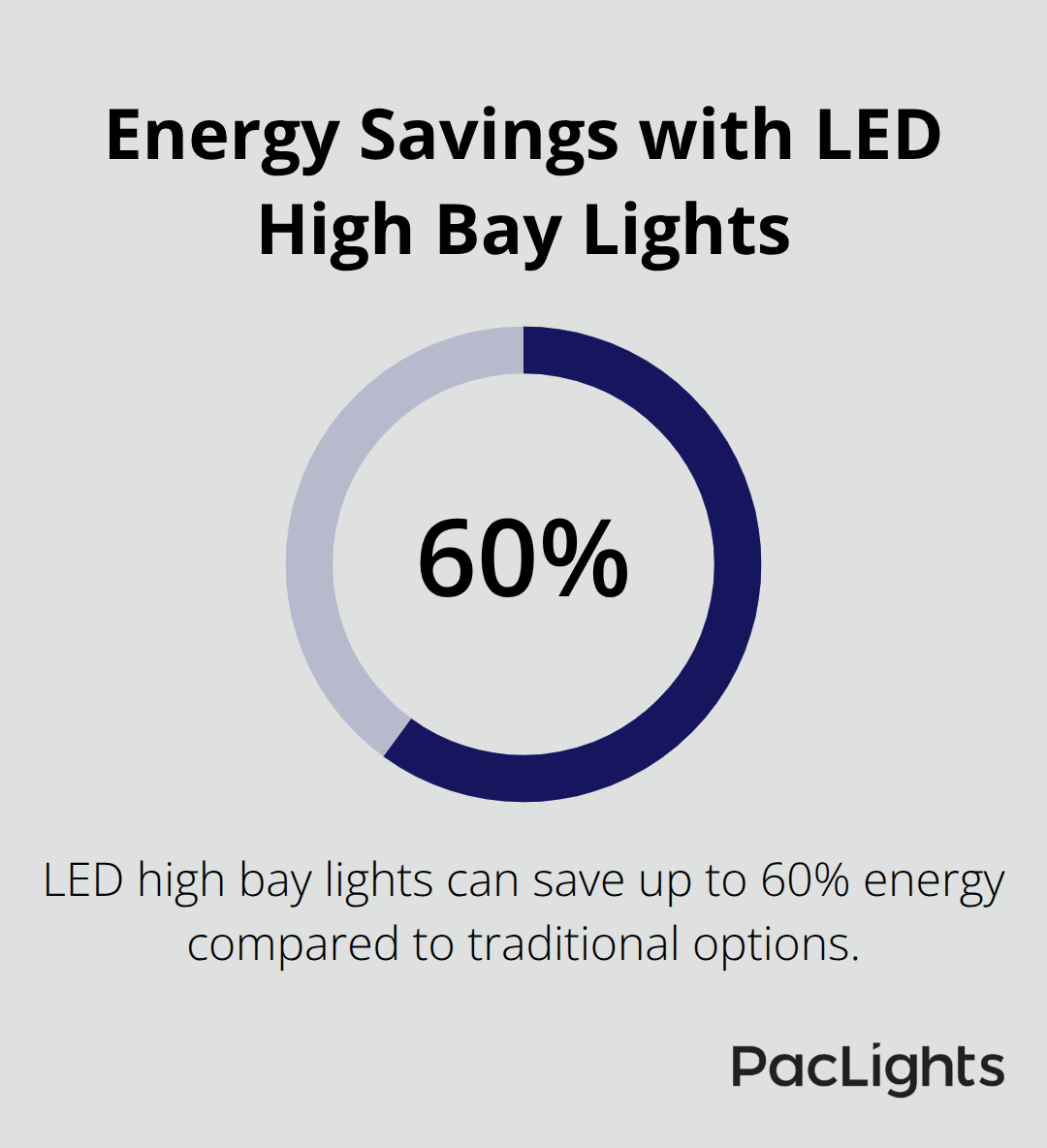
LED high bay lights can provide energy savings of up to 60% compared to traditional options (as reported by the U.S. Department of Energy).
Color Temperature
Industrial settings often prefer cooler temperatures (5000K-6500K) to mimic daylight and enhance visibility. Retail environments might benefit from warmer tones (3000K-4000K) to create a more inviting atmosphere.
Durability
Check the IP (Ingress Protection) rating of the fixtures. An IP65 rating or higher ensures protection against dust and moisture, which is essential in many industrial settings.
Long-term Costs
Consider both initial and operational costs when making your decision. While LED high bay lights might have a higher upfront cost, their energy efficiency and longer lifespan (often exceeding 50,000 hours) result in significant savings over time.
As we move forward, it’s important to explore the various types of high bay lighting available in the market. Each type offers unique advantages and considerations that can impact your lighting decision.
Types of High Bay Lighting: A Comprehensive Comparison
LED High Bay Lights: The Modern Powerhouse
LED high bay lights have transformed industrial lighting. These fixtures convert up to 90% of their energy into light, which results in significant cost savings. A 150W LED high bay can replace a 400W metal halide fixture while providing equal or superior illumination.
LEDs also offer an impressive lifespan, often exceeding 50,000 hours. This translates to less frequent replacements and lower maintenance costs. Many industrial facilities report up to 75% reduction in energy costs after switching to LED high bays.
Metal Halide High Bay Lights: The Traditional Option
Metal halide lights have been a staple in industrial lighting for decades. These fixtures produce a bright, white light that closely resembles natural daylight. However, they convert only about 25% of their energy into light, making them less efficient than LEDs.
The average lifespan of a metal halide bulb ranges from 10,000 to 20,000 hours (significantly shorter than LEDs). They also require a warm-up period to reach full brightness, which can prove inconvenient in spaces that need immediate illumination.
Fluorescent High Bay Lights: The Middle Ground
Fluorescent high bays strike a balance between energy efficiency and cost. These fixtures are more efficient than metal halides but less so than LEDs. A typical fluorescent high bay fixture lasts about 20,000 to 30,000 hours.
One advantage of fluorescent lights is their ability to produce a diffused, even light that minimizes glare. However, they contain mercury, which raises environmental concerns upon disposal.
Energy Efficiency and Lifespan Comparison
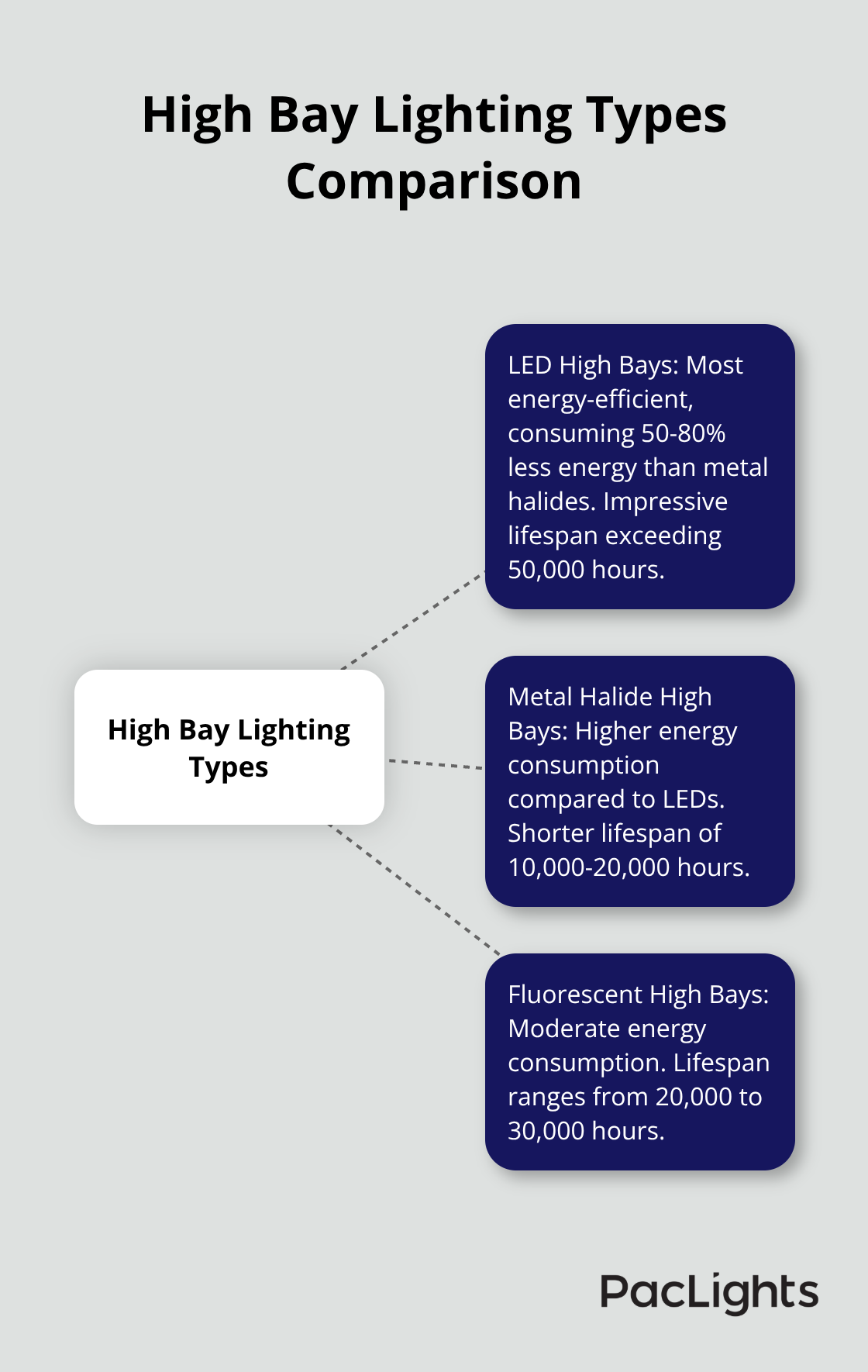
To illustrate these differences, let’s compare the energy consumption and lifespan of each type:
- LED High Bays: Consume 50-80% less energy than metal halides and last 50,000+ hours.
- Metal Halide High Bays: Higher energy consumption, last 10,000-20,000 hours.
- Fluorescent High Bays: Moderate energy consumption, last 20,000-30,000 hours.
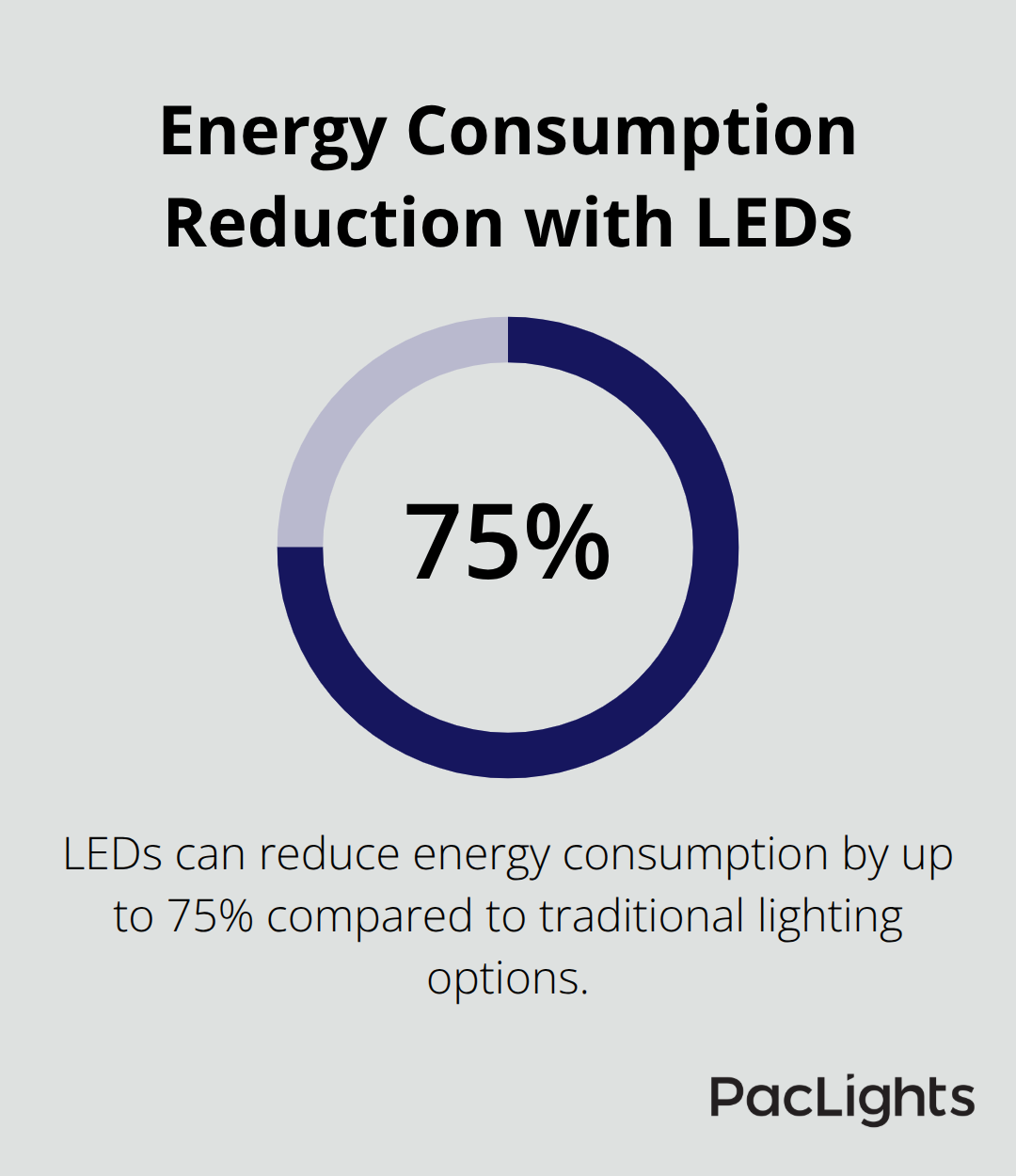
The U.S. Department of Energy reports that LEDs can reduce energy consumption by up to 75% compared to traditional lighting options. This translates to substantial savings over time, especially in large industrial spaces.
Cost Considerations
When selecting high bay lighting, factor in both the initial cost and long-term operational expenses. While LEDs may have a higher upfront cost, their energy efficiency and longevity often result in a lower total cost of ownership.
Now that we’ve explored the different types of high bay lighting, let’s examine the specific factors you should consider when choosing the best option for your space. These factors will help you make an informed decision that aligns with your facility’s unique requirements and budget constraints.
How Specific Factors Impact High Bay Lighting Choice
Ceiling Height and Light Distribution
The height of your ceiling determines the appropriate high bay lighting solution. Ceilings between 20 to 25 feet require a beam angle of 120 degrees for optimal coverage. Higher ceilings (30 feet and above) need a narrower beam angle of 60 to 90 degrees to ensure light reaches the floor effectively.
Light distribution prevents dark spots and shadows, which enhances safety and productivity. A study by the National Safety Council found that proper light distribution can reduce accidents by up to 60% in warehouse settings.
Lumen Output and Efficacy
Lumen output determines the brightness of your space. Try to achieve about 30 lumens per square foot in industrial settings (though this can vary based on specific tasks).
Efficacy (measured in lumens per watt) indicates how efficiently a fixture converts electricity into light. Modern LED high bays can achieve efficacies of 150 lumens per watt or more, resulting in significant energy savings compared to traditional lighting options.
Color Temperature and CRI
Color temperature affects both the appearance and functionality of your space. Industrial environments often prefer cooler temperatures (5000K-6500K) as they mimic daylight and enhance alertness. Retail settings benefit from warmer temperatures (3000K-4000K) to create a more inviting atmosphere.
Color Rendering Index (CRI) measures how accurately a light source renders colors. Most industrial applications require a CRI of 80 or above. Settings where color accuracy is critical (such as quality control areas) need fixtures with a CRI of 90 or higher.
Durability and IP Rating
Industrial environments demand durable fixtures. Look for robust construction and materials that withstand harsh conditions. The Ingress Protection (IP) rating indicates a fixture’s resistance to dust and moisture. Most industrial applications need an IP65 rating or higher.
Consider the specific challenges in your facility. Food processing plants, for example, require fixtures resistant to cleaning chemicals and high-pressure washdowns (IP69K rating might be necessary in such cases).
Control Options and Compatibility
Advanced control options enhance the efficiency and functionality of your lighting system. Dimming capabilities allow you to adjust light levels based on natural light availability or occupancy. The U.S. Department of Energy reports that this can save up to 40% on energy costs.
Ensure new fixtures integrate with your current control systems if you’re upgrading an existing facility. For new installations, choose fixtures compatible with smart building management systems to future-proof your investment.
Final Thoughts
Selecting the best high bay lighting for your space requires careful evaluation of multiple factors. Ceiling height, lumen output, color temperature, durability, and control options all influence the most suitable solution for your facility. We at PacLights understand that every facility has unique requirements, which is why we recommend seeking professional assessment to tailor your lighting solution to your specific needs.
Our team of experts can provide valuable insights and custom lighting solutions that align with your operational goals and budget constraints. Energy-efficient options like LED high bays can significantly reduce your electricity costs and carbon footprint. The extended lifespan of modern fixtures translates to lower maintenance expenses and fewer disruptions to your operations.
Improved lighting quality enhances worker safety and productivity, potentially leading to fewer accidents and increased output. Lighting technology continues to evolve rapidly, so choosing adaptable fixtures compatible with smart building management systems will future-proof your investment. The right high bay lighting transforms your space, creating an environment that’s brighter, safer, and more efficient.
Disclaimer: PacLights is not responsible for any actions taken based on the suggestions and information provided in this article, and readers should consult local building and electrical codes for proper guidance.