

Commercial buildings waste billions of dollars annually on artificial lighting when natural light remains underutilized. Architectural light shelves offer a proven solution to redirect daylight deeper into interior spaces.
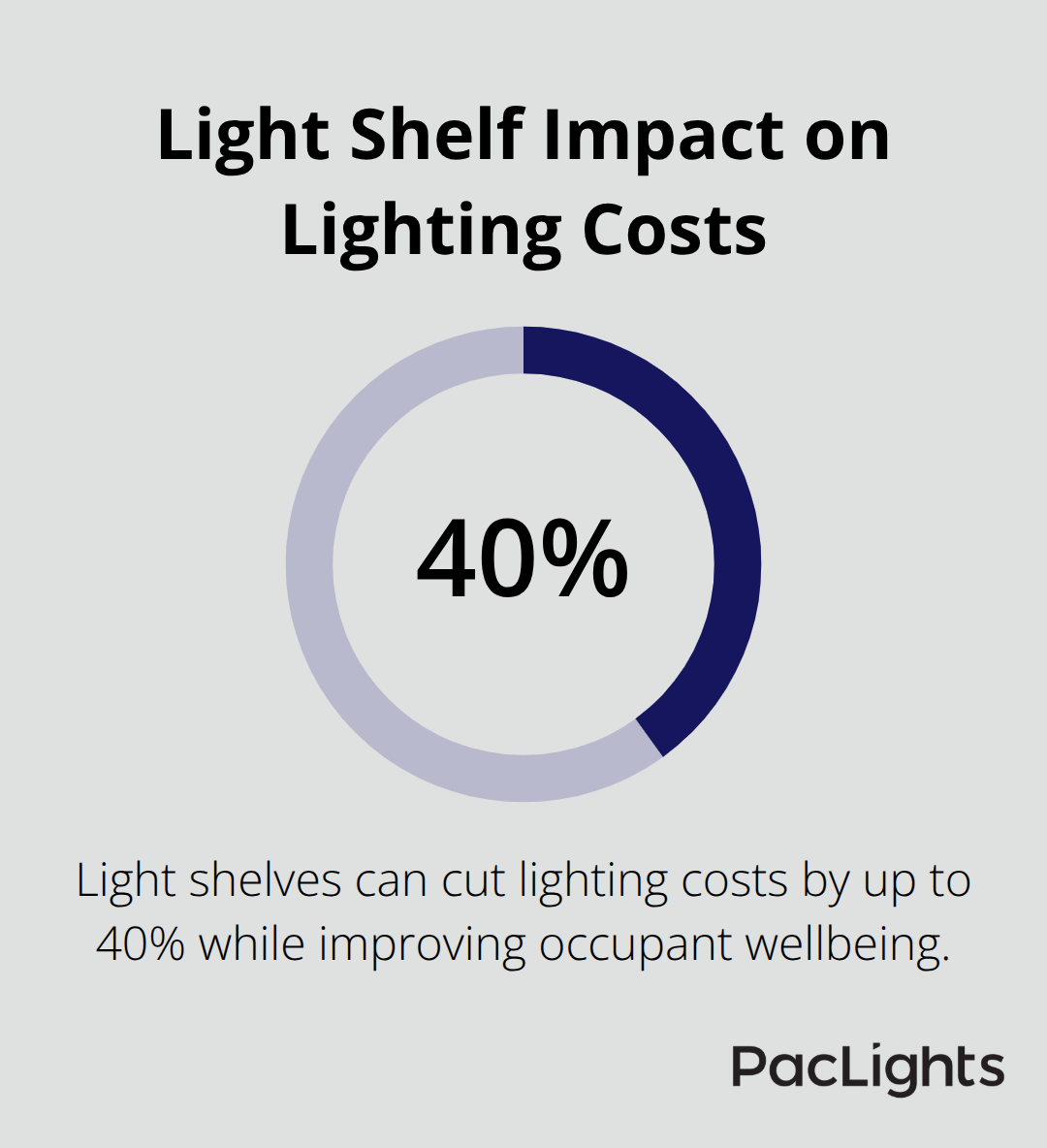
We at PacLights have seen how these horizontal surfaces can cut lighting costs by up to 40% while improving occupant wellbeing. Smart implementation transforms both energy efficiency and workspace quality.
How Do Light Shelves Actually Work
Light shelves are horizontal surfaces that architects position above eye level to capture and redirect natural light deep into building interiors. These architectural elements bounce sunlight off their upper surface onto the ceiling, which then distributes illumination evenly throughout the space. The American Society of Heating, Refrigerating and Air Conditioning Engineers found that properly designed light shelves extend daylight penetration up to 2.5 times the window height, with advanced configurations reaching 4 times this distance.
Interior vs Exterior Light Shelf Performance
Interior light shelves mount inside the building and offer easier maintenance access, while exterior versions provide superior shade and light redirection. Exterior installations typically outperform interior ones by 15-20% in daylight distribution effectiveness. The optimal depth for interior light shelves should match the height of the window area above them, while exterior shelves work best at depths between 3-6 feet (depending on building orientation and climate conditions).
Material Selection and Reflectance Properties
White or highly reflective aluminum surfaces achieve the highest light reflection rates, with reflectance values that exceed 80% for maximum performance. These materials bounce more sunlight toward the ceiling compared to darker surfaces. Architects select materials based on durability requirements and maintenance access, with aluminum offering excellent longevity in exterior applications.
Installation Requirements and Space Considerations
Light shelves require minimum heights of 2 feet from the ceiling and work best in spaces with floor-to-ceiling heights of at least 9 feet. The upper window area should comprise 8-11% of the total floor area for proper light distribution. Buildings in Canada face width restrictions of 4 feet maximum when sprinkler systems are present (requiring specialized fire safety compliance design considerations).
These technical specifications directly impact how architects integrate light shelves with modern lighting control systems and automated daylight sensors.
Why Light Shelves Transform Building Economics
Light shelves deliver measurable financial returns that building owners can track monthly through reduced electricity bills. The World Green Building Council documented 15% productivity increases in offices with optimized natural lighting, while employees take 6.5% less sick leave when exposed to adequate daylight. These performance gains translate to approximately $2,000 per employee annually in reduced absenteeism costs and higher output value.

Energy Savings That Compound Over Time
Buildings with properly installed light shelves reduce artificial lighting loads by one-third, according to Architecture 2030 research. This reduction creates a cascade effect: lower lighting loads decrease cooling demands by 10-20% since less heat generation occurs from artificial fixtures. A 50,000 square foot office building typically saves $15,000-25,000 annually in combined lighting and HVAC costs. The initial installation cost of $0.50-0.75 per square foot pays for itself within 3-5 years through these energy reductions.
Productivity Gains That Exceed Energy Savings
Natural light exposure regulates circadian rhythms and reduces eye strain, which leads to sharper focus during peak work hours. Google’s Mountain View Campus extensively uses light shelves to create collaborative workspaces that support higher engagement levels. The Manitoba Hydro Place demonstrates how reflective surfaces and strategic window placement can maximize daylight penetration while maintaining comfortable indoor temperatures year-round.
Property Value Increases Through LEED Certification
Light shelves qualify for LEED credits under Indoor Environment Quality: Daylight & Views, which increases property values by 3-7% according to commercial real estate studies. Buildings with sustainable features command higher rental rates and experience lower vacancy rates compared to conventional structures. The aesthetic appeal of naturally lit spaces attracts premium tenants who value employee wellness and environmental responsibility.
Smart Integration with Modern Control Systems
Advanced daylight sensors work with light shelves to automatically adjust artificial lighting levels based on available natural light (creating seamless transitions throughout the day). Motion sensors can result in energy savings of 10% to 50% when combined with daylight harvesting techniques. These automated systems require proper calibration to achieve optimal performance and prevent energy waste from conflicting lighting sources.
How Should You Position and Size Light Shelves
South-facing windows provide the most consistent sunlight throughout the day, making them the primary location for light shelf installation. Position light shelves at heights between 7-9 feet above the floor to capture maximum solar angles while avoiding glare at eye level. The shelf depth should equal the height of the window area above it – a 4-foot window requires a 4-foot deep shelf for optimal light redirection. Exterior shelves outperform interior versions by 15-20% but require structural analysis for wind loads and thermal expansion. ASHRAE recommends window-to-wall ratios between 30-40% on south facades when combined with light shelves to balance daylight admission with thermal performance.

Smart Lighting Control Integration
Modern daylight sensors must mount on the ceiling at least 6 feet from windows to avoid direct sunlight interference that causes false readings. Program automated systems to maintain 300-500 lux at task level by dimming artificial lights as natural light increases. Photosensors connected to LED fixtures can reduce energy consumption by 40-60% when properly calibrated with light shelf performance. Install separate control zones for perimeter and interior spaces since light shelves primarily affect areas within 20 feet of windows. Motion sensors combined with daylight harvesting create additional savings of 10-50% in spaces with variable occupancy patterns.
Climate-Specific Design Requirements
Northern climates benefit from larger light shelves angled at 10-15 degrees to capture low winter sun angles, while southern regions require smaller horizontal shelves to prevent overheating. Desert climates need exterior shelves with reflective coatings to manage intense solar heat gain that can increase cooling loads by 25%. Tropical locations should limit shelf width to 3 feet maximum to prevent moisture accumulation and mold growth. Canadian buildings face fire code restrictions that limit shelf width to 4 feet when sprinklers are present. Coastal environments require corrosion-resistant aluminum or stainless steel materials to withstand salt exposure and maintain 80%+ reflectance values over time.
Structural and Safety Considerations
Exterior light shelves require engineering analysis to handle wind loads up to 90 mph in most commercial applications. Steel support brackets must anchor to the building structure at intervals no greater than 8 feet to prevent deflection under snow loads (which can exceed 40 pounds per square foot in northern regions). Interior shelves need fire-rated materials and proper clearances from sprinkler heads to meet building codes. Maintenance access becomes critical for exterior installations – plan walkways or anchor points for safe cleaning and inspection procedures.
Final Thoughts
Architectural light shelves represent a proven investment that delivers measurable returns through reduced energy costs, enhanced productivity, and improved property values. Buildings that implement these systems achieve 40% reductions in lighting costs while creating healthier work environments that boost employee performance by 15%. The future of natural light integration points toward smart building technologies that automatically optimize daylight harvesting.
Advanced sensors and networked controls will seamlessly blend natural and artificial illumination, maximizing energy efficiency while maintaining optimal comfort levels throughout changing weather conditions. Building owners should start with energy audits to identify spaces with the greatest potential for daylight optimization. Architects must consider light shelf integration during early design phases to achieve maximum effectiveness and cost benefits.
The combination of architectural light shelves with modern LED systems and intelligent controls creates the foundation for sustainable, high-performance buildings. We at PacLights support this transition with energy-efficient LED fixtures that integrate seamlessly with daylight harvesting systems. Our advanced lighting controls and motion sensors complement natural light strategies, helping buildings achieve optimal illumination while minimizing energy consumption and operational costs.
Disclaimer: PacLights is not responsible for any actions taken based on the suggestions and information provided in this article, and readers should consult local building and electrical codes for proper guidance.