

Choosing the right high bay LED lighting supplier can make or break your lighting project.
At PacLights, we understand the importance of finding a reliable partner who offers top-quality products, energy efficiency, and excellent customer support.
This guide will walk you through the key factors to consider when selecting a high bay LED lighting supplier, ensuring you make an informed decision for your specific needs.
What Matters Most in a High Bay LED Supplier?
Product Quality and Performance
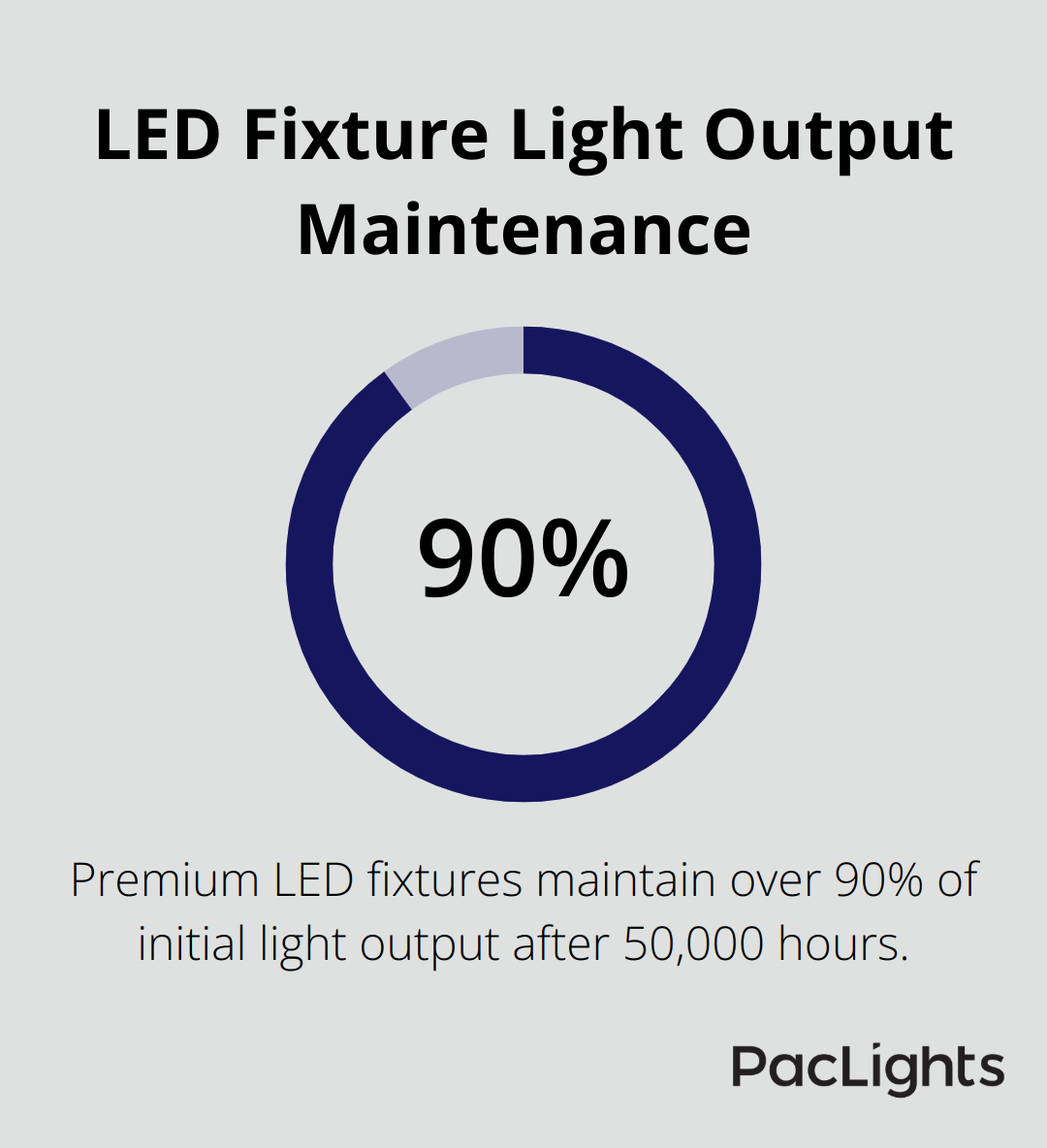
The foundation of any lighting project rests on the quality and performance of the fixtures. Top suppliers use high-grade components and implement rigorous quality control processes. A 2023 Department of Energy study revealed that premium LED fixtures can maintain over 90% of their initial light output after 50,000 hours of operation. This level of performance ensures consistent illumination and reduces replacement frequency.
Energy Efficiency and Cost Savings
Energy efficiency stands as a primary advantage of LED lighting. The best suppliers offer fixtures with high lumens per watt ratios. For example, top-tier high bay LEDs typically achieve 150-180 lumens per watt, which translates to significant energy savings. When you evaluate suppliers, request detailed energy consumption data and projected cost savings over the fixture’s lifespan.
Durability and Longevity
High bay environments often present challenging conditions (high temperatures, dust, and moisture). You should select suppliers whose products have appropriate IP ratings for your specific environment. An IP65 rating, for instance, indicates total dust protection and resistance to low-pressure water jets-suitable for many industrial settings.
Customization Capabilities
Every facility has unique lighting requirements. Leading suppliers offer customization options such as adjustable color temperatures, various beam angles, and dimming capabilities. These features allow you to tailor the lighting to your specific needs, which enhances productivity and comfort in your workspace.
Warranty and Support
A comprehensive warranty and reliable customer support indicate a supplier’s confidence in their products. Industry-leading warranties typically range from 5 to 10 years for high bay LED fixtures. Additionally, you should look for suppliers that offer technical support, installation guidance, and after-sales service to ensure smooth operation throughout the fixture’s lifespan.
The next chapter will explore the top features you should expect from high-quality high bay LED lights, helping you make an even more informed decision when selecting your lighting solution.
Top Features of High-Quality High Bay LED Lights
Lumen Output and Efficacy
High bay LED lights stand out primarily due to their lumen output. Industry-leading fixtures deliver between 18,000 to 60,000 lumens, depending on the application. Efficacy, measured in lumens per watt, is equally important. Top-performing high bay LEDs achieve 150-180 lumens per watt, outperforming traditional lighting technologies.
A 240W high bay LED fixture producing 36,000 lumens (150 lm/W) can replace a 400W metal halide fixture, resulting in substantial energy savings. When evaluating fixtures, request detailed photometric data to ensure the light distribution meets your specific needs.
Optical Design and Light Distribution
The optical design of high bay LED lights significantly impacts their performance. Wide beam angles (typically 90 to 120 degrees) ensure even illumination across large areas. Some applications may require narrower beam angles for focused lighting.
Advanced optical designs incorporate precision-engineered lenses or reflectors to minimize glare and maximize light utilization. A study by the Lighting Research Center found that well-designed optics can increase light utilization efficiency by up to 30% compared to basic designs.
Color Quality and Temperature Options
High-quality high bay LED lights offer multiple color temperature options (typically ranging from 3000K to 5000K). The choice of color temperature can significantly impact worker productivity and comfort. A 2022 study published in the Journal of Environmental Psychology found that cooler color temperatures (4000K-5000K) enhanced alertness and cognitive performance in industrial settings.
Try to find fixtures with a high Color Rendering Index (CRI) of 80 or above. A high CRI ensures accurate color representation, which is important for quality control and safety in industrial environments.
Environmental Protection and Durability
In industrial settings, high bay lights must withstand harsh conditions. The Ingress Protection (IP) rating indicates a fixture’s resistance to dust and moisture. For most industrial applications, look for fixtures with a minimum IP65 rating (which ensures total dust protection and resistance to low-pressure water jets).
Some environments may require even higher protection. Food processing facilities often require IP66 or IP67 rated fixtures to withstand high-pressure washdowns.
Smart Controls and Future-Proofing
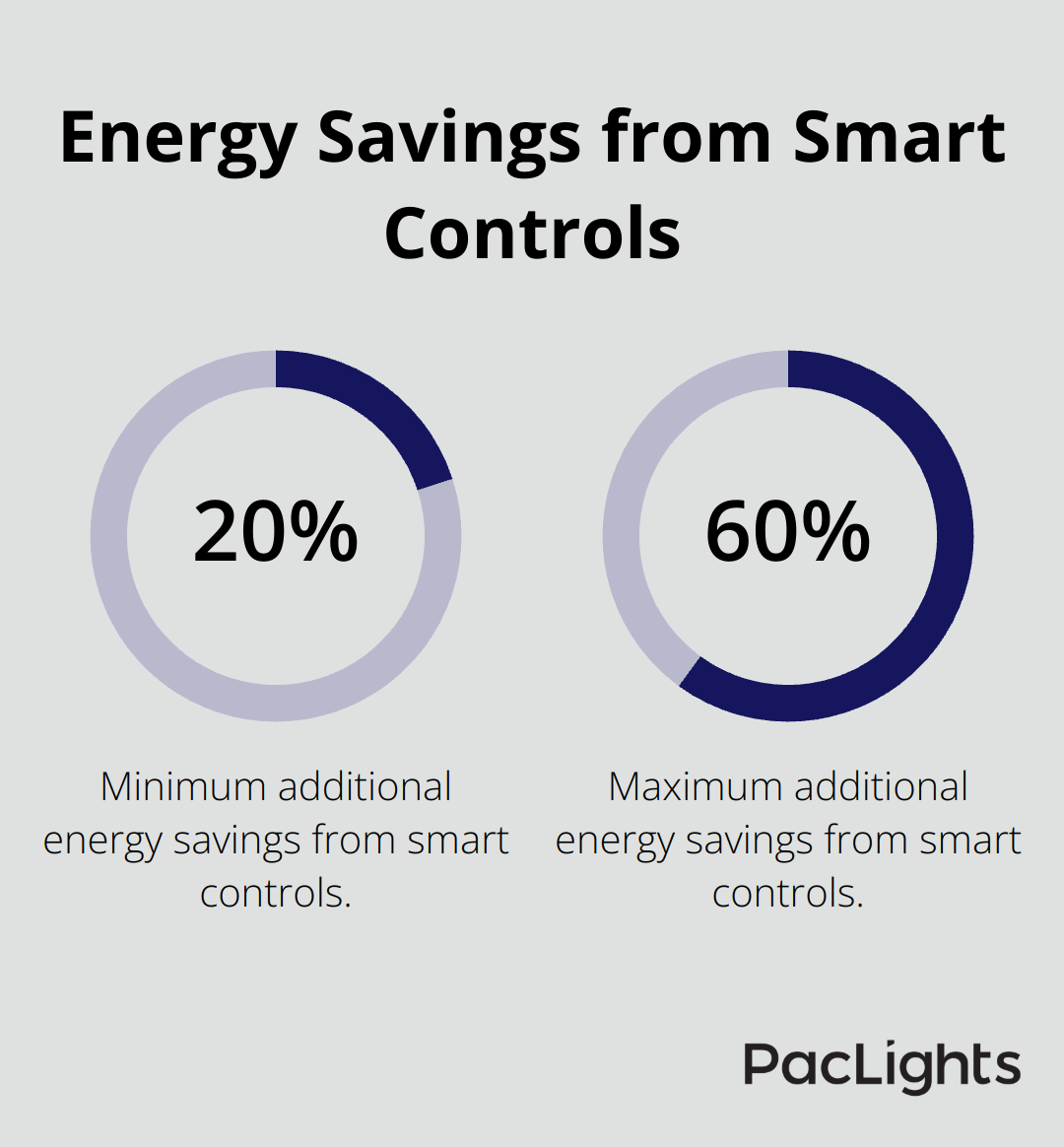
The integration of smart controls can dramatically enhance the efficiency and functionality of high bay LED lighting. Look for fixtures that offer dimming capabilities and compatibility with occupancy sensors and daylight harvesting systems. These features can lead to additional energy savings of 20-60% (according to a report by the U.S. Department of Energy).
Consider fixtures that are compatible with networked lighting control systems. These systems allow for granular control, energy monitoring, and predictive maintenance, future-proofing your lighting investment.
The next section will guide you through the process of evaluating suppliers, helping you identify the most reliable partners for your high bay LED lighting needs.
How to Evaluate High Bay LED Lighting Suppliers
Assess Industry Experience and Reputation
Start your evaluation by investigating the supplier’s track record in the LED lighting industry. Companies with 5-10 years of experience often have refined products and processes. Check online reviews, case studies, and testimonials from businesses in your industry. A supplier who has successfully lit large warehouses or manufacturing facilities similar to yours will likely understand your specific needs.
Ask for references and contact them directly. Inquire about the supplier’s responsiveness, product performance, and after-sales support. A reputable supplier should provide this information transparently.
Verify Certifications and Compliance
Ensure the supplier’s products meet industry standards and certifications. Look for DLC (DesignLights Consortium) certification, which indicates high-quality, energy-efficient products. UL (Underwriters Laboratories) listing is important for safety compliance. For energy efficiency, ENERGY STAR certification serves as a good indicator.
Ask about specific certifications relevant to your industry (e.g., NSF standards for food processing). Request copies of certifications and verify them independently.
Evaluate Product Range and Technical Support
A supplier with a diverse product range will likely offer solutions tailored to your specific needs. Look for suppliers offering comprehensive services such as:

These services can streamline your project and ensure optimal results. A detailed lighting layout design can help you achieve uniform illumination while minimizing the number of fixtures needed (potentially saving thousands in upfront costs).
Analyze Pricing and Long-Term Value
Consider the total cost of ownership, not just the upfront price. Higher quality fixtures might cost more initially but can lead to significant savings over time through energy efficiency and reduced maintenance.
Request detailed pricing breakdowns and energy consumption data. Calculate potential energy savings over the fixture’s lifespan. For example, if a 200W high bay LED fixture from one supplier costs $300 and another supplier offers a similar fixture for $250, don’t automatically choose the cheaper option. If the $300 fixture is 10% more energy-efficient, it could save you hundreds or even thousands of dollars in energy costs over its lifespan (far outweighing the initial price difference).
Factor in the warranty period and terms. A longer, more comprehensive warranty can provide better long-term value and peace of mind.
Final Thoughts
Selecting the right high bay LED lighting supplier impacts your facility’s efficiency, productivity, and bottom line for years. The best suppliers offer more than just fixtures; they provide comprehensive solutions tailored to your specific needs. These include free lighting layout designs, ROI assessments, and ongoing technical support.
Initial costs matter, but the true value of high bay LED lighting lies in its long-term benefits. Energy-efficient fixtures with high lumen output and smart control capabilities can lead to substantial savings over time (factoring in energy consumption and maintenance requirements). You should take the time to research and compare multiple suppliers before making a decision.
We at PacLights understand the complexities of choosing the right lighting solution for your facility. Our range of high bay LED fixtures combines cutting-edge technology with practical design, offering energy-efficient illumination for diverse industrial needs. You can contact us for expert guidance on selecting the best high bay LED lighting for your specific requirements.
Disclaimer: PacLights is not responsible for any actions taken based on the suggestions and information provided in this article, and readers should consult local building and electrical codes for proper guidance.