

Designing an effective high bay lighting layout is a critical task for industrial and commercial spaces. At PacLights, we understand the importance of proper illumination in these environments.
Our guide will walk you through the key steps, from understanding lighting requirements to selecting and placing fixtures. We’ll also introduce you to high bay lighting layout tools that can streamline your design process.
What Are High Bay Lighting Requirements?
Defining High Bay Spaces
High bay lights are lighting fixtures that are typically mounted at heights of 15 feet or more from the ground. These areas include warehouses, manufacturing plants, and large retail stores. Powerful illumination ensures safety, productivity, and efficiency in these environments.
Illumination Needs in Industrial Settings
Proper lighting in industrial settings creates a safe and productive environment. The Occupational Safety and Health Administration (OSHA) sets specific foot-candle requirements for various work environments. Warehouses need 15-200 foot-candles (depending on task complexity), while hospital operating rooms require 100-200 foot-candles for safe procedures.
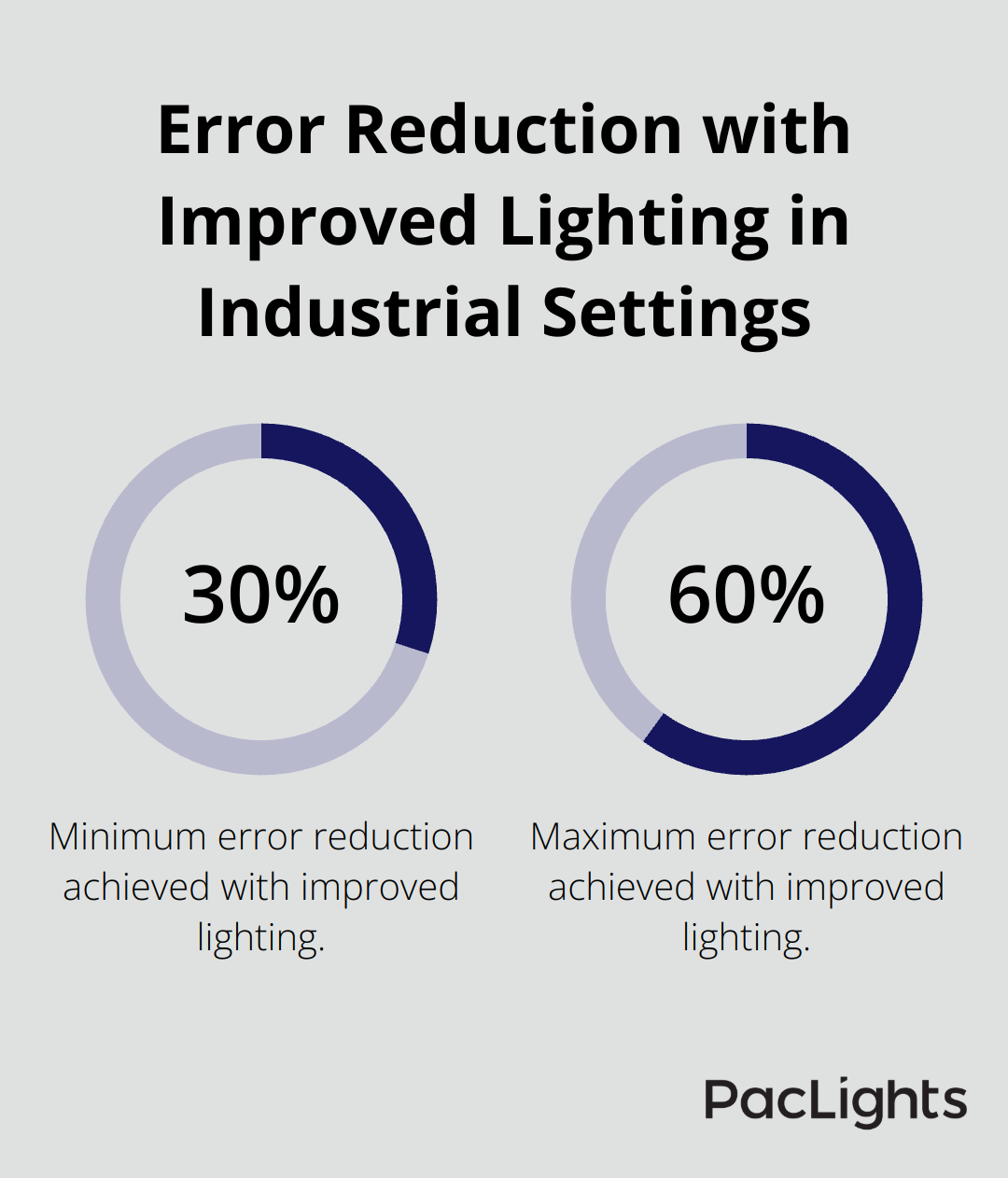
Adequate lighting reduces workplace accidents and increases productivity. A study by the National Institute for Occupational Safety and Health found that improved lighting can reduce errors by 30-60% in industrial settings.
Key Factors in High Bay Lighting Design
Ceiling Height
Ceiling height significantly impacts high bay lighting design. For heights over 40 feet, fixtures generating 40,000 lumens or more provide optimal illumination. The mounting height affects light spread; fixtures at higher points require fewer units due to wider distribution.
Space Usage
Space usage determines brightness requirements. Retail and manufacturing areas typically need higher brightness levels at ground level compared to warehouses or recreational spaces. Retail stores often require 25-100 foot-candles for discount warehouses and up to 200 for merchandising displays.
Ambient Conditions
Ambient conditions influence fixture selection. In environments with dust and moisture concerns, IP65-rated fixtures ensure durability. Food and pharmaceutical processing settings require NSF certification for safe and efficient lighting solutions.
Optimizing Light Distribution
To achieve optimal brightness, select fixtures based on ceiling height. A basic guideline for fixture spacing includes: over 30 feet -> 25 ft spacing for normal, 20 ft for high brightness. This approach ensures even light distribution and minimizes shadows.
Color temperature also plays a role in light distribution. High bay LEDs typically range from 3000K to 4000K. Cooler tones (around 4000K) improve alertness and suit work areas, while warmer tones (around 3000K) promote relaxation in break rooms or less task-intensive areas.
Understanding these high bay lighting requirements allows you to create a lighting layout that meets industry standards and enhances your space’s functionality and efficiency. The next step involves calculating specific lighting requirements for your unique space.
How to Calculate Lighting Requirements for High Bay Spaces
Determining Required Light Levels
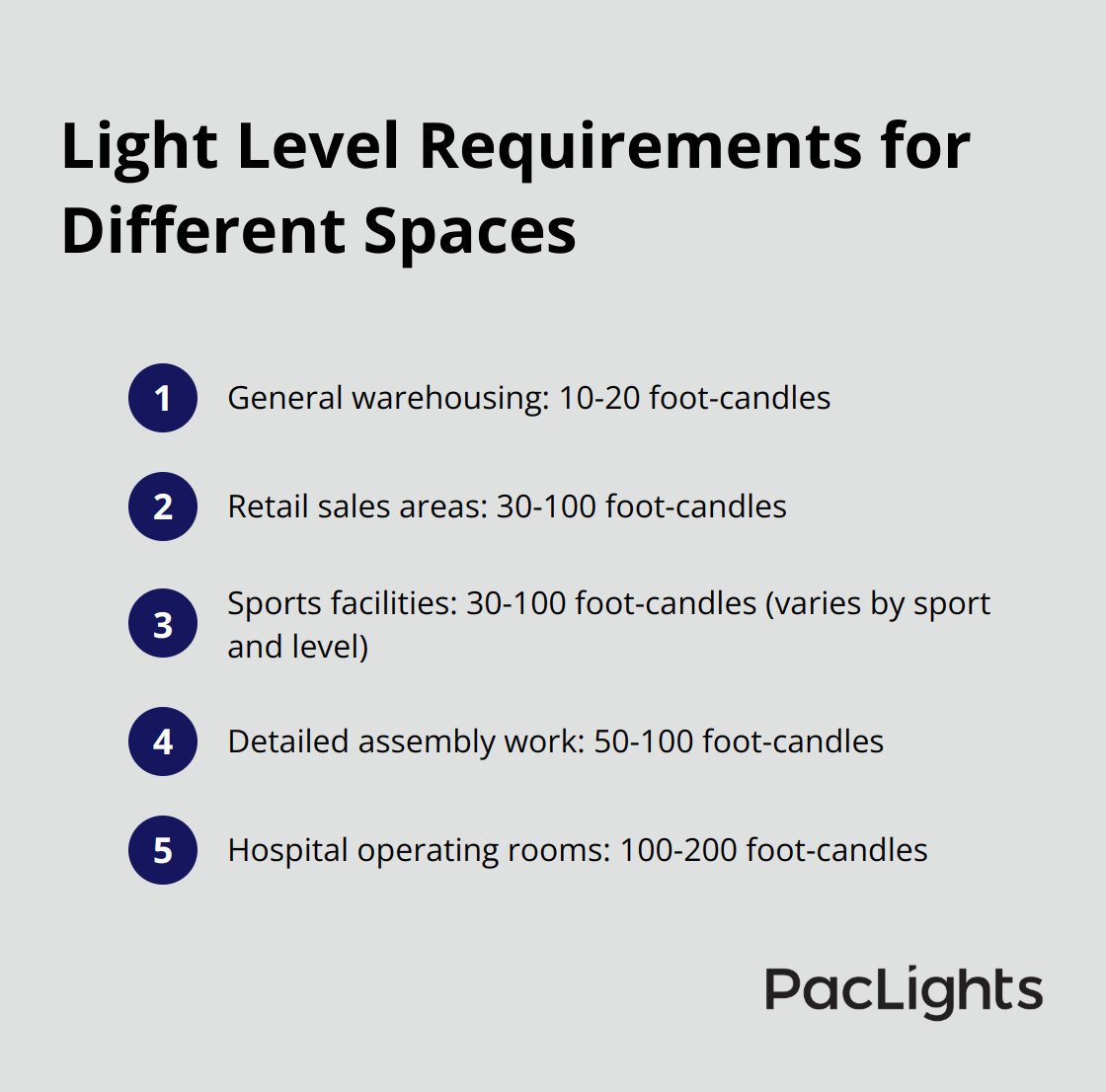
The first step in calculating lighting requirements involves the determination of necessary light levels for your space. Light levels are measured in foot-candles (fc) or lux. The Illuminating Engineering Society (IES) provides guidelines for different activities:
- General warehousing: 10-20 fc
- Detailed assembly work: 50-100 fc
- Retail sales areas: 30-100 fc
- Sports facilities: 30-100 fc (varies by sport and competition level)
To assess current light levels in your space, use a light meter. This measurement will help you identify areas that need improvement and set realistic goals for your new lighting design.
Calculating Number of Fixtures
After you determine the required light levels, calculate the number of fixtures needed using the lumen method. This method considers the total lumens required for the space and the lumen output of each fixture.
Follow these steps for a simplified calculation:
- Calculate total lumens needed: Area (sq ft) x Required fc = Total lumens
- Determine lumens per fixture: Check manufacturer’s specifications
- Calculate number of fixtures: Total lumens ÷ Lumens per fixture
For instance, a 10,000 sq ft warehouse requiring 30 fc needs 300,000 total lumens. If each fixture produces 25,000 lumens, you’ll need 12 fixtures.
Accounting for Light Loss and Utilization
The basic calculation doesn’t account for real-world factors that affect lighting performance. Two important factors to consider are the Light Loss Factor (LLF) and Coefficient of Utilization (CU).
Light Loss Factor accounts for the depreciation of light output over time due to factors like dirt accumulation and lamp aging. A typical LLF for LED high bay lights ranges from 0.85 to 0.9.
Coefficient of Utilization measures how effectively light from the fixture reaches the work plane. This factor depends on the fixture’s light distribution, room dimensions, and surface reflectances. CU typically ranges from 0.6 to 0.8 for high bay applications.
To incorporate these factors, divide your total lumen requirement by (LLF x CU). This calculation will provide a more accurate estimate of the lumens needed, and consequently, the number of fixtures required.
Advanced Calculation Tools
While manual calculations provide a good starting point, advanced software tools can offer more precise results. These tools consider factors such as room geometry, reflectance values, and specific fixture characteristics to create detailed photometric reports.
Many lighting manufacturers and distributors offer free lighting layout design services that utilize these advanced tools. These services can save time and ensure accuracy in your lighting calculations.
The next step in designing an effective high bay lighting layout involves the selection and placement of fixtures. This process requires careful consideration of various factors to optimize illumination and energy efficiency.
How to Select and Place High Bay Fixtures
Choosing the Right High Bay Light Type
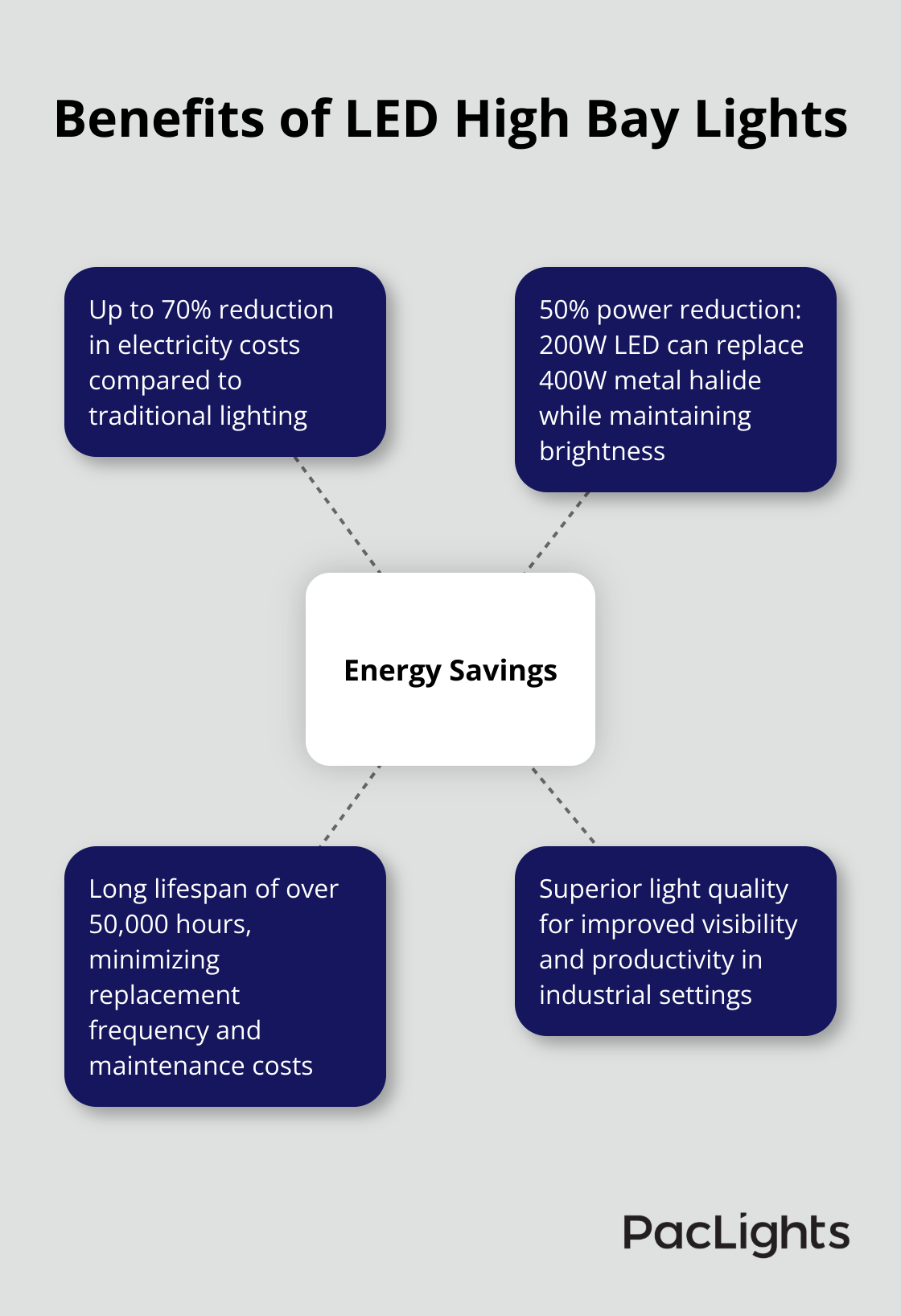
LED high bay lights stand out as the top choice for most modern industrial and commercial applications. They offer superior energy efficiency, longer lifespan, and better light quality compared to traditional options like fluorescent or HID lights. LEDs can reduce electricity costs by up to 70% and typically last over 50,000 hours, which minimizes replacement frequency and associated maintenance costs.
A 400W metal halide light can often be replaced by a 200W LED high bay, which leads to a 50% reduction in power consumption while maintaining similar brightness levels. This translates to substantial energy savings over time.
Optimal Mounting Height and Spacing
The mounting height of high bay lights directly affects their performance and coverage area. For ceilings 20-30 feet high, fixtures producing 22,000-35,000 lumens are typically recommended. As a general rule, the spacing between fixtures should match their mounting height. For instance, if your fixtures are mounted at 20 feet, try to achieve a 20-foot spacing between them.
This rule isn’t set in stone. In spaces with specific lighting needs (such as retail areas or manufacturing floors), you might need to adjust the spacing. A lighting simulation tool can help you visualize and fine-tune your layout before installation.
Addressing Glare and Shadows
Glare and shadows can create unsafe conditions and reduce worker productivity. To minimize these issues, consider using fixtures with appropriate beam angles. Round (UFO) high bay lights typically provide a 120-degree beam angle, which suits large open areas like warehouses and gyms. Linear high bay fixtures offer rectangular illumination, which makes them ideal for spaces with aisles or shelving.
The incorporation of reflectors can enhance light distribution and reduce glare. Some high-quality LED fixtures come with built-in glare reduction features, which can particularly benefit areas where workers need to look upward frequently.
Incorporating Task Lighting
While general high bay lighting provides overall illumination, task lighting is important for areas that require higher light levels for detailed work. In a warehouse setting, you might need 30 foot-candles for general areas but up to 100 foot-candles for picking and packing stations.
To address these varying needs, consider a layered lighting approach. Use your high bay fixtures for general illumination, then supplement with targeted task lighting in specific work areas. This approach not only ensures adequate light levels for all tasks but can also lead to energy savings by allowing you to dim general lighting in areas where task lighting suffices.
Every space is unique, and what works in one facility might not be ideal for another. Many lighting companies offer free lighting layout designs to help optimize high bay lighting systems for specific needs. These services can help balance factors like energy efficiency, light quality, and cost-effectiveness to create a lighting solution tailored to your space.
Final Thoughts
Designing an effective high bay lighting layout requires careful consideration of space requirements, accurate calculations, and strategic fixture placement. Professional assistance can provide valuable insights and access to advanced high bay lighting layout tools for detailed simulations. A well-designed system enhances safety, boosts productivity, and offers significant energy savings through modern LED solutions.
We at PacLights offer a range of high bay lighting solutions tailored to diverse industrial needs. Our products include optional daylight or motion control features to optimize energy use. We also provide free lighting layout designs to help you make informed decisions about your lighting system.
An effective high bay lighting layout creates an environment that supports safety, productivity, and efficiency. You can design a lighting system that meets your specific needs and contributes to your business’s success. Contact us today to learn how we can help you achieve optimal illumination for your industrial space.
Disclaimer: PacLights is not responsible for any actions taken based on the suggestions and information provided in this article, and readers should consult local building and electrical codes for proper guidance.