

Warehouse lighting failures cost money and create safety risks. A single burnt-out fixture in a dark corner can lead to accidents, inventory errors, and lost productivity.
At PacLights, we’ve seen firsthand how a structured warehouse lighting maintenance checklist prevents these problems before they start. This guide walks you through daily, weekly, monthly, and quarterly tasks that keep your facility safe and efficient.
Daily and Weekly Warehouse Lighting Checks
Warehouse lighting failures cost money and create safety risks. A single burnt-out fixture in a dark corner can lead to accidents, inventory errors, and lost productivity. A structured maintenance checklist prevents these problems before they start. This section walks you through daily, weekly, and quick inspection tasks that keep your facility safe and efficient.
Spot Broken or Flickering Fixtures During Daily Walk-Throughs
Spend five minutes each day scanning your facility for broken or flickering fixtures, which often signal deeper electrical issues before they escalate into safety hazards. Flickering typically stems from loose wiring, faulty LED drivers, or power fluctuations, so address these immediately rather than waiting for a scheduled maintenance window. When you spot a fixture that flickers or dims unexpectedly, tighten all visible connections first-many technicians find this solves the problem without requiring a replacement. If tightening connections doesn’t work, the LED driver likely needs replacement, which costs far less than ignoring the issue and dealing with a complete fixture failure later.
Clean Lenses and Diffusers Weekly to Restore Lost Brightness
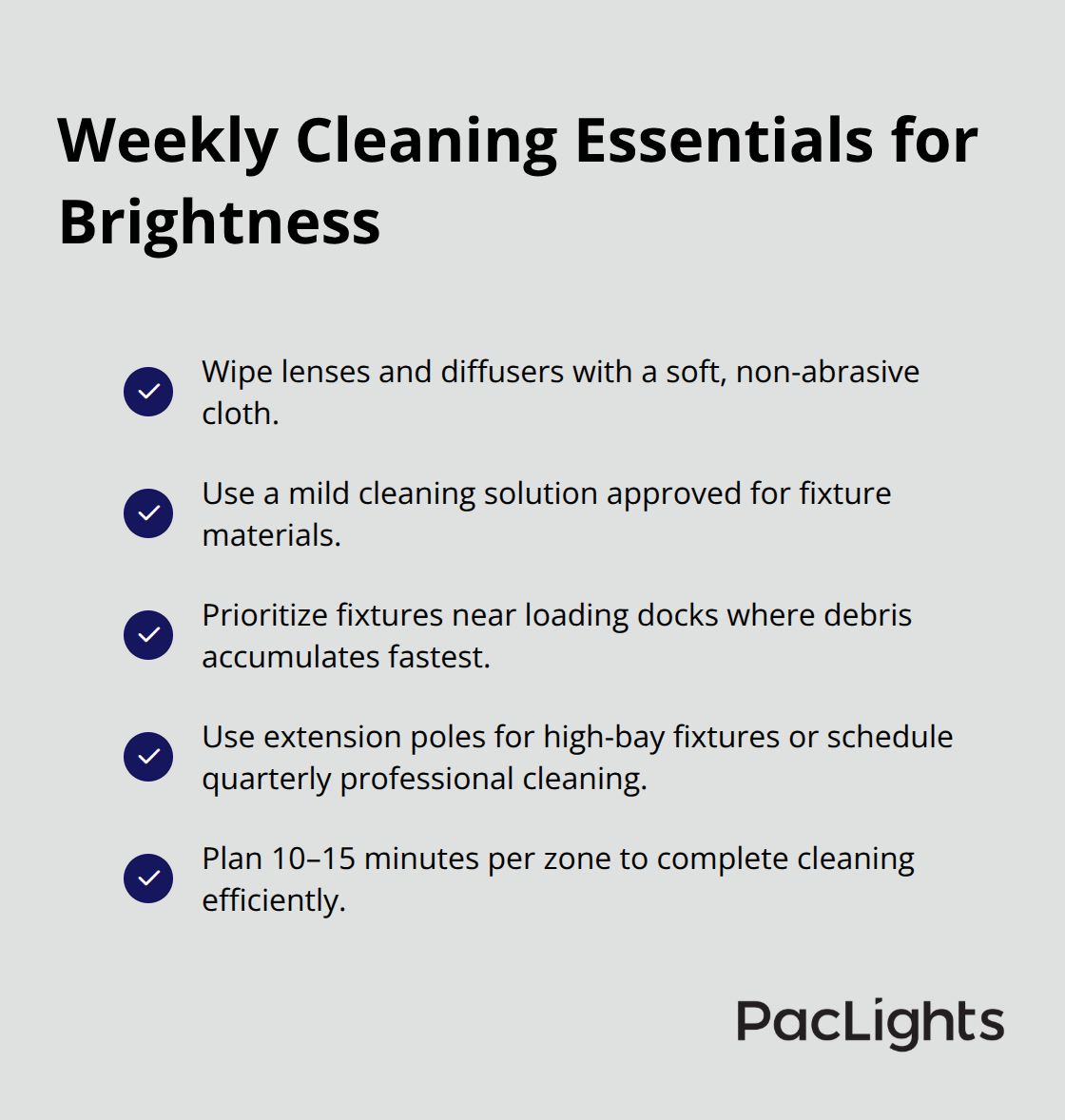
Dust and debris accumulate rapidly in warehouse environments, especially in facilities with high forklift traffic or outdoor-adjacent spaces. A single month of neglect reduces your lighting output by 15 to 20 percent, forcing workers to strain their eyes and increasing accident risk. Clean lenses and diffusers weekly using a soft, non-abrasive cloth and a mild cleaning solution-this takes roughly 10 to 15 minutes per zone depending on your facility size. Pay special attention to fixtures near loading docks, where moisture and airborne particles settle fastest. For high-bay fixtures beyond easy reach, use extension poles or schedule quarterly professional cleaning sessions to maintain consistent brightness across your entire space.
This preventative approach costs far less than replacing fixtures prematurely or managing accidents caused by poor visibility.
Test Emergency Lighting Every Seven Days
Emergency and exit lighting systems must function reliably during power outages, yet many facilities test these systems only during annual inspections. Test your emergency lighting weekly by switching off main power for 30 seconds to verify that backup systems activate instantly and maintain adequate brightness. Document which fixtures respond correctly and flag any that fail to illuminate or show dim performance. Battery backups degrade over time, so replace batteries annually even if they appear functional-waiting until an outage occurs leaves your facility exposed to liability and safety violations. The U.S. Department of Labor emphasizes that inadequate emergency lighting during outages leads to injuries and evacuation delays, making these weekly checks non-negotiable rather than optional.
These daily and weekly tasks form the foundation of a reliable lighting system. Monthly and quarterly maintenance tasks address deeper issues that daily inspections cannot catch, including faulty components and electrical wear that accumulate over time.
Monthly and Quarterly Deep Maintenance
Replace Bulbs and Drivers Before They Fail
Monthly inspections catch problems that escape daily walk-throughs. Start by replacing any bulbs or ballasts showing signs of age, dimming, or color shifts. LED fixtures rarely fail outright, but their drivers deteriorate gradually, causing flicker or reduced output before complete failure. Non-LED systems with ballasts fail without warning, leaving entire fixture banks dark. Replace ballasts proactively rather than waiting for failure, especially in high-usage zones near loading docks or assembly areas where lighting directly impacts safety.
Keep spare LED drivers and ballasts on hand so you can swap failed components immediately instead of waiting for parts to arrive. Document each replacement with dates and part numbers to build a maintenance history that reveals patterns. If specific fixture types fail repeatedly, that signals a design or installation problem worth addressing with upgrades.
Tighten Connections and Schedule Professional Electrical Inspections
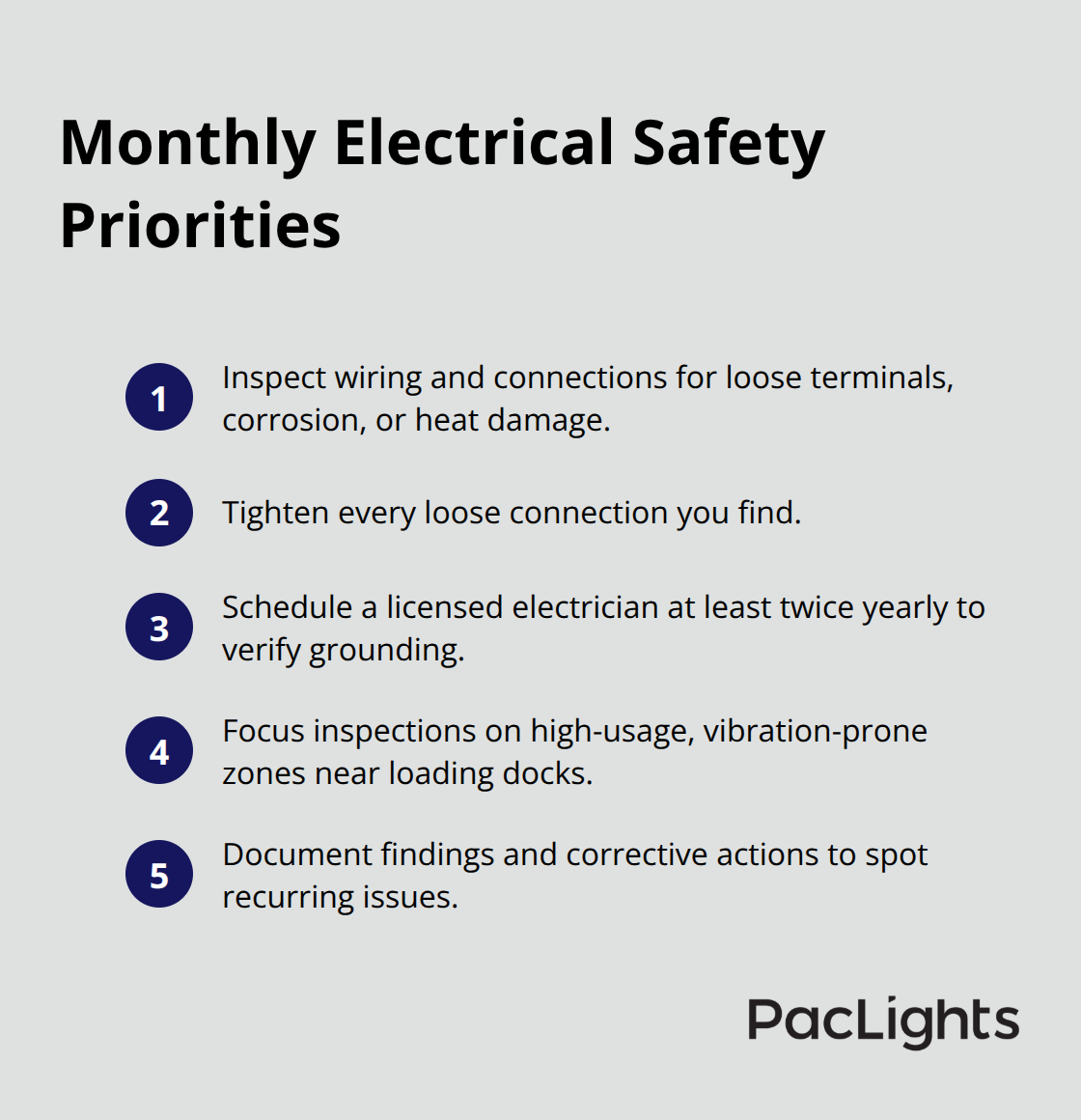
Inspect all visible wiring and electrical connections monthly, looking for loose terminals, corrosion, or heat damage. Loose connections cause power fluctuations that degrade LED performance and create fire hazards. Tighten every connection you find, then schedule a professional electrician at least twice yearly to verify grounding and detect deeper electrical issues. This preventative approach costs far less than managing electrical failures or fire incidents later.
Test Motion Sensors and Control Systems Monthly
Motion sensors and control systems drift out of calibration over time, so test them monthly by walking through sensor zones and confirming lights respond as expected. Dim or unresponsive fixtures often result from misaligned sensors rather than broken hardware-repositioning a sensor costs nothing but prevents wasted energy and dark zones. For quarterly maintenance, perform a group relamping strategy in high-traffic areas by replacing all lamps at once rather than replacing individual bulbs as they fail. This maintains uniform brightness across your warehouse and minimizes the maintenance disruptions that come from scattered replacements.
Verify Smart Controls Deliver Expected Energy Savings
If your facility uses smart controls with timers or dimmers, test these systems quarterly to verify they operate correctly and deliver the energy savings you designed them for. Many facilities lose thousands annually because control systems malfunction silently while facility managers assume everything works as intended. Quarterly cleaning with microfiber cloths maintains optimal light output, as dirt accumulation reduces illumination by 20–30 percent. These quarterly checks take minimal time but prevent silent energy waste and ensure your investment in advanced controls actually performs.
Common warehouse lighting problems often stem from neglected maintenance routines, but they respond quickly to targeted fixes when you catch them early.
Common Warehouse Lighting Problems and Solutions
Address Dim or Uneven Lighting Coverage
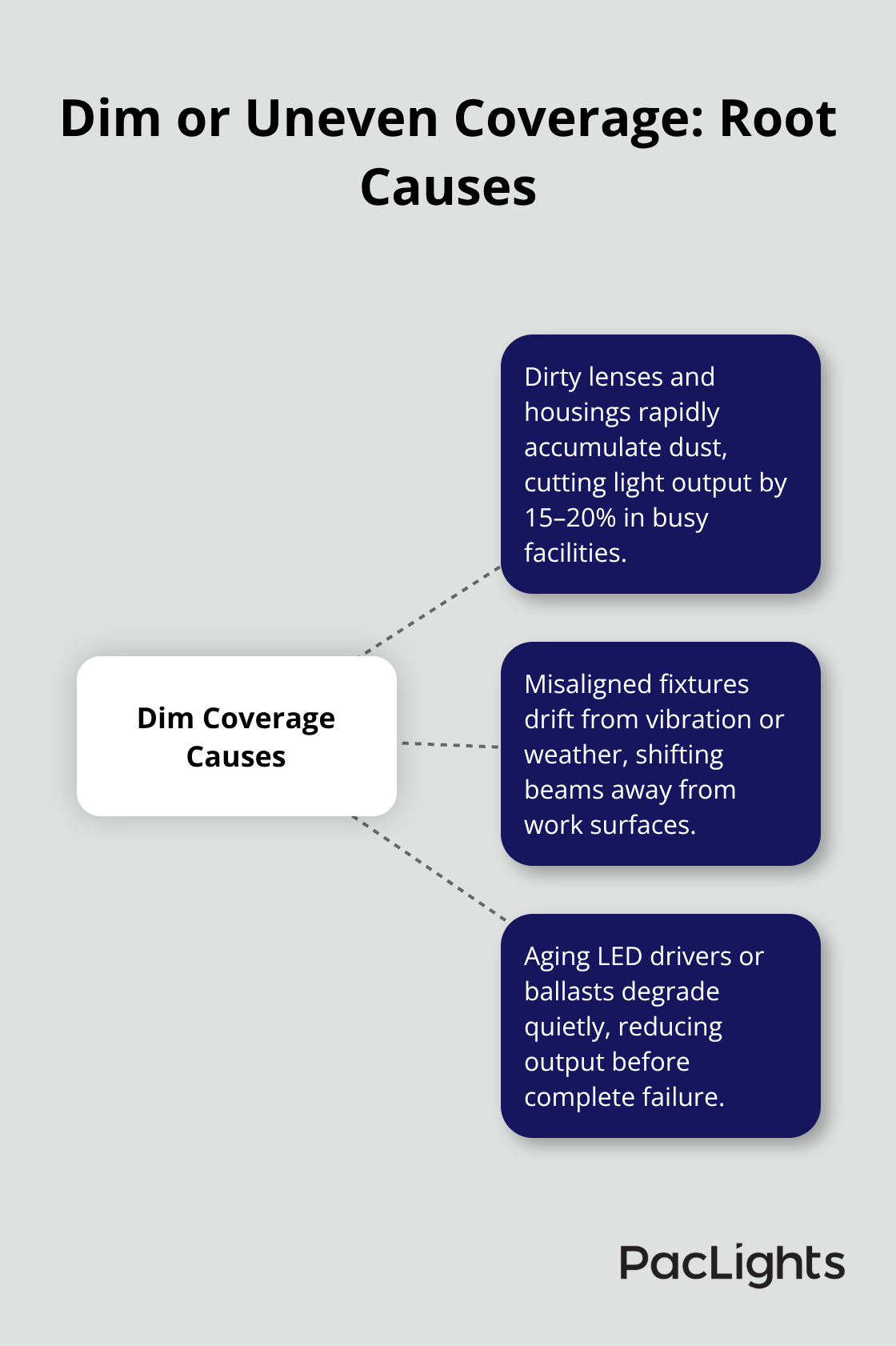
Dim or uneven lighting coverage stems from three preventable causes that facility managers routinely miss until workers complain about visibility. The first culprit is dirty lenses and housings-dust reduces output by 15 to 20 percent within weeks in high-traffic warehouses, yet many facilities never clean fixtures after installation. The second cause is misaligned fixtures, which happens gradually after vibration from forklifts or weather events shift mounting brackets. The third involves aging LED drivers or ballasts that fail silently before complete fixture shutdown.
When you encounter dim zones, start by cleaning all lenses in that area with a soft cloth and mild solution, then visually inspect fixture angles to confirm they point toward work surfaces rather than angled downward. If cleaning and realignment don’t restore brightness, measure light levels using a basic lux meter-try 300 to 500 lux for warehouse aisles according to Illuminating Engineering Society standards. If readings fall below target, replace LED drivers in affected fixtures or schedule professional assessment to determine whether additional fixtures are needed for proper coverage.
Fix Electrical Issues and Power Surges
Electrical issues and power surges damage lighting systems faster than any other warehouse hazard. Loose wiring connections create voltage fluctuations that degrade LED drivers and cause flicker, which workers often ignore until fixtures fail completely. Inspect every visible connection monthly by tightening terminals with appropriate tools, paying special attention to high-usage zones near loading docks where vibration loosens connections repeatedly.
If tightening connections doesn’t eliminate flicker, the problem likely involves power surges from heavy equipment or inadequate grounding rather than the lighting fixtures themselves. Install surge protectors on the circuits powering your most critical lighting zones (these cost under two hundred dollars per zone) and prevent thousands in damage from electrical spikes. Schedule a professional electrician to verify grounding at least twice yearly, as improper grounding creates fire hazards and accelerates component failure.
Resolve Control System Malfunctions
Control system malfunctions typically involve motion sensors drifting out of calibration or smart controls operating on incorrect schedules that waste energy while leaving spaces dark. Test motion sensors monthly by walking through detection zones and confirming lights respond within two to three seconds of movement. If response time exceeds five seconds or lights remain on when zones are empty, reposition the sensor toward the area needing coverage rather than replacing hardware.
For smart controls with timers and dimmers, review programmed schedules quarterly against actual facility usage patterns-many warehouses maintain lighting during closed hours because nobody updated schedules after shift changes or seasonal adjustments. Reprogramming controls takes minutes but recovers thousands in wasted energy annually. PacLights offers fixtures with optional motion control and advanced lighting controls that simplify troubleshooting and allow facility teams to address problems without waiting for specialized technicians.
Final Thoughts
A warehouse lighting maintenance checklist transforms safety and efficiency from aspirational goals into measurable outcomes. Daily walk-throughs, weekly cleaning sessions, and monthly electrical inspections catch problems before they cascade into accidents, downtime, or costly emergency repairs. Facilities that follow these routines report fewer injuries, higher worker productivity, and significantly lower energy bills compared to those relying on reactive maintenance.
LED fixtures lasting up to 100,000 hours combined with preventative maintenance reduce replacement frequency dramatically compared to traditional lighting systems. Cleaning lenses monthly prevents the 15 to 20 percent brightness loss that forces workers to strain their eyes and makes accidents more likely. Tightening electrical connections twice yearly eliminates the power fluctuations that degrade LED drivers and create fire hazards, while testing emergency lighting weekly ensures your facility meets compliance requirements and protects occupants during outages.
We at PacLights design fixtures specifically for warehouse environments, offering durable high-bay lights and specialty solutions that withstand dust, vibration, and temperature extremes. Contact PacLights to explore lighting solutions tailored to your facility’s specific needs and discover how quality fixtures combined with disciplined maintenance create safer, brighter, more efficient warehouse spaces.
Disclaimer: PacLights is not responsible for any actions taken based on the suggestions and information provided in this article, and readers should consult local building and electrical codes for proper guidance.