

Your commercial downlights are costing you more than they should. Older fixtures drain energy, demand constant maintenance, and cast poor light that affects how your team works.
At PacLights, we’ve helped businesses transform their spaces with commercial downlight retrofit ideas that cut energy bills and boost productivity. This guide walks you through the process, from assessing your current setup to choosing the right LED solutions.
Why Your Older Downlights Cost More Than You Think
Energy Drain and Hidden Expenses
Halogen and fluorescent downlights consume 60 to 75 watts per fixture, while modern LED alternatives deliver the same brightness at 10 to 15 watts. That difference adds up fast across a typical commercial space. A 50-fixture office retrofit saves 5,000 to 7,500 kilowatt-hours annually, translating to roughly $1,800 per year in energy costs alone, according to real retrofit data from commercial facilities in Atlanta. Over a decade, that amounts to $18,000 in avoided electricity expenses from a single retrofit project. Older fixtures also generate significant heat, forcing your HVAC system to work harder during warm months.
Beyond energy consumption, maintenance becomes a constant drain. Traditional downlights require lamp replacements every 2,000 to 5,000 hours, meaning frequent service calls and ladder work.
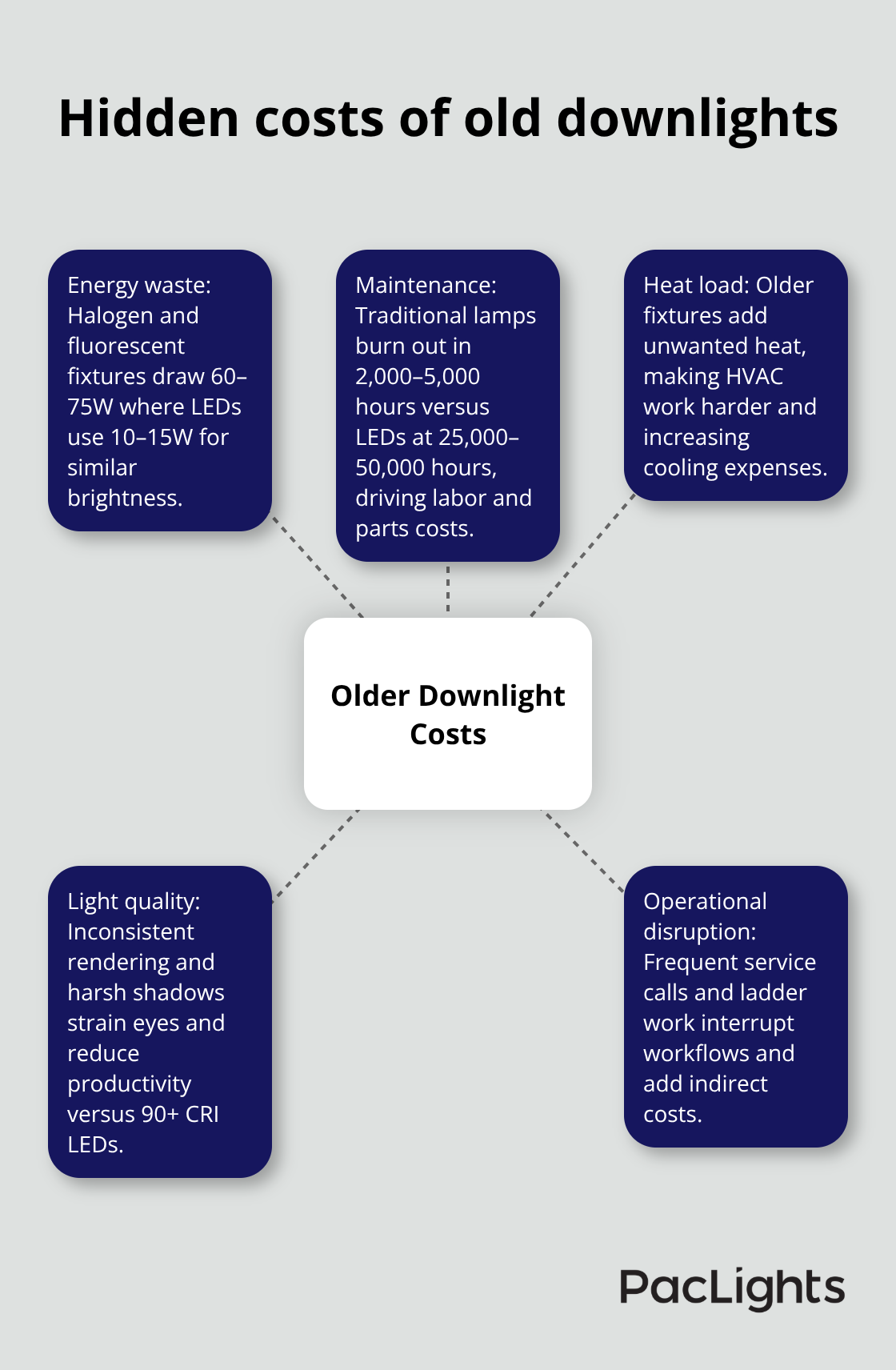
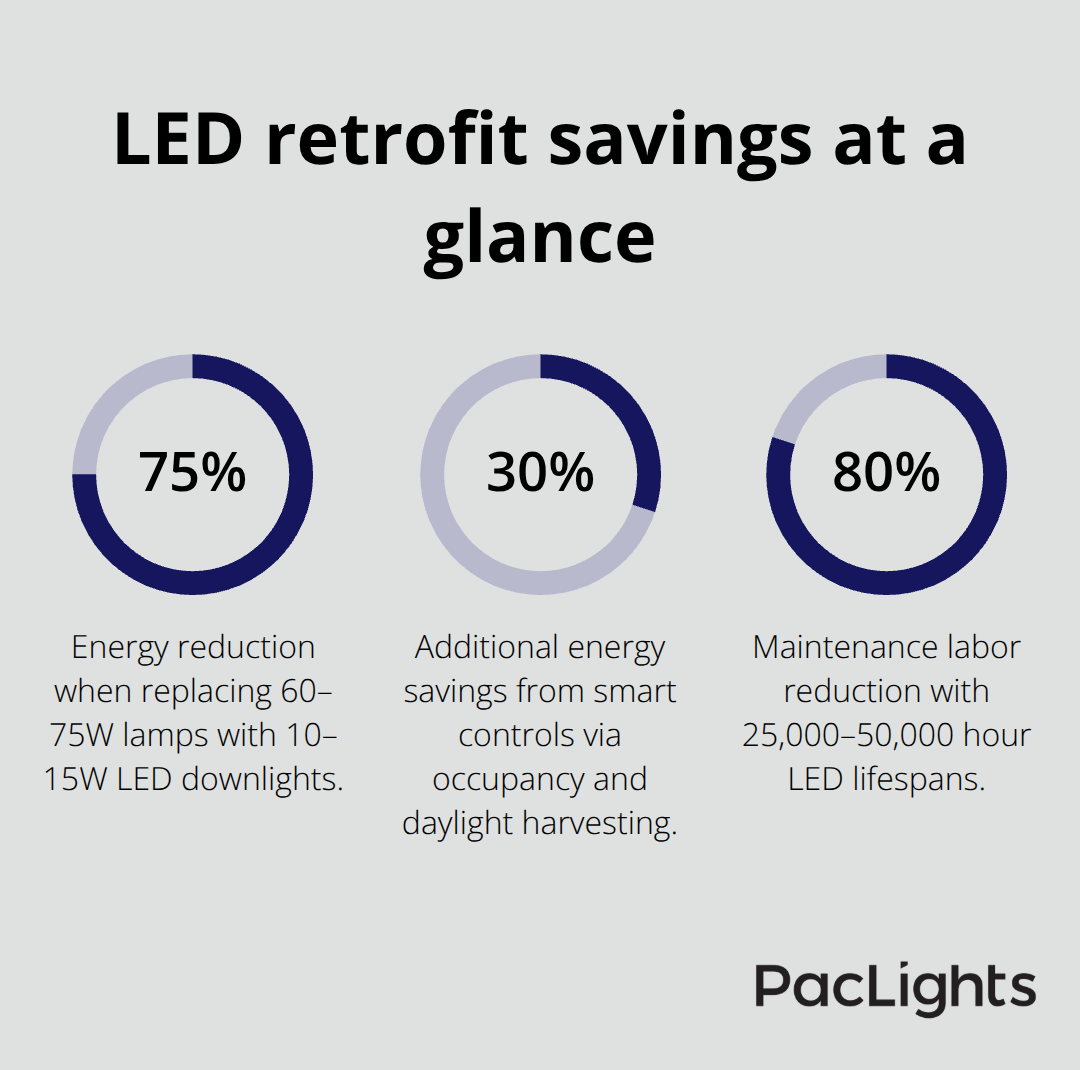
LED fixtures last 25,000 to 50,000 hours, reducing maintenance labor by up to 80 percent. That’s the difference between replacing a fixture every year or every five years. When you factor in labor costs, materials, and operational disruption, older systems become genuinely expensive to keep running.
Light Quality and Worker Performance
Older halogen and fluorescent systems deliver inconsistent color rendering and create harsh shadows that tire the eyes. Poor lighting quality directly impacts employee productivity, with workers reporting increased fatigue and difficulty concentrating in spaces with inadequate light. Modern LED downlights offer 90+ CRI, meaning colors appear true and natural, reducing eye strain during detailed work.
In retail environments, this matters even more-products under poor lighting look washed out, hurting sales. A Midtown retail space that upgraded 100 fixtures reported not only energy savings but improved product visibility that customers noticed immediately.
Smart Controls Multiply Your Savings
LED retrofits give you control that older systems cannot match. Dimmable options and smart controls enable occupancy-based dimming and daylight harvesting, adjusting light levels automatically based on occupancy and natural light. These systems achieve 20 to 30 percent additional energy savings beyond the baseline LED improvement. High-traffic areas with smart features can reach 60 to 70 percent annual energy reductions compared to legacy systems.
The right retrofit solution transforms your space from a cost center into an efficiency asset. Selecting the proper LED downlight specifications and working with lighting professionals ensures you capture all these benefits while matching your facility’s unique needs.
LED Retrofit Solutions Work in Your Space
Standard Fixtures Accept Modern LED Modules
LED retrofit solutions fit directly into your existing infrastructure without demanding a complete teardown. Most commercial spaces use standard 4 to 6 inch recessed cans, and modern LED retrofit modules slide into those housings with minimal modification. A 6 inch LED retrofit downlight-the most common choice for broad illumination-uses adapter rings if your older housings are slightly different sizes, and IC rated options work safely in insulated ceilings. This compatibility eliminates the disruption of ripping out ceiling sections or rewiring entire zones. Installation takes 15 to 30 minutes per fixture, meaning a 50 fixture office upgrades in one or two days without major operational downtime.
Energy Cuts and Financial Returns
The financial case for LED retrofit rests on real numbers. A 6 inch LED retrofit delivers 800 to 1,200 lumens at 10 to 15 watts, replacing older 60 to 75 watt fixtures and cutting energy use by up to 75 percent according to DOE standards. Post rebate costs typically range from $15 to $40 per fixture after you factor in incentives like Georgia Power rebates, which commonly offset $10 to $25 per fixture for qualifying installations.
A standard retrofit pays for itself in under 2 years, with Atlanta projects showing 18 to 24 month payback periods after incentives.
For a 50 fixture office, annual energy savings reach 5,000 to 7,500 kilowatt hours, worth roughly $1,800 yearly. LED modules last 25,000 to 50,000 hours, so maintenance drops dramatically compared to traditional lamps that burn out every 2,000 to 5,000 hours.
Smart Controls Amplify Your Savings
Dimmable LED options and smart occupancy sensors push savings even higher, achieving 20 to 30 percent additional reductions beyond the baseline LED improvement. Retrofit kits preserve your existing housings and junction boxes, avoiding waste and unnecessary replacement costs. These systems (occupancy sensors, daylight harvesting, and networked controls) transform how your facility manages light and energy consumption.
The next step involves assessing your current lighting layout and selecting the right specifications for your specific space.
Planning Your Downlight Retrofit Project
Measure Your Existing Fixtures and Document Your Space
Start with your existing recessed housing dimensions and document fixture locations on a floor plan. Most commercial spaces use standard 4 to 6 inch recessed cans, but older buildings sometimes have non-standard sizes that require adapter rings during retrofit. Photograph your current fixtures from below and note the trim style-baffle, reflector, or open-since this affects glare and light distribution.
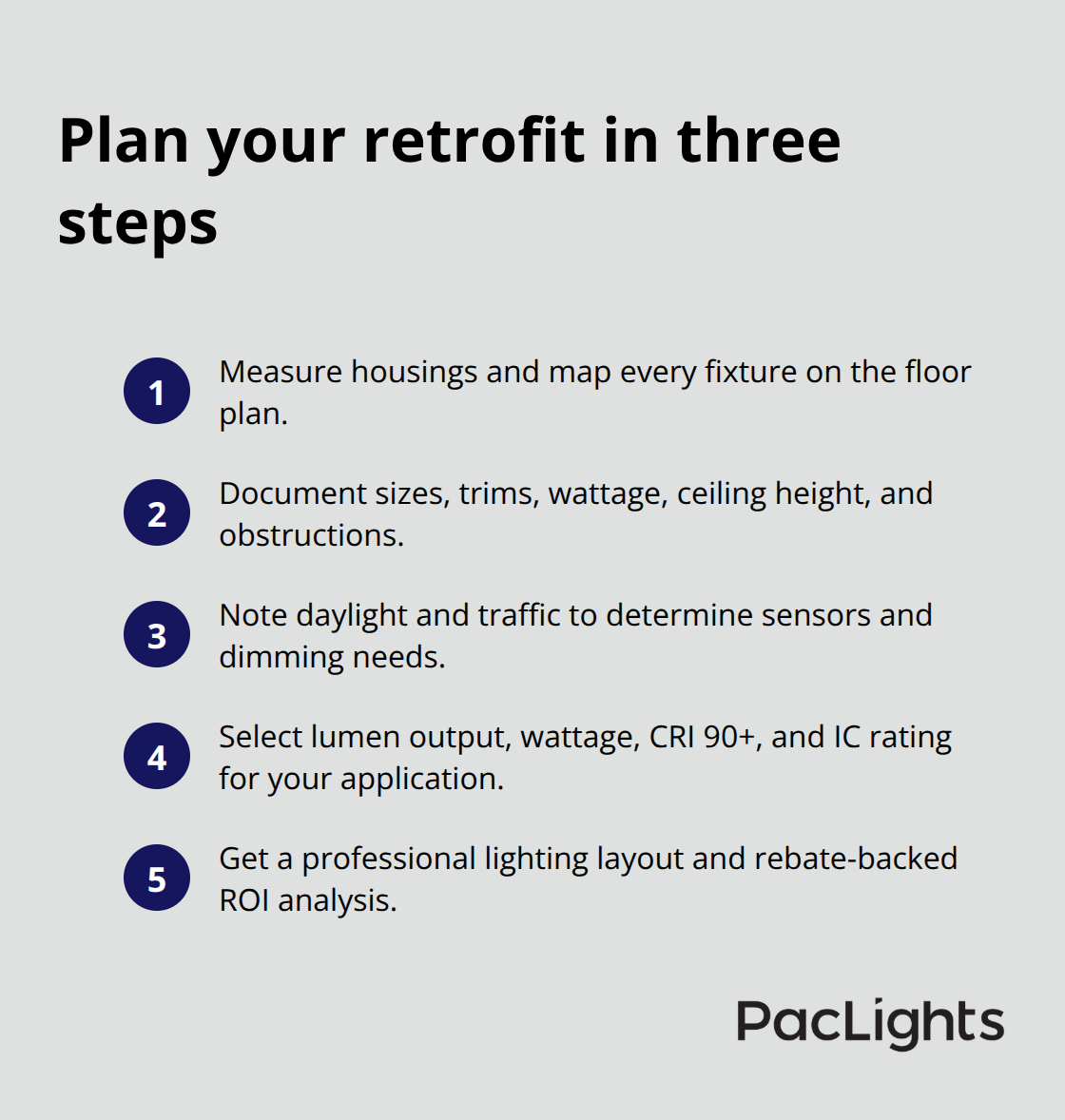
Count every fixture in each zone and record the wattage of current lamps if visible on the packaging or ballast.
This inventory becomes your baseline for calculating energy savings and determining retrofit costs. Measure ceiling height and note any obstructions like HVAC ducts or structural elements that might complicate installation, particularly in narrow plenums where slim LED retrofit designs become necessary. Document which areas receive natural daylight and which zones experience the most foot traffic, as these details influence whether occupancy sensors or daylight harvesting controls make financial sense for your retrofit.
Select the Right LED Specifications for Your Application
Once you have this data, selecting the right LED specifications becomes straightforward. A 6 inch LED retrofit downlight delivering 800 to 1,200 lumens at 10 to 15 watts handles most office and retail applications effectively. Choose fixtures with 90+ CRI to match the light quality standards your work requires, and verify that IC rating on the housing if your ceiling contains insulation. Dimmable options cost slightly more upfront but unlock 20 to 30 percent additional energy savings through occupancy-based control, making them worthwhile for high-traffic zones.
Work with Lighting Professionals to Optimize Your Layout
A free lighting layout assessment confirms that lumen levels match your space’s actual needs-oversizing fixtures wastes energy and money. Professional lighting designers model your current layout, identify dark zones or glare problems, and recommend specific configurations before you purchase anything. This assessment typically includes ROI calculations based on your local utility rates and available rebates like Georgia Power incentives, which commonly offset $10 to $25 per fixture for qualifying installations (subject to eligibility requirements and professional installation standards).
Involving a professional eliminates guesswork and ensures your retrofit captures all available savings while meeting code requirements for electrical work and ceiling safety.
Final Thoughts
A 50-fixture retrofit cuts energy consumption by 5,000 to 7,500 kilowatt-hours annually, saving roughly $1,800 per year while reducing maintenance labor by up to 80 percent. LED fixtures lasting 25,000 to 50,000 hours mean you replace lamps every five years instead of every year, and your team works better under 90+ CRI lighting that reduces eye strain. Smart controls add another 20 to 30 percent in energy savings through occupancy-based dimming and daylight harvesting, transforming your space into an efficiency asset.
Most retrofits pay for themselves in 18 to 24 months after accounting for Georgia Power rebates that offset $10 to $25 per fixture. Installation takes just one or two days for a typical office, with LED modules sliding directly into your existing 4 to 6 inch recessed cans using adapter rings where needed. Over a decade, that single retrofit project avoids $18,000 in electricity costs alone.
We at PacLights help businesses execute commercial downlight retrofit ideas that transform aging systems into efficient assets. Contact our team to discuss how your space can benefit from LED retrofit solutions tailored to your goals and budget, and we’ll provide a free lighting layout design and ROI assessment to guide your retrofit planning.
Disclaimer: PacLights is not responsible for any actions taken based on the suggestions and information provided in this article, and readers should consult local building and electrical codes for proper guidance.